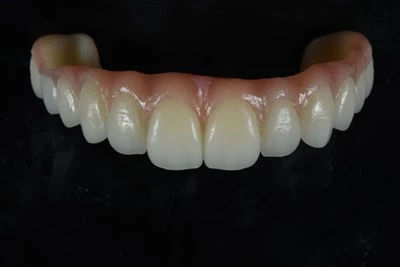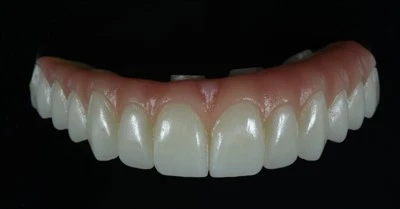
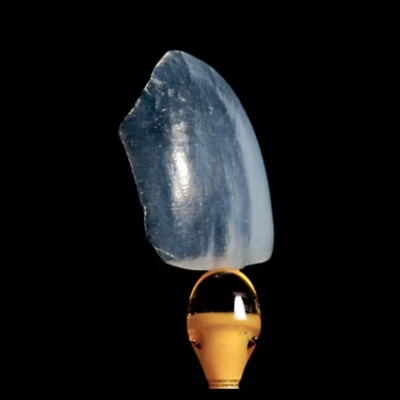
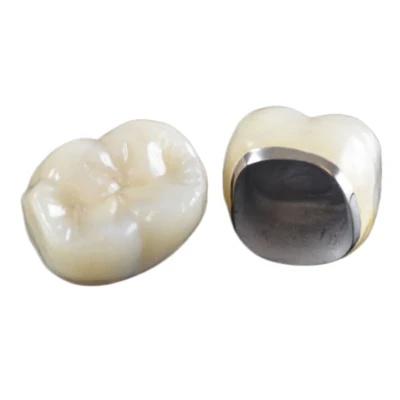
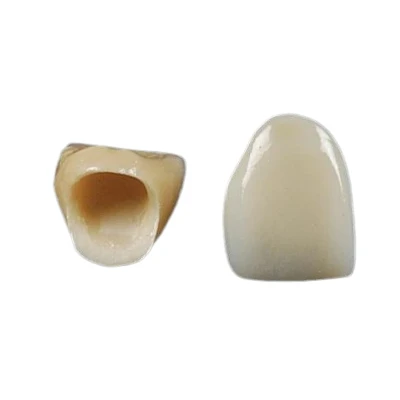
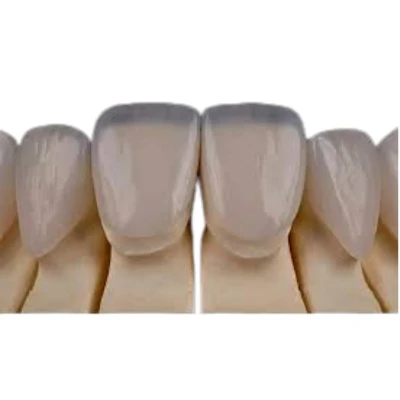
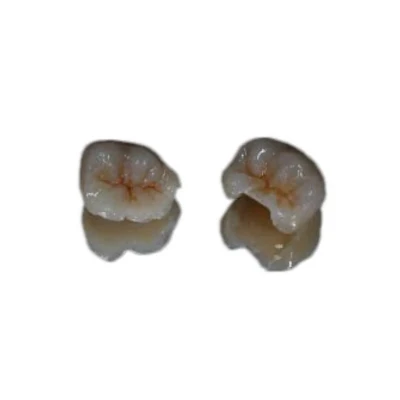



High-translucency zirconia is an yttria-stabilized dental zirconia designed to transmit more light than conventional opaque zirconia. It gives dentists a useful middle ground between the mechanical performance of zirconia and the optical qualities expected in esthetic restorations.
That added translucency comes with a trade-off. As zirconia becomes more translucent, its strength and fracture toughness generally decrease. For predictable results, material selection must account for load, restoration thickness, design, and the color beneath the restoration-not esthetics alone.

What Is High-Translucency Zirconia, and What Changes as Translucency Increases?
Conventional dental zirconia, particularly 3Y-TZP, contains a high proportion of tetragonal zirconia. This structure contributes to one of zirconia's main mechanical advantages: transformation toughening. When stress develops around a crack, localized phase transformation can help resist further crack propagation. For a broader explanation of zirconia composition and material structure, see this guide to what zirconia crowns are made of.
Higher-translucency zirconias use a different balance of crystal phases. Increasing yttria content generally increases the proportion of cubic-phase zirconia. Cubic zirconia scatters less light, allowing more light to pass through the restoration and producing a less opaque appearance.
The optical improvement changes the material's mechanical behavior. Research on high-translucency zirconia strength, fracture toughness, and cubic-phase content supports the general relationship: a higher cubic-phase fraction improves translucency but usually reduces transformation toughening and mechanical reserve compared with conventional 3Y zirconia.
Higher translucency is not a free upgrade. It represents a different balance between optical performance and mechanical reserve.
It is also important to separate the material from the restoration design. High-translucency zirconia is often used for monolithic crowns, but "high-translucency" does not mean "monolithic." The same material may be used as a full-contour restoration, selectively cut back, or layered where additional characterization is required. The clinical differences between these designs are covered in more detail in monolithic vs. layered zirconia crowns.
3Y vs. 4Y vs. 5Y Zirconia: Understanding the Strength-Translucency Spectrum
The terms 3Y, 4Y, and 5Y refer broadly to zirconia systems stabilized with different amounts of yttria. They are useful for understanding general performance trends, but they are not universal clinical grades.
Published research comparing 3Y, 4Y, and 5Y dental zirconia shows that yttria content, crystalline structure, aging, fabrication methods, and test conditions can all affect measured strength and translucency.
Different manufacturers also use different powders, grain structures, coloring methods, multilayer designs, and sintering protocols. Actual mechanical properties can therefore overlap.
|
Zirconia family |
General translucency |
General mechanical reserve |
Representative flexural strength* |
Common decision role |
|
3Y zirconia |
Lower |
Highest |
About 900-1,200 MPa |
High-load posterior restorations and demanding structural applications |
|
4Y zirconia |
Moderate to high |
Intermediate |
Often about 700-900 MPa |
Cases requiring a balance of strength and esthetics |
|
5Y / highly translucent zirconia |
Highest |
Lower than 3Y |
Roughly 430-650+ MPa |
Esthetic single crowns and selected lower-load applications |
*Representative ranges reported across different materials and studies, not universal product specifications.
3Y Zirconia: Greater Mechanical Reserve
3Y-TZP remains valuable where strength and fracture toughness carry more weight than maximum translucency. It is commonly considered for posterior regions, higher-load situations, and restorations where a larger mechanical safety margin is desirable.
Its limitation is optical. Compared with newer formulations, conventional 3Y zirconia can appear more opaque, particularly in thin anterior restorations or when matching adjacent natural teeth.
4Y Zirconia: A Middle Ground
4Y zirconia is often selected when a case needs more translucency than conventional zirconia without moving fully toward the lower toughness of highly translucent 5Y materials.
This makes 4Y useful for many single crowns and other cases where both functional demand and esthetics matter. For restorative options specifically built around this balance, see our 4Y/5Y zirconia crowns.
5Y Zirconia: Greater Translucency, Less Mechanical Reserve
5Y zirconia generally contains more cubic-phase material and offers higher translucency. It can produce a more natural light response in the esthetic zone and reduce the opaque appearance associated with earlier zirconia generations.
Its lower mechanical reserve matters more as the restoration becomes thinner, the load becomes heavier, or the design becomes more complex.
For that reason, 3Y, 4Y, and 5Y should be treated as material families, not as complete prescriptions. The exact product's indication, minimum thickness, bridge limitations, and connector requirements remain more important than the label alone.
Where High-Translucency Zirconia Works Best
High-translucency zirconia performs best when the esthetic benefit is useful and the mechanical conditions remain favorable. Single-unit restorations are generally the most straightforward applications because they avoid many of the connector and flexural stresses associated with bridges.
Anterior Single Crowns
Anterior single crowns are among the strongest indications for high-translucency zirconia.
In the esthetic zone, increased light transmission can help the restoration integrate more naturally with adjacent teeth. High-translucency zirconia reduces the flat, opaque effect sometimes seen with conventional zirconia while retaining the durability of a zirconia-based restoration.
It is particularly useful when there is:
- Adequate restorative thickness;
- Favorable occlusion;
- Normal or relatively light stump color;
- High esthetic demand;
- A preference for a zirconia-based monolithic restoration.
For clinicians evaluating anterior indications specifically, anterior zirconia crowns illustrate how zirconia can be used where esthetics and strength must be considered together.
A single central incisor can still be difficult to match. Translucency alone does not reproduce cervical chroma, incisal effects, surface texture, or the optical behavior of the adjacent natural tooth. Our guide to zirconia esthetics, translucency, and shade matching explains why final appearance depends on more than the zirconia grade.
Accurate shade information, stump shade, material thickness, staining, and technician characterization still matter.
Premolar and Selected Posterior Single Crowns
High-translucency zirconia is not limited to anterior teeth.
Premolar crowns can be good candidates because they often require a combination of visible esthetics and functional strength. Selected posterior single crowns may also be appropriate when sufficient material thickness is available and occlusal conditions are favorable.
Posterior use should become more conservative when there is severe bruxism, restricted clearance, or unusually high occlusal loading. Understanding the causes of high occlusion in dental crowns can also help clinicians separate material-selection problems from occlusal-design problems.
Posterior location alone does not rule out high-translucency zirconia. Functional demand determines how much mechanical reserve the case needs.
Selected Implant-Supported Single Crowns
High-translucency zirconia can also be useful for selected implant crowns, particularly in visible areas. However, implant restorations introduce another optical variable: the color beneath the crown.
A titanium abutment or Ti-base may show through a highly translucent restoration if masking is inadequate. Tissue thickness, abutment material, restorative thickness, and emergence profile should therefore be evaluated before choosing the most translucent zirconia available. For a broader overview of these decisions, see implant crown materials and restoration types.
The esthetic zone often rewards greater translucency, but only when the underlying structure supports it.

Where High-Translucency Zirconia May Not Be the Best Choice
Some cases benefit more from strength, toughness, or masking ability than from additional light transmission. In those situations, moving toward a stronger or more opaque zirconia can be the better clinical decision.
Limited Restorative Space
Thickness affects both fracture resistance and optical behavior.
Laboratory research comparing 3Y, 4Y, and 5Y zirconias has shown that reducing thickness lowers fracture resistance. In one mastication-simulation study, 4Y and 5Y specimens performed better at approximately 1.2 mm, while at 0.7 mm only the 3Y group survived the tested conditions.
That does not make 1.2 mm a universal clinical minimum. It shows why reduced clearance matters more when selecting more translucent zirconia.
Limited space may result from:
- Extensive tooth wear;
- Opposing tooth extrusion;
- Deep bite;
- Inadequate preparation;
- Restricted occlusal clearance.
The practical relationship is straightforward:
less clearance → thinner restoration → lower fracture resistance → greater need for mechanical reserve
When space is already compromised, choosing the most translucent formulation can reduce the safety margin further. For a deeper discussion of clinically relevant dimensions, see zirconia crown thickness and minimum-clearance considerations.
Heavy Bruxism and High Functional Load
Zirconia as a material category is useful in high-load dentistry, but that does not mean the most translucent zirconia is the best zirconia for a heavy bruxer.
Clenching and bruxism increase cyclic loading. This places greater importance on fracture toughness, thickness, occlusal design, and fatigue resistance.
For severe parafunction, a stronger 3Y or suitable 4Y formulation may make more sense than a highly translucent 5Y product. Occlusal protection may also be appropriate depending on the patient.
The distinction matters: bruxism does not necessarily rule out zirconia; it may rule out prioritizing maximum translucency.
Long-Span or Highly Loaded Bridges
Bridge cases deserve more caution than single crowns.
As span length increases, connector areas and pontics are exposed to bending and repeated fatigue. Posterior position, cantilever design, limited connector dimensions, and high occlusal force increase the demand further.
Some high-translucency zirconia products are approved for selected short-span bridges. That does not mean all 4Y or 5Y materials should be treated as interchangeable bridge materials.
Bridge selection should follow the specific manufacturer's requirements for:
- Permitted span;
- Anterior or posterior use;
- Minimum connector dimensions;
- Pontic configuration;
- Wall thickness;
- Cantilever limitations.
A simple "three-unit bridge" rule is not enough. The exact material and design determine whether sufficient strength remains.
Dark Stumps, Metal Posts, and Titanium Abutments
High translucency can become an esthetic disadvantage when the underlying structure needs to be hidden.
Research on the masking ability of translucent zirconia over discolored dentin and abutments shows that greater translucency does not necessarily provide adequate masking of severely discolored substrates. The final color of a monolithic zirconia crown can also be influenced by the abutment color beneath it.
This matters with:
- Severely discolored preparations;
- Tetracycline staining;
- Dark endodontically treated teeth;
- Metal posts or cores;
- Titanium implant abutments.
More translucent does not always mean more esthetic.
When the substrate is dark, a more masking zirconia, an alternative restorative design, or a different ceramic strategy may produce a better final result.
Why Thickness and Tooth Preparation Change the Answer
Material selection and tooth preparation cannot be separated.
A high-translucency zirconia crown may be mechanically appropriate at one thickness and much less forgiving when the available space forces the restoration to become thinner.
Thickness Affects Both Strength and Optics
Thinner zirconia generally transmits more light. At the same time, reducing thickness reduces fracture resistance.
That creates a practical compromise. An extremely thin restoration may appear more translucent but have less mechanical reserve. Increasing thickness can improve fracture resistance and masking, but it also changes how light travels through the restoration.
There is no single "best translucent thickness" for every zirconia.
Minimum thickness should come from the selected material's instructions for use and be evaluated together with the patient's occlusion and restoration position.
Under-Reduction, Contour, and Margin Design
Under-reduction creates a problem for both the clinician and the laboratory. If there is not enough space, the technician must usually choose between:
- Over-contouring the crown; or
- Reducing restorative thickness.
Neither is ideal.
Preparation should also avoid sharp internal line angles that can concentrate stress. A clear, continuous finish line is important for digital scanning or conventional impressions and gives the laboratory a reliable margin to design.
A chamfer or light shoulder is commonly used with many zirconia systems, but preparation geometry should follow the requirements of the selected material rather than a universal number. More detailed clinical guidance is available in our zirconia crown preparation guidelines.
Even a well-selected zirconia cannot compensate for inadequate clearance or an incomplete margin scan.
High-Translucency Zirconia vs. Other Restorative Options
Material selection becomes easier when the comparison is based on what the case needs most.
When a Stronger Zirconia May Be Better
A stronger zirconia formulation deserves consideration when the case involves:
- Severe bruxism;
- High posterior load;
- Limited restorative space;
- Bridge designs;
- High fatigue demand.
In these cases, additional translucency may provide little benefit compared with a larger mechanical safety margin.
A posterior molar outside the smile line, for example, may gain little from maximum translucency while benefiting substantially from greater fracture toughness.
When Lithium Disilicate May Be Better
Lithium disilicate remains an important option for highly esthetic bonded restorations, veneers, and selected anterior crowns.
Studies comparing lithium disilicate with high-translucency zirconia have found higher translucency for lithium disilicate in some material systems. This can be useful when optical integration is the dominant concern.
High-translucency zirconia, however, generally provides greater mechanical reserve. A more detailed comparison of the clinical trade-offs is available in zirconia vs. E.max crowns.
|
Clinical priority |
Material direction often worth considering |
|
Maximum mechanical reserve |
Conventional or stronger zirconia |
|
Balance of esthetics and strength |
4Y / suitable high-translucency zirconia |
|
High esthetic demand with zirconia strength |
5Y / highly translucent zirconia, if indicated |
|
Very high translucency for selected bonded restorations |
Lithium disilicate |
|
Strong masking of dark substrate |
More opaque zirconia or another masking restorative strategy |
There is no universal winner. A material that is ideal for a thin anterior bonded restoration may be a poor choice for a high-load posterior bridge.
Why Laboratory Processing Still Matters
The zirconia blank defines the material's potential. Laboratory processing determines how closely the finished restoration reaches it.
CAD/CAM design controls restoration thickness, anatomy, contacts, and occlusion. Milling quality affects surface integrity and fit. Sintering changes the final microstructure and can influence both mechanical and optical properties.
Sintering protocols should be material-specific. Rapid sintering is not universally inferior to conventional sintering; studies have shown that some 5Y materials retain similar microstructure and mechanical properties after validated rapid cycles, while other systems respond differently.
Finishing also matters. Staining and glazing influence lightness, chroma, hue, and surface appearance. The laboratory techniques behind these changes are explained in more detail in how dental labs shade and characterize zirconia crowns.
After chairside occlusal adjustment, proper polishing is particularly important for maintaining a smooth zirconia surface.
A predictable zirconia workflow therefore includes more than material selection:
correct CAD thickness and connector design;
controlled milling;
validated sintering;
appropriate staining and glazing;
careful polishing;
margin, contact, occlusion, and shade inspection.
For anterior and other demanding esthetic cases, complete shade information is equally important. Photos, stump shade, and characterization details can help the laboratory interpret the intended result more accurately; see our guide on how to communicate shade to a dental lab.
The material can only perform as intended when the clinical prescription and laboratory process support the same objective.
How to Decide if High-Translucency Zirconia Is Right for a Case
A practical material decision can usually be made by evaluating six factors:
How important is esthetics in this location?
Greater visibility increases the value of translucency.
How much functional load will the restoration receive?
Heavy posterior loading and severe parafunction increase the value of strength and toughness.
Is sufficient restorative thickness available?
Limited clearance reduces the mechanical margin.
Is this a single crown or a bridge?
Bridges introduce connector, flexural, and fatigue demands not present in single crowns.
Does the stump or abutment require masking?
Dark dentin, metal posts, and titanium can make high translucency counterproductive.
Is the exact zirconia product approved for the indication?
Manufacturer-specific minimum thickness and bridge limitations take priority over generic 3Y, 4Y, or 5Y labels.
High-translucency zirconia is most attractive for visible single crowns with adequate space, manageable loading, and a favorable substrate.
As the case moves toward heavy loading, restricted thickness, longer spans, or strong masking requirements, the balance shifts toward stronger or more opaque materials.
Choose the most translucent zirconia that still provides an appropriate mechanical and masking margin for the case-not simply the most translucent zirconia available.

Conclusion
The better material is the one that matches the preparation, load, thickness, substrate, and esthetic target.
High-translucency zirconia works best when its optical advantage is useful and the case still provides enough mechanical safety margin. It becomes a weaker choice when thickness is restricted, functional load is extreme, bridge demands increase, or a dark substrate requires stronger masking.
ADS Dental Laboratory Ltd produces high-translucency, full-contour, layered, anterior, and posterior zirconia restorations through a digital CAD/CAM workflow with technician finishing and structured quality control. If you need help selecting a zirconia formulation for a specific case or outsourcing zirconia crown and bridge production, contact our team to discuss the prescription and clinical requirements.
FAQ
Is High-Translucency Zirconia Strong Enough for Molars?
Yes, selected high-translucency zirconias can be used for posterior single crowns when the specific material is approved for posterior use and sufficient thickness is available.
The decision should also account for occlusal load and parafunction. A high-load molar in a severe bruxer may be better served by a tougher zirconia formulation.
Can High-Translucency Zirconia Be Used for Bridges?
Some products are indicated for selected short-span bridges. Bridge use should never be based on the term "high-translucency zirconia" alone.
Check the specific product's permitted span, connector dimensions, anterior/posterior indication, and cantilever restrictions. Long-span and heavily loaded posterior bridges require more conservative material selection.
Is High-Translucency Zirconia Better Than Lithium Disilicate?
Not universally.
Lithium disilicate can provide higher translucency and remains well suited to many veneers, bonded restorations, and highly esthetic anterior cases. High-translucency zirconia usually provides greater mechanical reserve and may be preferred when strength requirements increase.