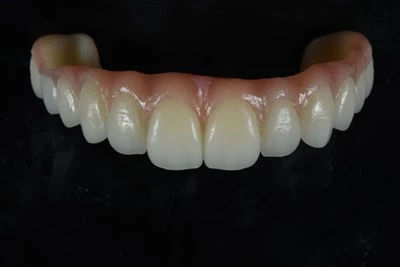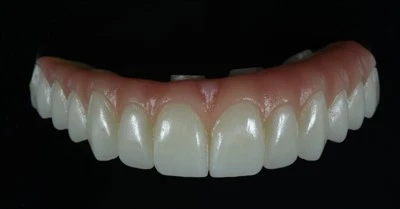
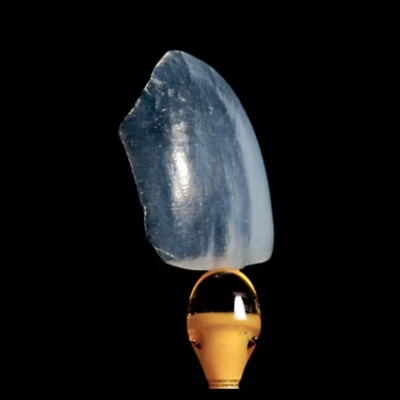
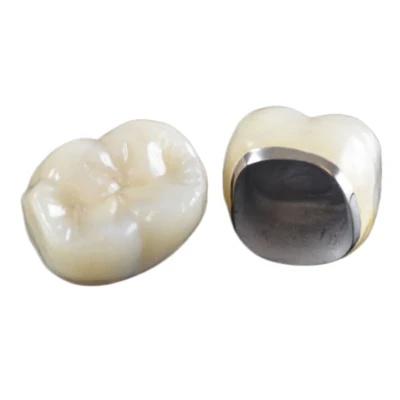
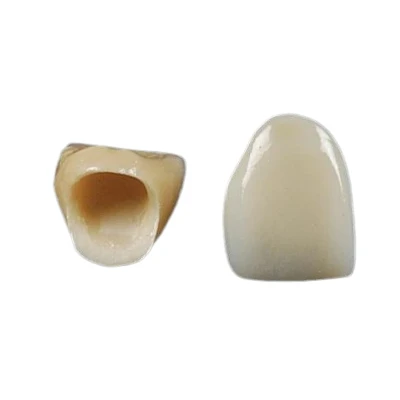
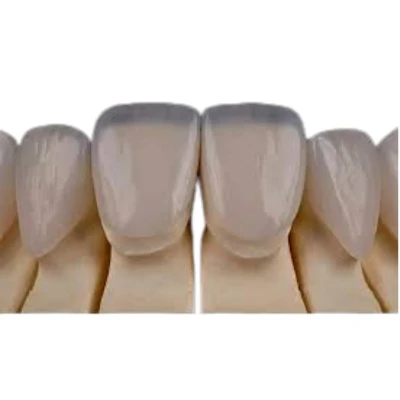
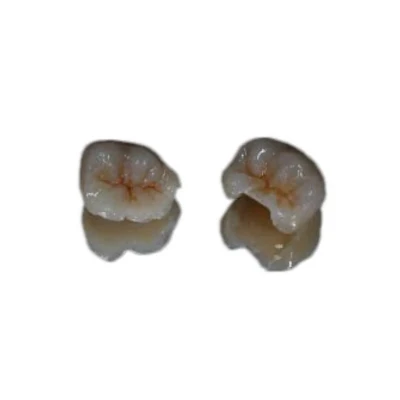



Zirconia crowns are widely used because they are strong, digitally efficient, and suitable for many anterior and posterior restorations. But strength alone does not make a crown look natural. A zirconia crown can have the right fit and still look too white, too flat, or too opaque. Stain and glaze are the finishing steps that help turn a milled zirconia restoration into a crown that blends with natural teeth.
They control color, light reflection, and surface character.

Why Zirconia Crowns Need Stain and Glaze
A zirconia crown is a dental crown made from zirconium dioxide, a high-strength ceramic material used for fixed restorations. In dental labs, zirconia is often designed digitally, milled from a zirconia blank, sintered, and then finished before delivery.
The digital workflow creates accurate anatomy and margins. The material provides strength. But the final aesthetic result depends heavily on surface finishing.
Natural teeth are not one solid color. The cervical area near the gumline is often warmer and slightly deeper in shade. The body of the tooth has its own saturation and brightness. The incisal edge may show more translucency, especially in anterior teeth. Posterior teeth also have grooves, fissures, and occlusal details that affect how the restoration looks in the mouth.
Untreated zirconia can look uniform. This is especially noticeable in monolithic zirconia crowns, where the crown is made from one solid zirconia structure rather than layered with porcelain. Without proper characterization, the restoration may appear chalky, dense, or too bright beside natural dentition.
Stain and glaze help solve this problem.
In the dental lab context, stain refers to ceramic color modifiers applied to the crown surface to adjust shade, depth, and localized character. Glaze refers to a thin ceramic surface layer fired onto the crown to create smoother texture and enamel-like luster.
Milling creates the crown shape. Stain and glaze create much of the final visual character.
What Do Stain and Glaze Do in Zirconia Crowns?
Stain and glaze are often mentioned together, but they do different jobs. Understanding this difference is important for dentists, dental labs, and outsourcing partners evaluating zirconia crown quality.
|
Finishing step |
Main role |
Aesthetic effect |
Key control point |
|
Stain |
Adds color and characterization |
Creates depth, shade transition, cervical warmth, incisal effect, groove detail |
Thin, layered, and well blended |
|
Glaze |
Adds smoothness and luster |
Creates enamel-like shine and improves light reflection |
Thin, even, and not overbuilt |
Stain Adds Color Depth and Character
Staining is not simply "painting a crown." It is a controlled characterization process. The technician uses ceramic stains to create natural shade variation in selected areas.
A well-stained zirconia crown should not look dramatic. It should look believable.
For example, a slight warm tone near the cervical third can help the crown blend with the gumline and neighboring teeth. Subtle color in occlusal grooves can make posterior anatomy look more natural. A cooler or lighter effect near the incisal edge may create the visual impression of translucency.
The goal is not to cover the crown with color. The goal is to break up uniformity.
Glaze Adds Surface Luster and Smoothness
Glazing changes how light reflects from the crown surface. A rough or matte zirconia surface scatters light, which can make the restoration look dry or artificial. A controlled glaze creates a smoother, glossier surface that more closely resembles natural enamel.
Good glaze is not the brightest glaze.
Over-glazing can make a zirconia crown look fake, almost like plastic. It can also soften fine anatomical details if applied too thickly. The best result is a controlled luster that matches the surrounding dentition.
Stain controls color. Glaze controls surface reflection. Both are needed when the goal is a lifelike zirconia crown.
How Stain Improves the Natural Appearance of Zirconia Crowns
The main aesthetic value of zirconia crown staining is shade control. Natural teeth have depth because color changes across different regions of the tooth. Staining allows the dental lab to recreate these transitions on a zirconia surface.
Cervical Warmth
The cervical area is the part of the crown closest to the gingival margin. On natural teeth, this area often appears slightly warmer or deeper because enamel is thinner and more dentin color shows through.
For zirconia crowns, cervical staining can prevent the restoration from looking too flat at the gumline. This is especially useful when matching older adjacent teeth, naturally darker teeth, or teeth with a warmer base shade.
The staining should be subtle. A heavy cervical stain can make the crown look dirty or aged in the wrong way. Controlled warmth is different from visible discoloration.
Body Shade and Visual Depth
The body of the crown carries the main shade. Even when a zirconia blank already has a base color, surface stain can still refine brightness, chroma, and visual depth.
This matters because zirconia crowns can sometimes look too opaque. Stain helps reduce the "single block of color" appearance by adding small variations across the surface. The result is a crown that looks less manufactured and more integrated with the mouth.
Layering is important here. Technicians usually start with lighter stains and build gradually. It is easier to add more color than to remove excessive stain after firing.
Incisal and Occlusal Characterization
In anterior zirconia crowns, the incisal edge is one of the most visible aesthetic zones. Stain can be used to create a lighter, cooler, or slightly translucent-looking effect. This does not replace the true translucency of the zirconia material itself, but it can visually improve the incisal character.
In posterior crowns, occlusal grooves and fissures can be lightly stained to show anatomy. This must be done with restraint. Heavy groove staining may look unnatural, especially in patients with clean, bright dentition.
Common stain target areas include:
- Cervical third for warmth and depth
- Middle third for body shade refinement
- Incisal edge for subtle translucency effect
- Occlusal grooves for posterior character
- Small surface features for individualized aesthetics
Good staining should support the crown design, not distract from it. When done well, the patient notices the tooth looks natural, not that it has been stained.

How Glaze Enhances Enamel-Like Luster and Surface Texture
Glaze improves zirconia crown aesthetics by changing surface texture and gloss. While stain affects color, glaze affects the way the surface interacts with light.
A glazed surface can make zirconia look less dry and more enamel-like. This is important because natural enamel has a smooth, reflective quality. It does not look rough, dusty, or chalky.
Surface Smoothness
Surface smoothness is important for both aesthetics and clinical performance. In controlled lab conditions, properly glazed ceramic surfaces can reach very low surface roughness values, sometimes close to or below Ra 0.1 μm. By comparison, poorly finished or unglazed rough surfaces may show much higher roughness.
The exact number depends on the material, polishing protocol, glaze system, and firing process. But the principle is clear: a smoother surface reflects light more evenly.
It also feels better in the mouth.
A rough crown surface can catch stains more easily and may retain more plaque than a smooth, well-finished surface. For this reason, glazing and polishing are not only cosmetic details. They are part of the final clinical quality of the restoration.
Gloss Control
Gloss is the shine seen when light reflects from the crown surface. Some glazed ceramic surfaces may reach gloss values around 80–90 GU under controlled conditions, approaching the high-gloss appearance associated with enamel-like surfaces.
But gloss must be matched to the case.
A young patient with bright anterior teeth may need a higher luster. An older patient with more textured, lower-gloss enamel may need a softer surface finish. If the crown is too shiny compared with adjacent teeth, it will stand out even if the shade is correct.
This is why glaze control is a technical and aesthetic judgment.
Glaze Thickness and Marginal Control
Glaze should be thin and even. In many ceramic finishing workflows, glaze thickness is controlled within a very small range, often around 20–50 μm depending on the system and application.
Too little glaze may fail to create the desired luster. Too much glaze can cause problems.
Excessive glaze may:
- Make the crown look thick or artificial
- Blur fine anatomy
- Pool in grooves or undercuts
- Interfere with margins
- Affect occlusion
- Increase the risk of surface defects during firing
The margin area needs special attention. A crown can have excellent shade and still fail clinically if glaze buildup affects seating or marginal fit.
A good glaze finish is clean, smooth, and controlled. It should improve the crown without changing the intended anatomy.
The Balance Between Color, Translucency, Texture, and Gloss
Aesthetic zirconia crowns depend on balance. Color alone is not enough. Gloss alone is not enough.
A crown may match the shade guide but still look wrong in the mouth if the surface is too dull. Another crown may have a beautiful shine but look artificial because the stain is too heavy or the color transition is too abrupt.
Natural-looking zirconia crowns usually require four elements to work together:
|
Aesthetic factor |
What it affects |
Lab control method |
|
Color |
Shade match with adjacent teeth |
Base zirconia shade, stain selection |
|
Translucency effect |
Visual depth and incisal realism |
Material choice, thickness, subtle staining |
|
Surface texture |
Natural enamel character |
Anatomy design, finishing, polishing |
|
Gloss |
Light reflection and enamel-like appearance |
Glaze application and firing |
For anterior crowns, this balance is critical because the restoration is highly visible. The incisal edge, facial surface, and line angles all affect how the crown reflects light. For posterior crowns, the aesthetic demand may be lower, but surface smoothness, occlusal detail, and shade harmony still matter.
Stain and glaze do not replace good material selection. A highly opaque zirconia material cannot be made fully translucent just with surface stain. A crown with insufficient reduction or poor shade information cannot be completely corrected at the final stage.
The best result comes from correct decisions at every step: material, design, sintering, stain, glaze, and final quality control.
How Dental Labs Control the Stain and Glaze Workflow
A reliable stain and glaze result comes from a controlled workflow. It is not a random artistic step at the end of production.
Surface Preparation
Before stain or glaze is applied, the zirconia crown surface must be clean. Dust, oils, polishing residue, or handling contamination can affect how stains and glaze adhere to the surface.
Dental labs commonly use steam cleaning, ultrasonic cleaning, or other approved cleaning methods before characterization. Crowns should be handled with clean tools or gloves to avoid contamination.
This step looks simple, but it matters. Poor cleaning can lead to uneven color, poor glaze distribution, or surface defects after firing.
Controlled Application
Staining should be gradual. Technicians usually apply color in thin layers and build the effect slowly. This allows better control over cervical warmth, body shade, incisal effect, and occlusal characterization.
Blending is just as important as color selection. Harsh stain borders can make the crown look artificial. Natural teeth have transitions, not sharp color blocks.
Glaze application also needs control. A thin, even layer is preferred. The technician must avoid heavy buildup around margins, contacts, and occlusal surfaces.
The goal is consistency. One good crown is not enough for a dental lab. For outsourced zirconia crown production, the lab must repeat the same quality across different cases, technicians, batches, and shipping schedules.
Firing and Final Inspection
Stain and glaze materials must be fired according to manufacturer instructions. Firing temperature, holding time, vacuum settings, and cooling process can all affect the final surface.
A ceramic furnace that is not calibrated can cause inconsistent results. Over-firing may change color or surface texture. Under-firing may affect glaze maturity and appearance.
After firing, each crown should be inspected for:
- Shade accuracy
- Smooth color transition
- Even glaze coverage
- Surface bubbles or streaks
- Margin cleanliness
- Contact and occlusion
- Final polish where needed
This is where lab quality becomes visible. A crown that looks good in a photo but has glaze pooling, rough adjusted areas, or poor occlusal finish is not a finished restoration.

Common Problems When Stain and Glaze Are Poorly Controlled
Poor stain and glaze work can make a zirconia crown look worse, not better.
Over-staining is one of the most common issues. It can create dark cervical bands, dirty-looking grooves, or excessive gray-blue incisal effects. These details may seem artistic on the bench, but they can look unnatural in the patient's mouth.
Under-staining creates the opposite problem. The crown may look too plain, too white, or too opaque. It may match the basic shade but still lack depth beside natural teeth.
Glaze problems are equally noticeable. A glaze layer that is too thick can create a glassy, artificial shine. It may also round off anatomy or accumulate near the margin. A glaze layer that is too thin or uneven may leave dull patches, rough areas, or inconsistent light reflection.
Occlusal adjustment creates another risk. If a dentist adjusts a glazed zirconia crown chairside and the surface is not properly polished afterward, that area can become rougher than the original finish. This may affect comfort, gloss, and surface cleanliness.
Aesthetic finishing should never be separated from function. The crown must look natural, seat fully, and maintain proper occlusal contact.
That is the standard that matters.
Why Dentist-Lab Communication Affects the Final Aesthetic Result
Even a skilled dental lab cannot fully compensate for incomplete shade information. Stain and glaze work best when the dentist provides clear case details.
A basic shade alone may not be enough, especially for anterior crowns or single-unit restorations. The lab needs to understand the surrounding teeth, the patient's expectations, and the clinical situation.
Useful information includes:
- VITA shade or other shade system reference
- Photos with shade tabs
- Stump shade, especially for discolored preparations
- Adjacent tooth photos
- Desired brightness level
- Surface texture preference
- Notes on white spots, craze lines, or incisal effects
- Whether the patient wants a natural or brighter appearance
Single anterior zirconia crowns are especially demanding. The crown must match not only color, but also value, translucency effect, surface texture, and gloss. Small differences are easy to notice.
For overseas cases, communication becomes even more important. The lab does not see the patient directly. Clear photos and instructions reduce remakes, shade corrections, and delivery delays.
Good stain and glaze begin before the brush touches the crown. They begin with accurate case information.

Stain and Glaze in Outsourced Zirconia Crown Production
For overseas dentists and dental laboratories, outsourcing zirconia crowns is not only about price. It is about repeatable quality.
A reliable dental lab must control every stage of the restoration: digital design, material selection, milling, sintering, staining, glazing, polishing, and final inspection. If one part of the process is inconsistent, the final crown may fail to meet expectations.
Stain and glaze are useful indicators of lab quality because they reveal both technical control and aesthetic judgment. A crown with natural shade transition, clean margins, smooth glaze, and controlled gloss shows that the lab understands more than production speed.
It understands clinical delivery.
For long-term outsourcing, consistency is more valuable than occasional excellent results. Dentists and partner labs need crowns that arrive with predictable shade, fit, surface quality, and turnaround.
ADS dental laboratory Ltd is a China-based digital dental laboratory focused on custom restoration outsourcing for overseas dentists and dental labs. We support zirconia crown production with digital workflows, case communication, controlled stain and glaze finishing, and final quality checks before shipment.
If you are looking for a stable partner for custom zirconia crowns, veneers, bridges, or other dental restorations, contact ADS dental laboratory Ltd to discuss your cases and outsourcing needs.