


What is Dental Veneers
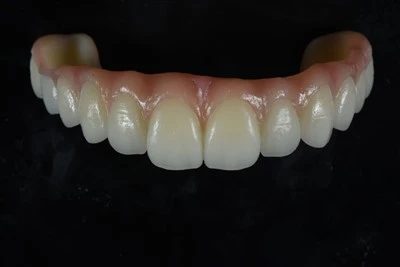
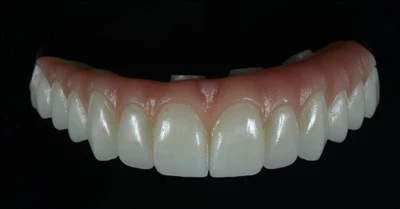
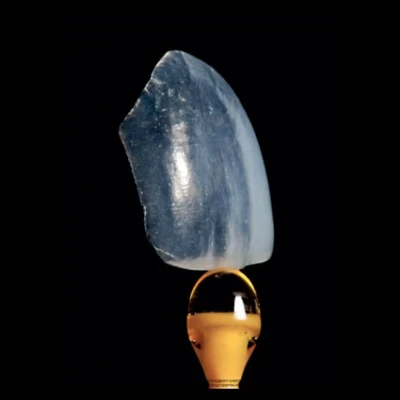
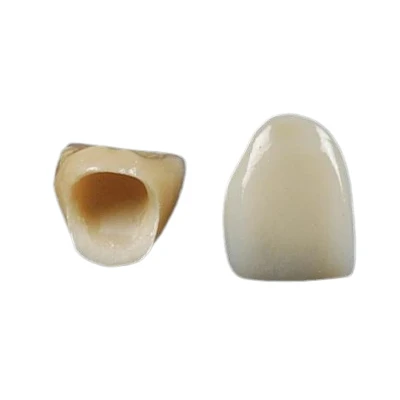
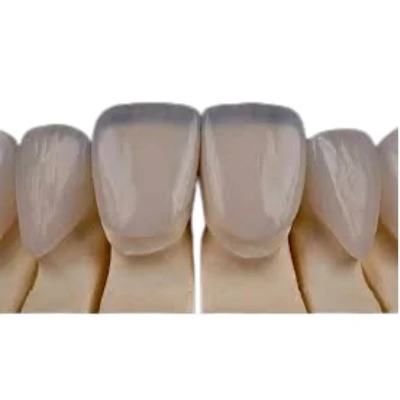
In dentistry, a dental veneers is a layer of material placed over a tooth. Veneers can improve the aesthetics and function of a smile and protect the tooth's surface from damage. There are two main types of material used to fabricate a veneer: composite and dental porcelain.
Benefits of Dental Veneers
Dental Veneers is a Less Invasive Procedure
Due to the preservation of natural teeth, dental veneers are better than other dental operations. The dentist will remove a little piece of enamel for the veneers to attach to the front of the teeth. Be aware that the teeth will be more susceptible to sensitivity and decay if a significant portion of enamel is removed.
Dentistry implants are an example of a cosmetic dental technique that requires the root to be placed in the jaw and healed before the crown can be connected. There is no need for anesthesia with veneers.
Dental Veneers Prevent Tooth Discoloration
You do not need to undergo routine teeth whitening procedures since dental veneers, which are very stain-resistant, may withstand discoloration more effectively than the natural enamel of your teeth.
Dental Veneers are Easy to Maintain
Dental veneers have the significant benefit of requiring no additional maintenance or care after installation. To keep your teeth healthy, all you need to do is clean and floss them frequently. Veneers need the least amount of maintenance.
Dental Veneers Offer Extra Protection and Added Volume
Due to their non-porous nature, dental veneers are more stain- and cavity-resistant than tooth enamel. This provides additional protection for the original teeth underneath.
As people age, there is a natural tendency for their teeth to lose volume. The skin around the lips thins as a result of this. To restore dental support, dental veneers can be created to order. Dental veneers make your smile more full, making you look younger and healthier.
Dental Veneers Cover Up Chips, Cracks, and Gaps
Minor aesthetic problems that are noticeable while you talk or smile might be resolved with dental veneers. With a process known as bonding, minor flaws in teeth, like cracks, gaps, or chips, are frequently fixed. To fix the damage and restore the region's immaculate appearance, bonding includes painting the area with a tooth-colored resin.
Dental veneers can resolve a similar issue, which will also last longer than bonding. Veneers' porcelain is more resilient than resin and won't need to be touched up or adjusted regularly.
Dental Veneers Function and Look Like Natural Teeth
Veneers are produced specifically for each patient to suit your natural teeth properly. Your dentist takes an imprint of your teeth, which the dental lab will use to create custom dental veneers for you. The dentist will then connect them to your teeth after further shaping them to ensure a snug fit. Only you and your dentist know that you have dental veneers since they appear and feel so natural. You are sure that no one will notice your teeth veneers since the porcelain veneers treatment are made to match the color and shape of your natural teeth.
Dental Veneers Offer Instant Results
Some dental operations could be incredibly time-consuming, as well as causing a significant amount of discomfort. Using dental veneers is less complicated. An aesthetically attractive façade is created to hide the structural problems instead of addressing them. There is no need to deal with the hassle of addressing issues like uneven surfaces or gaps between teeth because they do not threaten your oral health. The conclusion is that compared to other operations, veneers can produce a similar aesthetic effect sooner.
Dental Veneers Boost Your Confidence
Getting dental veneers may make you feel more confident. Due to broken or missing teeth, you could start to hide your mouth when you smile. Veneers can fix this issue and give you the courage to smile.
Dental Veneers Whiten Teeth
For teeth whitening treatments, many consumers go to the dentist. There is no need for routine bleaching procedures since dental veneers are more stain-resistant than our natural tooth enamel.
Your dental veneers will be made to match the size, shape, and color of your natural teeth. They reflect light very similar to natural teeth, and you don't have to worry about stains.
Dental Veneers Allow You to Choose Your Designer Smile
Your smile might change thanks to dental veneers. Veneers can be produced in a variety of forms and dimensions. So, if you want the smile of your dreams, make an appointment with your dentist.
With so many benefits of having teeth veneers, it's no surprise why many people prefer them over other dental procedures to fix their cosmetic dental problems.
-
![E-max Veneer]() E-max VeneerTurnaround time:3 days in lab. Warranty:5 years
E-max VeneerTurnaround time:3 days in lab. Warranty:5 years -
![Natural Aesthetic Veneers With Strength And Precision]() Natural Aesthetic Veneers With Strength And PrecisionADS Dental Lab provides high-end E.max monolithic veneers for dentists, dental clinics, dental laboratories, and dental traders seeking natural aesthetics, precise fit, and reliable outsourcing
Natural Aesthetic Veneers With Strength And PrecisionADS Dental Lab provides high-end E.max monolithic veneers for dentists, dental clinics, dental laboratories, and dental traders seeking natural aesthetics, precise fit, and reliable outsourcing -
![E.max Layered Veneer]() E.max Layered VeneerThe E.max Layered Veneer represents the gold standard in anterior aesthetic restoration. At ADS Dental Laboratory, we combine the proven strength of IPS e.max® lithium disilicate with traditional
E.max Layered VeneerThe E.max Layered Veneer represents the gold standard in anterior aesthetic restoration. At ADS Dental Laboratory, we combine the proven strength of IPS e.max® lithium disilicate with traditional -
![Emax Layered Veneer]() Emax Layered VeneerNatural Aesthetic Veneers with Precision and Dental Artistry
Emax Layered VeneerNatural Aesthetic Veneers with Precision and Dental Artistry -
![Emax Monolithic Veneer]() Emax Monolithic VeneerNatural Aesthetic Veneers with Strength and Precision
Emax Monolithic VeneerNatural Aesthetic Veneers with Strength and Precision -
![Feldspathic Porcelain Veneers]() Feldspathic Porcelain VeneersTurnaround time:3 days in lab. Warranty:5 years. Shipping Way:UPS (preferred), Fedex and DHL Linex. Armex are also available. Payment:T/T, HSBC, PayPal, MoneyGram, Western Union
Feldspathic Porcelain VeneersTurnaround time:3 days in lab. Warranty:5 years. Shipping Way:UPS (preferred), Fedex and DHL Linex. Armex are also available. Payment:T/T, HSBC, PayPal, MoneyGram, Western Union -
![Six-Unit E.max Layering Veneers]() Six-Unit E.max Layering VeneersSix-Unit E.max Layering Veneers are designed for anterior aesthetic cases where a broader segment of the smile requires coordinated improvement in tooth form, proportion, shade, and overall visual
Six-Unit E.max Layering VeneersSix-Unit E.max Layering Veneers are designed for anterior aesthetic cases where a broader segment of the smile requires coordinated improvement in tooth form, proportion, shade, and overall visual -
![Four-Unit Maxillary Anterior E.max Layering Veneers]() Four-Unit Maxillary Anterior E.max Layering VeneersFour-Unit Maxillary Anterior E.max Layering Veneers are designed for cases where four upper anterior teeth require coordinated improvement in shape, proportion, shade, or overall smile appearance. In
Four-Unit Maxillary Anterior E.max Layering VeneersFour-Unit Maxillary Anterior E.max Layering Veneers are designed for cases where four upper anterior teeth require coordinated improvement in shape, proportion, shade, or overall smile appearance. In -
![Anterior E.max Layering Veneers]() Anterior E.max Layering VeneersAnterior E.max Layering Veneers are aesthetic ceramic restorations designed for the visible front-tooth region, where tooth proportions, symmetry, incisal relationships, and smile integration are
Anterior E.max Layering VeneersAnterior E.max Layering Veneers are aesthetic ceramic restorations designed for the visible front-tooth region, where tooth proportions, symmetry, incisal relationships, and smile integration are -
![Digitally Designed E.max Layering Veneers]() Digitally Designed E.max Layering VeneersDigitally Designed E.max Layering Veneers combine digital morphology planning with the aesthetic flexibility of hand-layered ceramic. Instead of moving directly from impression or scan to final
Digitally Designed E.max Layering VeneersDigitally Designed E.max Layering Veneers combine digital morphology planning with the aesthetic flexibility of hand-layered ceramic. Instead of moving directly from impression or scan to final -
![E.max Layering Veneers For Tooth Shape Correction]() E.max Layering Veneers For Tooth Shape CorrectionE.max Layering Veneers for Tooth Shape Correction are aesthetic anterior restorations designed to modify tooth form, proportion, symmetry, and visual balance. Rather than focusing primarily on shade
E.max Layering Veneers For Tooth Shape CorrectionE.max Layering Veneers for Tooth Shape Correction are aesthetic anterior restorations designed to modify tooth form, proportion, symmetry, and visual balance. Rather than focusing primarily on shade -
![Ultra-Thin E.max Layering Veneers]() Ultra-Thin E.max Layering VeneersUltra-Thin E.max Layering Veneers are anterior aesthetic restorations designed with a reduced ceramic profile where the clinical and restorative conditions allow. Their value lies not simply in being
Ultra-Thin E.max Layering VeneersUltra-Thin E.max Layering Veneers are anterior aesthetic restorations designed with a reduced ceramic profile where the clinical and restorative conditions allow. Their value lies not simply in being


Why Choose us
Cutting-edge Technology
We specialized in outsourcing with various Dental labs in the USA, Sweden, France, Spain, UK, Japan, etc. We Administer state of art technology and production techniques amidst an experienced staff of technicians.
Quality Services
Since 2004, China Digital Dental Lab is a nonpareil and experienced family-owned group of Dental Lab in China. Being a prominent Dental Laboratories group we provide a wide range of Services.
Honors and Awards
National High-Tech Enterprise
International quality system ISO9001, ISO13485 certification
US Food and Drug Administration (FDA: NO.3007268434) Import and export registration permit
Environmental management system ISO13485 certification
Guangdong Quality Credit Class A Medical Device Manufacturing Enterprise possess multiple national invention patent certifications
Composite Veneers
Composite veneers can conceal mild cosmetic issues. Your dentist uses a tooth-colored composite resin — The same material used for dental bonding — to achieve the desired results.
Porcelain Veneers
Porcelain veneers can address a number of aesthetic imperfections. These restorations are custom-made to fit your dental anatomy. Before placement, your dentist must remove some enamel from your natural teeth. This roughens your teeth surfaces and helps your new veneers stay in place.
No-prep Veneers
No-prep or minimal-prep veneers are a less invasive option. Like traditional porcelain veneers, no-prep veneers are custom-made for your smile. However, they require less enamel removal than traditional veneers.
It's important to understand that no-prep veneers still require some enamel removal.
No-prep veneers aren't right for everyone. Ask your dentist if you're a candidate.
Removable Veneers
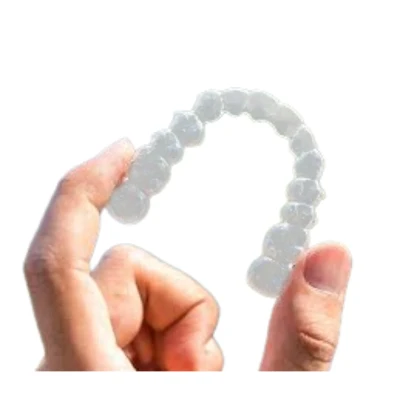
Removable veneers —Also called pop-on veneers or snap-on veneers — cover your natural teeth to hide imperfections. Like retainers, you can take removable veneers out anytime. Removable veneers can Enhance your smile — But they can make it difficult to eat, and they could have a negative impact on your speech.
There isn't a lot of research available on removable veneers because they've only been around for a few years. Ask your dentist if this option is safe for you.
How Are Dental Veneers Applied?


First, your dentist will evaluate your teeth. Dental veneers aren't for everyone. Your dentist is the best resource for determining the extent of the benefits you'll receive from this procedure. Once dental veneers are placed, they cannot be removed. It's important to communicate your desires and expectations to your dentist.
Second, your tooth will be shaped to make room for the veneer. Your dentist will remove a small amount of enamel from the front of your tooth. While the amount may vary, in general, it is 1.5 mm (roughly 1/16 of an inch). Your dentist will also remove any evidence of decay and carefully shape the teeth to correct any chips or gaps.
Third, the correct shade will be selected. Lighter shades will create a whiter smile, but don't go too white—doing so will look unnatural. Often, it only takes two or three shades lighter to make a dramatic difference.
Fourth, the dentist will make an impression on your teeth. Dentists use a type of impression putty or, in certain cases, sophisticated optical cameras to get a precise model of your teeth. This impression will be used to create the veneer to ensure an accurate fit.
Fifth, the veneers will be created. Some dental practices have access to equipment that enables them to create veneers in-house, meaning it doesn't have to be sent to a dental lab to be processed. If lab services are needed, it may take up to two weeks for the final veneers to be completed. In the meantime, the dentist will place a temporary covering over the teeth to protect them.
Finally, the dental veneers are placed. Your dentist will carefully evaluate the size and shape of your new veneers to ensure that they're a great fit. He or she will use a specialized bonding material to “glue” them permanently in place.
How to Take Care of Dental Veneers
Tip 1: Practice Proper Oral Hygiene
In order to keep your veneers looking flawless for many years, the best thing you can do is to practice proper oral hygiene. This will not only prolong the life of your veneers but also keep your mouth healthy. Even though dental veneers do not decay there are still parts of the teeth that may be exposed and be at risk for decay. You will need to brush twice a day and floss once in order to keep your veneers in tip-top shape.
Tip 2: Soft Toothbrush and Proper Toothpaste
When you have dental veneers you need to make sure that you are using a soft toothbrush when you brush your teeth. Hard-bristled toothbrushes can cause the polish on your veneers to become damaged. Try and stay away from toothpastes that have harsh abrasives as they also can cause damage to your veneers. Ask your dentist in Kirkland to recommend a good toothpaste to use on your veneers. Electric or traditional toothbrushes, either will work.
Tip 3: Prevent Gum Disease
Gum disease has the tendency to cause inflammation in the gums and sometimes cause them to recede. Receding gums have the tendency to expose part of the veneer which could in turn impact the overall appearance of them as well as your smile. Continue to practice proper oral hygiene and see your dentist if your veneers become damaged.
Tip 4: Frequent Dental Check-Ups
When you have dental veneers it is important that you do not miss your six-month check-up with your dentist. Your gums and teeth will remain healthy and your veneers can be repaired if need be. Keep your regularly scheduled appointments to prolong the life of your veneers.
Tip 5: Avoid Chewing on Objects
Even though porcelain veneers are durable they are not quite as strong as regular teeth. Try not to chew on hard objects such as ice, your fingernails, pens, and pencils. If you chew on a hard object it could cause your veneers to chip or become damaged.
Tip 6: Avoid Grinding and Clenching Teeth
If you grind or clench your teeth this is a habit that should be stopped regardless if you have veneers or not. It has the ability to wear down your veneers and can cause severe damage to the porcelain. If you have a habit of clenching or grinding your teeth you need to talk to your dentist about treatment options that can help you stop this bad habit before it causes damage to your teeth or veneers.
Tip 7: Avoid Foods That Stain Your Teeth
Most porcelain veneers are stain-resistant; the adhesive that is used to keep your veneers attached is not resistant to stains. This could cause the edges of your veneers to become darkened or yellowed. Try to avoid drinks such as coffee, soda, and try to use a straw to decrease the chances of these drinks staining your veneers.
Tip 8: Quit Smoking
Everyone already knows what a bad habit smoking is, and it is also bad for your veneers. It can cause your veneers to become stained and discolored. If you want them to look their best then you need to make sure you do not smoke.
Porcelain veneers can make a tremendous improvement to your appearance and confidence. Taking proper care of them will ensure you have them for many years. Make sure you visit your dentist regularly to ensure they continue to keep your smile looking bright and beautiful.
Company Profile
China Digital Dental Lab is a Dental Lab in China has a prudish production and management system. We control and manage the production and management processes and ascertain the quality inspection processes and requirements. We precisely control production processes to mold and emerge as standardized, institutionalized, and procedural. We serve universal customers with exceptional products, high-end technology, and a supreme production management system. China Digital Dental Lab has a nominally low alteration and reformation rate in the industry.

Asked Questions
ADS Dental Lab Ltd. is one of the most professional dental veneers manufacturers and suppliers in China, specialized in providing high quality products with low price. We warmly welcome you to buy cheap dental veneers in stock here from our factory. Contact us for customized service and free sample.
maxillary expander adults, lower palate expander for adults, all on 4 zirconia bridgePopular Products