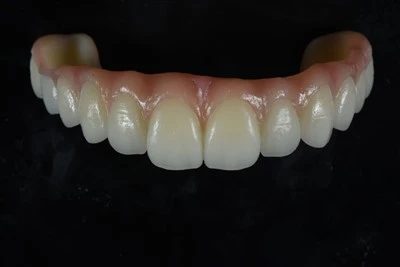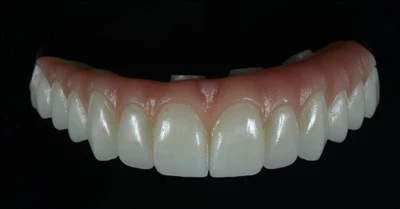


What is All Ceramic Crown
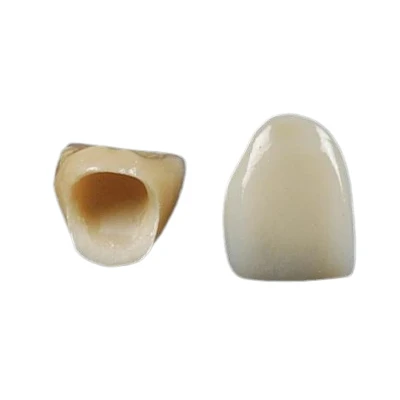
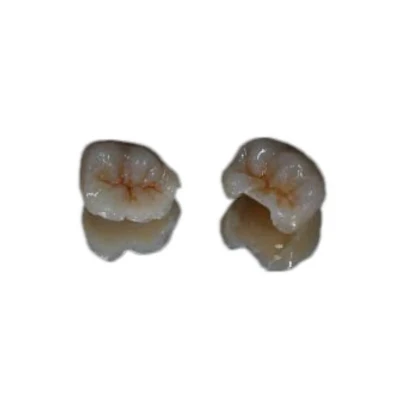
In dentistry, a all ceramic crown or a dental cap is a type of dental restoration that completely caps or encircles a tooth or dental implant. A crown may be needed when a large dental cavity threatens the health of a tooth. Some dentists will also finish root canal treatment by covering the exposed tooth with a crown.
Benefits of All Ceramic Crown
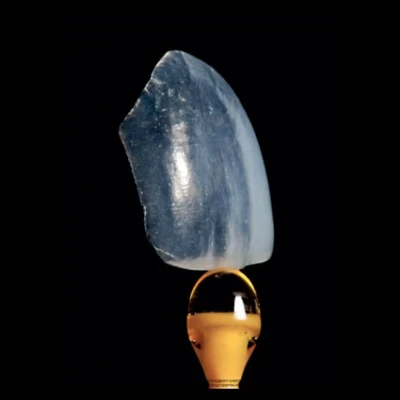
All Ceramic Crowns Have High Translucency
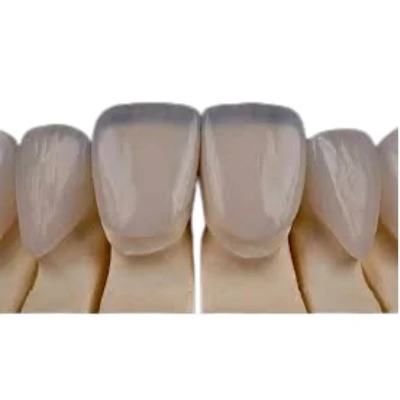
Have you ever noticed how natural tooth enamel looks like? It has multiple layers, pigments, and densities on different parts of the tooth. This depth of color and characterization is possible only with ceramic. The problem with metal-porcelain crowns is that in order to cover the gray metal substructure, a very opaque layer of porcelain must be used as a primer, and the space left to build up the depth of color is only a few millimeters. On the other hand, a well-made full ceramic crown can pass by unnoticed.
All Ceramic Crowns Do Not Have A Dark Margin
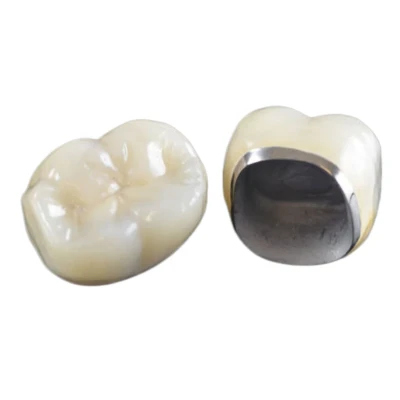
Metal porcelain crowns have a metal substructure composed of a mixture of several materials. This base is then fused through heat with the porcelain. However, to avoid gum recession and to protect the porcelain, there is usually a millimeter or two of exposed metal at the base of the crown. This metal ring is supposed to be covered by gum, but over time gum recession can expose it. In some other cases, if the metal is low on noble materials it can stain the gums in a dark color. This makes the crown very conspicuous. This does not happen with all ceramic crowns.
All Ceramic Crowns Offer The Same Resistance As Metal-porcelain Crowns
It was traditionally held that metal-porcelain crowns are more resistant than porcelain crowns. However, with new technology, there are new materials that offer even more resistance than metal and that are much more esthetic. For example, zirconium, a type of ceramic, offers greater strength than the metal-porcelain because it is designed and milled in a single block. Naturally, it is easier to fracture a layer than an entire block structure. Over the years, zirconium has been fabricated in ever more esthetic forms.
All Ceramic Crowns Involve A More Conservative Prepping
To allow metal-porcelain crowns more space for layering ordered toward greater translucency, the dentist must remove more of your natural tooth structure. With full ceramic crowns, the core is already a natural-looking color, and so less layers of porcelain are necessary to achieve the desired translucency. This means that the dentist can prep less of the tooth structure.
-
![Layered Zirconia Crown]() Layered Zirconia CrownTurnaround time:3 days in lab. Warranty:5 years. Shipping Way:UPS (preferred), Fedex and DHL Linex. Armex are also available. Payment:T/T, HSBC, PayPal, MoneyGram, Western Union.
Layered Zirconia CrownTurnaround time:3 days in lab. Warranty:5 years. Shipping Way:UPS (preferred), Fedex and DHL Linex. Armex are also available. Payment:T/T, HSBC, PayPal, MoneyGram, Western Union. -
![Implant Zirconia Bridge]() Implant Zirconia BridgeTurnaround time:3 days in lab. Warranty:5 years. Shipping Way:UPS (preferred), Fedex and DHL Linex. Armex are also available. Payment:T/T, HSBC, PayPal, MoneyGram, Western Union.
Implant Zirconia BridgeTurnaround time:3 days in lab. Warranty:5 years. Shipping Way:UPS (preferred), Fedex and DHL Linex. Armex are also available. Payment:T/T, HSBC, PayPal, MoneyGram, Western Union. -
![Metal-Free All-on-X Zirconia Bridge]() Metal-Free All-on-X Zirconia BridgeA Metal-Free All-on-X Zirconia Bridge is a full arch implant restoration made with a zirconia-based bridge body, without an internal titanium bar or metal framework inside the prosthetic structure.
Metal-Free All-on-X Zirconia BridgeA Metal-Free All-on-X Zirconia Bridge is a full arch implant restoration made with a zirconia-based bridge body, without an internal titanium bar or metal framework inside the prosthetic structure. -
![PMMA All-on-X Temporary Bridge]() PMMA All-on-X Temporary BridgeA PMMA All-on-X Temporary Bridge is a provisional full arch implant restoration used before the final zirconia bridge is delivered. It is commonly used in All-on-4, All-on-6, and All-on-X implant
PMMA All-on-X Temporary BridgeA PMMA All-on-X Temporary Bridge is a provisional full arch implant restoration used before the final zirconia bridge is delivered. It is commonly used in All-on-4, All-on-6, and All-on-X implant -
![All-on-6 Zirconia Bridge]() All-on-6 Zirconia BridgeThe All-on-6 zirconia bridge is a screw-retained, full-arch implant prosthesis supported by six osseointegrated implants per arch, fabricated from high-strength zirconia for long-term durability and
All-on-6 Zirconia BridgeThe All-on-6 zirconia bridge is a screw-retained, full-arch implant prosthesis supported by six osseointegrated implants per arch, fabricated from high-strength zirconia for long-term durability and -
![Pink Gingiva Full Arch Zirconia Bridge]() Pink Gingiva Full Arch Zirconia BridgeA Pink Gingiva Full Arch Zirconia Bridge is a full arch implant-supported restoration designed to restore both tooth aesthetics and gingival harmony. In many full arch implant cases, natural-looking
Pink Gingiva Full Arch Zirconia BridgeA Pink Gingiva Full Arch Zirconia Bridge is a full arch implant-supported restoration designed to restore both tooth aesthetics and gingival harmony. In many full arch implant cases, natural-looking -
![All-on-4 Zirconia Bridge]() All-on-4 Zirconia BridgeAn All-on-4 Zirconia Bridge is a fixed full-arch implant restoration supported by four dental implants. It is designed for edentulous patients, failing dentition cases, and full-mouth implant
All-on-4 Zirconia BridgeAn All-on-4 Zirconia Bridge is a fixed full-arch implant restoration supported by four dental implants. It is designed for edentulous patients, failing dentition cases, and full-mouth implant -
![All-on-X Implant Bridge]() All-on-X Implant BridgeReliable Full Arch Implant Restorations with Precision and Stability
All-on-X Implant BridgeReliable Full Arch Implant Restorations with Precision and Stability -
![Digitally Designed All-on-X Zirconia Bridge]() Digitally Designed All-on-X Zirconia BridgeADS Dental Laboratory Ltd is a full-service digital dental laboratory based in Shenzhen, China, providing customized implant restorations and long-term dental lab outsourcing services for dentists,
Digitally Designed All-on-X Zirconia BridgeADS Dental Laboratory Ltd is a full-service digital dental laboratory based in Shenzhen, China, providing customized implant restorations and long-term dental lab outsourcing services for dentists, -
![Mandibular All-on-X Zirconia Bridge]() Mandibular All-on-X Zirconia BridgeADS Dental Laboratory Ltd is a full-service digital dental laboratory based in Shenzhen, China, providing customized implant restorations and long-term dental lab outsourcing services for dentists,
Mandibular All-on-X Zirconia BridgeADS Dental Laboratory Ltd is a full-service digital dental laboratory based in Shenzhen, China, providing customized implant restorations and long-term dental lab outsourcing services for dentists, -
![Maxillary All-on-X Zirconia Bridge]() Maxillary All-on-X Zirconia BridgeADS Dental Laboratory Ltd is a full-service digital dental laboratory based in Shenzhen, China, providing customized implant restorations and long-term dental lab outsourcing services for dentists,
Maxillary All-on-X Zirconia BridgeADS Dental Laboratory Ltd is a full-service digital dental laboratory based in Shenzhen, China, providing customized implant restorations and long-term dental lab outsourcing services for dentists, -
![Full-Arch Zirconia Bridge with Gingival Characterization]() Full-Arch Zirconia Bridge with Gingival CharacterizationADS Dental Laboratory Ltd is a full-service digital dental laboratory based in Shenzhen, China, providing customized implant restorations and long-term dental lab outsourcing services for dentists,
Full-Arch Zirconia Bridge with Gingival CharacterizationADS Dental Laboratory Ltd is a full-service digital dental laboratory based in Shenzhen, China, providing customized implant restorations and long-term dental lab outsourcing services for dentists,


Why Choose us
Cutting-edge Technology
We specialized in outsourcing with various Dental labs in the USA, Sweden, France, Spain, UK, Japan, etc. We Administer state of art technology and production techniques amidst an experienced staff of technicians.
Quality Services
Since 2004, China Digital Dental Lab is a nonpareil and experienced family-owned group of Dental Lab in China. Being a prominent Dental Laboratories group we provide a wide range of Services.
Honors and Awards
National High-Tech Enterprise
International quality system ISO9001, ISO13485 certification
US Food and Drug Administration (FDA: NO.3007268434) Import and export registration permit
Environmental management system ISO13485 certification
Guangdong Quality Credit Class A Medical Device Manufacturing Enterprise possess multiple national invention patent certifications
4 Types Of All Ceramic Crown
Lithium Disilicate Crowns
These all ceramic crowns are made out of thin and light lithium disilicate. These crowns are extremely resilient with a high flexural rate (durability), allowing them to withstand hard biting and chewing. They are regularly used to restore front teeth thanks to their aesthetic appearance.
Solid Or Monolithic Zirconia
Solid or monolithic zirconia crowns are used for posterior restorations as they are virtually unbreakable. They provide a very precise, secure fit and have different shades available to match neighbouring teeth. Because of the smoothness and durability of this crown, it is commonly used for patients who have bruxism (a condition where you unconsciously grind your teeth).
High Translucent Zirconia
High translucent zirconia is made of highly biocompatible materials, promoting a healthy response to surrounding tissue. They are traditionally used for anterior restorations because of their low flexural strength.
This crown offers lifelike translucency as it transmits the color of adjacent teeth, thus blending in extremely well with the rest of your teeth. The translucency of these crowns are formed by how materials are processed, which minimizes impurities and structural defects.
Leucite Reinforced Pressable Porcelain Crowns
Leucite reinforced pressable porcelain crowns are famous for combining high durability with great aesthetics. These all ceramic crowns have high translucency and can transmit the shade from adjacent teeth, allowing them to match the shade of the surrounding teeth even in the most difficult cases. These crowns can mimic a natural appearance but are not as durable as the other options.
All Ceramic Crown VS Metal-Ceramic Crowns
Metal-ceramic dental crowns
Metal-ceramic crowns have their cover made of ceramics, while the central part between the teeth and the ceramics, i.e. the core, is made of metal. On the other side, full-ceramic crowns are entirely made of ceramics. They can be made from zirconium, a material also known as an artificial diamond, as well as from lithium disilicate.
For metal-ceramic crowns, the metal base is made by hand, and for full-ceramic crowns, the zirconium base is made by machine, under the control of a computer, so the process is much more precise.
All ceramic crown
With all ceramic crowns, it is possible to achieve a significantly better aesthetic effect which means that the all ceramic crown looks like a natural tooth. The fact that they do not have a metal base allows them to be more transparent and look more natural.
Zirconium-based full-ceramic crowns are also fully biocompatible and require less preparation, thus preserving the dental substance. For metal-ceramic crowns, one should remove from1.5mm to 2mm of the tooth, while for full-ceramic crowns it goes from 0.5mm to 1mm.
With metal-ceramic crowns can the metal might shade, therefore the metal edge is inserted under the gums to be hidden, but over time this might (in some cases) lead to the gums retention which is strip off the tooth neck.

Considerations When Choosing All Ceramic Crown
Quality and Aesthetics
Consider the reputation of the dental lab or manufacturer. Additionally, evaluate the aesthetics of different ceramic options, ensuring they match the shade and translucency of your natural teeth.
Quality and Aesthetics
Consider the reputation of the dental lab or manufacturer. Additionally, evaluate the aesthetics of different ceramic options, ensuring they match the shade and translucency of your natural teeth.
Durability and Longevity
Different ceramic materials have varying durability factors, and your dentist will guide you in selecting the most appropriate option based on your specific needs.
Considerations for Tooth Preparation
Your dentist will carefully shape and prepare the affected teeth to accommodate the crowns effectively. Different preparation techniques may be used, and your dentist will choose the most suitable one for your case.
Dentist's Expertise and Experience
Take the time to review the dentist's credentials, certifications, and patient reviews to ensure you're in capable hands.
All Ceramic Crown Cost
The cost of all ceramic crowns may vary based on several factors, including their type, the complexity of the case, and the location of the dental practice. Discuss the cost and potential insurance coverage with your dentist to make informed decisions.
Cementing Silicate Ceramics
When cemented with composite resin cement, silicate ceramics can be etched with hydrofluoric acid to enable better bonding. When silicate ceramics are acid etched and bonded, it helps to improve the physical properties of the porcelain. This is because silicate ceramics tend to be more brittle in nature, and using an adhesive composite resin cement helps to strengthen the etched porcelain because it locks into the microscopically-roughened surface, preventing microcracks from permeating through the porcelain. All ceramic crowns that are made from leucite-reinforced ceramic and can be cemented or dual-cured, self-cured, or light-cured. Crowns made from lithium disilicate are slightly more opaque compared to leucite-reinforced ceramic crowns. It is best to cement these crowns using self-adhesive, dual-cured, or self-cured resin cement. Due to the thickness and opacity of lithium disilicate crowns, light-cured resin cement is generally not advised.
Cementing Oxide All Ceramic Crowns
The crowns are made using metal oxides and are highly resistant to fracturing. Oxide ceramics are also resistant to being etched, but sandblasting the surface can help to make it more adhesive. Usually, oxide ceramics such as zirconia crowns can be cemented in place with the same types of cement used for PFM restorations. These include dual-cured composite resins, glass ionomer cement, and self-cured composite resin, as well as a self-adhesive composite resin cement. One of the easiest and most forgiving cements is resin-modified glass ionomer or alternatively-adhesive composite resin cement. With these materials, there isn’t any need to use a separate bonding agent, although some manufacturers do provide a surface primer to be used before seating a crown with composite resin cement.
Tips for Successful Cementation
Before cementing any all ceramic crown, make sure the tooth is properly cleaned. Using unit-dose mixed capsules and self-mixing cement provides a more uniform mix. When using resin-based cement and resin-modified glass ionomer, remember these are thixotropic and will flow under pressure. It is important to read all the instructions for using the cement and for storing them correctly. If the cement has to be refrigerated, ensure it is removed from the refrigerator at least an hour before use, allowing it to slowly reach room temperature.
Tips to Preserve Your All Ceramic Crowns [Dental Restoration]
Know Which Foods To Avoid
Crunchy, hard and sticky foods are all bad news for teeth as it is. With a all ceramic crown in place, the tooth is mostly protected from further damage and decay. However, the natural tooth underneath can still get cavities. Along the border of the crown near the gumline, the tooth is still susceptible to decay, as well.
To extend the life of a all ceramic crown, it is crucial to eat well and limit carbohydrates. Tooth decay occurs when sugary, carb-rich foods stick around in the mouth. The bacteria in the mouth feed on these food particles, producing acid as waste. The acid then eats away at the enamel and causes cavities. Limit cake, cookies and candy to prevent cavities from forming around and under the crown.
Instead, try eating foods that are rich in calcium and protein. For example, leafy greens offer a boost of nutrition that encourages healthy teeth and gums. Celery and carrots are excellent sources of teeth-healthy nutrition as well.
Practice Good Oral Hygiene
Brush and floss all teeth, including those that have been treated with a dental crown. Just because the crown itself is resistant to tooth decay does not mean it should not be cleaned. As detailed above, the border of the tooth and underneath the crown can still get cavities.
Brush after every meal to remove excess food particles and bacteria from the mouth. Floss once daily before brushing at bedtime to clear those hard to reach spaces between teeth.
Habits To Avoid
Snacking throughout the day produces more bacteria and more opportunities for cavities than eating three meals per day. Saliva production levels are stressed when a person frequently snacks. Saliva cannot properly clean the mouth when it is used too often.
Other habits like chewing on ice and biting down on hard objects can threaten a all ceramic crown. Never use teeth to open packages. Using teeth as a tool is never a good idea, neither for natural teeth nor those covered by a all ceramic crown. Clenching and grinding teeth can wear down a crown over time, causing it to fail. Ask your dentist about a nightly mouthguard if you tend to grind your teeth at night.
All Ceramic Crowns Can Last A Lifetime
Your all ceramic crown is meant to last 15 years or longer. To find out how to get the most out of your all ceramic crown, contact our office today to get a personalized care plan.
Company Profile
China Digital Dental Lab is a Dental Lab in China has a prudish production and management system. We control and manage the production and management processes and ascertain the quality inspection processes and requirements. We precisely control production processes to mold and emerge as standardized, institutionalized, and procedural. We serve universal customers with exceptional products, high-end technology, and a supreme production management system. China Digital Dental Lab has a nominally low alteration and reformation rate in the industry.

Asked Questions
ADS Dental Lab Ltd. is one of the most professional all ceramic crown manufacturers and suppliers in China, specialized in providing high quality products with low price. We warmly welcome you to buy cheap all ceramic crown in stock here from our factory. Contact us for customized service and free sample.
rapid palatal expansion in adults, mandibular expander appliance, narrow upper arch teethPopular Products