

What is PFM Crown
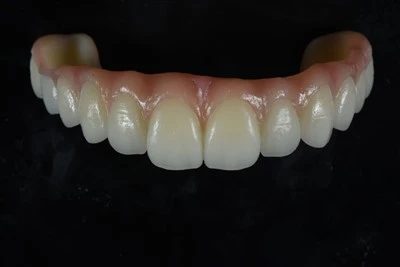
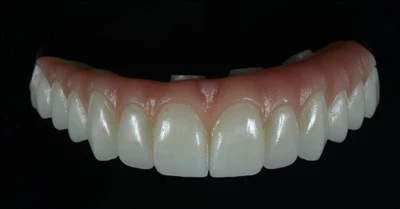
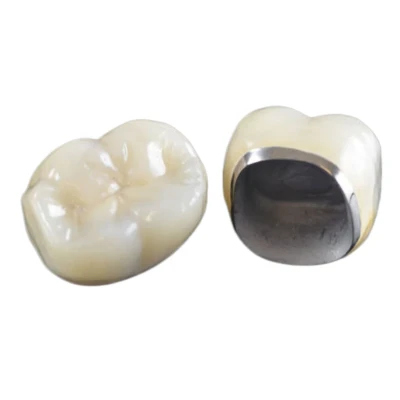
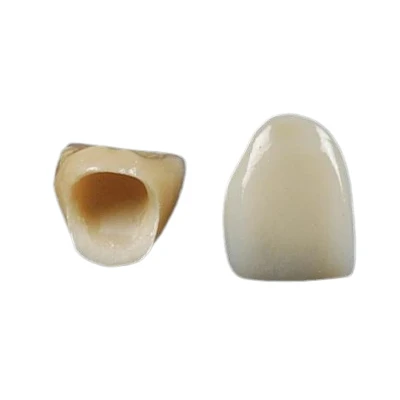
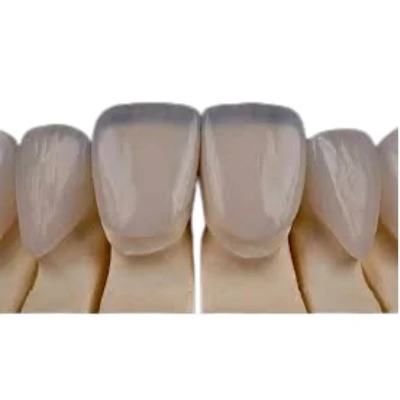
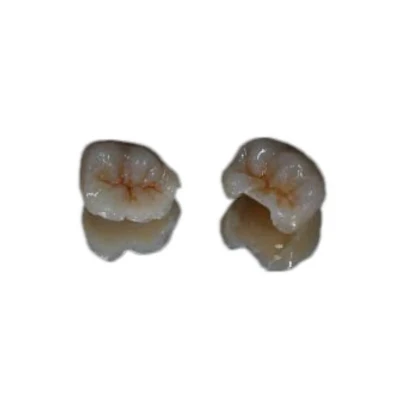
Porcelain fused to metal crowns (PFM crowns) are metal crowns with a layer of porcelain fused on the metal. This makes them almost as durable as pure metal crowns but a lot more esthetic. PFM crowns used to be the most popular crowns in dentistry for a long time.
Benefits of PFM Crown
PFM Crowns Are Cost-Effective
PFM crowns are a more cost-effective option than other types of dental crowns, such as all-ceramic crowns. This is because PFM crowns are made from ceramic and metal, making them less expensive to produce.
PFM Crowns Are Durable
PFM crowns are also a durable option for dental crowns. The metal component of the crown helps to reinforce the crown and make it more durable. This means that PFM crowns can last for many years — sometimes even a lifetime, with proper care.
PFM Crowns Offer Unique Protection
PFM crowns also offer unique protection. The crown's metal component helps protect the tooth from wear and tear. Additionally, the crown's ceramic part helps protect the tooth from staining and discoloration.
PFM Crowns Have a Natural-Looking Appearance
The porcelain portion of a PFM crown can be tinted to match the natural color of your teeth. This gives them a much more natural-looking appearance than other types of crowns.
PFM Crowns Reduce Tooth Sensitivity
PFM crowns are less likely to cause tooth sensitivity than other types of crowns. This is because the metal portion of the crown helps to block out stimuli that can cause the tooth to become sensitive.
PFM Crowns Reduce the Risk of Allergic Reactions
PFM crowns are made from materials that are less likely to cause an allergic reaction. This is important for people with allergies to certain metals, such as nickel.
-
![PFM Ceramic Crowns]() PFM Ceramic CrownsTurnaround time:3 days in lab. Warranty:5 years. Shipping Way:UPS (preferred), Fedex and DHL Linex. Armex are also available. Payment:T/T, HSBC, PayPal, MoneyGram, Western Union
PFM Ceramic CrownsTurnaround time:3 days in lab. Warranty:5 years. Shipping Way:UPS (preferred), Fedex and DHL Linex. Armex are also available. Payment:T/T, HSBC, PayPal, MoneyGram, Western Union -
![PFM Precision Crowns with Partial Dentures]() PFM Precision Crowns with Partial DenturesTurnaround time:3 days in lab. Warranty:5 years. Shipping Way:UPS (preferred), Fedex and DHL Linex. Armex are also available. Payment:T/T, HSBC, PayPal, MoneyGram, Western Union.
PFM Precision Crowns with Partial DenturesTurnaround time:3 days in lab. Warranty:5 years. Shipping Way:UPS (preferred), Fedex and DHL Linex. Armex are also available. Payment:T/T, HSBC, PayPal, MoneyGram, Western Union. -
![Posterior Implant Crown]() Posterior Implant CrownPosterior teeth carry the majority of occlusal load during chewing, which means a posterior implant crown has to do more than restore anatomical shape - it needs precisely designed occlusal contacts,
Posterior Implant CrownPosterior teeth carry the majority of occlusal load during chewing, which means a posterior implant crown has to do more than restore anatomical shape - it needs precisely designed occlusal contacts, -
![Implant Bridges With Pink Gingiva]() Implant Bridges With Pink GingivaWhen significant ridge resorption or gingival recession has occurred, a standard crown or bridge often isn't enough to restore natural tooth proportions - there's simply not enough soft
Implant Bridges With Pink GingivaWhen significant ridge resorption or gingival recession has occurred, a standard crown or bridge often isn't enough to restore natural tooth proportions - there's simply not enough soft -
![Anterior Implant Crown]() Anterior Implant CrownAn anterior implant crown is a custom implant restoration designed for the visible aesthetic zone, including central incisors, lateral incisors, and canine areas. Unlike posterior implant crowns that
Anterior Implant CrownAn anterior implant crown is a custom implant restoration designed for the visible aesthetic zone, including central incisors, lateral incisors, and canine areas. Unlike posterior implant crowns that -
![Implant Crown Compatible With Major Implant Systems]() Implant Crown Compatible With Major Implant SystemsCustom implant crowns require more than a well-shaped crown. To achieve an accurate fit, the restoration must be designed according to the exact implant system, implant line, platform, connection
Implant Crown Compatible With Major Implant SystemsCustom implant crowns require more than a well-shaped crown. To achieve an accurate fit, the restoration must be designed according to the exact implant system, implant line, platform, connection -
![Screw-Retained Zirconia Implant Crown]() Screw-Retained Zirconia Implant CrownA screw-retained zirconia implant crown combines a tooth-colored zirconia restoration with a retrievable screw-retained connection. Unlike a cement-retained implant crown, the restoration is secured
Screw-Retained Zirconia Implant CrownA screw-retained zirconia implant crown combines a tooth-colored zirconia restoration with a retrievable screw-retained connection. Unlike a cement-retained implant crown, the restoration is secured -
![PFM Dental Bridge]() PFM Dental BridgeTurnaround time:3 days in lab. Warranty:5 years. Shipping Way:UPS (preferred), Fedex and DHL Linex. Armex are also available. Payment:T/T, HSBC, PayPal, MoneyGram, Western Union.
PFM Dental BridgeTurnaround time:3 days in lab. Warranty:5 years. Shipping Way:UPS (preferred), Fedex and DHL Linex. Armex are also available. Payment:T/T, HSBC, PayPal, MoneyGram, Western Union. -
![PFM Implant Crown Bridge]() PFM Implant Crown BridgeTurnaround time:3 days in lab. Warranty:5 years. Shipping Way:UPS (preferred), Fedex and DHL Linex. Armex are also available. Payment:T/T, HSBC, PayPal, MoneyGram, Western Union.
PFM Implant Crown BridgeTurnaround time:3 days in lab. Warranty:5 years. Shipping Way:UPS (preferred), Fedex and DHL Linex. Armex are also available. Payment:T/T, HSBC, PayPal, MoneyGram, Western Union.


Why Choose us
Cutting-edge Technology
We specialized in outsourcing with various Dental labs in the USA, Sweden, France, Spain, UK, Japan, etc. We Administer state of art technology and production techniques amidst an experienced staff of technicians.
Quality Services
Since 2004, China Digital Dental Lab is a nonpareil and experienced family-owned group of Dental Lab in China. Being a prominent Dental Laboratories group we provide a wide range of Services.
Honors and Awards
National High-Tech Enterprise
International quality system ISO9001, ISO13485 certification
US Food and Drug Administration (FDA: NO.3007268434) Import and export registration permit
Environmental management system ISO13485 certification
Guangdong Quality Credit Class A Medical Device Manufacturing Enterprise possess multiple national invention patent certifications

PFM crowns are generally considered the most vital type of dental crown, and they are often used for teeth that are under a lot of stress, such as molars. They are also often used for teeth that are visible when you smile, as they can provide a very natural-looking result.
The PFM crown is made by first taking an impression of the tooth to be restored. This impression is then used to make a model of the tooth, which is used to create the crown.
The crown is then made by fusing porcelain with metal. The porcelain is color-matched to the natural tooth color, and the metal is used to give the crown strength.
Once the crown is made, it is then fitted over the tooth and cemented in place.
PFM Crown Suitability
Not every dental issue warrants a PFM crown. Understanding whether your specific case aligns with the suitability of a PFM crown is vital. Your dentist will assess factors like the extent of tooth damage, location within the mouth, and your overall oral health to determine if a PFM crown is the right solution for you.
PFM Crown Candidacy Criteria
Specific criteria must be met for you to be considered a suitable candidate for a PFM crown. Factors such as sufficient tooth structure remaining, absence of gum disease, and overall oral hygiene are crucial in determining candidacy.
PFM Crown Durability
One of the significant advantages of PFM crowns is their durability. The metal substructure provides strength, making them suitable for withstanding biting forces. However, it's essential to consider the crown's longevity and how it will withstand daily wear and tear.
PFM Crown Aesthetics
While PFM crowns offer a natural-looking appearance, especially when compared to all-metal alternatives, the presence of metal beneath the porcelain can sometimes result in a slightly opaque look, especially in cases of gum recession. PFM crown alternatives exist, but they certainly have differences. Understanding the aesthetic implications is essential, particularly for front teeth restoration.
PFM Crown Cost-Effectiveness
Cost is a significant factor for many individuals considering dental procedures. PFM crowns generally fall within a moderate price range compared to other options. However, it's crucial to weigh the initial cost against the long-term benefits and durability of the crown.
PFM Crown Lifespan
The lifespan of a PFM crown can vary depending on various factors, such as oral hygiene, biting forces, and maintenance. Understanding the expected lifespan of your crown can help you make an informed decision about its suitability for your needs.
PFM Crown Maintenance Requirements
Proper maintenance is essential to ensure the longevity of your PFM crown. Regular brushing, flossing, and dental check-ups are crucial to prevent any complications around the crown margins, such as decay or gum disease. PFM crown care instructions are usually given after the procedure and are just a few tips to ensure you are looking and feeling your best with PFM crowns!
Top 5 Ways To Take Care of Your New PFM Crown
Avoid sticky and hard foods
PFM crowns are durable and strong, but they can still be damaged, just like your natural teeth. Chewing on ice or hard candies can chip, crack, or break your PFM crown, which means you'll need to have it replaced earlier than you normally would. Sticky or very chewy foods can also cause problems, either by weakening or loosening your PFM crown or by causing sticky bits to get trapped between your PFM crown and your gum. It's best to avoid these foods when you can. Also, remember: The durable porcelain used to make your PFM crown is designed to resist staining. That resistance also means it can't be whitened like your natural teeth. Before having a PFM crown applied, you might want to have a professional whitening treatment to make sure your PFM crown matches your teeth when they look their best. Then, if you decide to have your teeth whitened in the future, your PFM crown will still match and blend in beautifully.
Brush and floss to keep the tooth healthy
Your PFM crown may be “artificial,” but the supporting tooth underneath still needs routine oral care to stay healthy and sound. Even though the PFM crown extends over the entire tooth surface, you still need to brush the PFM crown carefully to remove sticky plaque film and to keep the PFM crown looking its best. And it's also very important to floss since germs and food particles can still become trapped or caught between the PFM crown and your gum or the neighboring tooth. When you have a temporary PFM crown (before your permanent PFM crown is put in place), you'll be told to take care not to dislodge it when flossing. But your permanent PFM crown adheres with a stronger dental cement so you can floss around your crown the same way you floss around your other teeth. Also, even though your tooth is covered by a crown, you may still have sensitivity issues when eating hot or cold foods (that's normal). If your teeth are sensitive, it's OK to use a toothpaste designed for sensitive teeth.
Kick your bad habits
Do you bite your nails? Chew on pencils, ice, or other hard objects? Grind your teeth when you're stressed? Use your teeth for “tools” to open hard-to-budge bottle caps? Stop. Not only can these habits break your PFM crowns, but they can break or chip your natural teeth as well. Plus, hard objects can splinter and get lodged between your gums or even damage your gums. If you've tried breaking these habits before with no success, now's the time to double down. Not only will your teeth and gums thank you, but you can protect the investment in your new PFM crown as well.
Use a night guard
It's one thing to try to curb a grinding and clenching habit when you're awake; at least then, you're aware you're doing it. The problem is, plenty of people grind and clench their teeth while they're sleeping, which means they're probably not even aware of it. Grinding and clenching might not seem like really serious problems, but over time, they can take a serious toll on your teeth. Just regular biting exerts about 200 pounds of pressure per square inch; with grinding and clenching, that pressure can increase significantly, and that means your PFM crown is at an increased risk of breaking.
See the dentist regularly
Having routine checkups and cleanings every six months is important for making sure the gums surrounding the PFM crown stay healthy and for keeping the supporting tooth healthy too.
At Modern Age Dentistry, we use state-of-the-art techniques and materials to provide patients with PFM crowns that are beautiful and durable.
Here are some common reasons why a dentist near you may recommend a PFM crown:
Restoring A Badly Decayed Tooth: Fillings can address small cavities, but PFM crowns may be necessary for larger holes and badly decayed teeth. After removing the decayed enamel, a crown is placed over the tooth, protecting it from further damage.
Replacing A Large Worn-out Or Damaged Filling: If an old filling is more than 2/3 the width of your tooth or is failing, replacing it with a crown is recommended. Crowns offer better protection against cracking and other complications.
Repairing A Cracked, Chipped, Or Broken Tooth: PFM crowns effectively repair teeth affected by oral injuries or normal wear and tear. Cosmetic treatments can sometimes address minor chips, but significant tooth damage often requires a crown to provide strength and functionality.
Protecting A Tooth After A Root Canal: Root canal therapy involves removing decayed material from inside a tooth and filling it. Dentists commonly use fillings for front teeth, but they usually prefer PFM crowns for back teeth because of their increased biting force.
Covering Up A Tooth For Cosmetic Purposes: In some cases, PFM crowns can be used solely for decorative purposes. A crown can cover severe tooth discoloration or misshapen teeth, enhancing the appearance when veneers or bonding cannot treat them.
What Are the Key Differences Between Zirconia and PFM Crowns?
The key differences between zirconia and PFM crowns are the number of layers and the composition of said layers. Zirconia crowns are made from a single high-strength material, while PFMs are made from two materials: metal and a layering ceramic. Ultimately, the material makeup significantly impacts the definitive performance of a restoration.
Take PFMs, for example. Historically, they have displayed high rates of chipping, fracturing and shearing off of the layering ceramic. There are two primary reasons behind these breakages. First, because the ceramic layer is so thin, the material is less durable. Second, there are a difference between the thermal expansion characteristics of the substructure metal and those of the layering ceramic, which means that the layers expand and contract at differing rates during manufacturing. This imparts imperfections and weaknesses into the finalized restorations, especially at the location where the ceramic and metal meet.
Zirconia crowns, on the other hand, are milled from a solid block of zirconia and sintered as fully shaped restorations. The monolithic nature of the material means that all areas of the restoration share the same material characteristics, eliminating the issues observed in PFMs. Moreover, zirconia imparts significant performance characteristics, having nearly 10 times the flexural strength of an average feldspathic layering ceramic.
However, while zirconia is substantially stronger than the ceramics used for PFM crowns, the monolithic material does have a weakness: Zirconia bridges with long spans in an area with limited vertical space may fracture over time, an issue arising due to the bridge connectors having small volume. For these bridges, we typically recommend that dentists use PFM restorations because their metal substructure ensures a longer-lasting solution in those compact areas.
What to Consider When Choosing the Right PFM Crown
When it comes to choosing the right PFM crown, there are a few things that you will need to take into consideration. You must first consider the material the PFM crown is made of. There are a few different material options, each with its benefits and drawbacks. You must weigh these factors carefully to choose the right material.
The next thing you will need to consider is the shape of the PFM crown. There are a few options here, and you must decide which will work best for your smile. Again, each option has pros and cons, so you must consider what is most important to you before deciding.
Finally, you will need to consider the PFM crown's colour. It can be matched to your natural tooth colour or chosen based on aesthetic considerations. Once again, each option has pros and cons, so you must weigh your options carefully before deciding.
Company Profile
China Digital Dental Lab is a Dental Lab in China has a prudish production and management system. We control and manage the production and management processes and ascertain the quality inspection processes and requirements. We precisely control production processes to mold and emerge as standardized, institutionalized, and procedural. We serve universal customers with exceptional products, high-end technology, and a supreme production management system. China Digital Dental Lab has a nominally low alteration and reformation rate in the industry.

Asked Questions
ADS Dental Lab Ltd. is one of the most professional pfm crown manufacturers and suppliers in China, specialized in providing high quality products with low price. We warmly welcome you to buy cheap pfm crown in stock here from our factory. Contact us for customized service and free sample.
lower e arch expander, bonded rapid palatal expander, acrylic temporary crownPopular Products