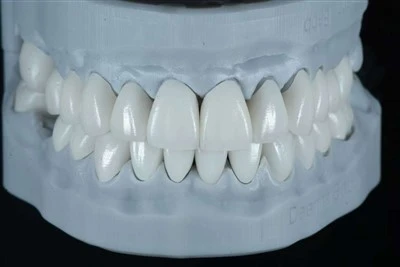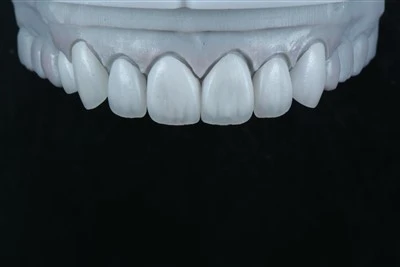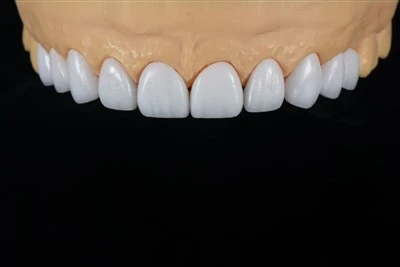
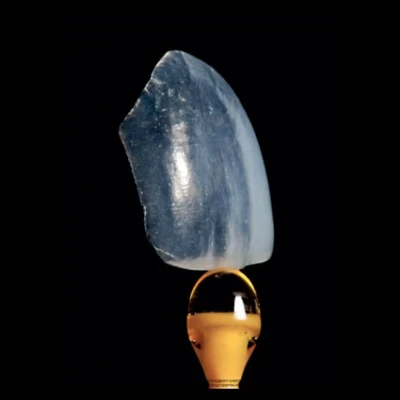
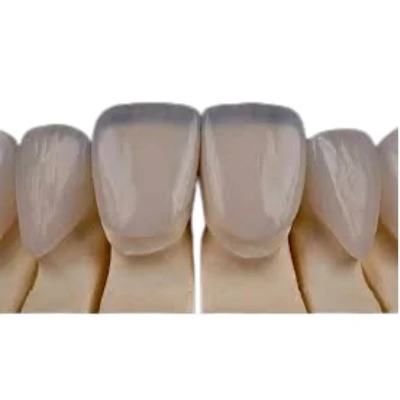


ADS Dental Lab Ltd. is one of the most experienced manufacturers and suppliers of ultra-thin e.max layering veneers in China, featured by quality products and low price. Please feel free to wholesale customized ultra-thin e.max layering veneers made in China here from our factory. For quotation, contact us now.
Ultra-Thin E.max Layering Veneers are anterior aesthetic restorations designed with a reduced ceramic profile where the clinical and restorative conditions allow. Their value lies not simply in being thin, but in controlling how ceramic thickness is distributed across the facial, cervical, proximal, and incisal areas while maintaining the intended contour and aesthetic effect.
At ADS Dental Laboratory, ultra-thin veneer cases are planned digitally before fabrication. Our technicians evaluate the existing tooth form, available restorative space, target shade, stump shade, and final contour to determine where the ceramic can remain thin and where additional material may be needed for morphology or optical characterization.
IPS e.max lithium disilicate is combined with selective ceramic layering and detailed hand finishing. The objective is a refined restoration with controlled volume rather than an excessively bulky veneer.
Send us your STL files, preparation scan, patient photos, stump shade, target shade, and prescription for technical case review.


Product Specifications
| SpecificationDetails | |
|---|---|
| Product Type | Ultra-Thin E.max Layering Veneers |
| Material | IPS e.max Lithium Disilicate with Layering Ceramic |
| Main Design Focus | Thin Ceramic Section and Controlled Volume |
| Technique | Digital Thickness Planning + Selective Hand Layering |
| Aesthetic Focus | Refined Contour, Margin Precision, and Optical Balance |
| Recommended Region | Primarily Anterior Aesthetic Restorations |
| Case Submission | STL Files, Photos, Prep Scan, Stump Shade, and Prescription |
| Typical Production Time | Approximately 4–5 working days after case confirmation |
What Are Ultra-Thin E.max Layering Veneers?
An ultra-thin veneer is a restoration designed with a reduced ceramic section where the case permits. It should not automatically be considered a no-prep or minimal-prep restoration.
Three different factors need to be distinguished:
Veneer thickness refers to the physical ceramic section of the restoration.
Tooth preparation refers to how much tooth structure the clinician removes.
Final contour refers to the overall shape and volume after the veneer is seated.
These three factors are related, but they are not identical.
A very thin veneer may still require preparation if the existing tooth is prominent or if the final contour needs to move inward. Likewise, a minimally prepared tooth does not automatically guarantee that the final restoration will be ultra-thin.
For this reason, ADS approaches ultra-thin veneers as a thickness-management problem rather than simply trying to minimize ceramic everywhere.
The ideal design is as thin as the case allows while still providing the space required for contour, shade control, surface form, and the intended aesthetic result.
The Main Challenge: Working Within a Thin Ceramic Section
Reducing ceramic thickness creates less room for adjustment during fabrication.
If a veneer becomes too thin in the wrong area, the technician may have limited ability to control:
- Shade correction
- Local opacity
- Surface anatomy
- Incisal characterization
- Facial contour
- Margin refinement
Excessive translucency may also allow more of the underlying tooth color to influence the final appearance.
At the same time, adding too much ceramic defeats the purpose of an ultra-thin design and can create unnecessary facial projection.
The technical challenge is therefore not simply "make it thinner." It is to distribute ceramic intelligently according to the needs of each region.
How ADS Designs Ultra-Thin Veneer Cases
Digital Thickness Mapping
Ultra-thin veneers do not need to have the same thickness across the entire restoration.
ADS uses digital design to review the available space in different areas, including:
- Facial surface
- Cervical region
- Proximal areas
- Incisal edge
- Localized thin zones
This allows the final restoration to be planned with more control over where ceramic volume is reduced and where additional space may be necessary.
Margin Precision
Thin restorations require careful margin finishing because delicate edge areas can be more sensitive to design and handling.
ADS uses magnification-assisted inspection as part of its quality-control system, with particular attention to margin integrity, fit, contact areas, and final finishing.
The objective is to maintain a clean transition without unnecessary cervical bulk.
Selective Ceramic Layering
Ultra-thin cases generally provide less room for extensive ceramic build-up.
Instead of applying heavy layering throughout the restoration, technicians may use more selective characterization in areas where optical effects are needed.
Depending on the case, this may involve controlled:
- Enamel effects
- Incisal characterization
- Local shade transitions
- Surface detailing
- Fine contour adjustment
ADS combines digital design with technician-led layering, staining, glazing, contouring, surface texture, and margin finishing.
Facial Contour Control
One of the key objectives of an ultra-thin veneer is avoiding unnecessary restorative volume.
The digital design is therefore reviewed for:
- Facial projection
- Cervical profile
- Proximal contour
- Line-angle position
- Incisal thickness
- Overall tooth volume
This is especially important when several anterior veneers are produced together, where small differences in facial prominence can affect the overall appearance of the smile.
Fine Finishing and Handling
Thin ceramic restorations require careful handling during final contouring, polishing, inspection, packing, and shipment.
ADS uses structured QC, technician traceability, and magnification-assisted inspection within its production workflow.
Completed cases are securely packed for international delivery to overseas dentists and dental laboratories.
Suitable Cases for Ultra-Thin E.max Layering Veneers
Ultra-Thin E.max Layering Veneers may be considered when:
- Existing tooth contours are relatively favorable
- Only limited facial volume needs to be added
- Major shade masking is not required
- A refined, low-bulk restoration is preferred
- The available restorative space supports a thin ceramic design
- Minor tooth shape or proportion changes are planned
- Adjacent teeth require a delicate restoration profile
- The aesthetic plan does not require extensive ceramic build-up
Cases should be evaluated more carefully when they involve:
- Dark stump shades
- Severe discoloration
- Large tooth-position changes
- Strong masking requirements
- Significant facial contour correction
- Complex underlying substrates
- Very limited restorative space in critical areas
The final preparation and restorative approach should always be determined according to the clinician's treatment plan and the specific case conditions.
Our Ultra-Thin Veneer Workflow
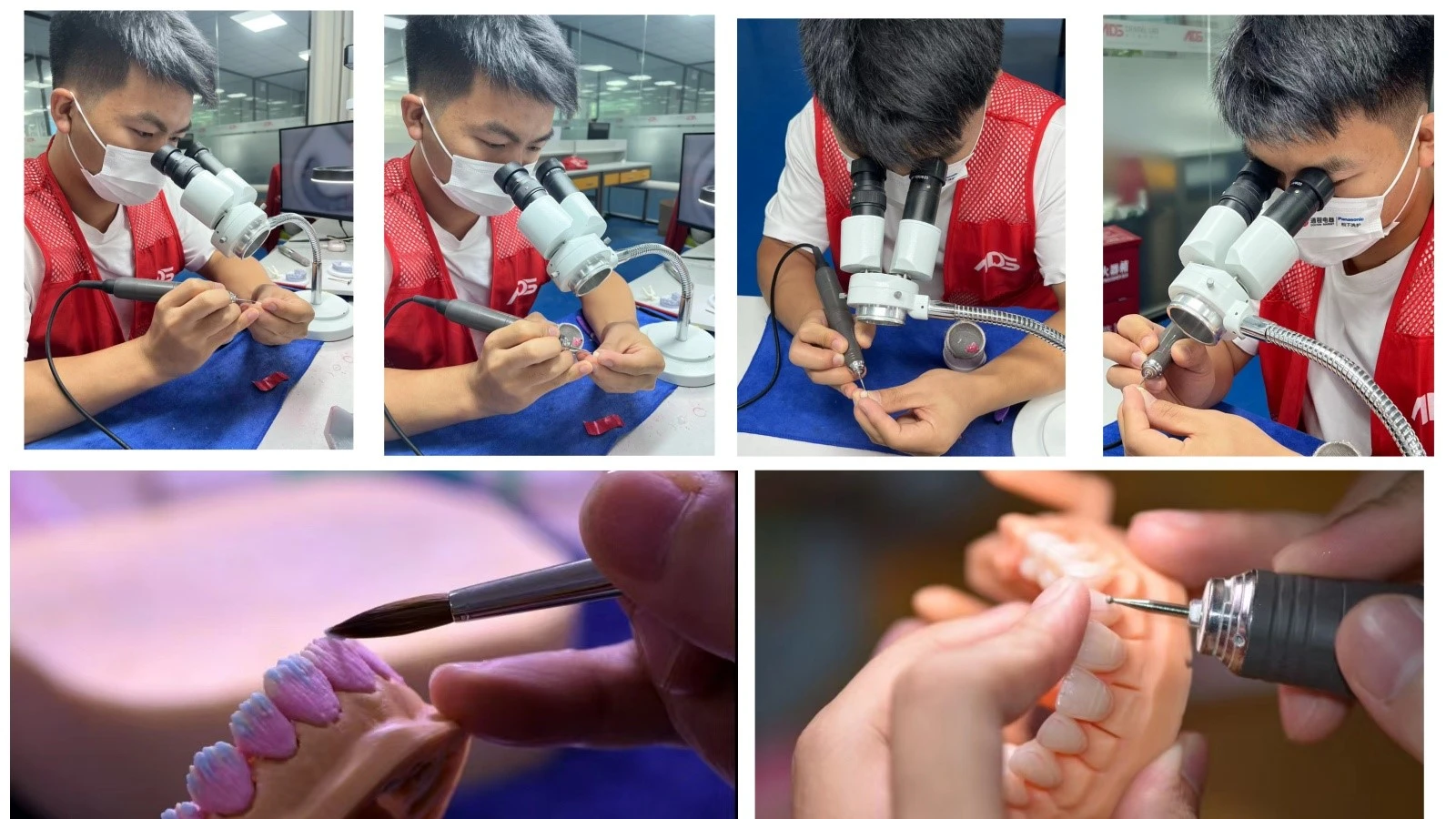
1. Submit Digital Records
Send STL files, preparation scans, patient photos, stump shade, target shade, and prescription.
2. Evaluate Restorative Space
Our team reviews the available facial, cervical, proximal, and incisal space.
3. Plan the Final Contour
Tooth length, facial projection, cervical profile, and overall morphology are digitally established.
4. Map Ceramic Thickness
Different regions are reviewed to identify where the restoration can remain thinner and where additional ceramic volume may be needed.
5. Fabrication and Selective Layering
The E.max restoration is produced and refined with controlled ceramic characterization within the available thickness.
6. Thin-Section Quality Review
Margins, localized thin areas, contour, shade balance, surface quality, and overall symmetry are checked.
7. Protective Packing and International Delivery
The finished restoration is securely packed and shipped through international logistics channels. ADS accepts both STL files and traditional impressions for overseas cases.
Why Choose ADS for Ultra-Thin Veneer Cases?

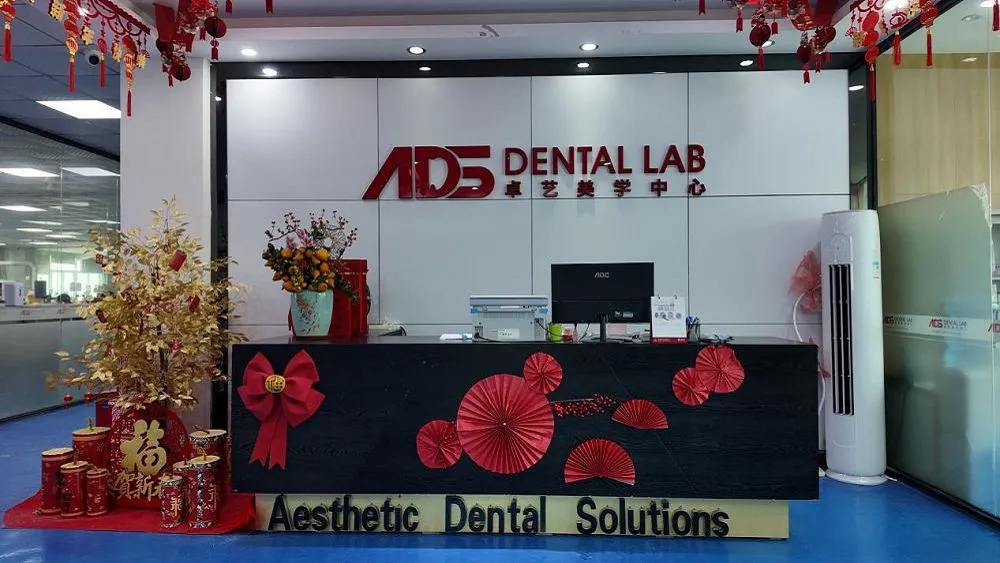
ADS Dental Laboratory Ltd is a full-service digital dental laboratory in Shenzhen, China, providing customized veneer production and long-term outsourcing support to dentists and dental laboratories worldwide.
- Digital Thickness Planning – Restoration thickness and contour are evaluated before fabrication.
- Dedicated Veneer Aesthetic Team – Specialized technicians support complex anterior aesthetic cases.
- Magnification-Assisted Margin Inspection – Thin margins and fit are reviewed within a structured QC workflow.
- Selective Hand Layering – Ceramic characterization is adapted to the limited space available in ultra-thin restorations.
- Flexible Outsourcing Support – Dental laboratories may outsource complete veneer cases or selected stages such as design, fabrication, layering, and finishing.

FAQ
Is an ultra-thin E.max veneer the same as a no-prep veneer?
No. Ultra-thin refers to the restoration design and ceramic thickness. Whether preparation is required depends on the tooth position, final contour, shade requirements, and clinical treatment plan.
How thin can an E.max layering veneer be?
There is no single thickness suitable for every case. The final ceramic section depends on restorative space, substrate color, tooth position, contour, and aesthetic requirements.
Does every area of the veneer have the same thickness?
No. Facial, cervical, proximal, and incisal areas may require different ceramic thicknesses depending on the restoration design.
Can ultra-thin veneers mask dark teeth?
Their masking ability may be limited when ceramic space is very restricted. Dark stump shades or strong discoloration should therefore be evaluated before fabrication.
Can ultra-thin veneers still have ceramic layering?
Yes. Selective layering and characterization can be used where sufficient space is available.
How do you prevent ultra-thin veneers from looking bulky?
ADS digitally evaluates facial projection, cervical profile, line angles, and overall contour before production.
Are ultra-thin veneers suitable for multi-unit cases?
They may be suitable when the tooth positions, restorative space, and aesthetic objectives allow controlled thin-section design across the case.
What should I send for an ultra-thin veneer case?
We recommend STL files, preparation scans, patient photos, stump shade, target shade, desired final contour, and a detailed prescription.
Hot Tags: ultra-thin e.max layering veneers, China ultra-thin e.max layering veneers manufacturers, suppliers, factory, expansion plate orthodontics, Feldspathic Porcelain Veneers, hawley retainer with pontic, lower palate expander for adults, Natural Looking And Aesthetic Emax Veneer, upper jaw expander for adults