

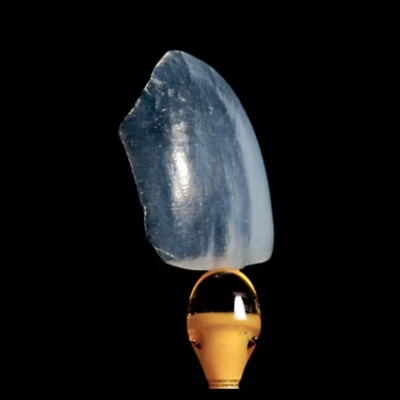
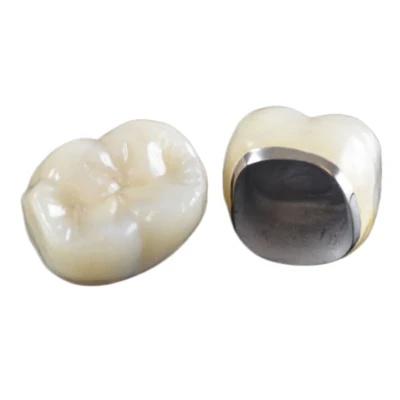
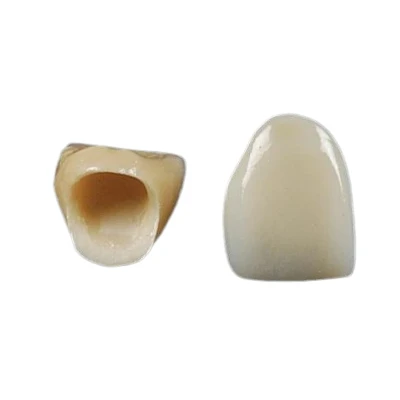
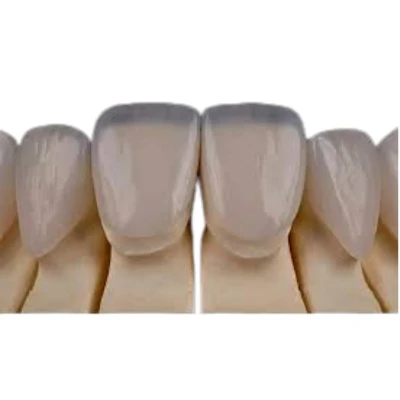



ADS Dental Lab Ltd. is one of the most experienced manufacturers and suppliers of minimal-prep e.max layering veneers in China, featured by quality products and low price. Please feel free to wholesale customized minimal-prep e.max layering veneers made in China here from our factory. For quotation, contact us now.
Minimal-Prep E.max Layering Veneers are anterior ceramic restorations designed for selected cases where tooth structure can be preserved while still creating enough space for an aesthetic veneer. The goal is not to eliminate preparation completely, but to reduce unnecessary tooth reduction while maintaining appropriate restoration thickness, contour, margin design, and ceramic space.
At ADS Dental Laboratory, minimal-prep cases are planned by comparing the existing tooth position with the intended final restoration. IPS e.max lithium disilicate provides the ceramic foundation, while digital design helps control facial contour, cervical profile, tooth length, and available restorative space. Experienced technicians then complete ceramic layering, contouring, and finishing within the planned dimensions.
Because every preparation is different, minimal-prep design should be based on the clinical situation rather than a fixed reduction value.
Send us your pre-op STL files, preparation scans, patient photos, temporary scan if available, desired tooth length, shade information, and prescription for case review.


Product Specifications
| SpecificationDetails | |
|---|---|
| Product Type | Minimal-Prep E.max Layering Veneers |
| Material | IPS e.max Lithium Disilicate with Layering Ceramic |
| Preparation Concept | Conservative / Minimal Tooth Reduction |
| Design Focus | Restorative Space, Thickness, and Facial Contour |
| Technique | Digital Design + E.max Fabrication + Hand Layering |
| Recommended Region | Primarily Anterior Aesthetic Restorations |
| Case Submission | Pre-op STL, Prep Scan, Photos, Shade, and Prescription |
| Typical Production Time | Approximately 4–5 working days after case confirmation |
What Are Minimal-Prep E.max Layering Veneers?
Minimal-prep veneers are based on a conservative restorative concept: preserve as much natural tooth structure as clinically appropriate while creating sufficient room for the planned ceramic restoration.
This does not mean that every tooth receives the same small amount of preparation.
The required reduction depends on factors such as:
- Existing tooth position
- Facial prominence
- Planned tooth length
- Desired final contour
- Shade correction
- Restorative thickness
- Margin location
- Available enamel
- Occlusal conditions
A tooth that is already prominent may require more reduction to avoid an over-contoured veneer, while a retruded or undersized tooth may require less preparation if the planned restoration is additive.
For this reason, minimal preparation should be guided by the final restoration design rather than by an arbitrary reduction number.
The objective is to create enough ceramic space to achieve the required shape and aesthetics without producing unnecessary facial bulk or sacrificing more tooth structure than the case demands.


Why Restorative Space Matters
Restorative space is one of the most important factors in a minimal-prep veneer case.
If insufficient space is created, the technician may have difficulty developing the required contour and ceramic layering without increasing facial thickness. This can lead to a veneer that appears too bulky, especially around the cervical and middle thirds.
Potential problems may include:
- Excessive facial projection
- Bulky cervical contour
- Abrupt gingival transition
- Limited ceramic layering space
- Over-thick incisal edges
- Poor integration with adjacent teeth
At the same time, excessive preparation defeats the purpose of a conservative veneer approach.
The challenge is therefore to find the correct balance between tooth preservation and the space required for the final restoration.
How ADS Designs Minimal-Prep Veneer Cases
Pre-Op vs. Final-Design Comparison
When pre-treatment scans and photos are available, ADS can compare the existing tooth form with the intended final morphology.
Our technicians and designers evaluate tooth position, facial prominence, length, alignment, and the amount of planned contour change.
This helps determine where additional ceramic is required and where the preparation already provides sufficient space.
Controlled Facial Thickness
Minimal-prep veneers should not simply be made thicker to compensate for limited reduction.
Digital design allows the restoration to be evaluated in terms of:
- Facial contour
- Cervical profile
- Line-angle position
- Incisal thickness
- Overall tooth volume
This helps reduce the risk of a restoration appearing excessively convex or overbuilt.
Margin and Cervical Transition
The cervical area requires particular attention in conservative veneer cases.
If the restoration becomes too thick near the margin, the transition from tooth to ceramic may look abrupt. ADS technicians therefore review margin position, cervical contour, and emergence form during design and finishing.
The objective is to maintain a smooth transition into the gingival area while respecting the prescribed preparation.
Digital Design Before Fabrication
For selected aesthetic cases, ADS can provide smile design, STL, or HTML design files for client confirmation before final production.
This is particularly valuable for minimal-prep cases because the final tooth position and contour can be reviewed before the ceramic restoration is completed.
Thickness-Conscious Ceramic Layering
Minimal-prep cases often provide less space for ceramic characterization.
Layering therefore needs to be controlled carefully. ADS combines digital design with technician-led ceramic layering, contouring, staining, glazing, surface finishing, and margin refinement.
The aim is to create the required aesthetic effect without adding unnecessary bulk.
Suitable Cases
Minimal-Prep E.max Layering Veneers may be appropriate when:
- Existing tooth position is relatively favorable
- Only moderate shape correction is required
- Tooth structure preservation is an important objective
- Small changes in tooth length or proportion are planned
- Facial correction can be achieved conservatively
- Available enamel and restorative space support veneer treatment
- Strong masking is not the main restorative requirement
- The case is suitable for an additive or minimally subtractive design
Cases may require more careful evaluation when they involve:
- Severely protruded teeth
- Significant discoloration
- Major alignment correction
- Large changes in tooth position
- Strong masking requirements
- Very limited restorative space
- Existing restorations or complex substrates
The final preparation design remains the responsibility of the treating clinician.
Our Minimal-Prep Veneer Workflow
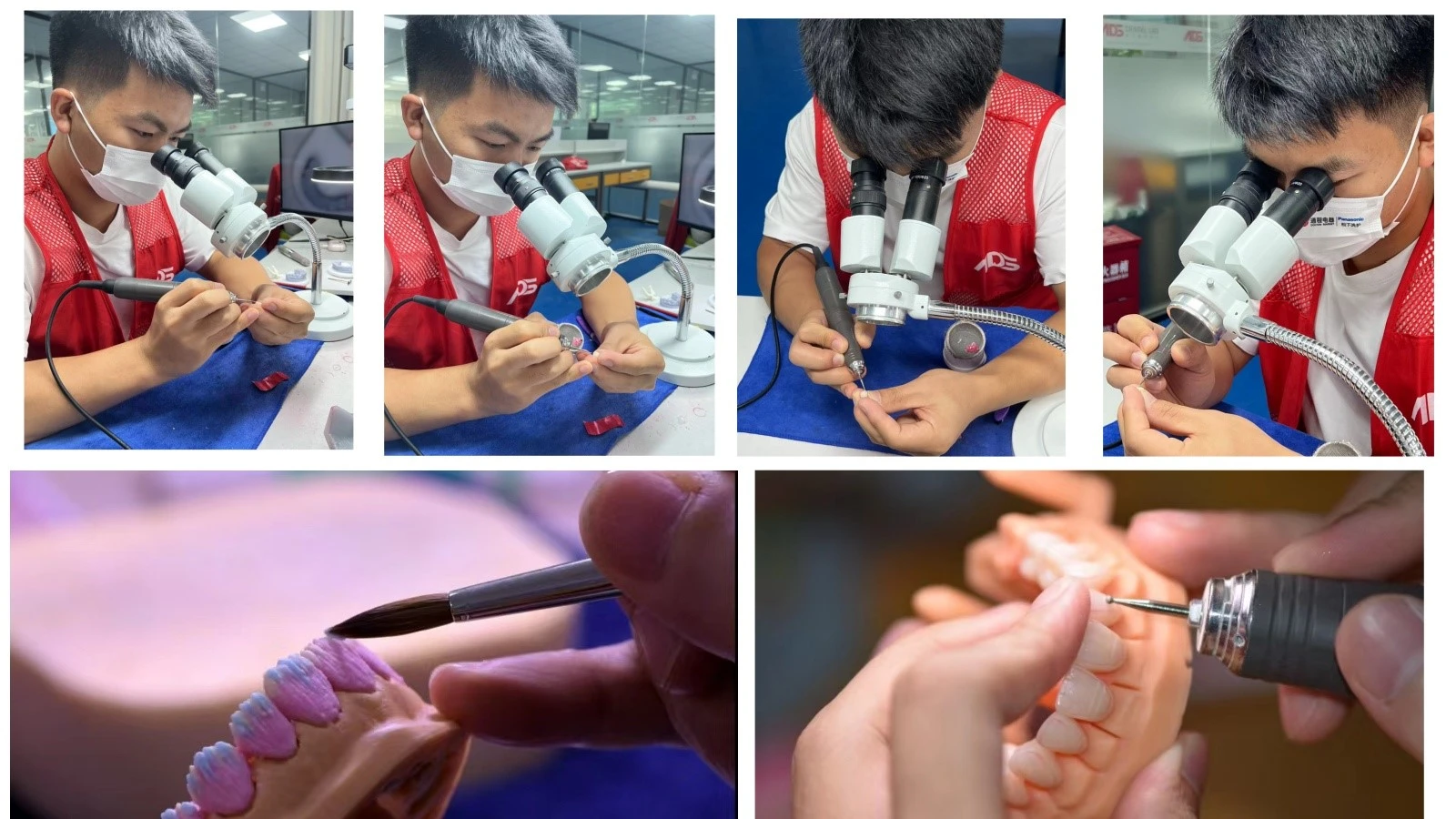
1. Submit Pre-Op Records
Send pre-treatment STL files, patient photos, shade information, and the desired aesthetic outcome.
2. Evaluate Existing Tooth Position
Our team reviews facial prominence, tooth length, alignment, and current contour.
3. Plan the Final Restoration Form
The intended tooth shape, length, facial contour, and symmetry are digitally established.
4. Review Preparation Space
Preparation scans are compared with the planned restoration to evaluate available ceramic space and possible over-contour risks.
5. Fabrication and Controlled Layering
The E.max restoration is fabricated and layered within the available space, with attention to thickness and final contour.
6. Contour and Margin Review
Facial bulk, cervical transition, margins, incisal thickness, and symmetry are checked before completion.
7. Final QC and Delivery
Fit, contacts, occlusion, surface finish, and overall case quality are reviewed before secure international shipment.
ADS accepts both digital STL files and traditional impressions and supports international case coordination for overseas clients.
Why Choose ADS for Minimal-Prep Veneer Cases?

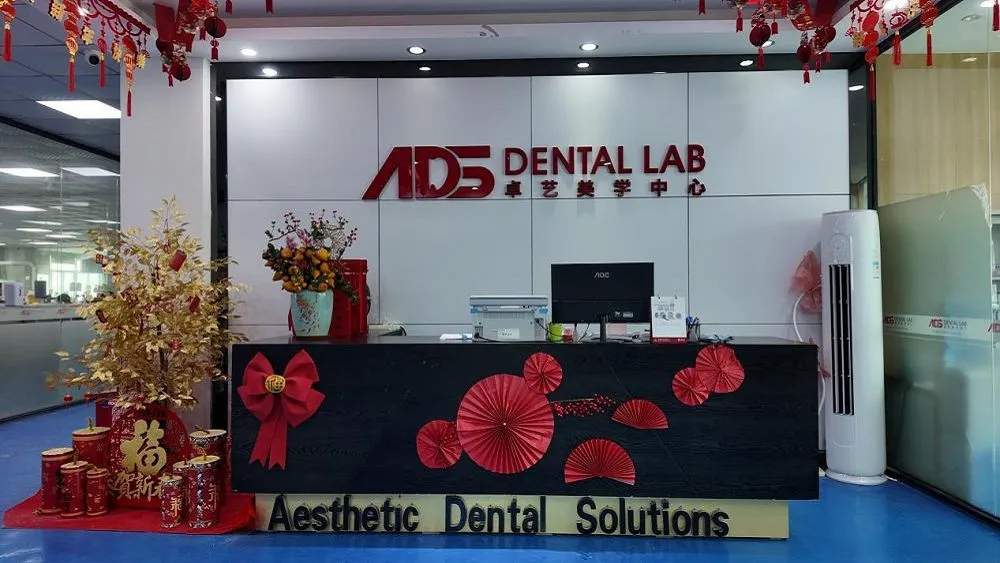
ADS Dental Laboratory Ltd is a full-service digital dental laboratory in Shenzhen, China, providing customized restorative production and long-term outsourcing support to overseas dentists and dental laboratories.
- Pre-Op and Final-Design Comparison – Digital records help our team evaluate the relationship between existing tooth position and intended restoration form.
- Dedicated Veneer Aesthetic Team – Specialized technicians support anterior aesthetic veneer production.
- Controlled Contour and Thickness – Digital design helps manage facial volume, cervical profile, and incisal thickness.
- Digital + Handcrafted Workflow – CAD/CAM planning is combined with manual layering, contouring, and finishing.
- Flexible Outsourcing Support – Dental laboratories can outsource complete veneer cases or selected stages such as design, fabrication, layering, or finishing.

FAQ
Is minimal-prep the same as no-prep?
No. Minimal-prep veneers may still require tooth reduction. The amount depends on the existing tooth position, planned contour, shade requirements, and restorative space.
How much tooth reduction is needed?
There is no single reduction value for every case. Preparation should be based on the final restoration design and clinical conditions.
Can minimal-prep veneers look bulky?
They can if restorative space is insufficient. This is why facial contour and thickness should be evaluated before fabrication.
How do you control veneer thickness?
ADS uses digital design to evaluate facial contour, cervical profile, incisal thickness, and the space available between the preparation and intended final restoration.
Are minimal-prep veneers suitable for dark teeth?
Cases requiring strong masking may need more restorative space or a different preparation strategy. These cases should be evaluated individually.
Can protruded teeth be treated with minimal-prep veneers?
Possibly, but protruded teeth may require more reduction to avoid excessive facial bulk. The degree of correction depends on the clinical situation.
Do you need a pre-op scan?
A pre-op scan is highly useful because it allows the existing tooth form to be compared with the planned final restoration.
Can ADS review the case before production?
Yes. Send us the pre-op scan, preparation scan, patient photos, temporary scan if available, shade information, and prescription for technical review.
Hot Tags: minimal-prep e.max layering veneers, China minimal-prep e.max layering veneers manufacturers, suppliers, factory, all on 4 zirconia bridge, dental expanders for adults, Feldspathic Porcelain Veneers, fixed palatal expander, hawley retainer upper and lower, upper jaw expander for adults


