

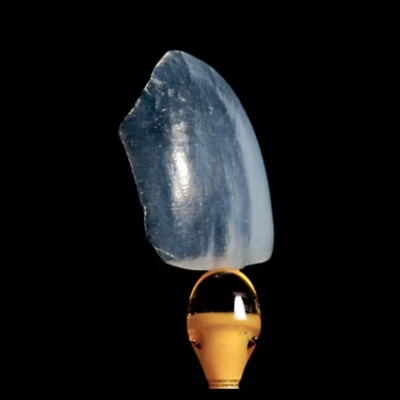
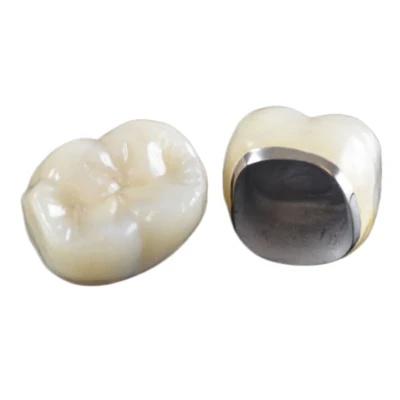
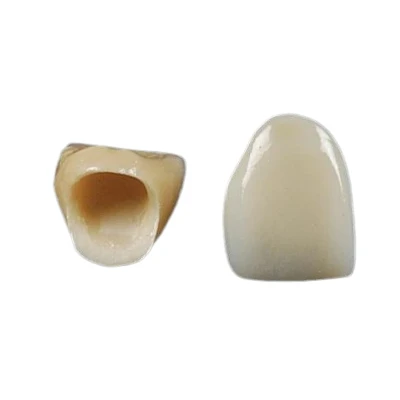
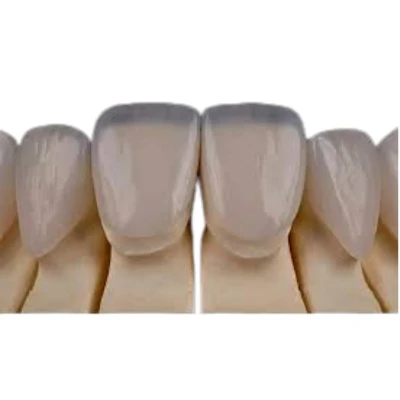



ADS Dental Lab Ltd. is one of the most experienced manufacturers and suppliers of e.max layering veneers with surface texture in China, featured by quality products and low price. Please feel free to wholesale customized e.max layering veneers with surface texture made in China here from our factory. For quotation, contact us now.
E.max Layering Veneers with Surface Texture are anterior aesthetic restorations designed not only around tooth shape and shade, but also around the detailed morphology of the facial surface. Even when a veneer has the correct color, it can still appear artificial if the surface is excessively smooth, flat, or lacks the small anatomical features that influence how light reflects from natural teeth.
At ADS Dental Laboratory, IPS e.max lithium disilicate is combined with digital morphology design, ceramic layering, hand contouring, surface characterization, glazing, and finishing. Our technicians can refine developmental grooves, line angles, facial convexity, incisal contour, and subtle micro-texture according to patient photographs, adjacent teeth, and the dentist's aesthetic requirements. ADS combines digital manufacturing with experienced technician-led processes such as layering, contouring, surface texture, shade matching, and margin finishing.
Send us your STL files, patient photographs, close-up anterior images, morphology references, and prescription for case evaluation.


Product Specifications
| SpecificationDetails | |
|---|---|
| Product Type | E.max Layering Veneers with Surface Texture |
| Material | IPS e.max Lithium Disilicate with Layering Ceramic |
| Main Feature | Customized Facial Surface Texture |
| Technique | Digital Design + Hand Contouring + Surface Characterization |
| Texture Options | Subtle, Moderate, or Customized |
| Aesthetic Focus | Morphology, Light Reflection, and Tooth Character |
| Case Submission | STL Files, Photos, Morphology References, and Prescription |
| Typical Production Time | Approximately 4–5 working days after case confirmation |
Why Surface Texture Matters in Veneer Aesthetics
Natural anterior teeth are not perfectly flat or uniformly polished. Their facial surfaces contain anatomical variations that influence how light travels across the crown.
These details may include:
- Developmental lobes
- Vertical grooves
- Subtle horizontal texture
- Facial convexities
- Line angles
- Incisal surface variations
- Small enamel-like irregularities
Together, these features affect where highlights appear and how wide, narrow, rounded, or flat a tooth looks from different angles.
This means surface texture is not simply decorative.
A veneer with well-designed surface morphology can reflect light in a more controlled way, while an excessively smooth veneer may create a broad, flat highlight that reduces visual depth.
Surface design can also influence perceived tooth proportions. Changing the position of the facial line angles or the width of the central reflective zone may make the same physical tooth appear visually narrower, wider, more rounded, or more defined.
For this reason, surface texture should be planned as part of the restoration's morphology rather than added only at the final polishing stage.


Macro-Texture and Micro-Texture
Macro-Texture
Macro-texture refers to the larger surface structures that define the general three-dimensional form of the tooth.
These may include:
- Facial lobes
- Developmental depressions
- Major line angles
- Cervical convexity
- Incisal contour
- Broad transition zones
Macro-texture has a strong influence on the apparent width, volume, and character of the restoration.
Micro-Texture
Micro-texture refers to finer surface details that become more visible at close range or under directional lighting.
Examples may include:
- Fine vertical surface patterns
- Subtle horizontal lines
- Small enamel-like irregularities
- Fine transitions between polished and textured areas
The amount of micro-texture should be controlled according to the clinical reference and desired aesthetic style. Not every veneer requires pronounced surface detail.
How ADS Creates Customized Veneer Surface Texture
Digital Morphology Comes First
Surface texture works best when the underlying tooth form is already well planned.
ADS uses digital design to establish:
- Tooth width and length
- Facial contour
- Incisal position
- Line-angle location
- Overall symmetry
This provides the structural foundation before finer surface details are added.
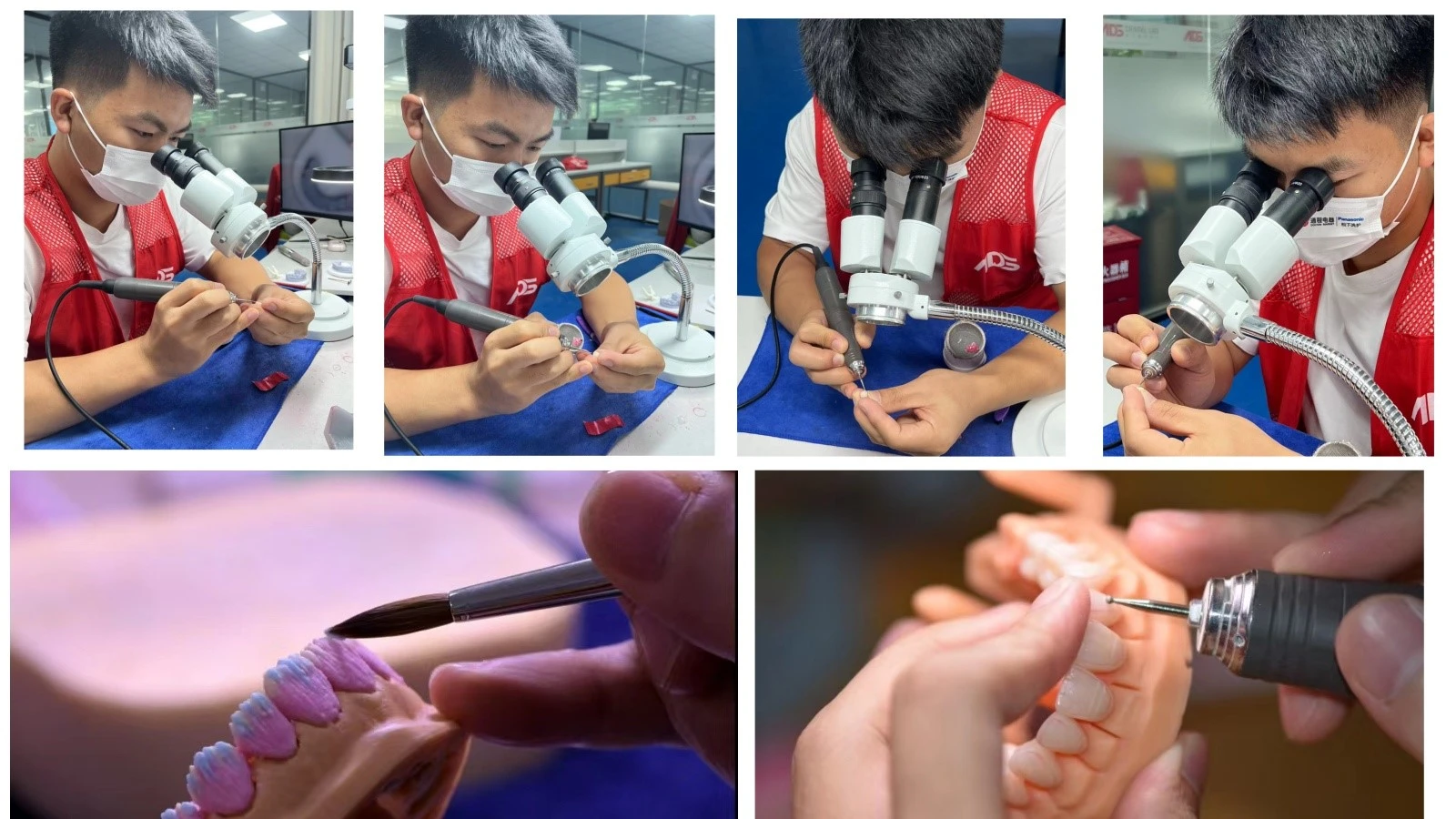
Hand Contouring for Surface Character
After the basic morphology is established, experienced technicians refine the facial surface manually.
Hand contouring can be used to develop primary and secondary anatomical details, including grooves, ridges, transition areas, and subtle irregularities.
This combination of digital precision and manual finishing is a core part of ADS's production approach.
Customized Texture Intensity
Surface texture should match the case rather than follow one standard pattern.
Depending on patient references and the dentist's prescription, the texture may be:
Subtle – clean and refined, with minimal visible surface variation.
Moderate – natural anatomical definition with controlled grooves and light-reflection zones.
Customized – more individualized surface character based on adjacent teeth or specific aesthetic references.
Light Reflection and Line-Angle Control
One of the most important functions of surface morphology is controlling reflected light.
Line angles define the central facial reflection zone. When they are positioned differently, the apparent width of the tooth can change even if the actual dimensions remain the same.
Facial convexity, grooves, and surface ridges also influence how highlights move across the veneer.
This makes line-angle control particularly useful in cases involving:
- Tooth proportion correction
- Symmetry improvement
- Narrower or broader visual tooth appearance
- Multi-unit smile design
Texture and Gloss Balance
Surface texture must remain visible after final finishing.
If the veneer is over-polished or excessively glazed, fine details may become less distinct. If the surface is left too rough, however, the restoration may not achieve the desired final finish.
Our technicians therefore balance surface definition with polishing and glazing so that the texture remains controlled without appearing exaggerated.
Suitable Cases
E.max Layering Veneers with Surface Texture may be suitable for:
- Single veneers requiring surface matching with adjacent natural teeth
- Anterior restorations where line-angle control is important
- Multi-unit veneer cases requiring coordinated surface character
- Replacement of veneers that appear overly smooth or flat
- Smile designs requiring more three-dimensional tooth morphology
- Cases where apparent tooth width needs visual adjustment
- Restorations requiring customized facial anatomy
- High-aesthetic cases supported by detailed patient photographs
The final surface design should always be based on the tooth position, adjacent dentition, smile design, restorative space, and prescribing dentist's aesthetic objectives.
Our Surface Texture Workflow
1. Collect Morphology References
Send STL files, patient smile photos, close-up anterior images, adjacent-tooth references, and the case prescription.
2. Analyze Tooth Form
Our technicians review tooth proportions, facial contour, line angles, incisal form, and surrounding dentition.
3. Digital Morphology Design
The overall restoration shape is digitally planned before surface detailing.
4. Define the Texture Style
The desired surface character is selected as subtle, moderate, or customized according to the clinical references.
5. Hand Contouring and Surface Characterization
Technicians refine developmental anatomy, grooves, line angles, facial transitions, and micro-texture.
6. Reflection and Gloss Review
The restorations are evaluated for highlight distribution, surface definition, texture intensity, and final gloss.
7. Final QC and International Delivery
Margins, fit, contacts, occlusion, surface finish, and overall aesthetic consistency are checked before shipment.
ADS also uses magnification-assisted inspection, technician traceability, and structured final QC as part of its production system.
Why Choose ADS for Surface Texture Veneer Cases?

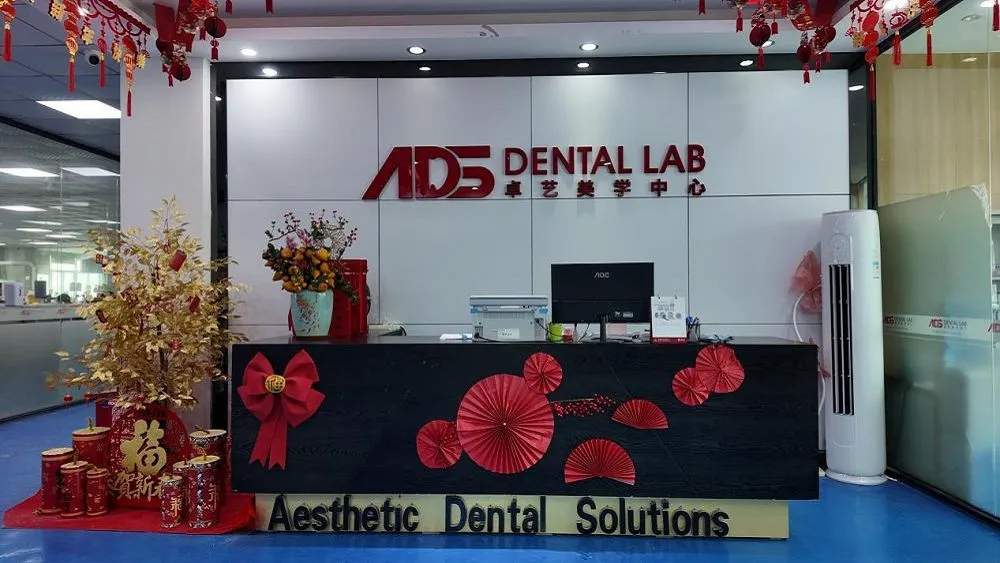
ADS Dental Laboratory Ltd is a full-service digital dental laboratory in Shenzhen, China, providing customized aesthetic restorations and long-term outsourcing support for overseas dentists and dental laboratories.
- Dedicated Veneer Aesthetic Team – Specialized technicians experienced in anterior morphology, contouring, and aesthetic finishing.
- Digital Morphology + Hand Contouring – Digital design establishes precise tooth form, while technicians refine the final surface manually.
- Customized Texture Intensity – Surface details can be adjusted according to patient photographs, adjacent teeth, and aesthetic preferences.
- IPS e.max Experience – ADS routinely produces E.max veneers and other aesthetic restorations and maintains an IPS e.max Loyal Club Elite relationship.
- Flexible Outsourcing Support – Dental laboratories may outsource complete veneer cases or selected processes such as design, layering, contouring, and finishing.

FAQ
Why does surface texture matter in an E.max veneer?
Surface texture changes how light reflects from the restoration and can influence its apparent depth, width, and overall tooth character.
Can surface texture make a veneer look narrower or wider?
Yes. The position of the facial line angles and the width of the reflective zone can influence the perceived tooth width.
Can you match the surface texture of adjacent natural teeth?
Yes. Clear close-up photographs of the adjacent dentition provide useful references for morphology and surface characterization.
Can I request a smoother veneer surface?
Yes. Texture intensity can be kept subtle when a cleaner, more refined appearance is preferred.
Can you create more pronounced surface character?
Yes. More visible developmental anatomy or micro-texture can be added when supported by the clinical reference and prescription.
Will glazing remove the surface texture?
Final glazing and polishing are controlled to maintain appropriate surface definition while achieving the required finish.
Is every veneer in a multi-unit case given exactly the same texture?
Not necessarily. The restorations can share an overall design language while individual surface details are adjusted to avoid an overly repetitive appearance.
What should I send for a surface-texture veneer case?
We recommend STL files, patient photos, close-up anterior images, adjacent-tooth references, desired morphology information, and a detailed prescription.
Hot Tags: e.max layering veneers with surface texture, China e.max layering veneers with surface texture manufacturers, suppliers, factory, acrylic resin partial denture, Digital Emax Veneers, expander for your mouth, lower hawley retainer, lower palate expander for adults, maxillary palatal expander


