



ADS Dental Lab Ltd. is one of the most experienced manufacturers and suppliers of feldspathic veneers with natural opalescence in China, featured by quality products and low price. Please feel free to wholesale customized feldspathic veneers with natural opalescence made in China here from our factory. For quotation, contact us now.
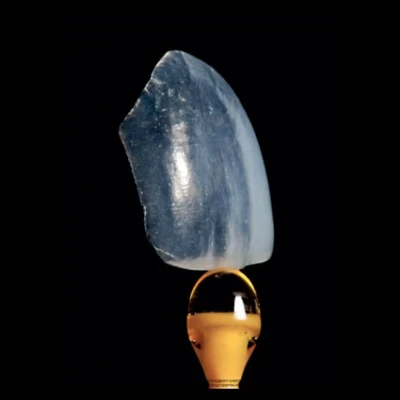
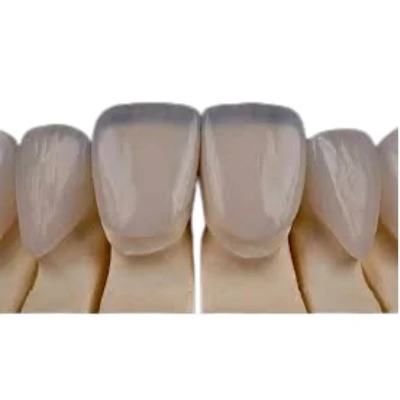
Feldspathic Veneers with Natural Opalescence are designed for high-end anterior aesthetic cases where dentists want more than a bright smile. These veneers are created to reproduce the subtle optical behavior of natural enamel, including enamel-like depth, soft blue-white reflection, warm transmitted tone, and lifelike surface luster.
At ADS Dental Lab, we fabricate custom opalescent feldspathic veneers for overseas dentists, cosmetic clinics, and dental laboratories. Each case is carefully evaluated based on patient photos, shade records, stump shade, adjacent teeth, target shade, and clinical prescription. Our experienced ceramists use hand-layered feldspathic porcelain techniques to create veneers with refined optical depth rather than a flat or overly opaque appearance.
For cosmetic anterior cases, single front tooth veneers, and high-end smile design restorations, natural opalescence can help the final result look closer to real enamel under different lighting conditions.
Send your opalescent feldspathic veneer case to ADS Dental Lab for a custom enamel-effect evaluation.


What Is Natural Opalescence in Feldspathic Veneers?
Natural opalescence refers to the way enamel scatters and reflects light. In natural anterior teeth, enamel does not simply appear white or transparent. Under reflected light, it may show a subtle blue-white or blue-gray effect. Under transmitted light, it can reveal a warmer orange or amber tone. This delicate optical behavior gives natural teeth depth, vitality, and visual softness.
In feldspathic veneers, opalescence is especially important for high-end aesthetic cases. A veneer without optical depth may look too flat, too white, or artificial. A properly designed opalescent veneer can create a more enamel-like effect, helping the restoration blend with the patient's natural smile.
Opalescence is different from simple translucency. Translucency refers to how much light passes through the ceramic. Opalescence refers to how light is scattered and reflected within the ceramic structure. For anterior feldspathic veneers, both effects must be controlled carefully to avoid veneers that look too gray, too cold, or too opaque.
Product Specifications
| Specification | Details |
| Product Type | Feldspathic veneers with natural opalescence |
| Material System | Hand-layered feldspathic porcelain ceramic |
| Main Aesthetic Focus | Enamel-like opalescence, optical depth, soft blue-white reflection |
| Indicated Area | Anterior teeth and smile zone |
| Ideal Cases | High-end cosmetic veneers, single anterior cases, natural smile design cases |
| Thickness Range | Case-dependent thin veneer design |
| Shade Matching | VITA shade guide, patient photos, digital shade records, stump shade |
| Case Submission | STL, PLY, DCM digital files or conventional impressions |
| Precision Control | Digital microscope-assisted marginal finishing |
| Case Quantity | Single anterior veneer, multi-unit anterior cases, smile makeover cases |


Key Product Advantages
Natural Enamel-Like Opalescence
The main advantage of these feldspathic veneers is their ability to reproduce the subtle opalescent effect found in natural enamel. Instead of creating a simple white ceramic surface, ADS focuses on building optical depth through careful ceramic layering.
Subtle Blue-White Reflection
Natural enamel often shows a delicate blue-white or blue-gray reflection, especially around the incisal and thin enamel areas. Our opalescent feldspathic veneers can be customized to create this refined optical effect without making the restoration appear too gray or unnatural.
Warm Transmitted Tone
Aesthetic veneers should not look cold or lifeless. With the right ceramic layering, opalescent feldspathic veneers can maintain a soft warmth when light passes through the ceramic. This helps the restoration look more natural in the mouth and under different lighting conditions.
High-End Anterior Aesthetics
Feldspathic Veneers with Natural Opalescence are especially suitable for anterior aesthetic cases where details matter. They are often chosen for single anterior veneers, high-end cosmetic cases, smile makeover restorations, and patients who want veneers that do not look flat or mass-produced.
Custom Ceramic Layering
ADS technicians use hand-layered feldspathic porcelain to control brightness, translucency, chroma, opalescence, and internal character. Each veneer is customized according to the patient's existing teeth, desired shade, stump shade, and final aesthetic goal.
Precise Marginal and Surface Finishing
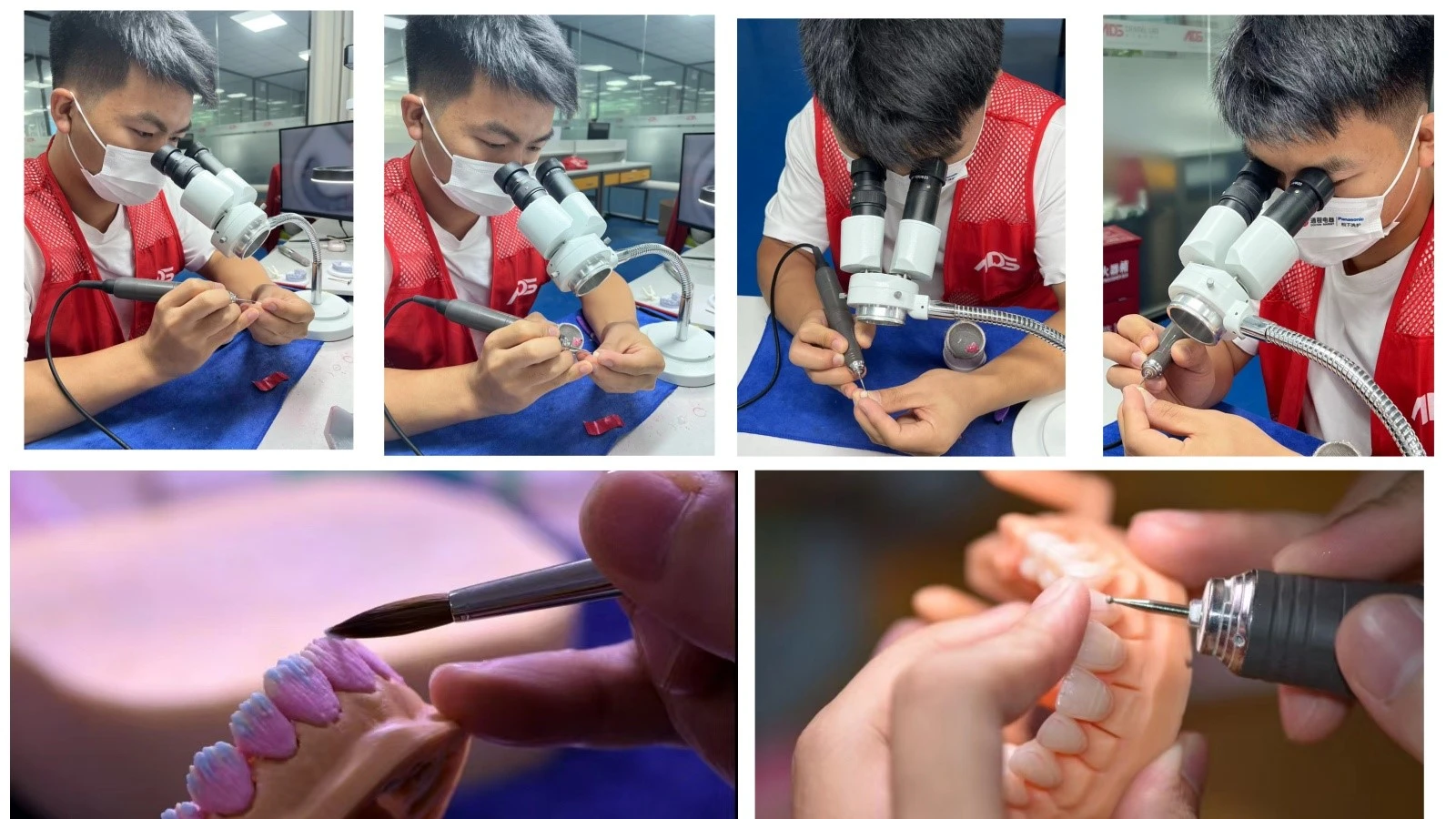
For anterior veneers, optical beauty must be supported by accurate fit and refined finishing. At ADS Dental Lab, each case is carefully finished and inspected under high-magnification digital microscopes to support precise margins, smooth surface details, and reliable final quality.
Suitable Cases for Opalescent Feldspathic Veneers
Feldspathic Veneers with Natural Opalescence are suitable for cases where the dentist wants to reproduce the optical quality of natural enamel rather than only changing the tooth color.
They are commonly used for:
- High-end anterior aesthetic restorations
- Single anterior veneer cases requiring enamel-like blending
- Cosmetic veneers requiring lifelike optical depth
- Smile design cases where the patient wants a refined natural effect
- Young smile cases with visible enamel character
- Cases requiring subtle blue-white incisal reflection
- Multi-unit anterior veneers needing natural optical variation
- Patients who do not want flat white or overly opaque veneers
- Dental labs outsourcing premium anterior ceramic cases
For severe discoloration or cases requiring strong masking, the opalescent effect may need to be adjusted. In these situations, ADS can review the stump shade, target shade, and preparation space to recommend the best ceramic layering strategy or alternative restoration material.
How ADS Creates Natural Opalescence
Shade and Photo Review
Before fabrication, ADS reviews patient smile photos, close-up anterior photos, shade tab photos, stump shade, adjacent tooth color, and the target shade. These records help our ceramists understand the patient's natural enamel character and the desired level of opalescence.
Opalescent Ceramic Layering
Our technicians use feldspathic porcelain layering techniques to create enamel-like optical effects. Depending on the case, opal enamel ceramics, translucent ceramics, and selected effect powders may be used to build subtle depth and light reflection.
Balance Between Brightness and Depth
Opalescent veneers must be carefully balanced. Too much translucency may make the veneer look gray; too much opacity may make it look flat. ADS controls ceramic brightness, chroma, translucency, and opalescence to create a refined aesthetic result.
Surface and Detail Refinement
The final effect is not determined by color alone. Surface texture, line angles, luster, and contour also affect how light reflects from the veneer. ADS technicians refine these details carefully before final delivery.
Digital Microscope-Assisted Inspection
Each veneer is inspected under high-magnification digital microscopes to check margin accuracy, surface quality, and fine finishing details. For multi-unit anterior cases involving occlusal adjustment, ADS can also use genuine Amann Girrbach articulators to help evaluate bite relationships before shipment.
Cooperation Workflow
Step 1 - Send Case Files
Clients can send STL, PLY, DCM digital files or conventional impressions. ADS accepts both digital and traditional case submissions from overseas dentists and dental laboratories.
Step 2 - Provide Photos and Shade Records
For opalescent veneer cases, we recommend sending patient photos, close-up anterior photos, shade tab photos, stump shade, target shade, and any reference images showing the desired enamel effect.
Step 3 - Aesthetic Evaluation
ADS evaluates the case to determine the suitable opalescent ceramic effect, shade strategy, veneer thickness, and overall design direction.
Step 4 - Design and Layering Confirmation
For selected anterior aesthetic cases, ADS can provide smile design confirmation before fabrication. The ceramic layering plan is then adjusted according to the confirmed design and clinical prescription.
Step 5 - Fabrication and Quality Control
Our ceramists fabricate the feldspathic veneers using customized ceramic layering. Each veneer is checked for optical effect, shade harmony, margin quality, surface texture, and final finish.
Step 6 - Worldwide Shipping
Finished veneers are securely packaged and shipped internationally through FedEx, UPS, DHL, or LINEX. ADS also provides after-sales and warranty support for long-term cooperation.
Why Choose ADS Dental Lab?
ADS Dental Lab supports overseas dentists and dental laboratories with custom opalescent feldspathic veneer fabrication for single anterior cases, multi-unit anterior cases, and premium smile design restorations. Our technicians customize the level of opalescence according to patient photos, adjacent tooth shade, stump shade, and final aesthetic goals.
Each case is hand-layered, refined, and inspected under high-magnification digital microscopes to support precise margins and fine surface detail. ADS accepts STL, PLY, DCM digital files as well as conventional impressions, making case submission simple for international clients.
With reliable worldwide shipping through FedEx, UPS, DHL, and LINEX, dedicated communication support, and long-term warranty service, ADS provides a dependable outsourcing solution for dentists and labs seeking high-quality feldspathic veneers with natural enamel-like opalescence.

FAQ
Q1: What is natural opalescence in feldspathic veneers?
Natural opalescence is the enamel-like optical effect where the veneer shows subtle blue-white reflection under reflected light and a warmer transmitted tone when light passes through. It helps the veneer look more lifelike and less flat.
Q2: How is opalescence different from translucency?
Translucency describes how much light passes through the ceramic. Opalescence describes how light is scattered and reflected within the ceramic, creating blue-white and warm optical effects similar to natural enamel.
Q3: Can ADS customize the level of opalescence?
Yes. ADS can adjust the opalescent effect according to patient photos, adjacent teeth, stump shade, target shade, and the dentist's prescription. The goal can be subtle, youthful, or more pronounced depending on the case.
Q4: Are opalescent feldspathic veneers suitable for single anterior teeth?
Yes. Opalescent feldspathic veneers can be a good choice for single anterior veneer cases where the restoration must blend with the natural optical character of adjacent teeth. Detailed photos and shade records are very important for these cases.
Q5: What records should I send for opalescent veneer cases?
We recommend sending digital scans or impressions, patient smile photos, close-up anterior photos, shade tab photos, stump shade, target shade, preparation photos, bite records, and reference images if available.
Q6: Can opalescent veneers be used for discolored teeth?
They can be used for some mild discoloration cases, but severe discoloration may reduce the visible opalescent effect or require stronger masking. ADS can review the case and recommend the most suitable veneer design or alternative material.
Hot Tags: feldspathic veneers with natural opalescence, China feldspathic veneers with natural opalescence manufacturers, suppliers, factory, all on 4 zirconia bridge, Dental Veneers, expander for your mouth, expansion appliance dental, fixed zirconia bridge, lower expansion appliance


