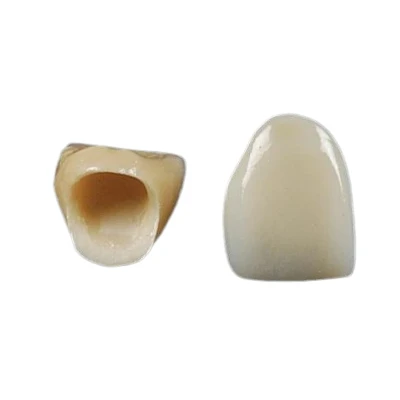
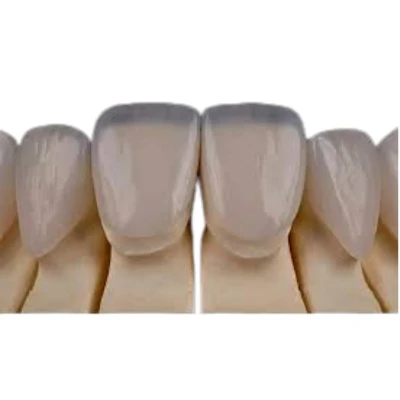
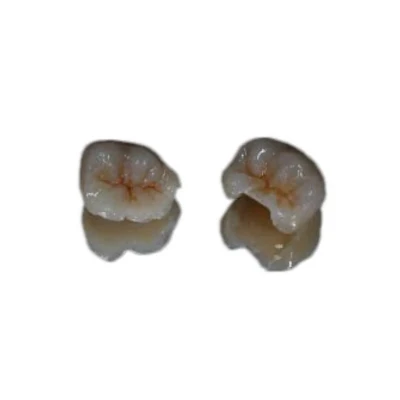

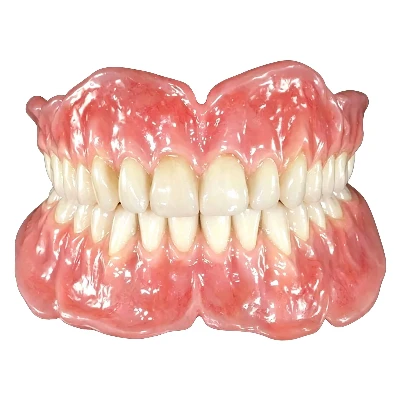

A restoration can have accurate margins, acceptable contacts, and the right shade, yet still create problems if the occlusion is wrong. High contacts, excursive interferences, or an unstable bite record can turn a routine seating appointment into repeated grinding, polishing, and patient complaints. In more severe cases, the restoration must be remade.
Better occlusion is not created by removing more ceramic at delivery. It starts with accurate clinical records, case-specific design, and careful verification before the restoration leaves the laboratory.

What Better Occlusion Means in Restorative Dentistry
In restorative dentistry, occlusion describes how the maxillary and mandibular teeth contact in a closed position and how those contacts change during functional movement. It includes both static occlusion, such as contact in maximum intercuspation, and dynamic occlusion during protrusive and lateral movements.
A restoration may appear acceptable when the patient closes straight down but still interfere during chewing or mandibular excursions. That is why checking only one bite position is not enough.
Better occlusion means that the restoration fits into the patient's existing functional pattern without creating a new premature contact, an isolated overload, or a harmful lateral interference. Contact location matters. Contact intensity matters. The direction of force matters as well.
More contacts do not automatically mean better occlusion.
A posterior crown may need stable support in maximum intercuspation while avoiding heavy contact on a steep incline. An anterior crown may need to preserve guidance without becoming the only tooth carrying excursion forces. An implant-supported crown often requires more conservative load control because the implant does not have the same periodontal ligament cushioning and proprioceptive response as a natural tooth.
The target is not a universal contact map. It is a contact pattern that suits the tooth position, restoration type, material, opposing dentition, and patient.
How Occlusal Errors Lead to Chairside Adjustments and Remakes
From an Incorrect Bite to a High Restoration
Many occlusal problems begin before the restoration is designed. If the bite registration is distorted, incomplete, or captured while the patient closes in an unstable position, the laboratory receives the wrong maxillomandibular relationship.
The CAD design may still look precise, but it is being built on incorrect input.
At delivery, the patient may report that:
- The crown contacts first;
- One side feels higher than the other;
- The jaw shifts before the teeth come together;
- The restoration catches during lateral movement;
- Chewing feels uneven or uncomfortable.
The dentist then marks and adjusts the occlusal surface. Minor refinement is common, but repeated or extensive adjustment usually indicates an earlier workflow problem.
How Excessive Adjustment Can Turn Into a Remake
Extensive chairside grinding changes the restoration that the laboratory originally designed. Cusp height is reduced. Fossae become shallow. Functional inclines may be flattened. The restoration can lose the anatomy intended to guide food, distribute force, and coordinate with the opposing dentition.
Heavy adjustment can reduce ceramic thickness, expose a layered interface, remove glaze, or leave rough zirconia that requires careful repolishing. If too much material is removed, the crown may become under-occluded.
Some cases cannot be corrected by further grinding. The restoration may need to be remade because the jaw relationship was wrong, the design cannot be adjusted without compromising strength, or the patient still cannot achieve a stable bite.
The main objective is not to eliminate every small adjustment. It is to prevent large, repetitive, and avoidable adjustments.
Where Occlusal Errors Enter the Restorative Workflow
Occlusal discrepancies can enter the case during clinical recording, digital alignment, design, fabrication, or finishing.
Clinical Recording Errors
A complete scan does not automatically mean an accurate bite record.
Common clinical causes include limited scan coverage, missing opposing anatomy, a unilateral bite scan that does not stabilize the arch relationship, or patient movement during closure. The patient may slide into a different position while the bite is recorded. A thick or distorted interocclusal material can create a similar problem.
Risk increases with unstable intercuspation, severe wear, limited posterior support, or bruxism. A simple habitual closure scan may then be insufficient.
Important functional details can also be lost when the prescription does not mention anterior guidance, existing wear facets, parafunctional habits, or the desired contact pattern.
Digital Alignment and Design Errors
Bite alignment software is useful, but automatic matching should not be accepted without review. The system may align the arches using limited surface data or produce a relationship that looks visually clean but does not reflect the patient's actual closure.
Design problems can also occur when the technician:
- Checks only static contact;
- Ignores protrusive or lateral movement;
- Uses the same occlusal settings for every case;
- Maintains idealized cusp anatomy despite limited restorative space;
- Places heavy contact on an implant crown;
- Relies on color maps without considering contact direction.
Digital precision does not correct an incorrect jaw relationship.
Fabrication and Finishing Errors
Milling, sintering, veneering, staining, and glazing may alter the final occlusal surface. Even a small buildup can turn a light contact into a high point.
For that reason, occlusion should be checked again after the final production steps. The laboratory also needs to verify that proximal contacts, internal fit, and margins will allow the restoration to seat completely. A crown that is held up by a tight contact may appear occlusally high even when the occlusal design itself is correct.
The entire workflow must be controlled. A good design can still fail if the final restoration is not rechecked.
How Dentists Can Provide More Reliable Occlusal Records
Reliable occlusal design starts with stable clinical information. The dentist should first determine whether the existing bite is repeatable and suitable for a conformative restoration.
For routine crown and bridge cases, the following steps reduce avoidable errors:
- Scan the complete working arch and enough opposing anatomy to provide stable alignment;
- Capture bilateral bite data when possible;
- Confirm that the patient is closing naturally and not biting on the tongue, cotton, or scanner tip;
- Inspect the bite relationship before submitting the case;
- Document obvious wear facets, fractures, fremitus, and bruxism;
- State whether the restoration should follow maximum intercuspation or another verified jaw position;
- Identify contacts that should be maintained, lightened, or avoided.
Complex cases need more than a standard scan package. Full-mouth rehabilitation, altered vertical dimension, unstable intercuspation, and full-arch implant restorations may require wax-ups, verified provisionals, additional jaw records, or photographs.
A provisional restoration can be especially valuable. Once the patient has adapted to its vertical dimension, guidance, phonetics, and function, the provisional becomes a tested reference for the definitive design.
The laboratory can only work with the relationship it receives. Better input remains the most effective way to reduce downstream correction.

How Dental Labs Reduce Occlusion-Related Remakes
A reliable dental laboratory should not treat occlusion as a final software setting. It should be part of case review, design, production, and final quality control.
Pre-Production Data Validation
Before design, the laboratory should verify scan completeness, readable margins, usable opposing anatomy, and a clinically reasonable bite alignment.
The technician should also check restorative space. If it is insufficient for the selected material and anatomy, the laboratory should communicate the problem rather than simply thinning the crown or flattening every cusp.
Any contradiction between the scan, prescription, photographs, and existing anatomy should be resolved early. This is where a large number of preventable remakes can be stopped.
Static and Dynamic Occlusal Design
Static contact in maximum intercuspation is only the starting point. The design should also be assessed during protrusive and lateral movement when the case requires it.
The laboratory should consider:
- Tooth position;
- Functional cusp anatomy;
- Opposing material;
- Qvailable ceramic thickness;
- Natural-tooth or implant support;
- Bridge span and connector design;
- Parafunctional risk;
- Existing anterior guidance.
Reported maximum bite forces are much higher in the molar region, reaching approximately 390 to 800 N, compared with about 155 N in the incisor region. These values vary among patients, but the difference explains why a small posterior high point can become a significant mechanical problem.
Contact maps must therefore be interpreted, not merely accepted. A visually balanced map may still place force on an unfavorable incline or create a non-working interference.
Final Occlusal Quality Control
The completed restoration should be rechecked after sintering, layering, staining, or glazing. The laboratory should confirm:
- Complete seating on the model or verified digital representation;
- Acceptable proximal contacts;
- Stable static contact;
- Absence of obvious excursive interference;
- Adequate material thickness;
- Proper repolishing of any adjusted ceramic surface.
Remakes should be classified by cause. "High bite" is not enough; the team should distinguish bite-registration, seating, contact, design, post-processing, and patient-related factors.
A repeatable quality-control process is more valuable than a technician making isolated corrections case by case.
Occlusal Priorities for Different Restoration Types
Different restorations fail in different ways. The occlusal plan should reflect those differences.
|
Restoration type |
Main occlusal concern |
Practical design priority |
|
Posterior crown |
High bite force and cusp overload |
Stable central contact without heavy incline interference |
|
Multi-unit bridge |
Uneven loading across abutments |
Balanced support after complete seating |
|
Anterior crown or veneer |
Altered guidance and excursive contact |
Preserve functional movement as well as esthetics |
|
Implant-supported crown |
Direct load transfer and limited physiologic cushioning |
Reduce harmful lateral and non-axial load |
|
Full-arch restoration |
Jaw relation and vertical dimension error |
Verify function with provisionals or try-ins |
|
Bruxism case |
Repeated high-intensity functional load |
Stronger material strategy and controlled contact pattern |
Posterior Crowns and Bridges
Posterior restorations carry higher functional loads than anterior restorations. Cusp position, central fossa contact, marginal ridge height, and excursive clearance all matter.
For bridges, complete seating must be confirmed before occlusion is judged. Tight proximal contact or internal interference can create a false high bite, while uneven loading can stress one abutment or connector.
Anterior Crowns and Veneers
Anterior restorations affect more than appearance. Changes in incisal length, palatal contour, or lingual thickness can alter protrusive and lateral guidance.
Even a thin veneer can create functional interference if it extends over the incisal edge. The technician must preserve the patient's movement pattern unless the treatment plan intentionally reorganizes it.
Implant-Supported Restorations
Implants lack the periodontal ligament cushioning and sensory feedback of natural teeth, making contact timing and lateral-force control more important.
Poor load management may contribute to ceramic chipping, screw loosening, or other mechanical complications. These problems are multifactorial, so they should not be blamed on occlusion alone. Still, avoiding heavy eccentric contact is a basic risk-control step.
Bruxism and Full-Mouth Rehabilitation Cases
Bruxism amplifies small design errors. A minor interference that causes little trouble in a low-force patient can become a fracture risk under repeated parafunctional loading.
Full-mouth rehabilitation adds another challenge: the jaw relationship or vertical dimension may be intentionally changed. In these cases, the definitive restorations should not be the first place where function is tested. Diagnostic wax-ups, mock-ups, printed try-ins, and verified provisionals provide a safer path.

Digital Occlusal Tools: What They Improve and What They Cannot Fix
What Digital Tools Improve
Intraoral scanning, CAD software, virtual articulators, and digital occlusal analysis tools can improve communication and make contact patterns easier to visualize.
They help the clinical and laboratory teams:
- Review the opposing anatomy;
- Measure restorative space;
- Identify potential high areas;
- Simulate mandibular movement;
- Compare versions of a design;
- Store and transfer records without physical model distortion.
Tools such as T-Scan and OccluSense can also provide information about contact timing and relative force distribution that articulating paper alone cannot show.
One reported digital full-arch workflow reduced occlusal adjustment time by about 70%. This workflow-specific result shows the potential value of accurate data capture and pre-delivery verification.
What Digital Tools Cannot Fix
Digital tools cannot correct an unstable closure, diagnose jaw function from an STL file, or create missing restorative space.
They also cannot guarantee that the final result remains unchanged after sintering, layering, or glazing.
Software supports judgment. It does not replace it.
The strongest digital workflow combines accurate clinical capture, careful technical review, case-specific design, and final verification.
The Hidden Cost of Chairside Adjustments and Remakes
A remake costs more than the replacement restoration.
Chairside adjustment consumes staff time, polishing materials, and appointment capacity. A failed seating may require repeated grinding, a new scan or impression, provisional maintenance, and another delivery visit.
For outsourced cases, the laboratory must review the complaint, coordinate new files, remake the restoration, and ship again. International transit can turn a production issue into weeks of delay.
There is also a patient cost. Patients do not separate clinical capture, CAD design, and laboratory production. They experience the result as a crown that feels wrong, requires too much grinding, or needs to be replaced.
Reducing chairside adjustments therefore improves more than efficiency. It protects the anatomy of the restoration, shortens the seating appointment, reduces operational disruption, and strengthens trust between the clinic, patient, and laboratory.
Conclusion
Better occlusion reduces remakes and chairside adjustments by preventing premature contacts, excursive interferences, unstable loading, and false high bites caused by incomplete seating. The process begins with a reliable bite record, continues through case-specific design and laboratory quality control, and ends with clinical verification after the restoration is fully seated.
Small adjustments may still be necessary. Repeated heavy grinding should not be treated as normal.
ADS Dental Laboratory Ltd provides digital dental restoration outsourcing for overseas dentists and dental laboratories. We use genuine Amann Girrbach articulators and related components to support more accurate simulation of mandibular movement and more consistent occlusal verification throughout production. Combined with restoration-specific design standards and structured quality control, this helps reduce preventable remakes and unnecessary chairside adjustments. Contact us to discuss your workflow or submit a case for evaluation.