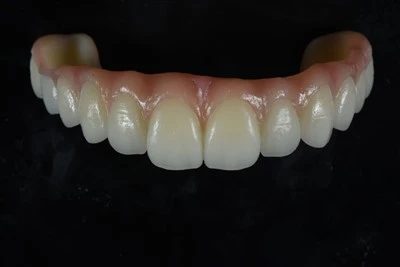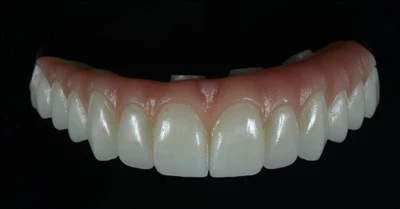
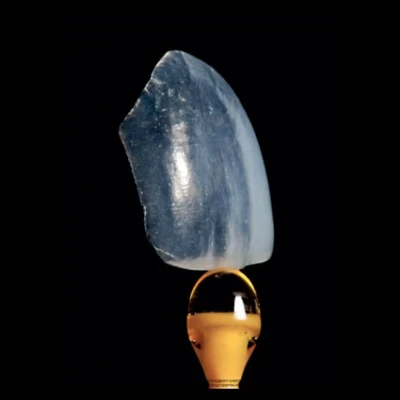
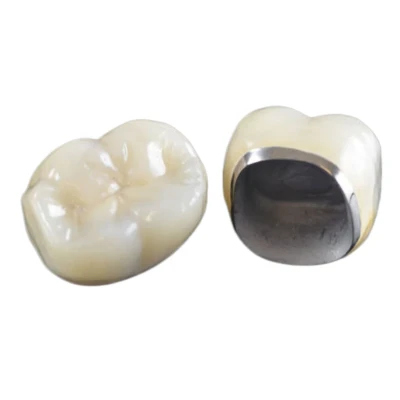
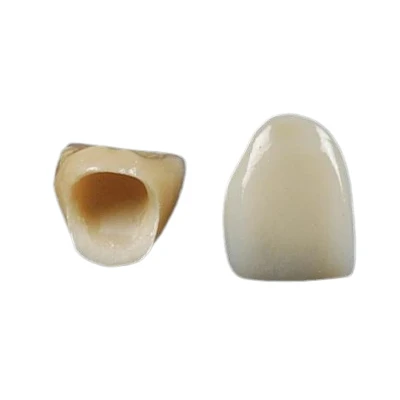
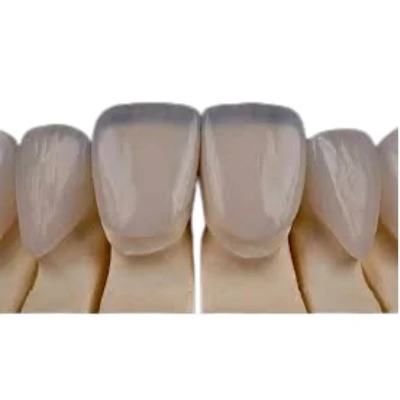
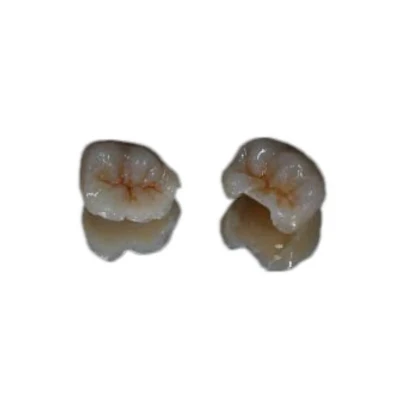
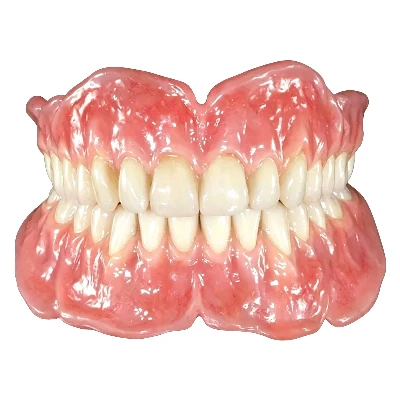

Emax and feldspathic porcelain are both glass-based dental ceramics, but they are not interchangeable. Feldspathic porcelain offers exceptional optical control for thin, highly customized anterior restorations. Emax, a lithium disilicate ceramic, provides greater strength and a broader range of clinical indications.
The right choice depends on the restoration type, substrate shade, available ceramic thickness, remaining enamel, occlusion, and esthetic target. Material strength matters, but it should never be evaluated separately from preparation design, bonding conditions, and laboratory technique.

What Are Emax and Feldspathic Porcelain?
Emax usually refers to IPS e.max, a family of lithium disilicate glass-ceramic materials. Lithium disilicate contains a high concentration of reinforcing crystals within a glass matrix. This structure gives the material substantially greater flexural strength than traditional feldspathic porcelain while maintaining enough translucency for esthetic restorations.
Emax restorations can be fabricated through heat pressing or CAD/CAM milling. Milled lithium disilicate blocks are processed in an intermediate crystalline state and then undergo a crystallization firing cycle. This final firing develops the material's tooth color and mechanical properties.
Feldspathic porcelain is also a dental ceramic. More specifically, it is a silica-based, glass-rich ceramic with relatively low crystalline content. Its high glass content allows light to travel through the restoration in a way that can closely resemble natural enamel.
Traditional feldspathic restorations are built by hand. A technician applies porcelain powders in multiple layers, then fires the restoration through several cycles. This process makes it possible to control dentin color, enamel translucency, incisal effects, fluorescence, surface texture, and luster.
Feldspathic ceramics can also be milled from industrially manufactured CAD/CAM blocks. These blocks improve workflow consistency and production efficiency, although they offer less internal layering freedom than traditional hand-built porcelain.
The important distinction is not "ceramic versus porcelain." Both materials are ceramics. Their clinical differences come from their microstructure, strength, optical behavior, and fabrication method.
Emax vs. Feldspathic Porcelain at a Glance
The following table shows the practical differences most relevant to case selection.
|
Comparison |
Emax / Lithium Disilicate |
Feldspathic Porcelain |
|
Material type |
Crystal-reinforced glass ceramic |
Glass-rich feldspathic ceramic |
|
Typical flexural strength |
Approximately 360–500 MPa |
Approximately 60–100 MPa |
|
Optical character |
Excellent; available in different translucency levels |
Excellent light transmission and layering control |
|
Common fabrication methods |
Pressed or CAD/CAM milled |
Hand-layered or CAD/CAM milled |
|
Common indications |
Veneers, crowns, inlays, onlays |
Mainly anterior veneers and selected esthetic restorations |
|
Functional-load tolerance |
Higher |
Lower and more case-sensitive |
|
Masking options |
Multiple opacity and translucency levels |
Highly dependent on thickness, layering, and substrate shade |
|
Main advantage |
Balance of strength, esthetics, and versatility |
Maximum control of individualized anterior esthetics |
|
Main limitation |
Requires sufficient space for contour, masking, and material design |
Lower mechanical strength and less tolerance for unfavorable loading |
Flexural-strength values are useful for comparison, but they do not predict clinical survival by themselves. A well-bonded feldspathic veneer on enamel can perform reliably, while a poorly designed Emax restoration can still crack, debond, or fail.
The stronger material is not automatically the better material.
Which Material Provides Better Esthetics?
Feldspathic porcelain offers the greatest freedom for individualized layering. A skilled technician can build the restoration in separate optical zones rather than relying on one uniform ceramic body.
This matters in demanding anterior cases.
Natural teeth do not have one flat shade. The cervical area may have greater chroma. The body of the tooth reflects the underlying dentin color. The incisal third may contain translucency, opalescence, mamelons, halos, or fine internal characterization. Surface texture and gloss further change how the tooth reflects light.
Hand-layered feldspathic porcelain allows the technician to control these details independently. It is especially useful when matching a single central incisor, reproducing a complex incisal edge, or creating very thin veneers over favorable tooth structure.
Emax can also produce excellent anterior esthetics. Its result depends heavily on how it is used.
A monolithic Emax restoration that is only stained and glazed will not have the same internal depth as a cut-back and layered Emax restoration. The selected ingot or block also matters. High-translucency materials transmit more of the underlying tooth color, while lower-translucency materials provide more masking.
Thickness changes the result again. A thicker restoration may appear more dense, while a very thin high-translucency restoration can be strongly influenced by the substrate.
CAD/CAM feldspathic blocks occupy a middle position. They retain the brightness and light transmission associated with feldspathic ceramic, but their monolithic structure limits the internal gradation available through full hand layering. Surface staining, texture, and hand finishing can improve the final appearance.
Feldspathic porcelain has the higher ceiling for customized optical work. Emax remains the more practical choice when the restoration must combine a high esthetic standard with greater mechanical support.
How Do Strength, Durability, and Functional Load Compare?
Lithium disilicate is substantially stronger than conventional feldspathic porcelain. Reported flexural-strength values vary by product and test method, but Emax is commonly placed in the approximate 360–500 MPa range. Traditional feldspathic porcelain is generally closer to 60–100 MPa.
That difference affects clinical indications.
Emax can be used for veneers, single crowns, inlays, and onlays. It is more tolerant of functional loading and is easier to handle during try-in and bonding than an extremely thin feldspathic restoration. It also provides a greater strength margin when part of the restoration extends into a functional area.
Feldspathic porcelain is more sensitive to thickness, support, and stress concentration. Thin unsupported areas, unfavorable incisal contacts, poor bonding, or aggressive chairside adjustment can increase the risk of chipping or fracture.
Its lower material strength does not make feldspathic veneers unreliable. Bonded ceramic behaves as part of a larger system. When a feldspathic veneer is bonded primarily to enamel, properly designed, and protected from excessive loading, the tooth-ceramic complex can perform well over time.
Emax can also fail. Common causes include:
- Insufficient material thickness
- Sharp internal preparation angles
- Poorly positioned occlusal contacts
- Inadequate bonding procedures
- Unsupported ceramic
- Uncontrolled bruxism
- Incomplete polishing after adjustment
Bruxism deserves special attention. Emax may be a more defensible choice than feldspathic porcelain when functional demand is elevated, but it is not resistant to every parafunctional load. Active grinding can still cause fractures, debonding, wear, and damage to opposing teeth.
These cases require careful occlusal analysis, adequate material dimensions, proper surface finishing, and often a protective night guard.
Mechanical strength creates a larger safety margin. It does not replace sound case planning.
How Do Tooth Preparation, Thickness, Bonding, and Substrate Shade Affect the Choice?
Material selection should take place before tooth preparation. Once the available space and enamel have been removed, the treatment options may become more limited.
Tooth Preparation and Ceramic Thickness
Feldspathic porcelain is often associated with minimal-prep or no-prep veneers. That can be appropriate in additive cases, such as closing a small diastema, increasing the width of an undersized lateral incisor, or restoring a tooth that is slightly lingually positioned.
No-prep treatment is not automatically conservative.
When the tooth is already prominent, adding ceramic without preparation can create excessive facial contour, bulky cervical margins, poor emergence profiles, and plaque-retentive areas. Severe discoloration may also require more ceramic thickness than an additive design can provide.
Emax veneers often require enough space to satisfy three needs:
- Adequate ceramic thickness
- Proper final contour
- Sufficient masking of the substrate
Selected lithium disilicate veneers may be designed at approximately 0.3 mm in certain low-risk, additive situations. Other cases require greater thickness, especially near the incisal edge or when correcting color.
The same principle applies to feldspathic porcelain. A 0.3 mm veneer may work over a favorable substrate but may not have enough optical depth to mask a dark tooth or reproduce a large shade change.
Thickness should follow the case objective, not a fixed marketing number.
Enamel Bonding and Remaining Tooth Structure
Feldspathic veneers perform best when most of the bonding surface remains in enamel. Enamel provides a more predictable adhesive substrate than dentin and helps support a thin ceramic restoration.
Large areas of dentin exposure can increase bonding sensitivity and change the risk profile. Margin location also matters. A restoration with well-defined enamel margins is easier to isolate and bond than one extending deeply below the gingiva.
Emax has greater inherent strength, but it still depends on correct surface treatment and adhesive cementation when used as a bonded restoration. Higher flexural strength cannot compensate for contamination, poor isolation, incorrect etching, or incomplete seating.
The amount and location of remaining tooth structure should therefore influence both material choice and preparation design.
Substrate Shade and Masking Requirements
The underlying tooth color has a major effect on the final shade of any thin ceramic restoration.
A bright, evenly colored enamel substrate allows the laboratory to use more translucent materials. A dark preparation, metal post, severe tetracycline staining, or uneven dentin color may require additional masking.
Emax provides several translucency and opacity options. This gives the technician more control when a case requires both masking and strength. However, not every Emax block or ingot is suitable for a dark substrate. A thin high-translucency veneer may allow the discoloration to show through.
Masking depends on:
- Ceramic opacity
- Restoration thickness
- Prepared-tooth shade
- Layering technique
- Resin-cement shade
- Final brightness target
Increasing opacity can solve one problem and create another. An overly opaque restoration may hide the substrate but look flat, bright, or disconnected from the adjacent teeth.
For discolored teeth, the dentist should provide the laboratory with a clear prepared-tooth shade photograph before fabrication. Material selection, thickness, and cement shade can then be planned as one system.
When Is Feldspathic Porcelain the Better Choice?
Feldspathic porcelain is most effective when the case is driven by optical refinement rather than structural reinforcement.
Highly Individualized Anterior Veneers
A single anterior restoration is one of the most demanding situations in esthetic dentistry. The restoration must match the adjacent tooth in value, chroma, translucency, texture, and light reflection.
Hand-layered feldspathic porcelain gives the technician precise control over these variables. It is especially useful for:
- Single central or lateral incisors
- Highly characterized anterior teeth
- Complex incisal translucency
- Fine surface texture and luster matching
- Patients with favorable underlying tooth color
In these cases, the material's optical flexibility can outweigh its lower strength.
Additive or Minimal-Prep Cases
Feldspathic porcelain is also a strong option for selected additive cases, including:
- Small diastema closure
- Minor shape correction
- Peg lateral enlargement
- Slight lengthening of worn but low-risk anterior teeth
- Subtle shade adjustment over healthy enamel
These cases allow the technician to work with thin ceramic while preserving enamel for predictable bonding.
The final contour must still be planned carefully. Minimal preparation is valuable only when the restoration does not become overbuilt.
Cases with Low Functional Risk
Feldspathic porcelain is best used when occlusion is stable and the restoration is not exposed to concentrated functional stress. Patients with severe deep bite, edge-to-edge contacts, active bruxism, or unstable anterior guidance require greater caution.
It is generally not the first choice for high-load posterior restorations or teeth that need substantial structural reinforcement.
Choose feldspathic porcelain when enamel is available, the substrate is favorable, and a highly individualized anterior result is the main treatment objective.

When Is Emax the Better Choice?
Emax is usually the more versatile material. It provides a stronger ceramic structure without giving up the esthetic advantages of a glass-based restoration.
Cases Requiring More Structural Support
Lithium disilicate is well suited to teeth with more extensive structural damage. It can be used for:
- Veneers with greater functional involvement
- Anterior and posterior single crowns
- Inlays
- Onlays
- Selected partial-coverage restorations
This broader indication range makes Emax useful when the treatment is not limited to a thin facial veneer.
It is also practical when the incisal edge requires coverage or when the restoration must replace more missing tooth structure.
Cases with Greater Functional Demand
Emax is usually preferred over feldspathic porcelain when the restoration will carry more functional load. Its higher strength provides greater tolerance for normal occlusal forces and routine clinical handling.
That advantage should not be overstated.
Patients with active bruxism, heavy anterior contacts, or limited restorative space still require careful planning. In severe high-risk cases, the dentist may need to reconsider the material, preparation design, or treatment approach entirely.
Cases Requiring More Masking Control
Emax can be a better option for teeth with mild to moderate discoloration because the system offers different levels of translucency and opacity. The technician can select a material that limits show-through while preserving enough light transmission for a natural result.
A discolored central incisor may benefit from a lower-translucency lithium disilicate framework with additional layering. A thin high-translucency Emax veneer would not provide the same masking effect.
Severely dark teeth remain challenging. More opaque ceramic, greater thickness, pre-restorative bleaching, internal masking, or another restorative strategy may be necessary.
Choose Emax when the case requires a wider safety margin, broader restorative coverage, or more control over strength and masking.
How Fabrication Method and Lab Communication Affect the Final Result
Two restorations made from the same material can look and perform very differently. Fabrication method changes the internal structure, surface character, consistency, and amount of technician input.
Fabrication Method Changes the Restoration
Hand-layered feldspathic porcelain offers the greatest freedom for individualized color and translucency. The result depends heavily on the technician's ability to control powder selection, layer thickness, firing cycles, contour, texture, and glaze.
CAD/CAM feldspathic ceramic offers a more standardized workflow. Industrial blocks provide material consistency, and digital design improves control over shape and thickness. The trade-off is reduced freedom to build complex internal effects.
Pressed Emax provides accurate form and a strong ceramic structure. It can be produced as a monolithic restoration, cut back for layering, or fully veneered in selected areas.
CAD/CAM Emax supports an efficient digital workflow. After milling and crystallization, the restoration may be stained and glazed or cut back and layered. A monolithic stained crown will usually appear different from a layered anterior restoration, even when both are described as Emax.
Material names alone do not describe the final product.
Information the Dental Lab Needs
Reliable material selection depends on complete case information. The laboratory should receive:
- Preoperative facial and intraoral photographs
- Shade-tab photographs taken under controlled lighting
- Prepared-tooth shade
- Digital scans or accurate impressions
- Bite records
- Information about bruxism or heavy contacts
- Desired translucency and surface texture
- Final restoration type and margin design
- The dentist's material preference, when already determined
Prepared-tooth shade is especially important for veneers. Without it, the technician may choose a ceramic that is too translucent, too opaque, or unable to reach the requested value.
Early communication also prevents a common problem: selecting the material after the preparation has already removed the space or enamel needed for the preferred design.
The laboratory should be involved before fabrication, not only after the scan arrives.
Emax or Feldspathic Porcelain? A Practical Case-Selection Checklist
Before selecting either material, evaluate the case in the following order:
- Is the restoration a veneer, crown, inlay, or onlay?
- How much healthy enamel will remain after preparation?
- Is the substrate bright and uniform, or does it require substantial masking?
- Is there enough restorative space for proper contour and ceramic thickness?
- Where will functional contacts occur?
- Does the patient have bruxism, deep bite, or edge-to-edge occlusion?
- Is the priority subtle optical matching or greater structural support?
- Will the restoration be monolithic, cut back, or fully layered?
- Can the laboratory reproduce the required shade and surface character with the selected workflow?
Feldspathic porcelain is usually the better choice for highly individualized anterior veneers when the substrate is favorable, enamel bonding is available, and functional risk is low.
Emax is generally the more practical choice when the restoration requires greater strength, more masking flexibility, or a wider range of clinical indications.
The material, preparation, occlusion, and laboratory process must support the same treatment objective.

Conclusion
Emax and feldspathic porcelain can both produce excellent restorations, but they solve different clinical problems. Feldspathic porcelain provides exceptional control over translucency, internal characterization, and surface detail. It is best suited to carefully selected anterior cases with favorable enamel and limited functional risk.
Emax offers higher strength, broader indications, and more flexibility when the case involves structural damage, functional load, or substrate masking. It remains an esthetic material, particularly when the correct translucency and layering method are selected.
ADS Dental Laboratory Ltd is a China-based digital dental laboratory providing long-term custom restoration outsourcing services for overseas dentists and dental labs. Contact our team to discuss your case requirements, material options, digital files, and esthetic specifications before production.