

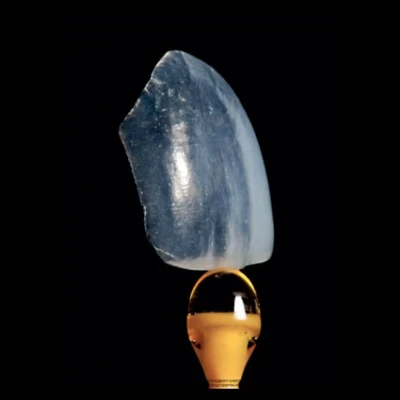
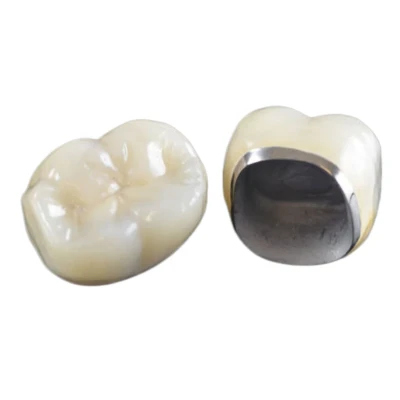
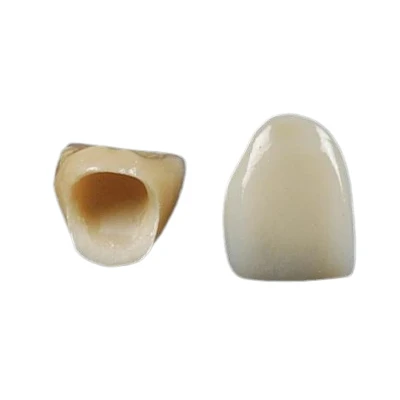
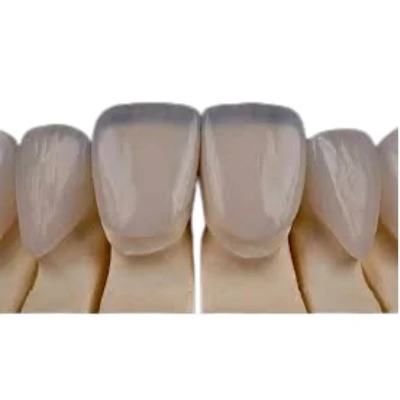



ADS Dental Lab Ltd. is one of the most experienced manufacturers and suppliers of hand layered feldspathic veneers in China, featured by quality products and low price. Please feel free to wholesale customized hand layered feldspathic veneers made in China here from our factory. For quotation, contact us now.
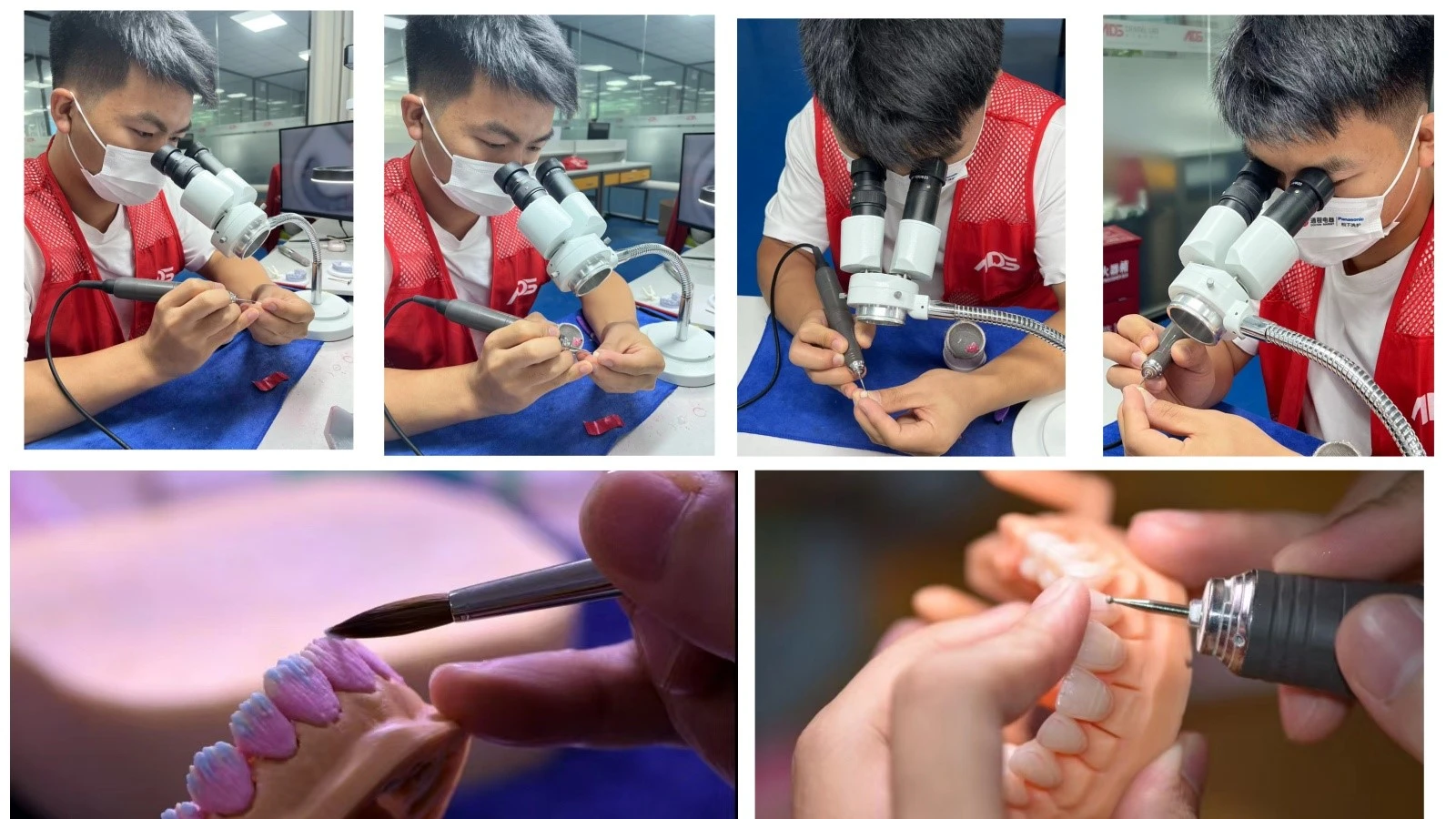
Hand Layered Feldspathic Veneers are premium anterior aesthetic restorations created through manual ceramic layering by skilled dental ceramists. Instead of relying only on machine processing or surface staining, these veneers are built layer by layer using feldspathic ceramic powders to achieve customized shade depth, tooth morphology, surface texture, and individual character.
At ADS Dental Lab, we fabricate hand layered feldspathic porcelain veneers for overseas dentists, cosmetic clinics, and dental laboratories that require high-end aesthetic results. Each case is reviewed according to the patient's photos, shade records, stump shade, preparation design, temporary restoration scan, and clinical prescription. Our technicians then create a customized ceramic layering plan to match the desired smile design and clinical requirements.
With experienced aesthetic ceramists, digital case communication, strict quality control, and worldwide logistics support, ADS Dental Lab provides reliable hand layered veneer outsourcing services for single-unit cases, multi-unit anterior cases, and long-term dental lab partnerships.
Send your hand layered feldspathic veneer case to ADS Dental Lab for a customized ceramic layering plan.


What Is Hand-Layered Feldspathic Porcelain?
Hand-layering is a fabrication method in which a ceramist builds a veneer directly on a refractory die or platinum foil, applying feldspathic porcelain powder mixed with liquid in successive layers - typically dentin, body, and incisal porcelain - and firing each layer individually before adding the next.
This is fundamentally different from the two other common fabrication routes in modern ceramics:
- CAD/CAM milling - a restoration is cut from a single pre-shaded ceramic block using computer-controlled machinery
- Pressed ceramic - a wax pattern is invested and the ceramic is heat-pressed into the mold in one cycle
In both of those methods, the final shade and translucency are largely determined before the restoration takes its final form - there is limited room to adjust once the block is milled or the press cycle is complete. Hand-layering reverses that order: the ceramist builds and adjusts the restoration through the process itself, firing after firing, until the desired result is achieved.


Process Specifications
| Specification | Details |
| Layering Structure | Dentin, body, and incisal porcelain layers, applied and fired individually |
| Average Firing Cycles Per Unit | 3–5 firings, depending on case complexity |
| Average Technician Time Per Unit | Several hours of hands-on ceramist work per veneer |
| Applicable Unit Range | Single tooth to full-arch cases |
| Adjustable During Fabrication | Shade gradient, translucency, incisal effects, contour, and length |
| Fabrication Base | Refractory die or platinum foil |
How We Achieve It - And Why Hand-Layering Matters
The Layering Process
Our ceramists begin with a dentin core to establish base shade and value, then build up body and incisal porcelain in stages, firing after each application. Because every firing is a checkpoint, the ceramist can compare the restoration against the shade reference and patient photos at each stage - and correct course before moving forward, rather than discovering a mismatch only after the piece is complete.
Why This Matters for Complex Cases
A milled or pressed restoration is essentially "decided" at the design or block-selection stage. Hand-layering keeps that decision open throughout fabrication, which is precisely what makes it valuable for cases involving color transitions, non-standard anatomy, or fine adjustments that a standardized process cannot accommodate.
Fabrication Method Comparison
| Comparison Item | Hand-Layered Feldspathic | CAD/CAM Milled | Pressed Ceramic |
| Shade Control | Adjustable at every firing stage | Fixed by block selection | Fixed at press cycle |
| Translucency / Opalescence | Fully customizable, layer by layer | Limited to block properties | Limited, uniform throughout |
| Best Suited For | Complex, highly customized anterior cases | Standardized, high-volume cases | Cases prioritizing strength over fine aesthetic control |
| Fabrication Time Per Unit | Longer, multi-firing process | Fast, single milling cycle | Moderate, single press cycle |
| Flexural Strength | Lower | Higher, depending on material | Higher, such as lithium disilicate |
This is also why hand-layered feldspathic veneers and milled or pressed restorations are not competitors so much as tools suited to different jobs - and our team can advise on which approach fits a given case during the design confirmation stage.
Where Hand-Layering Makes the Biggest Difference
- Cross-tooth shade gradients - cases where adjacent natural teeth have subtle shade variation that needs to be echoed across multiple veneers, rather than flattened into one uniform shade
- Non-standard anatomy or custom incisal form - cases where the patient or clinician has specific requirements for tooth length, edge shape, or contour that fall outside standard tooth libraries
- Small-batch, high-customization cases - single-tooth or few-unit cases where the priority is precision matching to existing dentition rather than fast turnaround at scale
For large, uniform full-arch cases where consistency and speed matter more than case-by-case shade adjustment, our team can also advise whether a pressed or milled alternative may better suit the case. We are happy to recommend the right approach rather than defaulting to one method for every case type.
Cooperation Workflow
Step 1 - Case Submission
Send digital scan files, such as STL files, or a conventional impression via FedEx, UPS, DHL, or LINEX, along with pre-prep and post-prep patient photos, stump shade, and desired tooth shape and length.
Step 2 - Digital Smile Design Confirmation
We prepare a digital smile design and send an STL or HTML preview for your review. Hand-layering begins only after your confirmation.
Step 3 - Hand-Layering and Fabrication
Our ceramists build each veneer through the multi-firing layering process described above.
Step 4 - Quality Control
Each case is checked for fit, shade accuracy, translucency, and layering consistency before shipping.
Step 5 - Packaging and Delivery
Cases are securely packaged and shipped via your preferred courier.
Payment
We accept wire transfer and PayPal.
Why Choose ADS Dental Lab
ADS Dental Lab is a premier digital dental laboratory in Shenzhen, China, home to over 400 certified dental technicians with deep, hands-on experience in traditional hand-layering techniques. Because our team has the scale to support genuine hand-craftsmanship without becoming a bottleneck, we are able to take on both single-case custom work and larger multi-unit orders without compromising on the layer-by-layer attention that makes this technique valuable in the first place.
All work is produced under CE, FDA, and ISO certified standards, backed by a comprehensive warranty and supported by 40+ trained representatives offering 363-day communication. This means hand-crafted quality comes with the same reliability and support you would expect from any large-scale lab partner.

FAQ
What is the difference between hand layered feldspathic veneers and stained veneers?
Hand layered feldspathic veneers are built with multiple internal ceramic layers, while stained veneers rely more heavily on external color adjustment. Hand layering allows better control of ceramic depth, internal character, and surface morphology.
Why are hand layered feldspathic veneers suitable for high-end anterior cases?
They allow the ceramist to customize shade, translucency, morphology, surface texture, and individual tooth character. This makes them suitable for demanding cosmetic cases where standard veneers may look too uniform.
Can ADS customize the ceramic layering for each patient?
Yes. We customize the ceramic layering according to patient photos, shade records, stump shade, temporary restoration scans, preparation design, and the dentist's prescription.
What records should I send for hand layered feldspathic veneers?
We recommend sending STL/PLY/DCM files, patient smile photos, close-up anterior photos, shade tab photos, stump shade, pre-preparation scans, preparation scans, temporary restoration scans, bite records, and restoration instructions.
Can I review the smile design before fabrication?
Yes. For aesthetic cases, ADS can provide an STL or HTML smile design preview for confirmation before fabrication begins.
How long does the hand layering process take?
Simple cases can often be completed within 4–5 working days after confirmation. The exact turnaround time depends on case complexity, number of units, design requirements, and logistics.
Are hand layered feldspathic veneers strong enough?
Yes, when used in suitable clinical conditions and bonded properly, feldspathic veneers can provide reliable performance. For patients with heavy bruxism, high occlusal risk, or limited bonding conditions, case evaluation is recommended before fabrication.
Can dental labs outsource only hand layered veneer cases to ADS?
Yes. ADS supports flexible lab-to-lab cooperation. Partner laboratories can outsource single trial cases, selected high-end aesthetic veneer cases, or long-term batch orders according to their business needs.
Hot Tags: hand layered feldspathic veneers, China hand layered feldspathic veneers manufacturers, suppliers, factory, acrylic resin partial denture, lower expansion appliance, lower palate expander for adults, maxillary expander adults, palate expander before braces, spacers and expanders


