

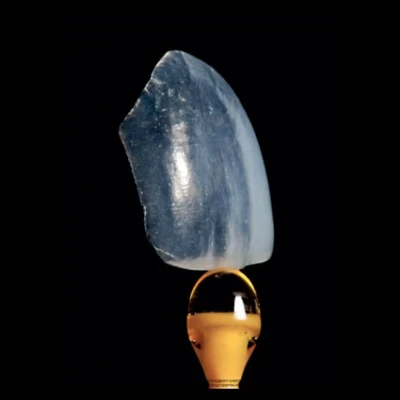
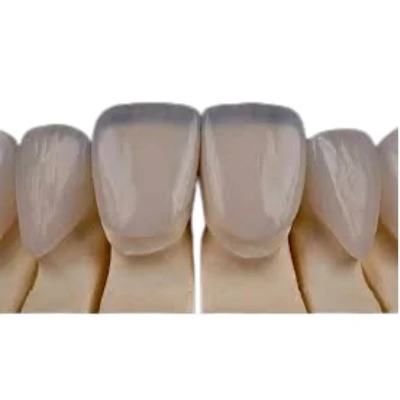


ADS Dental Lab Ltd. is one of the most experienced manufacturers and suppliers of e.max veneers for diastema closure in China, featured by quality products and low price. Please feel free to wholesale customized e.max veneers for diastema closure made in China here from our factory. For quotation, contact us now.
Diastema closure is not simply a matter of making two veneers wider. When closing a gap between anterior teeth, the final result depends on tooth proportion, contact area design, line angles, gingival harmony, incisal edge position, and the overall balance of the smile. If these details are not planned carefully, the space may be closed, but the teeth can look too wide, too square, or unnatural.
ADS Dental Lab provides custom E.max veneers for diastema closure cases, helping overseas dentists, cosmetic dental clinics, and dental laboratories close anterior gaps while maintaining natural tooth shape and smile harmony. Using lithium disilicate veneers, digital case planning, and hand-layered ceramic aesthetics, our team supports cases where dentists want to improve both spacing and anterior appearance.
For diastema closure cases, we can review STL scans, patient photos, gap width, stump shade, target shade, bite records, and desired tooth length before fabrication. When needed, ADS can provide a digital design preview in STL or HTML format so the dentist can confirm the gap closure design before production begins.
Send your diastema closure veneer case to ADS Dental Lab for proportion review, design confirmation, and quotation.


Product Specifications
| Specification | Details |
|---|---|
| Product Type | E.max veneers for diastema closure |
| Restoration Type | Anterior veneer restoration for gap closure |
| Material Structure | Lithium disilicate base with layered ceramic aesthetic finish |
| Indicated Area | Central incisors, lateral incisors, and anterior spacing cases |
| Main Design Focus | Gap closure, tooth width balance, contact area, line angle, smile symmetry |
| Common Case Type | Mild to moderate anterior spacing or midline diastema cases |
| Case Submission | STL files, intraoral scans, patient photos, bite records, shade information |
| Recommended Records | Gap width, pre-op scan, prep scan, stump shade, target shade, desired tooth length |
| Impression Option | Conventional impressions accepted via FedEx, UPS, DHL, Linex, or other couriers |
| Digital Approval | STL or HTML design preview available before fabrication |
| Turnaround Time | Usually 4–5 working days after design approval and case confirmation |
| Payment Methods | Bank transfer and PayPal accepted |
What Makes Diastema Closure Veneer Cases Different?
A diastema closure veneer case has a different challenge from a standard cosmetic veneer case. The laboratory must close the visible space without creating teeth that look oversized. This means the design cannot focus only on the gap itself. It must also consider the width-to-length ratio of the central incisors, the transition into the lateral incisors, the position of the contact area, and the shape of the embrasures.
For example, if a gap between the upper central incisors is closed only by adding width to both teeth, the centrals may become too broad. In some cases, a better solution is to distribute the change across 2, 4, or even 6 anterior veneers so the final smile looks more balanced. The correct approach depends on gap size, tooth shape, arch form, occlusion, and the patient's aesthetic expectations.
ADS reviews these design factors before production. Our goal is not only to close the space, but to help the final veneers look natural in the patient's smile.


Key Features
Proportion-Controlled Gap Closure
Closing a diastema requires careful control of tooth proportion. ADS evaluates the relationship between gap width, tooth length, and visible smile width before designing the veneer shape. This helps avoid the common problem of front teeth looking too wide after the space is closed.
Natural Contact Area Design
The contact area is one of the most important details in diastema closure. If the contact is too short, the case may still show an open gingival embrasure or black triangle. If the contact is too long or too flat, the teeth may look artificial. ADS designs the contact area to support a more natural transition between the central incisors or other anterior teeth.
Central Incisor Symmetry
Many diastema closure cases involve the upper central incisors. ADS pays close attention to the symmetry of #11 and #21, including tooth length, width, line angle, incisal edge position, and surface contour. Small differences between the two centrals can become very visible in the smile zone.
Digital Design Before Fabrication
For spacing correction cases, design confirmation is especially useful. ADS can create a digital veneer design based on the patient's scans and photos, then send an STL or HTML preview for client approval. This allows the dentist to review the gap closure, tooth width, and contact design before the veneers are fabricated.
Layered Ceramic Aesthetics
E.max veneers provide a strong lithium disilicate foundation, while layered ceramic finishing allows our technicians to refine shade depth, translucency, and surface texture. This helps the veneers close the gap while still maintaining a natural enamel-like appearance.
Conservative Veneer Planning
In suitable cases, E.max veneers can be used as a conservative aesthetic option for closing small anterior spaces and improving tooth shape at the same time. ADS reviews each case individually to help determine whether the veneer design is appropriate for the gap size and clinical condition.
Case Selection: When Are Veneers Suitable for Diastema Closure?
E.max veneers are often suitable for mild to moderate anterior spacing cases when the teeth can be reshaped visually without creating an unnatural width. They are especially helpful when the patient wants to close a gap and improve color, contour, or tooth shape at the same time.
Good candidate cases may include small central diastema, minor spaces between anterior teeth, narrow anterior teeth, peg-shaped lateral incisors with spacing, post-orthodontic residual spaces, or anterior gaps combined with discoloration or edge wear.
Some cases require additional review before veneer fabrication. If the space is too large, closing it only with veneers may make the teeth appear too wide. Cases involving severe tooth position problems, deep bite, periodontal issues, unstable occlusion, or very large spacing may need orthodontic treatment or a modified restorative plan before final veneers.
ADS can review the case records before production and suggest a suitable design direction based on the submitted photos, scans, gap size, and aesthetic goals.
Clinical Indications
E.max veneers for diastema closure are suitable for:
- Midline diastema between upper central incisors
- Small anterior gaps between front teeth
- Mild to moderate spacing in the smile zone
- Narrow anterior teeth requiring width correction
- Peg-shaped lateral incisors with spacing
- Post-orthodontic residual spaces
- Diastema cases combined with tooth discoloration
- Anterior spacing with worn or chipped incisal edges
- 2-unit or 4-unit anterior veneer cases for gap closure
- Patients seeking cosmetic improvement without a full smile makeover
- Dental clinics needing laboratory support for aesthetic spacing correction
- Dental laboratories outsourcing diastema closure veneer cases
For complex cases, ADS can review the records first and discuss whether veneers, orthodontics, or a broader smile design may be more suitable.
Manufacturing Workflow
Step 1 - Case Submission
Clients send STL files, intraoral scans, patient photos, bite records, shade information, and restoration instructions to ADS Dental Lab. For diastema closure cases, we recommend including the gap width, pre-preparation scan, preparation scan, stump shade, target shade, and desired tooth length. Conventional impressions are also accepted and can be shipped internationally.
Step 2 - Gap and Proportion Review
Our team reviews the gap size, tooth width, tooth length, arch form, occlusion, and smile-zone relationship. We evaluate whether the space can be closed naturally with 2 veneers or whether a 4-unit or wider anterior design would create better proportion.
Step 3 - Digital Diastema Closure Design
ADS creates a digital design for the veneer case. The design focuses on closing the space while maintaining natural central incisor symmetry, contact position, line angles, incisal edge form, and overall tooth proportion.
Step 4 - STL or HTML Design Confirmation
The proposed design can be sent to the dentist or dental laboratory as an STL or HTML preview. This allows the client to confirm the gap closure, tooth width, contact area, and smile appearance before fabrication begins.
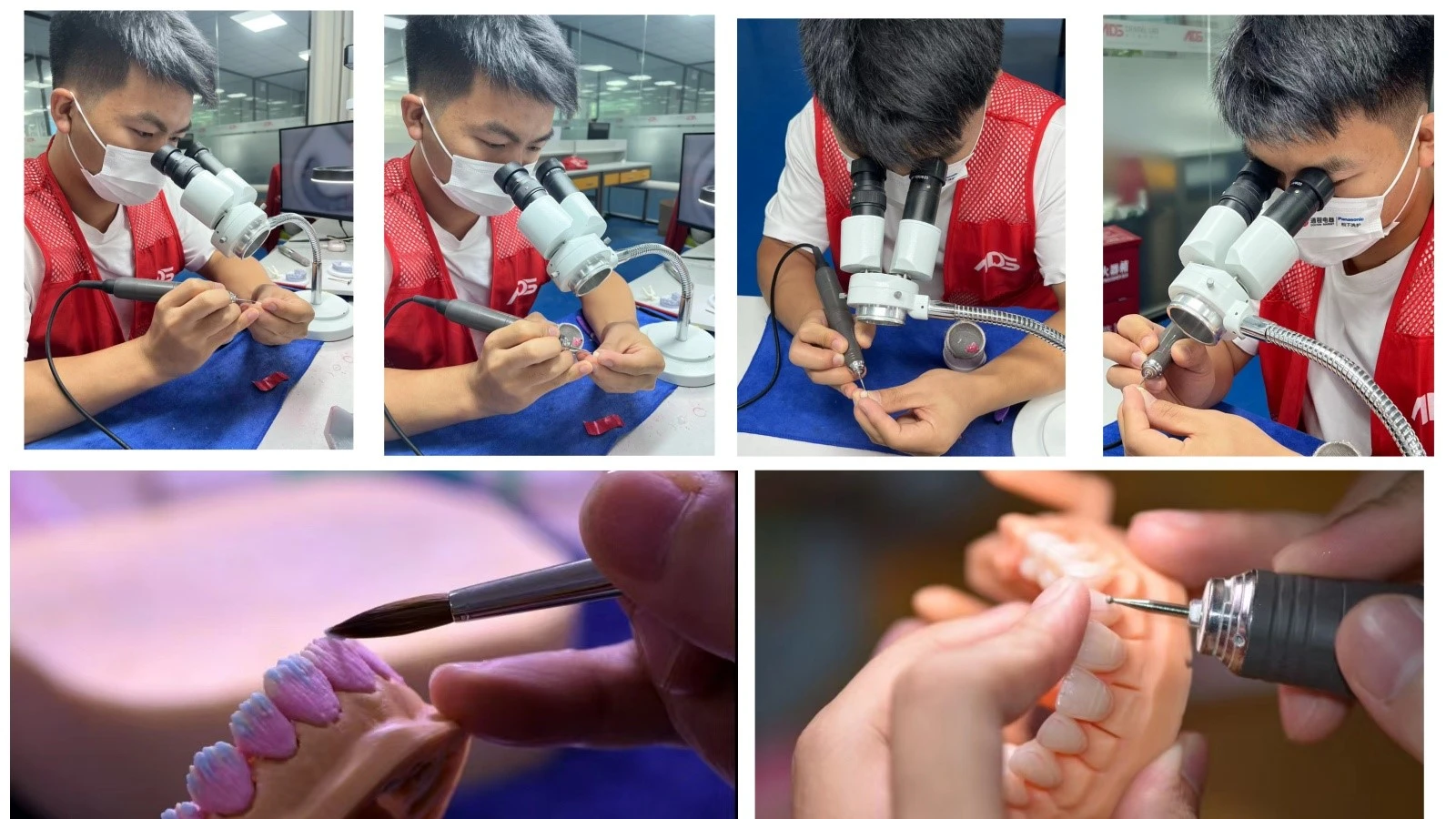
Step 5 - E.max Veneer Fabrication
After design approval, we fabricate the lithium disilicate veneer base according to the confirmed plan. The restoration is designed to support accurate fit, proper thickness, and enough room for ceramic aesthetic refinement.
Step 6 - Ceramic Layering and Contact Refinement
Our technicians apply ceramic layers to create natural shade depth and enamel-like appearance. For diastema closure cases, extra attention is given to contact area shape, line angle control, proximal contour, and the visual width of the teeth.
Step 7 - Model Check and Photo Communication
The veneers are seated on the working model for review. We check margin fit, contact relationship, gap closure, contour, incisal edge, and overall symmetry. When requested, ADS can send photos before final glazing for client feedback.
Step 8 - Final Glaze, QC, and Shipping
After final finishing, the veneers are glazed, polished, inspected, and packed for international delivery. Quality control includes margin inspection, model seating, contact verification, shade review, surface finish, and final gap closure evaluation.
Why Choose ADS Dental Lab

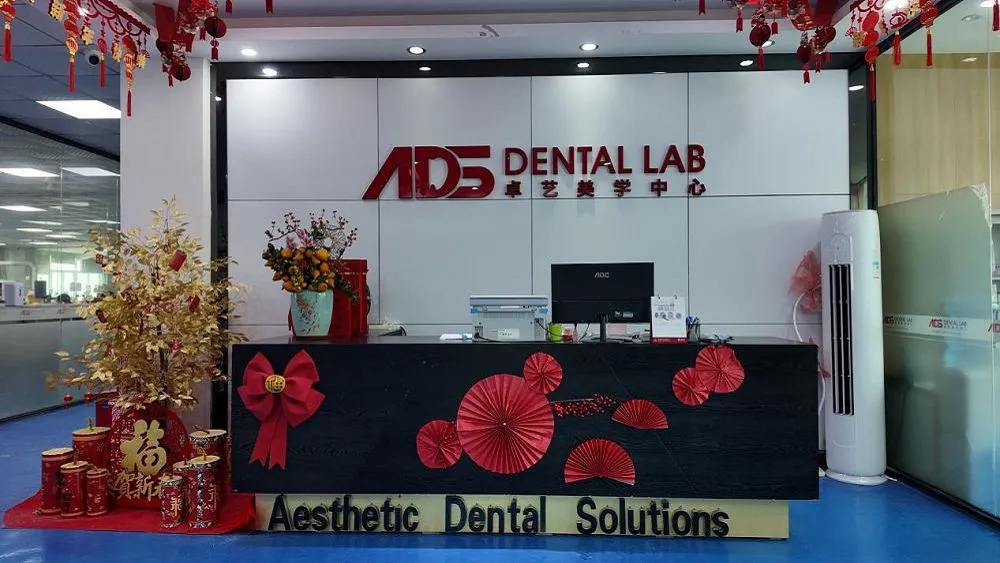
ADS Dental Lab is a family-owned dental laboratory group founded in Shenzhen, China in 2004. We serve dental clinics and laboratories across Europe, North America, Australia, the Middle East, and other international markets. Our services include veneers, crowns, bridges, implant restorations, digital design, orthodontic solutions, and complex full-mouth cases.
For diastema closure veneer cases, ADS provides more than standard veneer fabrication. Our Veneer Aesthetic Center and CAD/CAM digital design team help review tooth proportion, gap closure design, contact area, and final smile balance before production. This is especially important for anterior spacing cases, where a small design error can make the final teeth look too wide or unnatural.
ADS supports STL files, intraoral scans, conventional impressions, patient photo communication, digital design confirmation, and international shipping. Our quality and compliance support includes ISO9001, ISO13485, FDA registration, National High-Tech Enterprise qualification, Guangdong Quality Credit Class A Medical Device Manufacturing Enterprise recognition, and multiple patent certifications.
Send your diastema closure veneer case with photos, scans, gap width, stump shade, and target shade to ADS Dental Lab for review.

FAQ
Q1: Can E.max veneers close a diastema between front teeth?
Yes. E.max veneers can be used to close mild to moderate gaps between anterior teeth when tooth proportion, occlusion, and clinical conditions are suitable. ADS can review the case before fabrication to help confirm the design direction.
Q2: How do you avoid making teeth look too wide after closing a gap?
We evaluate the gap width, tooth length, existing tooth shape, and smile-zone relationship before design. In some cases, the space can be closed with 2 veneers. In other cases, distributing the design across 4 or more anterior teeth may create a more natural proportion.
Q3: What should I send for a diastema closure veneer case?
We recommend sending STL scans, patient photos, retracted intraoral photos, pre-preparation scans, preparation scans, bite records, stump shade, target shade, gap width, and desired tooth length.
Q4: Can ADS provide a digital design before fabrication?
Yes. ADS can create a digital design and send an STL or HTML preview for client confirmation. Production begins after the dentist or dental laboratory approves the design.
Q5: Are veneers suitable for all anterior spacing cases?
Not always. Very large spaces, severe tooth position problems, unstable occlusion, or periodontal concerns may require orthodontic treatment or another clinical approach. ADS can review the records and provide laboratory design feedback before production.
Q6: Can veneers close gaps and improve tooth shape at the same time?
Yes. Many diastema closure cases also involve tooth shape correction. E.max veneers can close small spaces while improving tooth width, contour, shade, and incisal edge appearance.
Q7: How do you design the contact area for diastema closure?
We design the contact area based on the gap location, gingival embrasure, tooth shape, and final width-to-length ratio. The goal is to close the visible space while keeping the teeth natural and balanced.
Q8: Do you accept both STL files and conventional impressions?
Yes. ADS accepts STL files and intraoral scans. We also accept conventional impressions shipped through FedEx, UPS, DHL, Linex, or other courier services.
Q9: How long does production take after design approval?
Production is usually completed within 4–5 working days after case confirmation and design approval. Shipping time depends on the destination country and courier service.
Q10: Can dental laboratories outsource diastema closure veneer cases to ADS?
Yes. Dental laboratories can outsource selected anterior spacing and diastema closure veneer cases to ADS while keeping routine work in-house. We support flexible lab-to-lab cooperation and long-term outsourcing.
Hot Tags: e.max veneers for diastema closure, China e.max veneers for diastema closure manufacturers, suppliers, factory, acrylic resin partial denture, Digital Emax Veneers, expansion plate dental, palate expander before braces, palate expander with tongue crib, spacers and expanders


