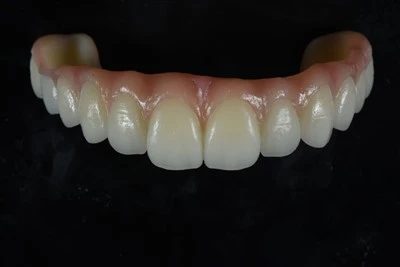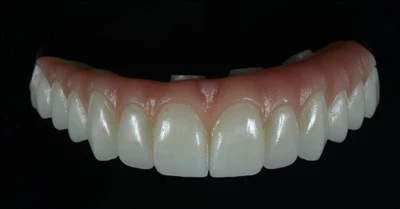
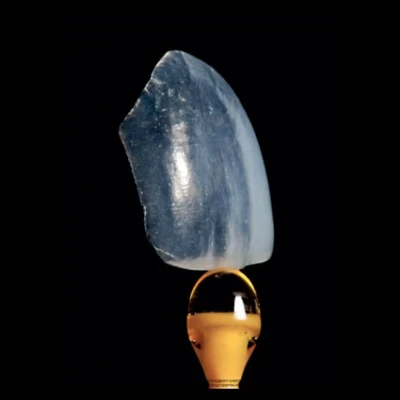
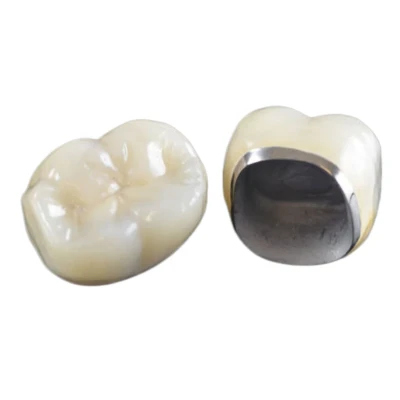
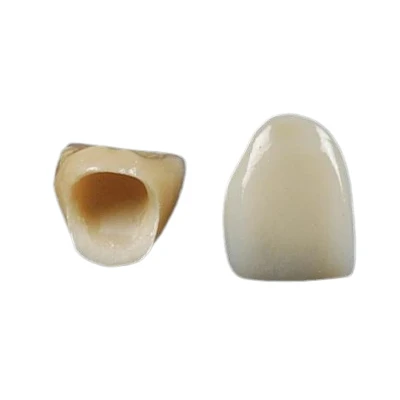
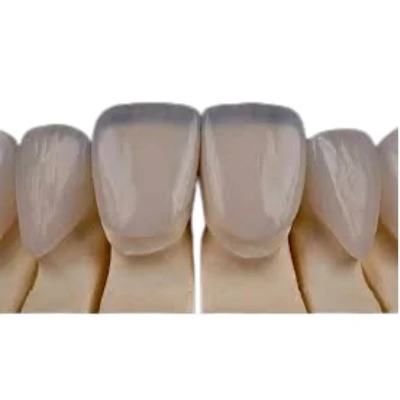
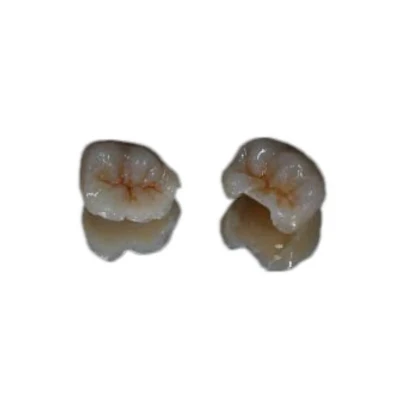
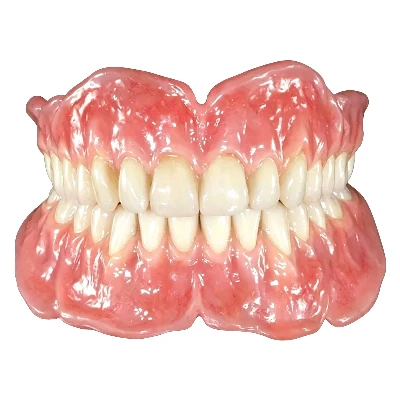


A zirconia crown is made primarily from zirconium dioxide (ZrO₂), a high-strength polycrystalline ceramic. Dental zirconia is usually stabilized with yttria (Y₂O₃). The amount of yttria and the resulting crystal structure determine how strong, tough, translucent, and opaque the final material will be.
That is why not all zirconia crowns are the same. A posterior bridge, an anterior single crown, and a crown over a dark implant abutment may all require different zirconia formulations.

What Is a Zirconia Crown Made Of?
The main component of a zirconia crown is zirconium dioxide. In dental manufacturing, zirconia powder is processed into a partially sintered blank or disc, milled through CAD/CAM, and then fully sintered to reach its final density and strength.
Dental zirconia is not usually an untreated block of pure ZrO₂. Manufacturers add stabilizing oxides-most commonly yttria-to control the material's crystal phases at room temperature. Some formulations may also contain small amounts of alumina, hafnia, pigments, or other processing and optical modifiers. Exact percentages vary by product.
The finished crown may contain more than the zirconia core itself. Depending on the design, it can also include:
- Pre-shading or coloring oxides within the blank
- External stains used for shade adjustment and characterization
- A fired glaze layer
- Veneering porcelain on layered zirconia restorations
A monolithic zirconia crown is still mainly one zirconia structure, but "monolithic" does not mean the surface is untreated or that every product has an identical chemical formula.
The practical answer is clear: zirconia crowns are ZrO₂-based ceramic restorations, usually stabilized with Y₂O₃ and finished with case-specific coloring, glazing, polishing, or porcelain layering.
Is Zirconia a Metal or a Ceramic?
Zirconium and zirconia are not the same material.
Zirconium is a metallic chemical element. Zirconia is zirconium dioxide, the oxide formed when zirconium combines with oxygen. After powder processing and high-temperature sintering, dental zirconia behaves as a polycrystalline ceramic rather than a conventional dental metal.
This distinction matters when comparing zirconia crowns with porcelain-fused-to-metal crowns. A PFM crown uses a metal coping covered with porcelain. A zirconia crown uses a zirconia ceramic body or framework. A layered zirconia crown may still have porcelain on the outside, but the supporting structure is ceramic rather than metal.
This is why zirconia crowns are commonly described as all-ceramic or metal-free restorations. They avoid the opaque metal coping and dark metal margin associated with traditional PFM designs.
Why Is Yttria Added to Dental Zirconia?
Pure zirconia can exist in three main crystal phases: monoclinic, tetragonal, and cubic. These phases are arrangements of atoms within the ceramic. They are not visible to the eye, but they strongly affect clinical performance.
At room temperature, pure zirconia tends to be monoclinic. Under higher temperatures, it can transform into tetragonal and then cubic structures. Cooling can reverse those changes, and the tetragonal-to-monoclinic transformation is accompanied by a local volume increase of roughly 3% to 5%. Uncontrolled transformation can create stress and instability.
Yttria is added to stabilize useful tetragonal and cubic phases at room temperature. It also affects grain growth and thermal stability. Dental zirconia is therefore commonly called yttria-stabilized zirconia.
The tetragonal phase is especially important because it supports transformation toughening. When stress develops near a crack tip, some tetragonal grains can transform into the monoclinic phase. The associated local expansion creates compressive stress around the crack and slows its progression.
This is a crack-resisting mechanism, not true self-healing.
As yttria content increases, the proportion of cubic phase generally rises. That can improve light transmission, but it also reduces the amount of transformable tetragonal phase. The result is a predictable trade-off: more translucency, but usually less fracture toughness and lower flexural strength.
What Is the Difference Between 3Y, 4Y, and 5Y Zirconia?
The terms 3Y, 4Y, and 5Y refer approximately to the molar percentage of yttria in the zirconia formulation. They are not product generations. A 5Y material is not automatically "better" than 3Y; it is designed for a different balance of strength and esthetics.
|
Zirconia type |
Approximate yttria content |
Main material tendency |
Typical flexural-strength range* |
Common clinical direction |
|
3Y-TZP |
3 mol% |
Higher strength and fracture toughness; lower translucency |
900–1,500 MPa |
Posterior crowns, bridges, high-load cases, masking |
|
4Y zirconia |
4 mol% |
Balanced strength and translucency |
600–1,000 MPa |
Anterior and posterior crowns, selected bridges |
|
5Y zirconia |
5 mol% |
Higher translucency; lower transformation toughening |
450–750 MPa |
Esthetic single crowns and shorter-span restorations |
*Published values vary with the product, specimen design, thickness, shade, sintering cycle, aging protocol, and test method.
3Y-TZP: Strength and Fracture Resistance
Traditional 3Y-TZP is predominantly tetragonal and has strong transformation-toughening behavior. It is usually the first choice when the restoration must tolerate high functional loads, limited space, or a longer span.
Its lower translucency can also be useful. A more opaque zirconia may mask a discolored preparation, a metal post, or a dark implant abutment more effectively than a highly translucent material.
That does not mean 3Y can never be used anteriorly. It may still be suitable when masking or strength matters more than maximum light transmission, especially when the restoration is layered or carefully characterized.
4Y Zirconia: A Practical Middle Ground
4Y zirconia contains more cubic phase than conventional 3Y material. It usually transmits more light while retaining more strength than many 5Y products.
This balance makes 4Y useful for a broad range of single crowns and selected bridge indications. It is often a practical choice when the case needs better esthetics than traditional opaque zirconia but cannot accept the lower mechanical margin of a high-translucency 5Y material.
5Y Zirconia: More Translucency, Less Toughening
5Y zirconia contains a higher proportion of cubic phase and less transformable tetragonal phase. It therefore offers better translucency but lower flexural strength and fracture toughness.
Published comparisons suggest that 5Y zirconia may be about 20% to 25% more translucent than 3Y, while flexural strength may be 40% to 50% lower. Some studies have also reported fracture toughness close to 50% lower than 3Y formulations.
This material is better suited to esthetic single crowns and short-span restorations than to unsupported long-span bridges. Its use still depends on minimum thickness, connector design, occlusal load, and the specific manufacturer's instructions.
The correct material is the one that provides enough mechanical reserve without sacrificing the optical result the case requires.
Are All Zirconia Crowns Made From the Same Material?
No. "Zirconia crown" can describe several different restoration structures.
Monolithic Zirconia Crowns
A monolithic zirconia crown is milled mainly as one full-contour zirconia structure. It does not have a conventional thick veneering-porcelain layer.
The crown may still be made from a pre-shaded or multilayer blank. It may also receive internal coloring, external stain, glaze, and final polishing. These steps adjust color and surface character but do not change the crown into a traditionally layered porcelain restoration.
Monolithic construction reduces the specific risk of veneering-porcelain chipping, although the crown can still fail through bulk fracture, loss of retention, poor design, or insufficient thickness.
Layered Zirconia Crowns
A layered zirconia crown uses zirconia as a coping or framework and adds veneering porcelain over the external surface. This design is also called porcelain-fused-to-zirconia.
Layering gives the ceramist more control over dentin color, enamel effects, internal depth, and incisal characterization. It is useful in demanding anterior cases. The trade-off is that the veneer layer introduces another interface and a possible chipping mode.
Multilayer and Composition-Gradient Zirconia
Multilayer zirconia refers to the structure of the milling blank, not necessarily to porcelain layering.
Some multilayer blanks provide only a color gradient from cervical to incisal. Their chemical composition may remain largely uniform. Others use a composition gradient, combining stronger zirconia in one region with more translucent zirconia in another. Commercial examples may transition from 3Y or 4Y in the cervical or body zone toward 5Y near the incisal area.
A multilayer crown can therefore still be monolithic. The lab must understand whether the blank offers a shade gradient, a translucency gradient, a strength gradient, or a combination of these features.

How Does Composition Affect Zirconia Crown Properties?
Strength, Toughness, and Fracture Resistance
Flexural strength describes how much bending stress a material can resist before fracture. Fracture toughness describes how well it resists the growth of an existing crack. They are related, but they are not interchangeable.
3Y zirconia usually performs better in both areas because it contains more transformable tetragonal phase. 5Y zirconia gains translucency by increasing cubic phase, but cubic grains do not provide the same transformation-toughening effect.
A high strength value does not remove the need for correct design. Thin occlusal areas, sharp internal geometry, undersized bridge connectors, aggressive adjustment, and excessive loading can still cause failure.
Translucency, Color, and Masking Ability
Translucency is the amount of light that passes through a material. It helps a crown blend with natural dentition, especially in the anterior region. Yet maximum translucency is not always desirable.
A high-translucency zirconia crown can be strongly affected by the color underneath it. Dark dentin, a metal post, or a titanium abutment may show through and lower the final value. In those cases, a more opaque zirconia or a different restorative structure may produce a better result.
Thickness also changes optical behavior. The same zirconia blank can look more translucent when thin and more opaque when thick. Stain and glaze can refine the final color, but they cannot fully correct a poor base-material choice or inadequate masking.
Biocompatibility and Surface Behavior
Dental zirconia is generally considered biocompatible and chemically stable. It avoids the conventional nickel- or chromium-containing metal coping used in some PFM restorations. Soft-tissue response, however, still depends on crown contour, marginal quality, residual cement, surface finish, and oral hygiene.
Surface condition also affects the opposing dentition. Smooth, well-polished zirconia generally produces less antagonist wear than zirconia that has been adjusted and left rough. The hardness of the material alone does not predict wear behavior.
Glaze can wear over time. For functional contact areas, controlled polishing is more reliable than depending only on a thin glazed surface.
How Are Zirconia Crowns Made?
Most zirconia crowns are produced through a digital dental-lab workflow:
1.Case data collection: The laboratory receives an intraoral scan or digitized impression, opposing arch, bite record, prescription, shade information, and supporting photographs.
2.CAD design: The technician designs the margin, contour, proximal contacts, occlusion, minimum thickness, and connector dimensions.
3.Material selection: The lab selects 3Y, 4Y, 5Y, or a multilayer formulation according to load, span, background color, and esthetic requirements.
4.CAM milling: The restoration is milled from a pre-sintered zirconia blank at an enlarged scale to compensate for sintering shrinkage.
5.Sintering: The milled crown is fired to reach final density, dimensions, and material properties.
6.Characterization and finishing: The crown is stained, glazed, layered, or polished according to the prescription.
7.Quality control: Margins, contacts, occlusion, surface quality, shade, and fit are checked before delivery.
Sintering is not a neutral step. Time and temperature affect grain size, shade, translucency, and mechanical behavior. Studies comparing conventional and speed-sintering cycles have reported material-specific differences rather than one universally superior protocol.
The validated firing cycle for the selected blank matters more than simply choosing the fastest furnace program. Digital production improves consistency only when design, milling, sintering, and finishing are controlled as one workflow. The source material also describes this scan-to-design, milling, sintering, finishing, and verification sequence.
How Do Dentists and Labs Choose the Right Zirconia?
Posterior and High-Load Restorations
Posterior crowns and bridges need adequate strength, fracture toughness, minimum thickness, and connector dimensions. High-strength 3Y zirconia is often the safer choice for heavy-load and longer-span indications. Certain 4Y products may also be suitable when their instructions permit it.
Bruxism does not automatically make a case suitable for thin zirconia. Occlusal design, available clearance, adjustment, polishing, and protective strategies still matter.
Anterior Esthetic Crowns
Anterior crowns require control of translucency, value, shade gradient, incisal character, and surface texture. 4Y, 5Y, or multilayer zirconia may be appropriate, depending on the preparation color and the visibility of the case.
A single central incisor remains demanding. High-translucency zirconia alone does not guarantee a match. The result may require detailed photography, stump-shade information, selective staining, micro-layering, and careful texture control.
Discolored Preparations and Implant Abutments
A dark preparation or metal abutment changes the material choice. Highly translucent zirconia can transmit the unwanted background, especially in thin cervical areas.
The lab may need a more opaque zirconia, increased thickness where possible, a suitable coping design, or controlled porcelain layering. Choosing translucency without evaluating the background is a common reason for a crown that looks gray or low in value.
Bridges and Multi-Unit Restorations
Bridge selection must consider span, pontic position, connector size, support, and manufacturer-approved indications. The word "zirconia" alone does not confirm that a material is suitable for a long-span restoration.
The best zirconia is not automatically the strongest or the most translucent. It is the formulation that fits the case's load, thickness, span, background color, and esthetic target.

Choosing Zirconia by Composition, Not by Name
A zirconia crown is made primarily from zirconium dioxide stabilized with yttria. The yttria level and crystal-phase balance create distinct 3Y, 4Y, and 5Y materials, each with different strength, toughness, translucency, and masking ability. Crown structure also matters: monolithic, layered, and multilayer restorations are not interchangeable terms.
Material selection should follow the case-not a generic "zirconia" label.
ADS Dental Laboratory Ltd provides custom digital zirconia restorations for overseas dentists and dental laboratories. We evaluate case position, span, occlusal load, stump or abutment color, restoration thickness, and esthetic requirements before production. Contact our team to discuss your zirconia crown, bridge, or implant restoration cases.
FAQ
Are Zirconia Crowns Made of Metal?
No. Zirconia crowns are made from zirconium dioxide ceramic. Zirconium is a metal element, but zirconia is its oxide and functions as a polycrystalline ceramic after processing and sintering.
Does a Zirconia Crown Contain Porcelain?
Some do. A monolithic zirconia crown normally does not have a traditional veneering-porcelain layer. A layered zirconia crown combines a zirconia coping or framework with external porcelain.
Which Type of Zirconia Is the Strongest?
Traditional 3Y-TZP generally offers the highest flexural strength and fracture toughness. The exact value depends on the brand, thickness, sintering protocol, aging, and test method.
Is High-Translucency Zirconia Always Better?
No. High-translucency zirconia is useful for selected esthetic cases, but it usually provides less masking and lower mechanical strength. Dark preparations, high-load areas, and longer bridges may require a different zirconia grade.