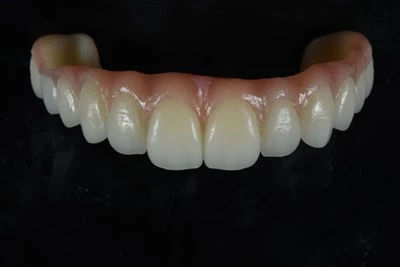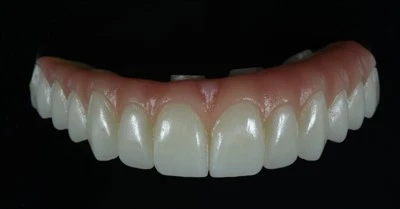
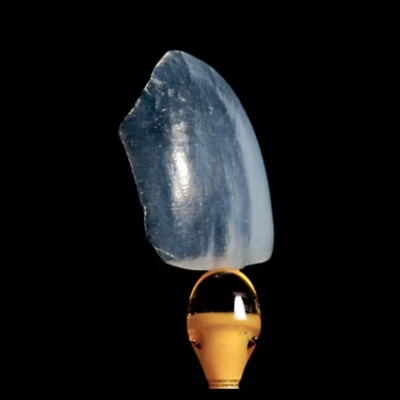
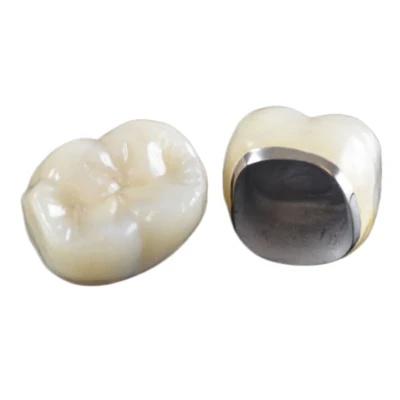
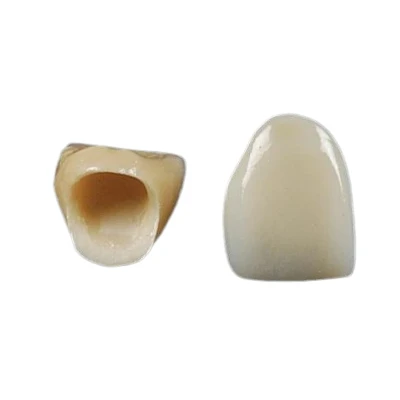
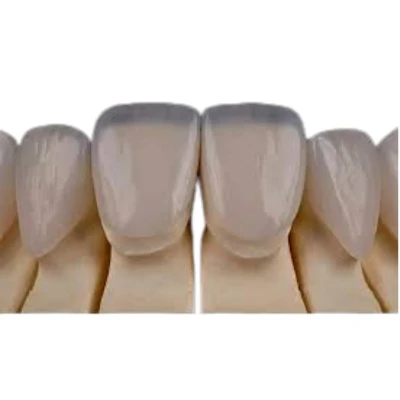
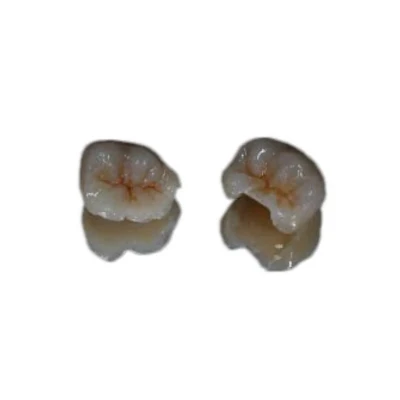


Zirconia is not a single dental material. The difference between 3Y, 4Y, and 5Y zirconia changes how a restoration behaves under load, how much light it transmits, and where it can be used safely. In general, 3Y prioritizes mechanical strength, 5Y prioritizes translucency, and 4Y sits between them.
Zirconia is already widely used in restorative dentistry. A 2021 ADA Clinical Evaluators Panel survey on zirconia restorations reported especially high use for posterior restorations. For dentists and dental laboratories, the practical issue is choosing a zirconia that matches the restoration design, occlusal load, esthetic requirements, and the specific indications of the material being used.

What Do 3Y, 4Y, and 5Y Mean in Dental Zirconia?
The "Y" in 3Y, 4Y, and 5Y refers to yttria, or yttrium oxide (Y₂O₃), which is added to zirconia to stabilize its crystal structure. For a broader explanation of the material itself, see what zirconia crowns are made of and how their composition affects their properties.
The numbers indicate the approximate molar concentration of yttria:
- 3Y zirconia: about 3 mol% yttria
- 4Y zirconia: about 4 mol% yttria
- 5Y zirconia: about 5 mol% yttria
Conventional 3Y material is commonly described as 3Y-TZP, or 3 mol% yttria-stabilized tetragonal zirconia polycrystal. Higher-yttria formulations such as 4Y and 5Y are often grouped more broadly as partially stabilized zirconia because their phase composition differs from traditional 3Y-TZP. The terminology and evolution of these materials are discussed in this peer-reviewed review of 3Y-TZP, 4Y-PSZ, and 5Y-PSZ zirconia classification.
These numbers should not be treated as quality grades.
A 5Y zirconia is not automatically "better" or more advanced than a 3Y zirconia. Increasing yttria changes the balance between mechanical properties and optical performance. That creates different materials for different clinical purposes. Modern 4Y and 5Y zirconia crowns, for example, are selected for different reasons than conventional high-strength zirconia.
Even zirconias within the same category are not identical. Two 3Y products can differ in alumina content, grain structure, manufacturing method, sintering behavior, and translucency. The same applies to 4Y and 5Y materials.
The Y value is therefore a useful starting point for material selection, not a complete specification.
Why Yttria Changes Zirconia Strength and Translucency
The clinical difference between 3Y, 4Y, and 5Y zirconia starts at the crystal level.
Traditional 3Y zirconia contains a large proportion of metastable tetragonal zirconia. When stress develops around a crack, some of this tetragonal material can transform into the monoclinic phase. The transformation produces a local volume change that helps resist further crack propagation.
This mechanism is known as transformation toughening.
It is one of the main reasons conventional 3Y zirconia has such high fracture toughness and performs well in mechanically demanding restorations.
As the yttria concentration increases, the phase structure becomes more stable and contains a larger proportion of phases that do not participate in transformation toughening. This reduces the material's ability to resist crack propagation through the same mechanism.
At the same time, the change in microstructure generally improves light transmission.
The practical relationship is straightforward:
Mechanical strength and fracture toughness:
3Y > 4Y > 5Y
Translucency:
5Y > 4Y > 3Y
This strength-translucency trade-off is the central difference between the three zirconia categories.
It also explains why simply prescribing "high-translucency zirconia" without considering occlusal load or restoration design can create problems. Better optical properties are useful only when the material still provides enough mechanical reserve for the case.
3Y vs. 4Y vs. 5Y Zirconia: Key Property Comparison
The exact mechanical values reported for dental zirconia vary between manufacturers and testing methods. Commercial formulations also continue to evolve. Standards such as ISO 6872 Dentistry - Ceramic Materials provide an important framework for the classification and testing of dental ceramics.
Still, the overall ranges provide a useful comparison.
|
Property |
3Y Zirconia |
4Y Zirconia |
5Y Zirconia |
|
Approx. yttria content |
~3 mol% |
~4 mol% |
~5 mol% |
|
Typical flexural strength |
~900–1400 MPa |
~700–1100 MPa |
~500–800 MPa |
|
Relative fracture toughness |
Highest |
Intermediate |
Lower |
|
Translucency |
Lower |
Moderate |
Highest |
|
Transformation-toughening contribution |
Highest |
Reduced |
Lowest |
|
Main design priority |
Mechanical reliability |
Strength-esthetic balance |
Esthetics |
|
Typical clinical direction |
High-load restorations, bridges |
Broad single-unit use, selected bridges |
Esthetic single units |
3Y Zirconia: Strength First
3Y zirconia generally offers the highest strength and fracture toughness of the three categories. Its transformation-toughening behavior gives it an important advantage in high-stress situations.
The trade-off is lower translucency.
Earlier 3Y zirconias could appear relatively opaque, although modern formulations have improved significantly. Even so, 3Y remains primarily a strength-driven material.
Typical applications include posterior crowns, bridge frameworks, implant-supported restorations, and other cases where mechanical reliability is more important than maximum translucency.
4Y Zirconia: The Middle Ground
4Y zirconia gives up some mechanical performance compared with 3Y but gains improved translucency.
That makes it useful across a broad range of routine cases. It can provide enough esthetic improvement for many monolithic zirconia crowns in anterior and posterior positions while retaining more strength than most 5Y materials.
For this reason, 4Y is often treated as a practical workhorse zirconia.
It should not, however, be considered universally indicated. Bridge span, connector size, occlusal load, and the manufacturer's instructions still matter.
5Y Zirconia: Translucency First
5Y zirconia shifts the balance toward optical performance.
Its higher translucency can improve light transmission and make monolithic restorations appear more natural, particularly in the anterior region. This is the main reason high-translucency zirconia crowns are considered for esthetically demanding cases.
The price of that translucency is reduced flexural strength and fracture toughness.
5Y is therefore best viewed as an esthetic zirconia rather than a high-load zirconia.
One more point matters: higher translucency does not automatically mean a better esthetic result. A dark preparation, metal post, or titanium implant component may show through a highly translucent restoration. Shade, stump color, surface characterization, and material thickness all influence whether zirconia crowns look natural.
In some cases, additional masking can be more valuable than maximum light transmission.

Which Zirconia Should You Use for Different Clinical Cases?
Material selection should start with the case, not with the zirconia label.
A useful decision sequence is to assess mechanical load first, then esthetic demand, restoration geometry, available thickness, and finally the indications of the specific zirconia product.
Anterior Crowns and High-Esthetic Cases
For highly visible anterior restorations, 4Y and 5Y zirconia are usually the most relevant options.
5Y offers the greatest translucency potential and is particularly attractive for low-stress, single-unit anterior restorations where natural light transmission is a priority.
4Y is often more appropriate when the case requires both improved esthetics and additional mechanical reserve. This can be useful in patients with stronger occlusion or when the preparation and restoration geometry are less favorable.
The substrate must also be considered.
A highly translucent crown over a dark stump, metal post, or titanium abutment may allow the underlying color to affect the final shade. In such cases, a less translucent zirconia or another ceramic strategy may produce a more predictable result. Dentists comparing these options may also find it useful to review zirconia vs. E.max crowns for strength and esthetics.
Posterior Crowns and High-Occlusal-Load Cases
Posterior crowns experience higher functional loads, especially in molars and patients with parafunctional habits.
3Y remains a strong option when maximum mechanical reliability is required. It is particularly useful for bruxers, patients with heavy occlusion, or restorations with limited mechanical tolerance.
4Y works well for many routine posterior crowns and offers a useful compromise when improved translucency is desired.
Some 5Y zirconia products are also indicated for posterior single crowns. However, 5Y should not automatically be chosen for high-load posterior cases simply because it offers better esthetics.
The actual product instructions, minimum thickness, preparation design, and occlusion should determine whether it is appropriate.
Bridges, Implant Restorations, and Full-Arch Cases
As restoration span and complexity increase, material selection becomes more conservative.
For long-span bridges and mechanically demanding implant-supported restorations, 3Y zirconia generally provides the greatest safety margin because of its higher strength and fracture toughness.
Some 4Y systems are indicated for selected bridges and even certain full-arch applications. That does not mean all 4Y zirconias should be used this way.
The same caution applies more strongly to 5Y.
5Y should not be treated as a general-purpose bridge material. Certain commercial products may allow limited short-span applications, but this must be confirmed for the specific material.
For bridges and full-arch cases, laboratories should evaluate:
- Span length
- Connector dimensions
- Minimum material thickness
- Occlusal load
- Bruxism or clenching
- Tooth-supported versus implant-supported design
- Manufacturer-specific indications
Material selection becomes even more important when planning implant crowns and implant-supported restorations, where restorative material, implant connection, occlusion, and prosthetic design interact.
The Y grade helps narrow the material choice. The restoration design and product-specific instructions determine whether that choice is clinically appropriate.
Why Thickness, Connector Design, and Occlusal Load Matter as Much as the Y Grade
Flexural-strength numbers are useful, but they do not predict restoration survival by themselves.
A zirconia restoration is a structure, not a laboratory test bar.
Its fracture resistance is influenced by restoration thickness, connector design, span length, preparation geometry, surface condition, antagonist material, and functional load.
This becomes particularly important with higher-translucency zirconia.
One fracture-resistance study cited in the source material found that under a thin-section test condition below 1 mm, approximately 70% of the tested 5Y samples failed while the 3Y samples at the same thickness did not. That result should not be interpreted as a universal clinical threshold, but it illustrates the difference in mechanical tolerance between the materials.
High translucency does not mean a zirconia restoration can automatically be made thinner.
For a more focused discussion of this issue, see zirconia crown thickness, minimum clearance, and design considerations.
Bridge connectors deserve the same attention. A strong zirconia used with inadequate connector dimensions can still fail. Conversely, a material may perform reliably when used within its validated thickness and connector requirements.
For dentists, available reduction and occlusal clearance should therefore influence material selection before the case reaches the laboratory. Proper zirconia crown preparation guidelines help create the space required for the selected material without unnecessary reduction.
For labs, the design must stay within the specifications of the actual zirconia system rather than relying on generic assumptions about 3Y, 4Y, or 5Y.
How Multilayer Zirconia Changes the 3Y/4Y/5Y Comparison
Modern multilayer zirconia makes the 3Y-versus-4Y-versus-5Y discussion more complex.
The term multilayer zirconia does not always describe the same type of material.
A disc may have:
- A shade gradient
- A translucency gradient
- A strength or composition gradient
- A combination of these features
Some advanced multilayer materials combine stronger lower-yttria regions toward the cervical or body area with more translucent higher-yttria regions toward the incisal or occlusal area.
This approach attempts to reproduce the optical gradient of natural teeth without giving up strength throughout the entire restoration. The differences between high-translucency and multilayer zirconia are therefore worth understanding before treating the terms as interchangeable.
However, the most translucent area can also be mechanically weaker.
That matters for bridges, connectors, occlusal surfaces, and the way a restoration is positioned inside the zirconia disc during CAD/CAM nesting. Laboratories should understand whether a particular multilayer blank changes only shade or also changes its composition and mechanical properties across the disc.
"Multilayer" therefore does not automatically mean stronger, safer, or better.
It also should not be confused with the separate design question of whether a restoration is monolithic or veneered. For that distinction, see monolithic vs. layered zirconia crowns.
Its value depends on how the gradient is engineered and whether the restoration is positioned and designed according to the material manufacturer's instructions.
What Dentists Should Specify to Their Dental Lab
A prescription that says only "zirconia crown" leaves an important material decision unresolved.
Dentists do not need to memorize every zirconia blank or manufacturer. They should, however, communicate enough clinical information for the laboratory to select an appropriate zirconia system.
Useful information includes:
- Restoration type
- Anterior or posterior position
- Single crown or bridge
- Bridge span
- Available occlusal clearance
- Bruxism or heavy functional loading
- Esthetic priority
- Stump shade or underlying substrate
- Natural tooth or implant
- Monolithic or layered restoration
- Any specific material requirement
This communication is especially important when outsourcing cases to a dental laboratory that works with several zirconia systems.
The most useful prescription describes the clinical objective, not just the material category.
A laboratory can then match the required strength, translucency, masking ability, and restoration design with a specific zirconia product and validated processing workflow.

Conclusion
The laboratory should also know the functional and esthetic goals of the case before selecting the material.
3Y, 4Y, and 5Y zirconia are not better-or-worse versions of the same material. 3Y favors strength, 4Y offers a broader strength-esthetic balance, and 5Y favors translucency. The right choice depends on occlusal load, restoration thickness, span, substrate, design, and the specifications of the zirconia system being used.
ADS Dental Laboratory Ltd provides zirconia crowns, bridges, implant restorations, and other custom fixed restorations for overseas dentists and dental laboratories. Our team evaluates restoration type, functional requirements, esthetic expectations, and case design when coordinating material selection and production. Contact ADS to discuss a zirconia case or long-term dental lab outsourcing requirements.
FAQs
Which zirconia is the strongest?
3Y zirconia generally provides the highest flexural strength and fracture toughness of the common 3Y, 4Y, and 5Y categories. It is usually preferred when mechanical reliability is the primary concern.
Which zirconia is the most translucent?
5Y zirconia generally provides the highest translucency, followed by 4Y and then 3Y. Actual translucency still depends on the manufacturer, shade, restoration thickness, microstructure, and processing.
Is 4Y zirconia a good all-purpose material?
4Y is one of the most versatile zirconia categories because it balances strength and translucency. It works well for many anterior and posterior single-unit restorations and some bridge applications. It should not be considered universally indicated, particularly for long-span or high-load cases.
Can 5Y zirconia be used for bridges?
5Y should not be treated as a general-purpose bridge material. Some 5Y products may permit selected short-span bridges, but the manufacturer must specifically indicate the material for that use. Connector dimensions, minimum thickness, span length, and occlusal load remain critical.
Should dentists ask their lab which zirconia they use?
Yes. At minimum, dentists should know whether the laboratory is using a strength-focused, balanced, or high-translucency zirconia and whether the specific product is indicated for the planned restoration.