


Dentistry continues to grow, but running a dental practice or laboratory is not getting easier. Staffing shortages, rising operating costs, remake pressure, digital workflow complexity, and tighter turnaround expectations are affecting the same cases at the same time. These problems also reinforce one another. Limited staffing reduces capacity. Capacity pressure makes quality control harder. Remakes then consume more labor, chair time, and money. For practices and laboratories, the priority is no longer solving each problem separately. It is building a workflow that can remain predictable as costs, technology, and case complexity increase.

Why Today's Dental Practice and Laboratory Challenges Are Connected
Many of the biggest dental practice challenges are operationally linked.
A practice struggling to hire hygienists or assistants may have less time for patient communication and case coordination. A dental laboratory short of experienced technicians may extend turnaround times or place more work on a smaller production team. When either side is under pressure, incomplete prescriptions, delayed communication, rushed adjustments, and remakes become more expensive.
The same applies to technology. Buying an intraoral scanner, CAD software, milling machine, or 3D printer can improve individual steps, but it does not automatically create an efficient digital dental workflow. Information still has to move accurately from the clinic to design, manufacturing, finishing, quality control, and delivery.
This is why isolated fixes often have limited impact. A lower laboratory price does not solve repeated remakes. Another CAD workstation does not fix incomplete case information. Hiring another technician does not correct a poorly organized production process.
The seven challenges below are best understood as parts of the same operating system.
Challenge 1: Staffing and Skilled Workforce Shortages
A dental workforce shortage occurs when practices or laboratories cannot recruit or retain enough qualified people to support their workload. For dental laboratories, the problem includes not only headcount but also access to specialized technical skills.
Industry reporting continues to identify staffing as a major concern for dental practices. Some 2026 industry analyses estimate that more than half of practices are experiencing staffing difficulties, while longer-term employment projections continue to show substantial annual demand for dental hygienists and dental assistants.
Dental laboratories face a different version of the same problem. Experienced ceramic technicians, implant technicians, denture technicians, and CAD/CAM designers take time to train. A technician who understands traditional morphology and occlusion may not automatically be proficient in digital design. A CAD operator may know the software but lack the restorative judgment required for complex cases.
That creates a skills gap between traditional dental craftsmanship and digital production.
Laboratory staffing shortages can lead to several downstream problems:
- Longer or less predictable turnaround times
- Higher labor costs as laboratories compete for skilled technicians
- Capacity limits during periods of high case volume
- Greater workload on experienced team members
- Difficulty maintaining consistent esthetic and functional standards
Practices face similar pressure when fewer employees must handle the same scheduling, clinical, administrative, and patient-communication workload.
The staffing challenge is therefore becoming a capacity-management problem, not simply a recruiting problem. Technology, training, workflow redesign, and selective outsourcing can all help, but none eliminates the need for experienced people where professional judgment still matters.

Challenge 2: Rising Operating Costs and Margin Pressure
Dental practices and laboratories are both dealing with higher operating costs, but focusing only on individual prices can hide where profitability is actually being lost.
For a dental practice, costs may include payroll, supplies, software, equipment, laboratory fees, administrative work, and clinical chair time. Laboratories carry their own cost structure: technician wages, CAD/CAM equipment, milling systems, 3D printers, materials, software licenses, maintenance, inventory, facilities, and quality-control labor.
Digital dentistry can also require significant capital investment. Scanners, milling equipment, printers, design systems, and related software may improve productivity, but they only make financial sense when they are used enough and integrated properly into the workflow.
More importantly, workflow inefficiency is itself a cost.
Repeated phone calls about missing prescriptions cost staff time. An incomplete scan may require another appointment. A remake consumes material and technician labor. An occlusal adjustment takes chair time that could have been used for another patient.
For this reason, practices and laboratories should think in terms of total completed-case cost, rather than looking only at the initial laboratory fee or manufacturing cost.
A cheaper restoration is not cheaper if it consistently requires extra adjustments, repeated communication, or remakes.
Cost control should therefore focus on waste, process reliability, equipment utilization, and labor efficiency-not simply buying less expensive materials or pushing suppliers for the lowest unit price.
Challenge 3: Remakes and Unnecessary Chairside Adjustments
A dental restoration remake is a restoration that must be produced again because the original cannot be delivered or used as intended. Remakes are particularly costly because they consume resources on both sides of the clinic-laboratory relationship.
Industry benchmarks commonly place dental laboratory remake rates in the mid-single-digit range, although the actual number varies considerably by laboratory, case type, customer mix, and how a remake is defined. High-performing workflows may operate at considerably lower rates.
More useful than the percentage itself is understanding where remakes begin.
Clinical Data Problems
Not every remake starts in the laboratory.
Clinical factors can include:
- Inaccurate conventional impressions
- Incomplete intraoral scans
- Poorly captured or unclear margins
- Preparation issues
- Inaccurate interocclusal records
- Missing or inconsistent bite information
Digital impressions remove some traditional impression variables, but they do not guarantee complete data. Missing margins, scan artifacts, inadequate soft-tissue management, or incorrect bite scans can still compromise the restoration before CAD design begins.
Communication Problems
A technically accurate scan is not a complete laboratory prescription.
The laboratory may still need information about material, shade, stump shade, restoration design, occlusion, contacts, implant system, retention type, characterization, and other case-specific requirements.
Incomplete information creates unnecessary assumptions.
For complex implant, esthetic, or full-arch cases, small communication gaps can become expensive later in production.
Laboratory Design, Manufacturing, and QC Problems
Remakes can also originate inside the dental laboratory through:
- CAD design errors
- Marginal discrepancies
- Incorrect proximal contacts
- Occlusal problems
- Shade mismatch
- Material-processing errors
- Inadequate finishing or characterization
- Insufficient final inspection
This is where structured dental laboratory quality control becomes important. Margin, contact, occlusion, shade, and case specifications should be reviewed before the restoration leaves the laboratory.
The cost of a remake is much larger than the cost of making the restoration again. It can include new material, technician labor, administration, rush shipping, additional chair time, another patient appointment, schedule disruption, and damage to the practice-laboratory relationship.
Reducing remakes in dental restorations therefore requires a closed-loop workflow involving the clinic, case communication, production, quality control, and feedback.
Challenge 4: Digital Transformation Without Workflow Integration

Digital transformation in dentistry means redesigning clinical and production workflows around digital data-not simply replacing analog equipment with digital equipment.
That distinction matters.
A practice may own an intraoral scanner while the laboratory uses advanced CAD/CAM, milling, and 3D printing systems. Yet the workflow can still remain inefficient if files are sent through disconnected systems, prescriptions are incomplete, software platforms do not communicate well, or staff are unclear about who is responsible for each step.
A functional digital dental workflow usually follows a connected sequence:
Data capture → prescription → data transfer → design → manufacturing → finishing → quality control → feedback
Every handoff matters.
Common digital transformation problems include incompatible file formats, proprietary systems, duplicated data entry, training requirements, manual workarounds, software learning curves, and unclear responsibility between clinic and laboratory.
This creates a digital dentistry paradox: technology can reduce manual steps while simultaneously creating new complexity if the workflow around it is poorly designed.
The goal should not be to become "more digital" for its own sake. A digital system should make a measurable part of the process more reliable, faster, easier to communicate, or easier to reproduce.
Digital dentistry creates the most value when information moves cleanly through the entire clinic-to-laboratory workflow.
Challenge 5: Capacity and Turnaround-Time Pressure
Dental laboratory capacity is the amount of work a laboratory can complete predictably while maintaining its required quality standards. It is not simply the number of cases the laboratory is willing to accept.
Capacity problems can develop even when overall case volume appears manageable.
A laboratory may have enough technicians for routine crown and bridge production but lack enough implant specialists for a sudden increase in full-arch cases. Denture workflows may require multiple stages and try-ins. High-esthetic anterior restorations may depend on a smaller group of experienced technicians.
Equipment can also become a bottleneck.
As case volume rises, overloaded design teams, milling units, printers, finishing departments, or QC staff can extend dental laboratory turnaround times.
This creates a dangerous temptation to solve the problem simply by working faster. That approach often shifts pressure downstream. Technicians have less time per case, communication becomes reactive, and quality-control checkpoints may become harder to maintain.
Predictable turnaround is more valuable than an aggressive turnaround promise that cannot be sustained.
Practices and laboratories therefore need to understand where their real production bottlenecks exist and whether they should be addressed through hiring, automation, additional equipment, better scheduling, or external production capacity.
Challenge 6: Poor Case Communication and Incomplete Digital Data
Digital files have made clinic-laboratory communication faster, but they have not removed the need for complete case information.
A digital dental case submission should provide the laboratory with enough clinical and restorative information to manufacture the prescribed restoration without relying on avoidable assumptions.
Depending on the case, that information may include:
- Complete scan or model data
- Clearly visible preparation margins
- Accurate bite records
- Tooth number and restoration type
- Material selection
- Shade and stump shade
- Contact and occlusal instructions
- Implant system and component information
- Screw- or cement-retention requirements
- Pontic or tissue design
- Special esthetic or functional instructions
A common mistake is treating the STL file as the prescription.
It is not.
An STL file describes geometry. It does not necessarily explain the clinician's restorative objective, material preference, characterization requirements, implant components, or how the laboratory should proceed when clinical space is inadequate.
Good laboratory production starts with good clinical information.
Standardized prescriptions, clear digital case submission procedures, and early review of questionable data can prevent problems before design and manufacturing begin. This is usually far less expensive than resolving the same issue after the restoration has already been produced.
Challenge 7: Maintaining Quality and Consistency While Scaling
Growth creates a specific problem for dental laboratories: producing more cases without making outcomes less predictable.
Quality consistency means that defined clinical, technical, and esthetic requirements can be reproduced across cases, technicians, and production periods. It becomes harder as more people, departments, materials, and technologies enter the workflow.
Digital manufacturing can improve repeatability, but it does not create quality automatically.
A scalable dental laboratory needs systems that support:
- Standardized production procedures
- Technician and case traceability
- Defined QC checkpoints
- Margin inspection
- Proximal contact inspection
- Occlusal verification
- Shade and esthetic review
- Non-conformance handling
- Corrective actions
- Final quality control
Experienced technicians remain important as well. Ceramic layering, characterization, surface texture, shade interpretation, contouring, and complex occlusal evaluation still require judgment that cannot be reduced to a production button.
The strongest model combines digital repeatability with technical oversight.
As volume increases, laboratories need a structured approach to scaling production without losing quality, rather than depending on individual technicians to remember how every case should be handled.
How Practices and Laboratories Can Build a More Flexible Workflow
There is no single production model that solves every dental practice or laboratory challenge.
The right approach depends on case volume, staffing, available expertise, equipment utilization, turnaround requirements, and how much production variability the business needs to absorb.
Keep Production In-House When It Creates a Clear Advantage
In-house production can make sense when a practice or laboratory has sufficient volume to utilize the equipment efficiently and has the staff required to manage the workflow.
It may be particularly useful for:
- High-volume repeatable workflows
- Urgent or same-day applications
- Specialized cases closely tied to internal expertise
- Work where immediate clinical-technician communication creates a clear advantage
In-house manufacturing also gives the organization direct control over scheduling and production decisions.
But ownership comes with equipment, software, training, maintenance, staffing, and technology-upgrade responsibilities.
Use Outsourcing for Flexible Capacity or Specialized Production
Dental lab outsourcing means assigning complete cases or selected production stages to an external laboratory partner.
Its value is not limited to reducing labor cost.
Outsourcing can provide flexible production capacity when internal teams are overloaded, help laboratories access specialized capabilities they do not use frequently enough to justify internally, and reduce the need to own every manufacturing technology.
Depending on the laboratory relationship, outsourced stages may include:
- CAD design
- Framework production
- Crown and bridge manufacturing
- Implant restorations
- Denture production stages
- Specialized esthetic or technical work
In this sense, outsourcing can convert part of a laboratory's fixed internal capacity into capacity that expands or contracts with demand.
Consider a Hybrid Production Model
For many dental laboratories, the most practical answer is neither fully in-house nor fully outsourced production.
A hybrid dental laboratory workflow keeps selected capabilities internally while using external partners for overflow, standardized manufacturing, specific technologies, or defined production stages.
A laboratory might retain complex relationship-sensitive cases internally while outsourcing selected crown and bridge production. Another may keep design and final finishing in-house but use an external partner for frameworks or manufacturing.
The decision should be based on workflow economics and quality requirements rather than habit.
The right response to today's dental industry challenges is not simply more staff, more equipment, or cheaper production. It is a workflow that uses people, technology, quality controls, and external capacity where each creates the most value.
Final Thoughts
The biggest challenges facing dental practices and laboratories today-staffing shortages, rising costs, remakes, digital transformation, capacity limits, incomplete case communication, and maintaining quality at scale-are closely connected. Solving them requires more than isolated purchases or short-term fixes. Practices and laboratories need reliable workflows that reduce unnecessary work, improve information flow, protect quality, and provide enough production flexibility to handle changing demand.
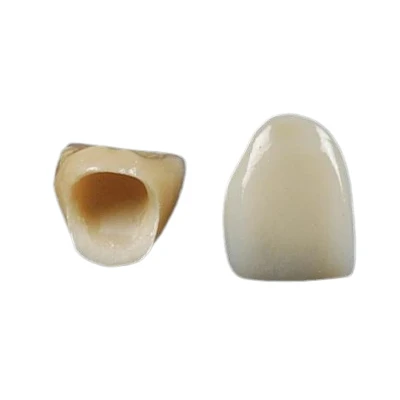
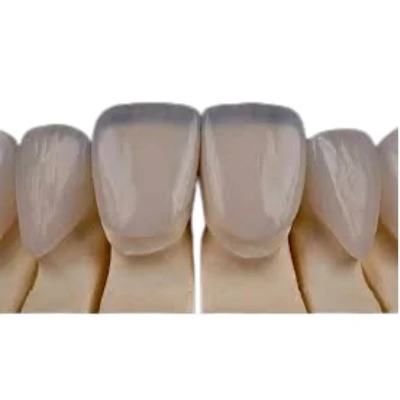
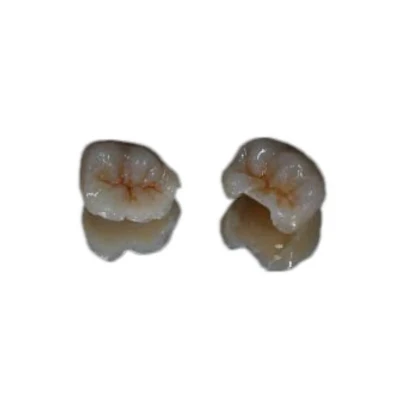
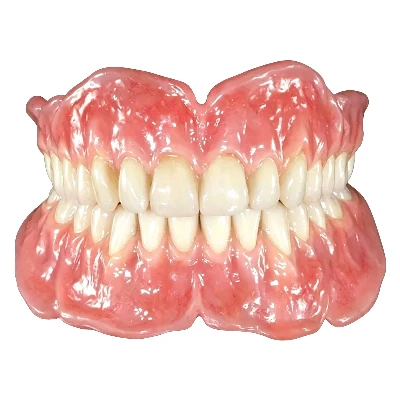
ADS Dental Laboratory Ltd is a full-service digital dental laboratory in Shenzhen, China, providing long-term dental lab outsourcing support for overseas dentists and dental laboratories. Our capabilities cover digital case processing, crown and bridge, veneers, implant restorations, full-arch cases, removable prosthetics, and selected production stages supported by structured quality-control procedures. If you are evaluating how external laboratory capacity could fit into your current workflow, contact ADS to discuss your case requirements or outsourcing model.