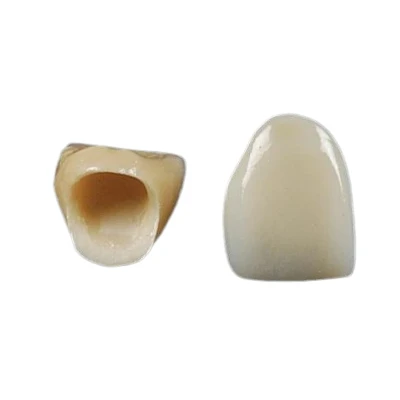
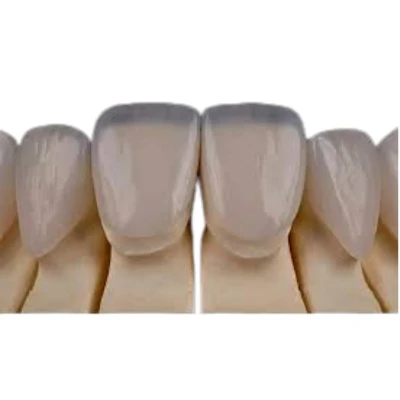
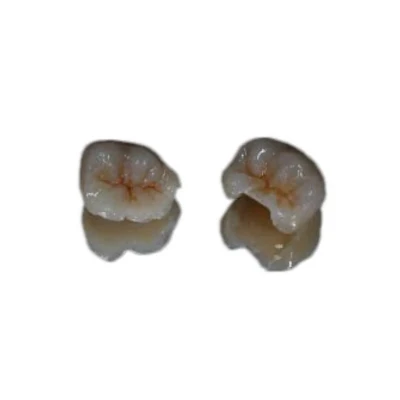

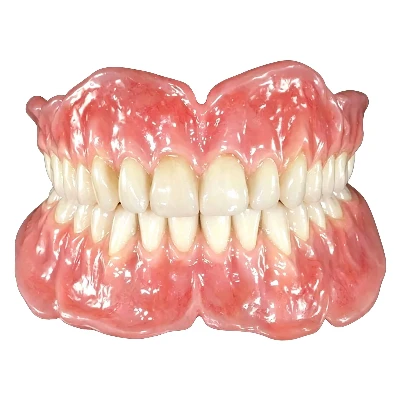


The cost of a dental crown reflects far more than the ceramic, zirconia, or metal used to make it. The final amount may include clinical diagnosis, tooth preparation, temporary restoration, laboratory fabrication, delivery, adjustment, and any treatment needed before the crown is placed.
Laboratory prices also vary. Material grade, technician time, case complexity, equipment, finishing, quality control, turnaround time, and remake support all affect the quote.
Understanding these differences makes it easier to compare crown options fairly.

Crown Cost vs. Dental Laboratory Fee: What Are You Actually Paying For?
A dental crown cost can refer to two different figures: the amount a patient pays a dental practice and the fee a dental laboratory charges to fabricate the restoration.
They are not the same.
A patient's treatment fee may include:
- Examination and diagnosis
- X-rays or 3D imaging
- Tooth preparation
- Conventional impressions or an intraoral scan
- A temporary crown
- Crown placement and cementation
- Occlusal and proximal contact adjustments
- Follow-up care
Additional treatment may be billed separately. A tooth with extensive decay or structural loss may require a core build-up, post, root canal treatment, periodontal therapy, or crown lengthening before the final restoration can be made.
The dental laboratory fee covers the technical work required to produce the crown. Depending on the case, this may include digital file review, CAD design, material selection, milling or pressing, sintering or crystallization, hand finishing, staining, glazing, polishing, and final quality inspection.
This distinction matters when comparing prices. A lower clinical quote may exclude foundation treatment or follow-up care. A lower laboratory quote may exclude models, implant components, custom shading, shipping, or remake support.
The price should always be evaluated against what is actually included.
How Crown Materials Affect the Price
Material is one of the most visible dental crown cost factors, but the name of the material does not tell the whole story. Two restorations described as "zirconia crowns" may differ in composition, translucency, manufacturing method, finishing, and quality control.
The correct material should be selected for the case. Price alone is not a clinical indication.
Zirconia Crowns
Zirconia is a high-strength dental ceramic widely used for posterior crowns, bridges, implant restorations, and selected anterior cases.
Its cost varies according to:
- Material brand and manufacturing consistency
- Strength and translucency category
- Monochromatic or multilayer structure
- Monolithic or layered construction
- Blank size and material utilization
- Milling time
- Sintering cycle
- Staining, glazing, and polishing requirements
A standard monolithic posterior crown may follow a highly repeatable production process. A multilayer anterior zirconia crown may require careful positioning within the disc, more detailed shade planning, surface characterization, and additional finishing.
Layered zirconia costs more because the technician must design or reduce the zirconia framework, apply veneering porcelain, complete multiple firing cycles, and refine the final contour.
The zirconia blank is only one part of the price.
Lithium Disilicate and Other Glass Ceramics
Lithium disilicate is commonly selected when translucency, enamel-like optics, and adhesive bonding are important. It may be milled and crystallized or fabricated through a pressing workflow.
Cost factors include:
- Ceramic block or ingot system
- Milling or pressing method
- Crystallization and glazing
- Minimum thickness requirements
- Stump shade and masking needs
- Custom staining or layering
- Shade photography and technician communication
A simple posterior lithium disilicate crown may need limited characterization. A single anterior crown beside natural teeth is more demanding. The technician may need to reproduce cervical chroma, internal brightness, incisal translucency, halo effects, and surface texture.
In that situation, labor often matters more than the difference in raw ceramic price.
Porcelain-Fused-to-Metal Crowns
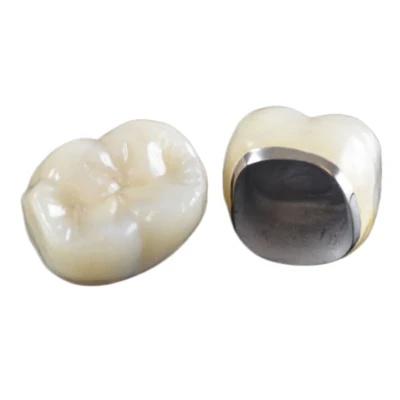
A porcelain-fused-to-metal crown, or PFM crown, combines a metal substructure with an external layer of dental porcelain.
Its cost includes two production systems:
- Fabrication of the metal coping or framework
- Application and firing of the veneering porcelain
The laboratory may need to complete framework design, casting or metal processing, metal finishing, opaque porcelain application, dentin and enamel layering, contour correction, staining, and glazing.
The alloy also affects the price. Base-metal, high-noble, and precious-metal systems have different material costs and handling requirements.
PFM should not automatically be treated as a low-cost or simple option. A well-made layered PFM crown can require considerable technician time.
Full-Metal and Precious-Metal Crowns
Full-metal crowns may be made from base-metal, noble, or high-noble alloys. Precious-metal crowns are unusual because their price can change with the metal market and the actual weight of alloy used.
The laboratory must account for:
- Alloy composition
- Current commodity price
- Restoration weight
- Casting or milling method
- Material loss
- Recovery and recycling
- Finishing and polishing
For a gold crown, raw material may represent a substantial share of the laboratory cost. For an esthetic ceramic crown, technician labor may be the larger variable.
There is no single material that is always the most expensive. The cost depends on both the material and the work required to use it correctly.

Why Technician Labor Can Cost More Than the Ceramic
A dental crown is a custom medical device made for one preparation, one bite, and one patient.
Digital production does not remove the need for skilled labor.
Before manufacturing begins, a technician may need to review the scan, identify the preparation margin, evaluate available space, set the insertion path, establish cement space, and design proximal and occlusal contacts.
After milling, pressing, or casting, the restoration still requires technical finishing. This may include:
- Removing supports or sprues
- Adjusting the internal surface
- Refining margins
- Checking thickness
- Correcting contacts
- Adjusting occlusion
- Adding stain and glaze
- Layering porcelain
- Polishing the final surface
The labor difference is especially clear when comparing a standard monolithic molar crown with a high-esthetic anterior crown.
A posterior monolithic zirconia crown may require a predictable design and stain-and-glaze workflow. A central incisor may require shade photographs, stump shade information, translucency mapping, internal effects, surface texture, and several firing cycles.
Hand-layered porcelain increases cost because the result depends on experienced ceramic work, not only machine time.
The more customized the crown, the more technician judgment affects the final price.
How Tooth Position and Case Complexity Change Crown Cost
The location of the tooth influences the crown design, but anterior and posterior crowns become expensive for different reasons.
Anterior vs. Posterior Crowns
Anterior crowns are often labor-intensive because they must blend with highly visible natural teeth. A small error in value, chroma, translucency, line angle, or surface texture can make the crown noticeable.
Posterior crowns usually place greater emphasis on:
- Occlusal load
- Material strength
- Functional anatomy
- Available thickness
- Parafunction
- Wear against the opposing dentition
A standard posterior monolithic crown may cost less than a customized anterior crown. However, a posterior crown with limited clearance, heavy bruxism, an irregular opposing arch, or a complex occlusal scheme can require more design and adjustment.
Tooth position changes the technical requirements. It does not create a fixed price rule.
Single Crowns, Bridges, and Multi-Unit Cases
A single crown is usually easier to manage than a bridge or multi-unit restoration.
Multi-unit cases require the laboratory to control:
- Shared path of insertion
- Connector dimensions
- Pontic design
- Tissue contact
- Framework strength
- Contacts across several units
- Occlusion across a wider area
- Passive seating
Long-span bridges and full-arch cases demand more design time and more quality-control checkpoints. Minor errors can accumulate across several units, making accurate data and careful production especially important.
Implant Crowns and Custom Abutments
Implant crowns have additional cost drivers that do not apply to conventional tooth-supported crowns.
These may include:
- Implant system identification
- Scan body compatibility
- Titanium base or custom abutment
- Screw channel position
- Emergence profile
- Soft-tissue contour
- Cement-retained or screw-retained design
- Component inventory
- Implant interface inspection
The laboratory may also need to mask a metal abutment or manage a limited restorative space. These requirements increase design time, component cost, and technical responsibility.
Clinical complexity and laboratory complexity should be considered separately. Root canal treatment increases the clinical fee. A custom implant abutment increases the laboratory fee. Some cases affect both.
Digital Workflow, Equipment, and Manufacturing Costs
A digital dental workflow uses scanned data, CAD software, and computer-controlled manufacturing to design and produce restorations.
A typical crown workflow may include:
Digital scan review → CAD design → CAM nesting → milling → sintering or crystallization → finishing → quality control
Digital production can reduce physical shipping, model work, impression distortion, and some repetitive manual steps. It also allows laboratories to receive cases quickly from overseas clients and identify missing data before production begins.
However, digital crowns are not cost-free machine products.
A digital dental laboratory must invest in:
- CAD and CAM software
- Milling machines
- Sintering furnaces
- Ceramic furnaces
- 3D printers
- Scanners
- Milling tools
- Maintenance and calibration
- Data storage
- Technician training
- Backup capacity for equipment failure
Equipment utilization also affects the cost per crown. A laboratory with stable case volume can spread fixed costs across more restorations, improve disc nesting, and run fuller production batches.
That is one reason a specialized digital dental laboratory may offer a lower unit price than a small operation while still using controlled materials and trained technicians.
Digitalization improves scalability and repeatability. It does not replace sound design, finishing, or inspection.
Why Dental Laboratory Prices Differ
Two laboratories may quote different prices for crowns that appear identical on a product list.
The difference often begins with the specification.
One "zirconia crown" may be a basic monolithic restoration with standard staining. Another may use a multilayer zirconia, individual shade mapping, advanced surface texture, a printed model, and additional quality checks.
Laboratory pricing can also reflect:
|
Cost factor |
How it affects the quote |
|
Material specification |
Brand, translucency, strength, traceability, and processing requirements |
|
Technician labor |
CAD design, morphology, shading, layering, finishing, and inspection |
|
Equipment |
Software, machinery, tools, calibration, maintenance, and depreciation |
|
Case volume |
Batch efficiency, disc utilization, and allocation of fixed costs |
|
Quality control |
Margin, contact, occlusion, shade, surface, and interface inspection |
|
Turnaround time |
Standard scheduling, overtime, low-load firing, and rush production |
|
Logistics |
Local delivery, international shipping, customs, and packaging |
|
Service level |
Technical communication, case review, design changes, and remake support |
Location also matters. Labor, energy, rent, regulation, taxation, and logistics vary between markets.
For an overseas dental laboratory, lower production costs may come from specialized division of labor, centralized purchasing, efficient machine utilization, and standardized digital processes. Reducing cost through scale is different from reducing cost by removing quality-control steps.
A higher laboratory fee does not prove better quality. A very low fee, however, may exclude services that the dental office expects to receive.
Quality Control, Remakes, and the Real Cost of a Crown
Laboratory quality control adds time before the crown is shipped. That time has value.
A complete inspection may cover:
- Margin integrity
- Internal seating
- Proximal contacts
- Occlusal contacts
- Minimum material thickness
- Surface defects
- Shade and value
- Glaze and polish
- Implant interface
- Case documentation
Not every problem can be detected outside the mouth. Clinical seating still depends on preparation quality, scanning or impression accuracy, soft-tissue management, and correct bite records.
But a controlled laboratory process can identify many avoidable errors before delivery.
The Hidden Cost of Adjustments and Remakes
The initial laboratory price is not the only cost carried by a dental office.
A poorly fitting or poorly communicated crown may lead to:
- Extended chairside adjustment
- Re-polishing after occlusal correction
- A second patient appointment
- A new scan or impression
- Remake production
- Additional shipping
- Treatment delay
- Administrative and communication time
For international outsourcing, a remake can also add cross-border transit time. An apparently small saving on the original unit may be lost through clinical labor and scheduling disruption.
This is the completed-case cost: the total cost required to finish the case successfully, not simply the price shown on the laboratory invoice.
The lowest unit price does not always create the lowest completed-case cost.

How to Compare Dental Crown Quotes Fairly
A fair comparison starts with matching specifications.
Instead of asking only for the price of a zirconia crown, confirm what type of zirconia crown the quotation covers.
Important questions include:
Restoration Specification
- What material and brand will be used?
- Is the crown monolithic, cut-back, or fully layered?
- Is staining and glazing included?
- Is a physical or printed model included?
- Are implant components included?
- Is custom shading available?
- Are design revisions included?
- Are there material or thickness limitations?
Service Specification
- What is the standard turnaround time?
- Is shipping included?
- Is there a rush fee?
- Who handles technical case communication?
- Are incoming scans reviewed before production?
- What is the remake policy?
- Which remake situations are excluded?
- Are customer design preferences recorded?
- Are prices stable for ongoing case volume?
A low quote may be suitable for a routine posterior crown with standard requirements. It may not be comparable to a quote that includes custom anterior work, implant components, models, priority service, or comprehensive remake support.
For dental practices and laboratories outsourcing regularly, consistency matters as much as price. A partner who understands preferred contacts, occlusion, morphology, and shade communication can reduce repeated instructions and prevent avoidable errors over time.
Compare the entire service specification, not one number.
Final Takeaway: Choose the Right Crown for the Case, Not the Lowest Price
Dental crown cost is shaped by the material, technician labor, clinical and laboratory complexity, production equipment, finishing, quality control, turnaround time, and service included in the quotation.
Material matters, but it is rarely the whole explanation. A standard monolithic crown and a hand-layered anterior crown may use similar quantities of ceramic while requiring very different levels of technical work. Digital production improves efficiency, yet skilled design and final inspection remain essential.
The best price is the one that delivers the correct restoration with predictable fit, function, appearance, and support.
ADS Dental Laboratory Ltd is a China-based digital dental laboratory providing long-term custom restoration outsourcing services for overseas dentists and dental laboratories. Contact our team to discuss crown materials, case requirements, turnaround times, and a production plan suited to your workflow.