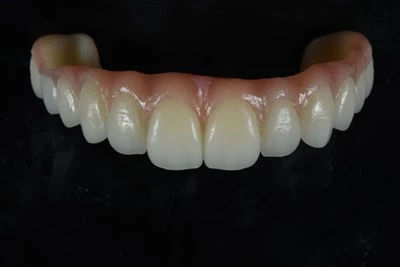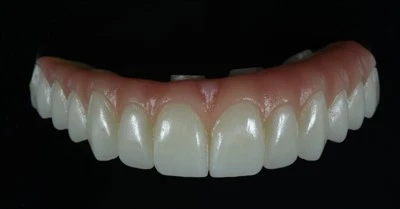
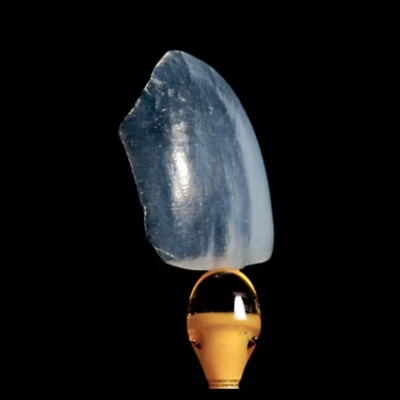
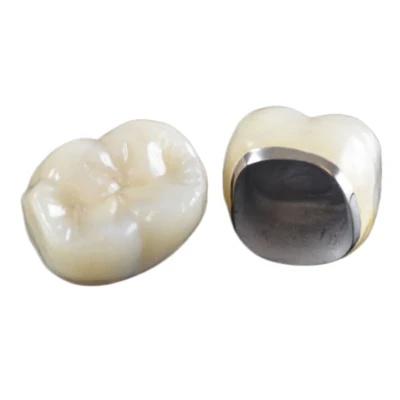
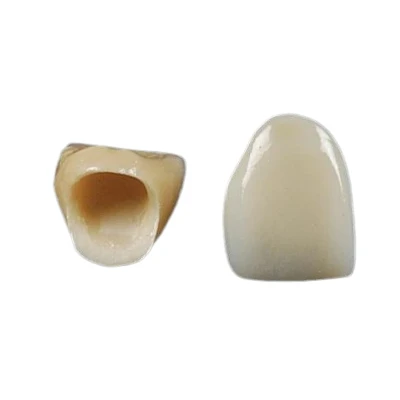
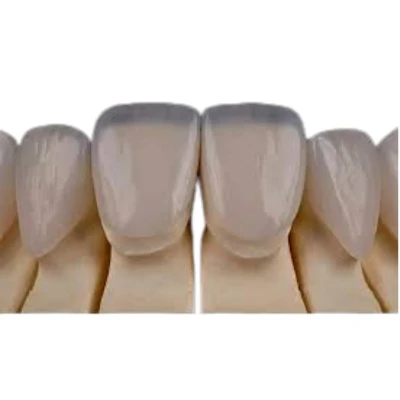
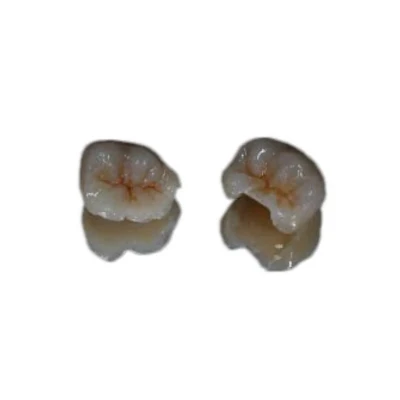



Zirconia crowns are widely used because they combine strength, biocompatibility, and natural-looking esthetics. Yet even a digitally designed restoration can arrive with a fit problem. A crown may not seat fully, the margin may remain open, proximal contacts may be too tight or too loose, or the bite may feel high.
These problems rarely come from one step alone. Zirconia crown fit depends on the entire clinical-to-laboratory workflow, from preparation and scanning to CAD design, milling, sintering, and final quality control.

What Are the Most Common Zirconia Crown Fit Problems?
In restorative dentistry, crown fit refers to how accurately the finished restoration seats on the prepared tooth and relates to the margin, adjacent teeth, and opposing dentition.
Most zirconia crown fitting problems fall into four practical categories.
The Crown Does Not Fully Seat
An incompletely seated crown stops before reaching its intended final position on the preparation. It may rock during try-in or appear to have an open margin.
The most common causes include internal interference, insufficient cement space, tight proximal contacts, preparation undercuts, inaccurate scan data, or dimensional discrepancies introduced during manufacturing.
This problem should be resolved before judging the margin or occlusion. If the crown is not fully seated, both can appear incorrect even when they are not the original cause.
Open or Irregular Margins
Marginal fit describes how closely the crown edge adapts to the prepared finish line.
Fit problems may appear as:
- A visible open margin
- An overextended or underextended margin
- Irregular marginal adaptation
- A margin that lifts during try-in
A marginal gap around 120 μm has often been used as a practical reference in dental literature, although acceptable values vary according to restoration type and measurement method. Research on the clinically acceptable marginal gap for zirconia crowns provides useful context for interpreting these values.
The more important clinical point is that large or irregular marginal discrepancies can increase the risk of cement degradation, plaque retention, and secondary complications.
Tight or Loose Proximal Contacts
Proximal contacts are the areas where the crown contacts the neighboring teeth.
Contacts that are too tight can make flossing difficult and may interfere with complete crown seating. Contacts that are too loose can contribute to food impaction and poor proximal function.
Both scan accuracy and laboratory design influence the final result.
High Occlusion or Premature Contacts
A crown may feel as though it contacts the opposing tooth before the rest of the dentition. This is usually described as a high bite or premature occlusal contact.
Before adjusting the occlusal surface, the clinician should confirm that the crown is fully seated. An incompletely seated crown naturally sits too high and can create apparent premature contacts.
These four problems account for most chairside zirconia crown fit complaints and provide a useful starting point for finding the real source of the error.
Why a Zirconia Crown May Not Fully Seat
A zirconia crown that does not seat completely has a seating problem, but seating failure itself is only a symptom. The interference may be internal, proximal, clinical, or manufacturing-related.
One common cause is inadequate internal relief. The internal surface of the crown must provide enough space for the restoration to pass over the preparation and accommodate the intended cement layer. If part of the intaglio surface binds against the preparation, the crown may stop before reaching the finish line.
The preparation itself can also create interference. Undercuts, irregular axial surfaces, or an unfavorable path of insertion may prevent passive seating.
Cement space, sometimes referred to in laboratory workflows as die spacer or internal spacing, is therefore a critical CAD parameter. Research into the marginal and internal fit of CAD/CAM zirconia crowns reflects why internal spacing and seating accuracy remain important considerations in digital crown fabrication.
If internal spacing is insufficient in a critical area, the restoration may bind before it reaches its final position.
Tight proximal contacts can create a similar problem. A crown may look internally correct but become trapped between adjacent teeth before it is fully seated.
Digital or physical data errors must also be considered. If the scan or impression does not accurately reproduce the preparation, the crown can fit the laboratory model or digital file while failing to fit the actual tooth.
Finally, manufacturing can introduce dimensional differences. Milling and sintering both occur after CAD design, so a restoration that appears ideal on screen still needs to maintain those dimensions through production. This is especially relevant for a CAD/CAM zirconia crown, where digital design accuracy must be carried through the physical manufacturing process.
If a crown has not reached its final seating position, its margin and occlusion should not yet be treated as reliable indicators of the underlying problem.
What Causes Open Margins and Poor Marginal Fit?
An open zirconia margin is often blamed on milling, but marginal accuracy can be lost much earlier.
The process starts with the preparation finish line. A clearly defined finish line is easier to record with an impression or intraoral scanner and easier for the laboratory to identify during CAD design. Deep subgingival margins, inadequate tissue displacement, moisture, blood, or irregular preparation geometry can make that finish line difficult to capture.
For a more focused discussion of finish-line geometry, see our guide to dental crown margin design, including chamfer and shoulder options.
When the clinical record is incomplete, the laboratory is forced to interpret missing information.
That is a major risk point.
Digital design software can assist with automatic margin detection, but ambiguous finish lines still require technician review. Once the margin has been identified correctly, several additional stages can still affect the final result:
- CAD margin geometry
- Milling accuracy
- Tool condition
- Sintering-related dimensional change
- Finishing of the marginal area
This is why a laboratory should not treat marginal fit as a single end-of-production inspection. Margin accuracy needs to be protected from the moment the clinical data enters the workflow.
A good laboratory will also stop and request clarification when the preparation margin cannot be identified confidently rather than guessing where the finish line should be.
Why Zirconia Crowns Have Tight or Loose Proximal Contacts
Proximal contact accuracy depends on both the clinical records and the laboratory workflow.
If the scan does not capture the adjacent tooth accurately, the CAD software is working with incorrect geometry. The technician may design an apparently appropriate contact against a digital model that does not perfectly represent the intraoral situation.
Studies addressing the accuracy of intraoral scanners for fixed prosthodontics help explain why scan quality, scanning technique, and complete capture of adjacent structures matter when fabricating crowns digitally.
CAD contact settings also matter. The intended contact strength must be appropriate for the case, but the laboratory cannot rely on software alone.
After milling, sintering, and finishing, the physical restoration still needs to be checked.
A contact that is too tight may:
- Prevent complete seating
- Require excessive chairside adjustment
- Make floss passage difficult
A contact that is too loose may:
- Allow food impaction
- Reduce proximal stability
- Require correction or remake
The final contact can also change slightly during finishing if material is adjusted at the proximal surface.
For that reason, proximal contacts should be verified on the finished restoration rather than assumed correct because the CAD design looked correct.

Why a Zirconia Crown Can Feel High in Occlusion
A zirconia crown that feels high does not always have an occlusal-design problem.
The first question is whether the restoration is fully seated.
If internal interference or a tight proximal contact prevents complete seating, the entire restoration remains slightly elevated. Grinding the occlusal surface before correcting the seating problem can therefore remove zirconia unnecessarily without addressing the real cause.
Once complete seating has been confirmed, true occlusal discrepancies can be investigated.
Common factors include:
- Inaccurate bite registration
- Incomplete opposing-arch scan data
- Incorrect jaw relationship
- CAD occlusal design
- Articulation errors
- Inadequate final occlusal verification
Accurate bite registration is particularly important because the laboratory uses it to reproduce the relationship between the prepared arch and the opposing dentition.
For a deeper explanation of these factors, see High Occlusion in Dental Crowns: Common Causes and Prevention.
Articulating paper or film can help identify excessive contacts clinically and during laboratory verification. Physical articulation can also provide an additional check in workflows where it is indicated.
At ADS Dental Laboratory, occlusion is part of the structured quality-control process, and Amann Girrbach articulators and related equipment are used in applicable workflows to improve occlusal consistency and functional evaluation.
The practical rule is simple: confirm seating first, then evaluate the bite.
Is the Problem Clinical or Laboratory-Related?
Most zirconia crown fit problems cannot be classified correctly by looking at the finished restoration alone. Errors can originate on either side of the workflow.
Clinic-Side Factors
Clinical records establish the geometry from which the restoration will be manufactured.
Important variables include:
- Tooth preparation geometry
- Undercuts
- Finish-line clarity
- Gingival retraction and moisture control
- Impression or intraoral scan accuracy
- Opposing-arch data
- Bite registration
Proper preparation remains one of the foundations of predictable crown fabrication. Our guide to zirconia crown preparation guidelines, including reduction, margins, and clearance covers these clinical considerations in more detail.
A laboratory cannot recreate anatomy or margin detail that was never captured.
That does not mean every poor scan should simply move into production. A quality-focused lab should identify questionable records early and contact the dentist before design begins.
Lab-Side Factors
Once accurate clinical data has been received, the laboratory becomes responsible for protecting that accuracy through production.
Lab-controlled factors include:
- Margin identification
- Internal cement-space settings
- Path-of-insertion analysis
- Proximal contact design
- Occlusal design
- Milling accuracy
- Tool and machine condition
- Sintering process control
- Finishing
- Final fit inspection
The distinction matters because corrective action depends on the source of the discrepancy. Repeatedly adjusting a crown cannot compensate for an inaccurate scan, just as excellent clinical records cannot prevent a manufacturing error later in the process.
Many zirconia crown fit problems are best understood as accumulated error across several stages rather than one isolated mistake.
How Dental Labs Prevent Zirconia Crown Fit Problems
Reliable zirconia crown fitting starts before the crown is designed. The laboratory needs a workflow that detects questionable information early, controls dimensional accuracy during production, and checks the finished restoration before shipping.
1. Case Intake and Digital Data Verification
The first quality-control stage begins when the case enters the laboratory.
Before design, the laboratory should verify:
- Preparation scan or impression completeness
- Margin visibility
- Adjacent tooth data
- Opposing arch
- Bite registration
- Restoration prescription
- Any case-specific contact or occlusal instructions
Preparation geometry should also be reviewed for obvious undercuts or areas that may interfere with the path of insertion.
If a critical margin or bite relationship is unclear, clarification should happen before manufacturing starts.
For digital outsourcing cases, this early review is especially important because STL and scan files can move immediately into CAD design. Our guide to what dental labs need from an intraoral scan explains the clinical records that help support predictable restorations.
Speed is useful only when the source data is reliable.
2. CAD Design, Milling, and Sintering Control
The CAD stage converts clinical geometry into manufacturing geometry.
The technician needs to verify the margin line, internal cement space, clearance, path of insertion, proximal contacts, and occlusal relationship. Automated software functions are useful, but they do not remove the need for technician judgment when the preparation or margin is difficult to interpret.
A complete CAD/CAM dental workflow from scan to final restoration involves several control points before and after the actual milling stage.
Milling is the next potential source of dimensional error.
Factors such as worn milling tools, machine calibration, workpiece stability, and incorrect processing parameters can change the dimensions of the crown.
Sintering is equally important.
Zirconia crowns are commonly milled before final densification. The production system must therefore account for the dimensional changes that occur during the sintering process. Furnace consistency, material-specific programs, heating and holding conditions, and validated processing parameters all contribute to dimensional stability.
These controls are relevant across different zirconia restoration designs, including monolithic and full-contour zirconia crowns.
For this reason, zirconia crown fit is not finished when the milling machine stops.
3. Final Fit, Contact, and Occlusal Quality Control
The final restoration should be inspected as a physical restoration, not just as a completed CAD file.
Important checks include:
- Marginal integrity
- Crown seating and internal fit
- Proximal contacts
- Occlusal contacts
- Surface finishing
- Overall case consistency
Magnification-assisted inspection is useful for detecting subtle marginal irregularities that are difficult to see at normal working distance. For more detail on this step, see Why Magnification Matters in Dental Laboratory Quality Control.
Physical model or analog checks and articulating film may also be used where appropriate.
ADS Dental Laboratory uses a structured quality-control workflow that includes margin inspection, contact inspection, occlusal inspection, technician traceability, magnification-assisted checks, and final QC.
The purpose of these checks is not to claim that remakes can never happen. It is to catch preventable fit discrepancies before the case reaches the dental chair. A broader discussion of this quality objective is available in How to Reduce Remakes in Dental Restorations.

Conclusion
Common zirconia crown fit problems usually appear as incomplete seating, open margins, inaccurate proximal contacts, or high occlusion. Preventing them requires more than accurate CAD design. Clinical records must be complete, cement space and insertion path must be controlled, milling and sintering must maintain dimensional accuracy, and the finished crown must still pass margin, contact, and occlusal checks.
For dentists and dental laboratories outsourcing zirconia restorations, a reliable production partner should build fit verification into every stage of the workflow. ADS Dental Laboratory provides digital zirconia crown production, structured quality control, and technical case communication for overseas dentists and dental labs. Contact our team if you would like to discuss a zirconia case or long-term dental lab outsourcing support.
Zirconia Crown Fit Problems: FAQ
Why won't my zirconia crown seat completely?
Common causes include internal interference, inadequate cement space, tight proximal contacts, preparation undercuts, inaccurate scan or impression data, and dimensional discrepancies introduced during milling or sintering.
The source of the interference should be identified before cementation.
Can tight contacts stop a zirconia crown from seating?
Yes. If the proximal contact engages too early, the restoration may become trapped between adjacent teeth before it reaches its intended final position.
Contact adjustment should be approached carefully because the actual cause may also involve internal interference.
What causes an open margin on a zirconia crown?
Open margins can originate from incomplete margin capture, inaccurate impressions or scans, incorrect digital margin identification, CAD design, milling, sintering, or finishing.
A significant marginal problem should not automatically be assumed to be a milling defect.
Why does a zirconia crown feel high after seating?
First confirm that it is actually fully seated.
If seating is complete, evaluate the bite registration, opposing scan, CAD occlusal design, articulation, and final occlusal contacts. Articulating paper or film can help locate premature contacts.