


Shoulder and Chamfer Margin Designs: The Basics
A shoulder margin creates a distinct horizontal ledge, typically 1.0–1.5 mm wide. Dentists prepare it to give the restorative material a clear platform. In modern practice, we strongly prefer a rounded shoulder with a smoothed internal line angle rather than a sharp 90-degree corner. The rounding reduces stress concentrations that can lead to fractures.
A chamfer margin, by contrast, forms a smooth, concave or curved transition. Depths usually range from 0.5–1.0 mm. Many clinicians now favor a deep chamfer for ceramic restorations because it provides better material bulk while remaining more conservative than a full shoulder.
These two designs dominate crown preparations today. The choice depends less on tradition and more on the specific material, tooth position, and fabrication method.
Shoulder Margin
- Offers a clear finish line that scanners and technicians appreciate.
- Provides generous space for porcelain layering or thicker monolithic material.
- Requires more tooth reduction, which can be a concern in structurally compromised teeth.
Chamfer Margin
- Conserves more tooth structure.
- Creates a smoother transition that often improves stress distribution.
- Demands careful depth control - too shallow and the margin becomes difficult to read.
Shoulder vs Chamfer: Direct Comparison
Experience in the lab shows that neither design is universally superior. Success depends on execution and context.】
|
Aspect |
Rounded Shoulder |
Deep Chamfer |
|
Tooth Reduction |
Higher (1.0–1.5 mm typical) |
Lower (0.5–1.0 mm typical) |
|
Material Support |
Excellent for layered ceramics |
Good when deep enough |
|
Stress Distribution |
Can concentrate at sharp angles if not rounded |
Smoother transition, better load spread |
|
Marginal Gap Potential |
40–80 μm in some studies |
Often 25–55 μm in comparable cases |
|
Digital Scan Readability |
Very good with clear preparation |
Excellent when continuous and deep enough |
|
Best For |
Esthetic zones needing porcelain bulk |
Monolithic zirconia and conservative preps |
Chamfer margins frequently deliver tighter marginal adaptation in monolithic zirconia cases. One in vitro study on alumina crowns showed chamfer designs achieving mean fracture loads of around 610 N compared to roughly 503 N for shoulders, with the difference reaching statistical significance. Such results highlight how smooth geometry can influence outcomes, though real-world performance also depends on cementation and occlusal forces.
Rounded shoulders shine when extra material thickness is needed, such as in layered restorations or situations requiring strong porcelain support.

Research Insights on Fracture Resistance and Fit
Ceramic materials are brittle. Margin design influences how forces transfer through the restoration. Studies consistently show that both deep chamfer and rounded shoulder margins can exceed typical biting forces when properly executed. However, sharp internal angles or insufficient material thickness create weak points.
Data on marginal gaps further illustrates the nuance. Some comparisons report smaller gaps with well-prepared chamfers (around 27 μm in certain alumina systems) versus shoulders. These numbers remind us that clarity and continuity of the finish line often matter more than the label itself.
The takeaway is straightforward: evaluate margin design together with restoration thickness, occlusal clearance, and the chosen material. Isolated comparisons rarely tell the full story.
Material-Specific Recommendations
Different crowns demand different margin considerations.
Monolithic Zirconia Crowns A well-defined deep chamfer works reliably in most posterior cases. It preserves tooth structure while giving the strong zirconia enough bulk. Rounded shoulders become useful when extra space is needed for contour or occlusion. Avoid shallow chamfers that risk thin edges prone to chipping during milling.
Layered Zirconia and E.max (Lithium Disilicate) These restorations benefit from deep chamfer or rounded shoulder designs. Layered cases especially need adequate space for porcelain. Thin margins here increase the risk of chipping or aesthetic issues at the gingival line. In our lab experience, lithium disilicate performs best with at least 1 mm of material thickness at the margin.
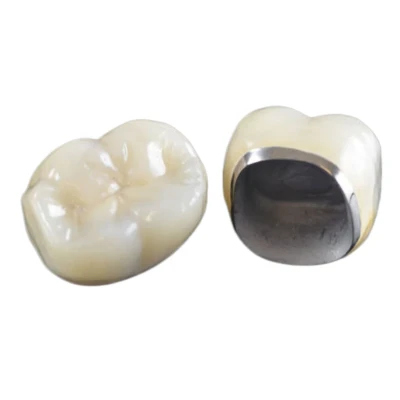
PFM and Full Metal Crowns Chamfer margins remain a classic choice for full metal restorations due to their conservatism. PFM crowns often use a shoulder on the facial for porcelain support and chamfer lingually for better adaptation.
Anterior Esthetic Cases Rounded shoulders frequently provide the best combination of strength and margin concealment. However, a properly executed deep chamfer can deliver excellent results when tooth structure is limited and the material allows good translucency.
Clinical Scenario Guidance
Anterior teeth prioritize esthetics and soft tissue harmony. A rounded shoulder often helps hide the margin transition, especially with thin gingival biotypes.
Posterior teeth face heavier occlusal loads. Deep chamfer margins paired with high-strength zirconia work well for many patients. In bruxers or those with limited clearance, we sometimes recommend slightly wider preparations regardless of exact margin type.
Subgingival vs supragingival placement influences outcomes more than shape alone. Supragingival margins simplify scanning and maintenance. When subgingival placement is necessary for caries or esthetics, ensure the finish line remains visible and continuous.

The Digital Laboratory Perspective
In a modern CAD/CAM workflow, margin quality directly impacts lab efficiency. Scanners struggle with unclear or discontinuous lines. We see more remakes from shallow, vague chamfers than from properly prepared shoulders.
Key lab requirements include:
- Clarity - the finish line must be distinct in the scan.
- Continuity - no jumps or fades around the circumference.
- Smooth internal geometry - rounded transitions prevent stress risers and seating issues.
- Adequate material thickness - especially critical for zirconia milling to avoid chipping.
A clean deep chamfer or rounded shoulder both scan and mill predictably when prepared well. Poorly defined margins, regardless of type, create headaches during design and production.
Common Preparation Pitfalls and Best Practices
Technicians frequently encounter sharp 90-degree shoulders that concentrate stress or shallow chamfers that disappear in scans. Inconsistent width around the tooth also leads to uneven material thickness.
Best practices emerge from daily case handling:
- Use appropriate diamond burs to create smooth, rounded transitions.
- Verify margin clarity before final impression or scan.
- Ensure at least 0.5–1.0 mm of material space at the margin for ceramics.
- Communicate closely with the lab when facing deep subgingival margins or limited tooth structure.
These steps dramatically reduce adjustments and remakes.
Conclusion
Crown Margin Design: Shoulder vs Chamfer comes down to matching the preparation to the material, clinical needs, and digital workflow. The best margin is clear, continuous, smooth, and thick enough for the chosen restoration - whether that leans toward a deep chamfer or rounded shoulder.
At ADS Dental Laboratory Ltd, we specialize in turning well-prepared cases into precise, long-lasting restorations using advanced digital workflows. If you have questions about margin design for an upcoming case or want to discuss outsourcing options, reach out to our team. We're ready to support your practice with reliable, high-quality crown manufacturing.
FAQ
Does a shoulder margin always provide higher strength?
Not necessarily. While shoulders offer more space, some studies on alumina crowns showed chamfer designs delivering higher fracture resistance due to better stress distribution. Rounded geometry and proper thickness matter more than the name.
Which margin works better for digital scanning?
A clear, continuous deep chamfer or rounded shoulder both perform well. Shallow or irregular margins create the most problems for intraoral scanners and CAD software.
What is best for anterior esthetic crowns?
Rounded shoulders often excel here for porcelain support and margin hiding, though a well-executed deep chamfer can succeed in conservative preparations.
How should labs handle different margin designs?
We evaluate each case individually. The goal is always a predictable, seated restoration with excellent marginal integrity. Clear communication about material choice and preparation photos helps us deliver optimal results.