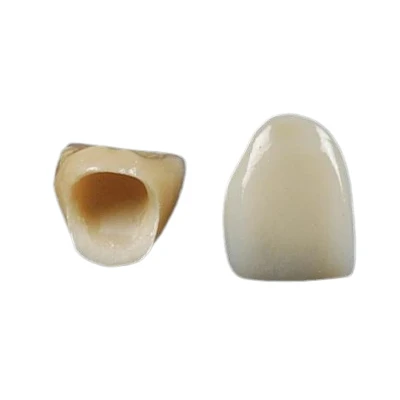
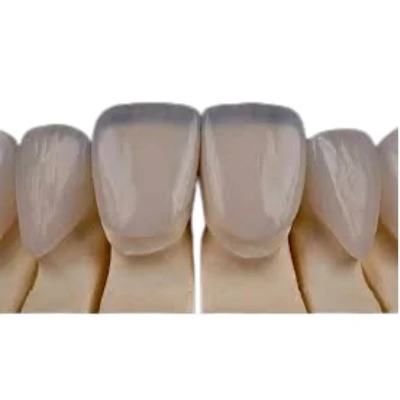
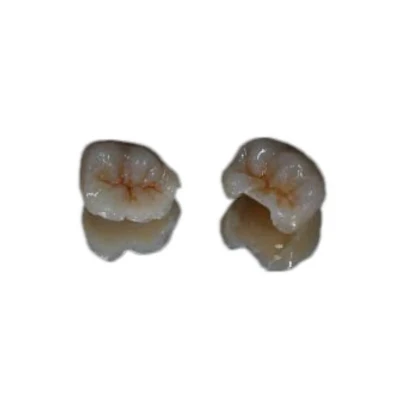
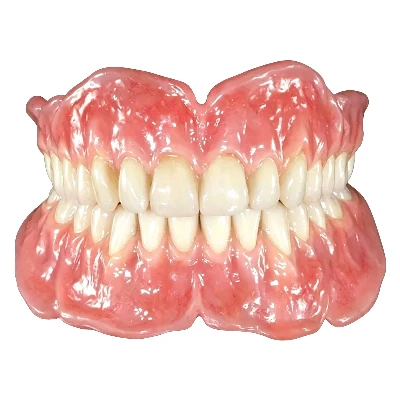

Zirconia crowns dominate modern restorative work because they combine high strength with good biocompatibility and aesthetics. Thickness controls fracture resistance, how natural the restoration looks, and how much tooth structure you preserve. Get it wrong, and you risk chipping, cracking, or unnecessary pulp exposure.
Minimum thickness is the lowest material depth that maintains structural integrity under load. Ideal thickness adds margin for real-world variables like occlusion, patient habits, and material type. Optimal thickness balances those factors for long-term success.
Three main zirconia generations drive decisions today: 3Y (high-strength, ~1100-1500 MPa), 4Y (balanced, ~800-1100 MPa), and 5Y (high-translucency, ~500-800 MPa). 3Y handles posterior loads best. 5Y suits anterior esthetics but demands more bulk.

Minimum Thickness for Different Types of Zirconia Crowns
Monolithic zirconia is the go-to for most cases-no veneer layer means simpler fabrication and fewer failure points.
For 3Y high-strength monolithic (BruxZir Full-Strength style), minimum axial wall sits at 0.4 mm anterior and 0.5 mm posterior. Occlusal or incisal minimum ranges 0.5-0.7 mm. Manufacturers like BruxZir push 0.5 mm minimum for full strength, with 1.0 mm ideal.
4Y and 5Y high-translucency types need more material because cubic phase reduces transformation toughening. Minimum axial jumps to 0.8 mm anterior and 1.0 mm posterior. Occlusal/incisal minimum starts at 1.0-1.2 mm. Katana UTML or similar high-trans materials often list 0.8 mm as the floor for reliable performance.
Layered zirconia (core + veneer porcelain) requires thicker core support-typically 1.0-1.5 mm core plus 0.5-1.0 mm veneer-to prevent chipping. Total minimum often hits 1.5-2.0 mm.
|
Zirconia Type |
Minimum Axial Wall (Anterior) |
Minimum Axial Wall (Posterior) |
Minimum Occlusal/Incisal |
Ideal Overall Range |
|
3Y Monolithic (High-Strength) |
0.4 mm |
0.5 mm |
0.5-0.7 mm |
1.0-1.5 mm axial, 1.5-2.0 mm occlusal/incisal |
|
4Y/5Y Monolithic (High-Trans) |
0.8 mm |
1.0 mm |
1.0-1.5 mm |
1.2-2.0 mm |
|
Layered Zirconia |
1.0-1.5 mm (core) |
1.0-1.5 mm (core) |
1.5-2.0 mm |
1.5-2.0 mm total |
Always check the specific disc manufacturer's data sheet. Strength drops fast below listed minimums, especially in 5Y under cyclic loading.
Zirconia Crown Thickness for Anterior vs Posterior Teeth
Anterior teeth see lower functional loads but higher esthetic demands. Posterior teeth handle heavy occlusion and wear.
Anterior monolithic zirconia allows conservative prep. For 3Y, aim for 0.4-0.5 mm axial minimum and 1.5-2.0 mm incisal. Lingual clearance can stay around 0.5-1.0 mm. High-trans 5Y pushes axial minimum to 0.8 mm for fracture safety while keeping translucency.
Posterior needs more bulk. 3Y minimum axial 0.5-0.7 mm, occlusal 0.7-1.0 mm minimum (functional cusps 1.5 mm+). Ideal occlusal 1.5-2.0 mm handles bruxism or heavy chewers. High-trans posterior demands 1.0 mm axial and 1.5 mm occlusal minimum.
Abutment support and load direction matter. Oblique forces increase stress; thicker material mitigates it. Without solid abutment backing, thin sections fail early.
Anterior focuses on light transmission and marginal fit. Posterior prioritizes load distribution and connector strength (bridges need 9-12 mm² cross-section).
Tooth Preparation Guidelines for Zirconia Crowns
Proper prep sets up uniform thickness and passive fit.
Use chamfer or rounded shoulder margin-0.5-1.0 mm depth, continuous and visible. Avoid feather edge unless the lab confirms milling capability; it risks thin margins and chipping.
Taper axial walls 4°-8° (around 5-6° ideal). No undercuts, no parallel walls, no 90° shoulders, no sharp internal angles. Round all line angles to cut stress concentrations.
Anterior prep: incisal reduction 1.8-2.0 mm, lingual concave with football diamond for natural contour.
Posterior prep: occlusal 1.5-2.0 mm (functional cusp bevel), axial 1.0-1.5 mm ideal.
Smooth surfaces improve digital scanning accuracy. Uniform reduction prevents weak spots.
These steps reduce chair time and remakes. Prep dictates how well the crown seats on first try.
What Happens If a Zirconia Crown Is Too Thin or Too Thick?
Too thin (< minimum) leads to fracture or chipping, especially posterior 5Y under 1.0 mm or 3Y under 0.5 mm in high-load zones. Stress concentrates at thin spots; cyclic loading drops survival rate fast. Edge failures and debonding follow.
Too thick over-reduces tooth structure, risks pulp exposure, creates unnatural aesthetics (less translucency), and interferes with occlusion. Over-bulked connectors weaken bridges.
Real cases show thin posterior crowns cracking within months in bruxers. Thick anterior ones look bulky and opaque.
Match material to case, verify thickness in design software, and check occlusion at try-in.
How Digital Dental Labs Control Zirconia Crown Thickness
CAD/CAM workflows lock in precision. Exocad or 3Shape designs flag areas below minimum thickness automatically. CAM milling holds tolerances under 0.05 mm.
Sintering follows strict protocols to avoid microcracks in thin sections. Digital calipers or built-in verification tools confirm uniform distribution-axial, occlusal, margins.
Labs run QC reports per case, catching inconsistencies before milling. This beats hand-waxed manual work where human error creeps in.
For overseas outsourcing, digital files ensure consistent results across batches. Thickness stays predictable even on complex preps.
Tips for Dentists When Designing Zirconia Crowns
Run digital mock-up first to check clearance space.
Select 3Y for bruxism or posterior high-load; go 5Y only anterior non-bruxers.
Communicate prep details with the lab-margin type, patient habits, material preference.
Use reduction guides and precise burs for smooth chamfer and rounded edges.
Provide full-arch scans; labs spot issues early.
At try-in, verify uniform thickness and occlusion.
Upload preps for feedback-many labs offer free thickness analysis.
FAQ
What is the minimum thickness for 3Y monolithic zirconia?
Anterior axial 0.4-0.5 mm, posterior 0.5-0.7 mm; occlusal/incisal 0.5-0.7 mm minimum.
Can anterior zirconia go as thin as 0.3-0.4 mm?
Possible with high-strength 3Y in conservative cases, but 0.4 mm+ is safer for fracture resistance.
How much occlusal reduction for posterior zirconia?
Minimum 0.7-1.0 mm (3Y), ideal 1.5-2.0 mm.
Does translucency affect required thickness?
Yes-5Y high-trans needs 0.8-1.0 mm axial minimum vs 0.4-0.5 mm for 3Y.
What if I under-prepare?
Crown comes too thin; fracture risk rises. Lab software flags it, but adjust prep or choose stronger material.
How do digital labs ensure thickness accuracy?
Auto-check in design, precise milling, post-sinter QC reports.
Is feather edge margin acceptable?
Only if lab confirms; chamfer preferred for margin integrity.
Zirconia thickness is not a fixed number-it shifts with material, location, and patient needs. Follow manufacturer specs, prioritize uniform reduction, and lean on digital tools for predictability. Success rates climb when prep matches the material's limits. For consistent results on overseas cases, labs with strong CAD/CAM QC make the difference.
At ADS dental laboratory Ltd, We uses advanced 3D printing, CNC milling, and strict quality control to produce both – with fast turnaround and competitive pricing tailored for overseas clients.
Contact us today to discuss your crown outsourcing needs and digital workflow integration.