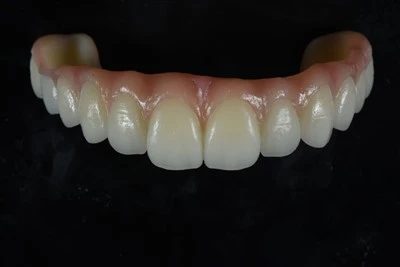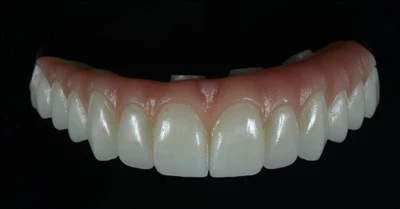
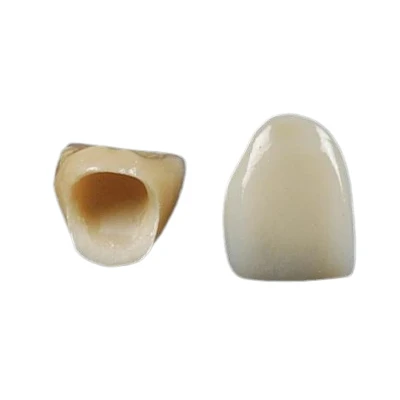
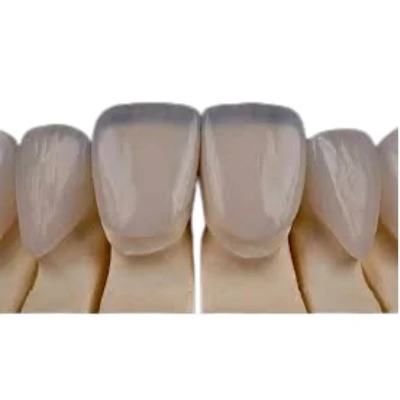
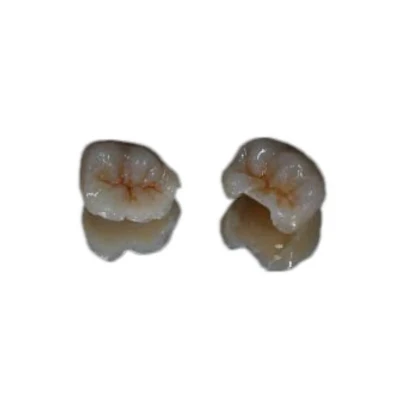

Modern zirconia crowns can look natural, including in the anterior region. The result depends on more than choosing a tooth-colored material. Zirconia type, translucency, crown thickness, preparation shade, surface texture, and laboratory characterization all affect the final appearance. High-translucency zirconia can provide excellent esthetics, but it is not the best choice for every case. A natural result comes from balancing light transmission with masking ability and giving the laboratory complete shade information.

Do Zirconia Crowns Look Like Natural Teeth?
Yes. A well-planned zirconia crown can blend closely with natural teeth in color, value, contour, and surface texture. Modern pre-shaded and multilayer zirconia has moved far beyond the flat, opaque appearance associated with earlier generations of the material.
The important point is that "zirconia" does not describe one uniform optical material. Some zirconia is designed mainly for strength and masking. Other formulations are designed for higher translucency and anterior esthetics. Two crowns may both be called zirconia restorations while producing very different visual results.
The clinical situation also matters. A high-translucency crown over a light preparation may look lifelike. The same material over a dark non-vital tooth or titanium abutment may look gray because the underlying color shows through. Crown thickness, cement shade, and the amount of available restorative space can change the outcome again.
Shape is equally important. Even when the shade is correct, a crown may still look artificial if the line angles are too strong, the incisal edge is too thick, or the facial surface reflects light differently from the adjacent tooth.
Zirconia crowns can look natural, but the result is created by the complete clinical and laboratory workflow-not by material color alone.
What Makes a Zirconia Crown Look Natural?
A natural-looking zirconia crown must reproduce how a tooth handles light. That includes transmission through the restoration, reflection from its surface, and scattering within the material.
Shade is the general color selected for the restoration. It is often recorded with systems such as VITA Classical, which includes 16 basic shades. Shade selection is only a starting point.
Value describes how light or dark the tooth appears. Value errors are especially visible in a single anterior crown. A crown that is slightly too bright may stand out even when its hue appears correct.
Chroma is the intensity or saturation of the color. Cervical areas usually show more chroma than incisal areas, so a uniform color from the gingival margin to the incisal edge can make a crown look flat.
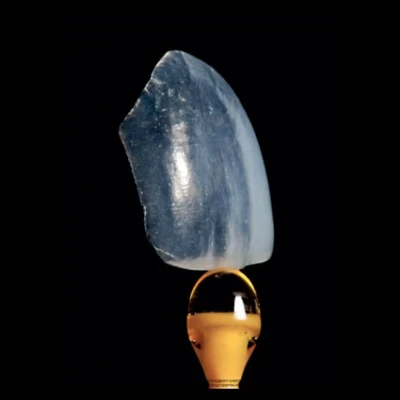
Translucency is the degree to which light enters and passes through a material. It creates depth and reduces the chalky appearance seen in highly opaque restorations.
Opacity is the ability to block the color beneath the crown. It is essential when the preparation is dark, a metal post is present, or a titanium implant component could influence the cervical color.
Natural teeth also display fluorescence, opalescent effects, surface texture, and different levels of gloss. These features affect how the restoration looks under daylight, operatory lighting, and photography.
A crown can match the selected shade tab and still look artificial if its value, contour, texture, or incisal effects are wrong. Esthetics depends on a combination of optical and anatomical details.
How Zirconia Type Affects Translucency and Esthetics
Dental zirconia is a polycrystalline ceramic based on zirconium dioxide. It is commonly grouped by yttria content into 3Y, 4Y, and 5Y materials. These categories do not describe exact performance for every brand, but they help explain the usual balance between strength, translucency, and masking ability.
3Y, 4Y, and 5Y Zirconia
|
Zirconia type |
Relative translucency |
Masking ability |
Strength tendency |
Common esthetic use |
|
3Y zirconia |
Lower |
High |
Highest |
Posterior crowns, longer bridges, dark preparations |
|
4Y zirconia |
Moderate to high |
Moderate |
High |
Premolars, short-span bridges, selected anterior cases |
|
5Y zirconia |
Higher |
Lower |
Lower than 3Y and 4Y |
Anterior single crowns and high-esthetic cases |
3Y zirconia usually contains more tetragonal-phase material and provides strong transformation toughening. It is useful when strength and masking are priorities, but it may appear more opaque than higher-translucency grades.
4Y zirconia offers a middle position. It is commonly selected when the case needs better light transmission than 3Y but still requires substantial strength.
5Y zirconia contains more cubic-phase material, which reduces light scattering and improves translucency. It can produce excellent anterior esthetics when the preparation shade is favorable. Its lower masking ability means it must be selected carefully for discolored teeth and implant cases.
Multilayer and Layered Zirconia
Multilayer zirconia is milled from a disc or block with built-in color or translucency gradients. The cervical area may be more chromatic and opaque, while the incisal area is lighter and more translucent. This reduces the uniform appearance of single-color zirconia.
Layered zirconia uses a zirconia coping or framework covered with veneering porcelain. The technician can create more complex internal color, mamelons, translucency, and incisal effects. It offers greater artistic control, although the veneering ceramic introduces a separate chipping risk.
Modern multilayer monolithic zirconia can handle many esthetic cases well. Complex single central incisors may still benefit from porcelain layering or another ceramic when the adjacent tooth has highly individual optical features.

Translucency vs. Masking Ability: Why More Translucent Is Not Always Better
Translucency gives a crown depth, but it also allows the underlying tooth or abutment to influence the final color.
This trade-off is critical in material selection.
A high-translucency zirconia crown can work well over a light, evenly colored preparation. The restoration receives optical support from the tooth underneath and often requires less aggressive surface characterization.
The same approach is less predictable over:
- A dark non-vital tooth;
- A metal post and core;
- A heavily stained preparation;
- A titanium implant abutment;
- A thin crown with limited restorative space.
In these situations, the restoration needs enough opacity to control the background color. A more translucent material may allow gray, brown, or metallic tones to show through. Increasing crown thickness can improve masking, but it may not be possible without additional tooth reduction or overcontouring.
Surface stain cannot fully correct a wrong material choice. It can refine hue and chroma, but it cannot reliably hide a dark substrate when the zirconia itself is too translucent.
The most translucent zirconia is not automatically the most natural-looking zirconia.
The correct material is the one that balances light transmission, masking, strength, thickness, and the clinical background of the case.
How Shade Matching Determines the Final Result
Shade matching is the process of recording and reproducing the color and optical features of a natural tooth. For zirconia crowns, this requires more than writing "A2" on a laboratory prescription.
A standard shade tab provides a basic reference, but natural teeth contain different color zones. The cervical third often has higher chroma. The body carries the main shade. The incisal third may show translucency, halos, white bands, or blue-gray effects.
Clinical Shade Records the Dentist Should Provide
For a predictable anterior result, the laboratory should receive:
- The selected base shade and target value;
- A photo with the shade tab and tooth in the same plane;
- Full-face, retracted, lateral, and incisal photographs where relevant;
- Close-up images of the cervical, body, and incisal zones;
- The preparation or stump shade;
- Details about metal posts, cores, or implant abutments;
- Notes on white spots, cracks, translucency, halos, and surface texture;
- Images of the provisional or previous crown when useful.
Shade should be recorded before the tooth becomes dehydrated. A dry tooth appears lighter and can lead to a crown with excessive value.
Photography must also be controlled. Strong flash, incorrect white balance, overexposure, or a shade tab positioned closer to the camera than the tooth can distort the information sent to the laboratory.
How the Laboratory Adjusts the Shade
The laboratory starts by selecting the correct zirconia category and disc position. With multilayer zirconia, vertical nesting affects how much cervical chroma and incisal translucency appear in the crown.
Technicians may then use coloring liquids, internal characterization, external stains, glazing, and polishing. Surface texture is added to control reflection. A highly polished flat surface reflects light differently from natural enamel, even when the color is accurate.
Digital shade devices can improve repeatability, but they do not guarantee an exact match. Their data should be combined with calibrated photographs, stump-shade records, and technician interpretation.
Minor color differences may be corrected with staining and reglazing. Major value errors, poor masking, or an unsuitable zirconia grade often require remaking the restoration.
Do Zirconia Crowns Look Natural on Front Teeth?
Zirconia can be an excellent anterior crown material, but front teeth expose small esthetic errors more clearly than posterior teeth.
Single Anterior Crowns
A single maxillary central incisor is one of the most demanding shade-matching situations. The crown must match the contralateral tooth in value, width, length, line angles, incisal position, translucency, texture, and gloss.
High-translucency or multilayer zirconia is often suitable when the preparation is light and the patient needs additional strength. If the adjacent tooth has complex internal features, a layered zirconia crown or lithium disilicate restoration may provide more customization.
A trial evaluation is useful before final cementation. The dentist should check the crown under different light sources and assess it from normal speaking distance, not only under magnification.
Multiple Anterior Crowns and Bridges
Multiple adjacent crowns can be easier to harmonize because the laboratory controls the full group rather than matching one restoration to a single untouched tooth. Proportion, midline, incisal plane, and symmetry become the main priorities.
Bridges require more attention to connector dimensions and strength. This may shift material selection toward 3Y or 4Y zirconia rather than the most translucent 5Y option.
Anterior Implant Crowns
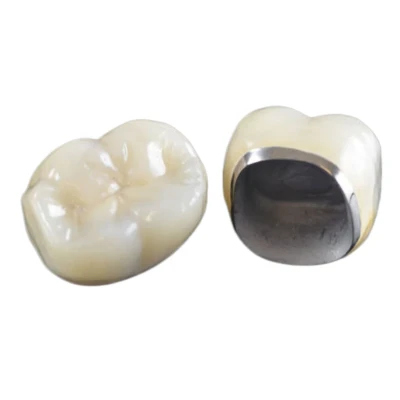
For implant crowns, cervical esthetics depend on more than the ceramic. Titanium abutments, thin soft tissue, implant position, and emergence profile can all influence the result. Zirconia avoids the metal coping associated with PFM crowns, but it cannot always prevent grayness caused by the implant component underneath.
In the anterior region, material selection must follow the preparation color, soft-tissue conditions, and restoration design-not a general preference for maximum translucency.
Why Do Some Zirconia Crowns Look Opaque or Artificial?
An unnatural zirconia crown usually reflects a mismatch between the material, the clinical background, and the finishing process.
A crown may look too white when its value is too high. Moving from one shade tab to another does not always solve this because the problem may be brightness rather than hue.
A crown may look chalky or opaque when a high-masking zirconia is used in a visible area, the restoration is excessively thick, or the surface lacks depth and texture.
A crown may look gray at the cervical margin when a dark preparation, metal post, or titanium abutment affects the final color. A more translucent zirconia can make this problem more visible.
A crown may look flat when it has no cervical-to-incisal gradient. Uniform color, uniform gloss, and an incisal edge without translucency can make the restoration appear artificial.
The shade may be acceptable while the crown still looks wrong because the facial contour, line angles, contact areas, or surface texture do not match the adjacent teeth.
Cementation can also change the final result. Highly translucent restorations are more affected by the preparation, try-in paste, and cement shade than more opaque zirconia crowns.
These problems are easier to prevent than to correct. Accurate shade records and case-specific zirconia selection should happen before milling, not after the final crown has been glazed.
Zirconia vs. Other Esthetic Crown Materials
No single crown material is the most natural in every case. The best choice depends on the underlying shade, restoration thickness, occlusal load, and level of customization required.
|
Material |
Esthetic tendency |
Masking ability |
Strength tendency |
Common use |
|
High-translucency zirconia |
High when case selection is correct |
Moderate |
Moderate to high |
Anterior and premolar crowns |
|
Layered zirconia |
Highly customizable |
Moderate to high |
Strong zirconia core |
Complex anterior crowns and dark preparations |
|
Lithium disilicate |
High translucency and enamel-like depth |
Low to moderate |
Moderate |
Anterior crowns, veneers, selected premolars |
|
Feldspathic porcelain |
Excellent optical layering |
Low |
Lower |
High-esthetic veneers and low-load anterior restorations |
|
PFM |
Can be acceptable but may appear more opaque |
High |
High |
Cases requiring strong masking or traditional workflows |
High-translucency zirconia is useful when the case needs both esthetics and greater mechanical confidence. Lithium disilicate often performs well for a single anterior crown over a favorable preparation. Layered zirconia is valuable when the case requires both masking and detailed characterization.
The material should be selected for the tooth in front of the clinician, not by habit.

Achieving Natural-Looking Zirconia Crowns Through Better Lab Communication
Zirconia crowns can look highly natural when translucency, masking ability, shade, thickness, anatomy, and surface finishing are planned together. High-translucency material alone cannot compensate for a dark preparation, incomplete shade records, or incorrect crown morphology.
ADS Dental Laboratory Ltd supports overseas dentists and dental laboratories with case-specific zirconia selection, digital scan workflows, shade-photo review, and customized esthetic finishing. Contact our team to discuss an anterior zirconia case or submit your scan and shade records for evaluation.
FAQ
Which Type of Zirconia Looks Most Natural?
High-translucency and multilayer zirconia usually provide the most natural appearance in favorable anterior cases. However, a dark preparation may require 3Y, 4Y, layered zirconia, or another masking strategy. The most esthetic option is the material that controls both translucency and background color.
Can a Zirconia Crown Match a Single Front Tooth?
Yes, but a single front tooth is a demanding case. The laboratory needs shade-tab photographs, stump shade, incisal details, surface texture, and accurate digital or conventional records. A standard shade code alone is rarely enough.
Can the Color of a Zirconia Crown Be Changed?
Small corrections can sometimes be made with external staining and reglazing. Large errors in value, masking, translucency, or material selection usually cannot be corrected predictably and may require a remake.
Do Zirconia Crowns Stain or Change Color?
Zirconia is generally color-stable and resistant to external staining. Long-term appearance can still change if the surface becomes rough, the glaze wears, the crown is adjusted without proper polishing, the gingiva recedes, or the surrounding natural teeth darken over time.
Are Zirconia Crowns More Opaque Than Porcelain?
Traditional high-strength zirconia is usually more opaque than glass ceramics and feldspathic porcelain. Modern 4Y, 5Y, and multilayer zirconia provides better translucency, but optical performance still varies by brand, thickness, shade, and sintering protocol.