
New York dentists have no shortage of dental laboratories to choose from. The harder part is finding one that matches the practice's case mix, digital workflow, quality expectations, and turnaround requirements.
Some labs focus on cosmetic restorations. Others are stronger in implants, removables, or high-volume digital production. This guide looks at several dental laboratories serving the New York market and explains how dentists can compare them before building a long-term lab relationship.

How We Evaluated Dental Laboratories in New York
There is no single "best dental lab" for every practice. A cosmetic dentist handling veneers has different priorities from a multi-doctor practice sending hundreds of posterior crowns each month.
The laboratories in this guide were considered based on practical factors that affect day-to-day restorative dentistry:
- Range of restorations and materials
- Digital impression and CAD/CAM capabilities
- Implant and complex-case experience
- Esthetic capabilities
- Communication and technical support
- Turnaround and logistics
- Quality-control processes
- Pricing transparency and remake policies
- Professional experience and market presence
A digital dental lab is a laboratory that accepts digital clinical data, such as intraoral scans, and uses computer-aided design and manufacturing technologies to design or fabricate restorations. Digital capability matters, but equipment alone does not determine quality. Scan interpretation, technician skill, manufacturing control, finishing, and final inspection still matter.
The best choice is therefore the laboratory that can produce the type of work your practice needs with consistent clinical results.
Dental Laboratories in New York Worth Considering
The following laboratories represent different service models and clinical focuses. They are not ranked from best to worst. Dentists should confirm current services, turnaround times, materials, and case requirements directly with each laboratory before sending cases.
Utica Dental Lab
Founded in 1954, Utica Dental Lab is one of the more established full-service dental laboratories in New York State. Its workflow includes conventional production as well as digital scanning, CAD design, and
CAD/CAM manufacturing.
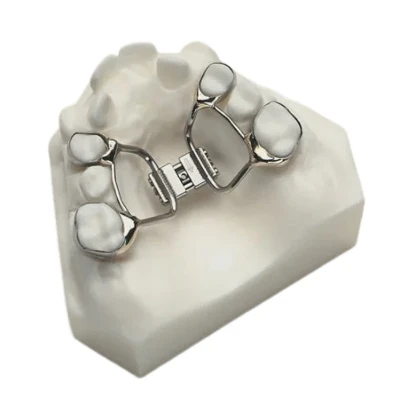
Its product range includes zirconia crowns, PFM restorations, full-cast restorations, dentures, implant restorations, and orthodontic appliances.
For general practices that want to consolidate fixed, removable, and implant work with one laboratory, Utica is worth considering. Its broad product range is more relevant than specialization in one narrow restoration category.
Ultimate Dental Laboratory
Ultimate Dental Laboratory was established in 2000 and has a stronger digital focus. Its workflow includes digital impression acceptance, 3D design, and in-house milling.
The laboratory works with zirconia crowns, veneers, bridges, implant crowns, full-arch restorations, and digital smile design. Typical production times cited for many restorations fall around four to six working days, depending on case complexity.
This profile makes Ultimate particularly relevant to practices already using intraoral scanning and sending a significant amount of fixed or implant work.
CreoDent
CreoDent combines traditional dental laboratory techniques with digital manufacturing. Founded in 1996, it serves restorative practices with crowns, bridges, implant restorations, full-cast work, and removable dentures.
Its CAD/CAM capabilities support routine restorative production while its broader product range allows practices to send mixed case types.
CreoDent may be a practical option for general and restorative practices that do not want to separate every fixed, implant, and removable case among multiple specialist laboratories.
Beam Dental
Beam Dental represents a newer generation of digital-focused laboratories. Launched in 2019, its workflow emphasizes digital impressions, cloud-based case management, and faster communication between the dental office and the lab.
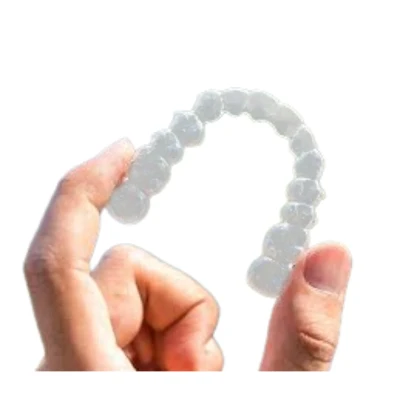
Its products include zirconia crowns, implant crowns, night guards, clear aligners, and whitening trays. Typical crown turnaround has been reported in the three-to-five-day range for standard cases.
Practices moving toward a fully digital workflow may find Beam particularly relevant because case submission and case management are central to its service model.
Advanced Dental Laboratory
Advanced Dental Laboratory has operated in New York since 1999 and provides both traditional and digital laboratory services.
Its product range covers crowns and bridges, implant-supported restorations, full dentures, and partial dentures. Digital impressions, CAD design, and laboratory milling are incorporated into its production process.
This makes it another full-service option for general practices that regularly alternate between fixed, implant, and removable prosthodontic cases.
Streamline Dental Lab
Streamline Dental Lab, founded in 2006, has built its workflow around digital impressions and CAD/CAM design and manufacturing.
Its services include zirconia crowns, PFM crowns, bridges, implant restorations, dentures, and night guards. Typical production times for many standard cases have been reported at approximately four to six working days.
The laboratory is particularly relevant for practices looking for a digital dental lab that can handle routine fixed restorations without giving up removable and implant capabilities.
Elegant Dental Laboratory
Elegant Dental Laboratory has a stronger cosmetic and anterior-restoration focus. Established in 2007, the laboratory combines CAD/CAM support with traditional ceramic techniques such as layering and customized contouring.
Its services include porcelain veneers, zirconia crowns, PFM restorations, bridges, implant crowns, and other cosmetic restorations.
For dentists performing a high percentage of veneers, anterior crowns, or smile-enhancement cases, shade communication, morphology, and ceramic finishing may matter more than pure production capacity.
Elegant's positioning makes it more relevant to that type of practice.
Prime Dental Laboratory
Prime Dental Laboratory has operated since 1995 and uses both conventional impression-based workflows and digital manufacturing.
Its services include zirconia, PFM restorations, bridges, dentures, and implant restorations. The combination of fixed, removable, and implant production makes it suitable for practices with a broad restorative case mix.
Dentists handling multi-unit or more complex restorative cases may also value a laboratory that maintains both traditional technical skills and digital production capabilities rather than relying exclusively on one workflow.
Smile Boutique NY
Founded in 2022, Smile Boutique NY is a newer laboratory with a strong cosmetic positioning. Its work includes porcelain veneers, zirconia and cosmetic crowns, clear aligners, whitening trays, and night guards.
The laboratory places particular emphasis on personalized design, shade selection, and smile esthetics.
It is therefore more relevant to cosmetic practices than to dentists primarily looking for a high-volume full-service production laboratory.

Quick Comparison: Which New York Dental Lab Fits Your Practice?
The laboratories above serve different types of dentists. This comparison helps narrow the list according to case mix rather than trying to identify one universal winner.
|
Dental Lab |
Main Focus |
Digital Workflow |
Implants |
Removables |
Esthetic Focus |
Best Suited For |
|
Utica Dental Lab |
Full service |
Yes |
Yes |
Yes |
Moderate |
General practices |
|
Ultimate Dental Laboratory |
Digital fixed and implant |
Strong |
Strong |
Limited |
Strong |
Digital restorative practices |
|
CreoDent |
General restorative |
Yes |
Yes |
Yes |
Moderate |
Mixed case loads |
|
Beam Dental |
Digital workflow |
Strong |
Yes |
Limited |
Moderate |
Digital-first practices |
|
Advanced Dental Laboratory |
Full service |
Yes |
Yes |
Yes |
Moderate |
General and multi-service practices |
|
Streamline Dental Lab |
Digital restorative |
Strong |
Yes |
Yes |
Moderate |
Routine digital cases |
|
Elegant Dental Laboratory |
Cosmetic restorative |
Yes |
Yes |
Limited |
Strong |
Esthetic and anterior cases |
|
Prime Dental Laboratory |
Full service |
Yes |
Yes |
Yes |
Moderate |
General and complex restorative work |
|
Smile Boutique NY |
Cosmetic dentistry |
Strong |
Limited |
Limited |
Strong |
Veneers and smile cases |
A practice sending mostly posterior zirconia should not evaluate laboratories in exactly the same way as a practice focused on high-end veneers. Specialization matters.
How to Choose the Right Dental Laboratory for Your Practice
A laboratory website can show which products are available. It tells you much less about how consistently those products will perform clinically.
Restoration Quality and Consistency
Fit should be judged across repeated cases, not one impressive sample.
Look at marginal adaptation, proximal contacts, occlusion, anatomy, shade, surface finishing, and the amount of chairside adjustment required at delivery.
Consistency is particularly important for practices sending significant case volume. A laboratory that occasionally produces an excellent crown but requires frequent adjustment on routine cases creates unnecessary chair time.
Digital Workflow and Technical Capability
If your practice already uses an intraoral scanner, confirm that the laboratory can work directly with your existing system.
Ask about:
- Scanner and file compatibility
- STL or other digital file acceptance
- Digital prescription submission
- CAD/CAM capabilities
- Design approval options
- Implant digital workflows
A digital file can reach a laboratory almost instantly, but poor scan data still produces problems. Margin visibility, occlusal records, tissue management, design parameters, manufacturing accuracy, and technician judgment remain important.
Communication, Technical Support, and Quality Control
A good dental lab functions as a technical partner, not simply a manufacturing vendor.
The technician should be able to clarify prescriptions, discuss difficult cases, review clinical photographs, and help resolve implant or material questions when necessary.
Quality control should also be systematic. Ask what is checked before a restoration leaves the laboratory and how problems are handled when a case does not meet the prescription.
Turnaround, Pricing, and Remake Policy
Turnaround time should mean the complete interval required to review, produce, and deliver the restoration-not only the number of days it spends on the production floor.
Ask whether quoted times include shipping.
The same applies to pricing. Compare the full cost of working with a laboratory, including shipping, rush charges, model fees, remakes, and additional appointments.
The lowest laboratory fee does not always produce the lowest cost for the dental practice.
Match the Dental Lab to the Type of Case
The clinical risk of the case should determine what you value most in a laboratory.
Routine Posterior Crowns and Bridges
For posterior zirconia and routine bridge work, prioritize marginal fit, proximal contacts, occlusion, consistency, turnaround, and production capacity.
These cases often make up a large percentage of a general practice's laboratory volume, so small workflow inefficiencies accumulate quickly.
Anterior Crowns, Veneers, and Smile Cases
Anterior cases depend much more heavily on shade, translucency, morphology, texture, and communication.
A laboratory that can review detailed clinical photographs, shade information, stump shade, and design expectations is usually more valuable here than one competing primarily on production speed.
In-person shade taking can also make a local cosmetic dental laboratory especially useful for difficult cases.
Implant and Full-Arch Restorations
Implant restorations require experience with implant systems, components, emergence profiles, verification, and prosthetic design.
For full-arch or All-on-X cases, technical communication becomes even more important. Dentists should ask which implant systems the laboratory works with regularly and how fit is verified before the final prosthesis is released.
Dentures, Repairs, and High-Volume Cases
Different removable cases create different priorities.
Complete dentures require consistency and an efficient production workflow. Implant-supported overdentures demand greater precision and implant experience. Repairs, relines, and rebases are much more sensitive to speed.
High-volume routine work adds another requirement: scalability. A laboratory must be able to absorb fluctuations in case volume without causing unpredictable delays or quality variation.

Local New York vs. Out-of-State vs. Overseas Dental Labs
A dentist searching for a New York dental laboratory does not necessarily need every restoration to be manufactured within New York.
Digital dentistry has widened the available sourcing options.
Local New York Dental Labs
Local laboratories retain important advantages when physical proximity matters.
They may provide easier access to:
- In-person shade taking
- Face-to-face technician consultation
- Local pickup and delivery
- Faster emergency handling
- Rapid adjustments for difficult esthetic cases
This makes local labs particularly useful for complex anterior cases, emergency remakes, repairs, or restorations requiring direct technician-patient interaction.
Out-of-State U.S. Dental Labs
Out-of-state laboratories offer a larger supplier pool while keeping production and shipping within the United States.
For routine crowns, bridges, dentures, and other cases that can be communicated digitally, geographic distance may add only a few days of logistics. Some sourcing comparisons place out-of-state laboratory costs approximately 20%–30% below certain New York providers, although actual pricing varies significantly.
Overseas Digital Dental Labs
Overseas laboratories are another option for practices and dental labs that already manage cases digitally.
Their strongest advantages are usually production capacity, scalability, and lower laboratory fees. In some sourcing comparisons, China-based laboratory fees can be roughly 40%–50% lower than those of certain New York laboratories.
The trade-off is logistics. International shipping, remake turnaround, communication, material documentation, and warranty terms need to be considered before case volume is increased.
For many practices, the most practical answer is not local or overseas.
It is using different laboratories for different types of work.
A local esthetic lab may handle demanding anterior cases, while a larger digital laboratory handles routine posterior crowns or overflow production.
Test a New Dental Lab Before Moving More Cases
Do not transfer a large percentage of your restorative workload based only on a price list, sample crown, or sales presentation.
Start with several representative cases.
A useful trial might include three to five restorations across different categories, such as a posterior zirconia crown, small bridge, anterior crown, or straightforward implant crown.
Track what actually happens:
- Marginal fit
- Proximal contacts
- Occlusion
- Shade
- Chairside adjustment
- Communication
- Turnaround reliability
- Remake handling
The goal is not to find a laboratory that performs perfectly on every first case. It is to determine whether the workflow is predictable enough to support a larger, long-term relationship.
Choosing the Best Dental Laboratory for Your Practice
The best dental laboratories in New York are not interchangeable. Some are better suited to cosmetic work, others to implants, general restorative cases, removables, or digital production. Dentists should compare laboratories according to the cases they actually treat and evaluate real performance through trial cases before committing larger volumes.
ADS Dental Laboratory Ltd is a China-based high end dental laboratory providing outsourced fixed, removable, implant, and other custom restorations for overseas dentists and dental laboratories. If your practice or laboratory is evaluating an additional production partner for routine digital cases or long-term outsourcing, contact ADS to discuss your workflow and case requirements.
FAQ
What should dentists look for in a dental laboratory?
Start with restoration consistency, digital workflow compatibility, communication, technical support, turnaround, quality control, and remake policy. Pricing matters, but it should be evaluated together with chairside adjustment and remake costs.
Does a dental lab need to be located in New York?
No. Local laboratories are advantageous when in-person shade matching, emergency service, or direct technician involvement is important. Routine digital cases can often be sent to out-of-state or overseas laboratories without changing the clinical workflow significantly.
How long do dental labs usually take to complete a case?
Many routine restorative cases fall within roughly one working week of laboratory production, although some digital crown workflows may be faster. Complex implants, full-arch restorations, dentures, and cases requiring try-ins take longer.
Always ask whether a quoted turnaround refers to in-lab working days or total door-to-door delivery.
Should a dental practice use more than one dental lab?
Often, yes.
A practice may use one laboratory for complex esthetic work, another for routine crown-and-bridge production, and a local backup for urgent remakes or repairs. This hybrid approach reduces dependency on a single supplier and allows each case to be sent to the laboratory best equipped to handle it.