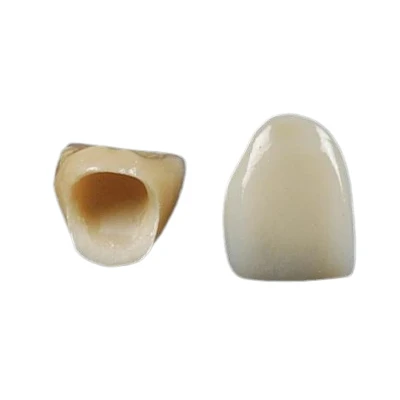
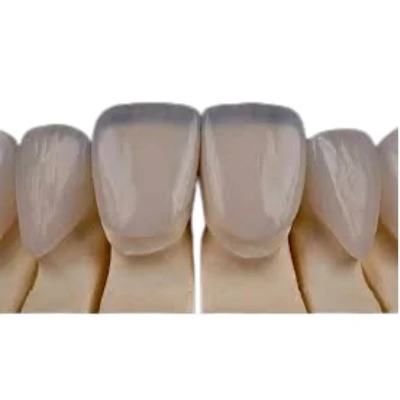
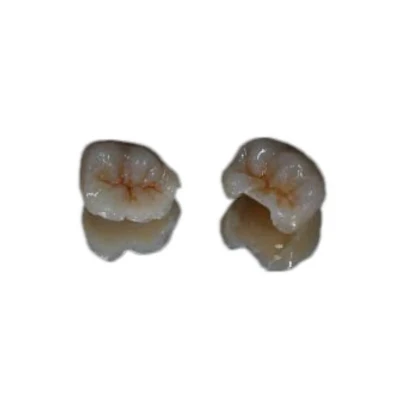
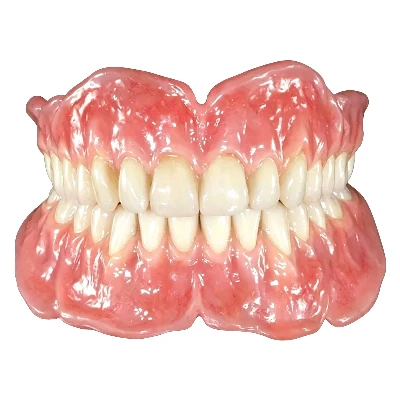

Zirconia crown costs in China vary widely because the term can refer to two different prices. A patient may pay several hundred dollars for treatment at a Chinese clinic, while an overseas dentist may pay a Chinese dental laboratory only for manufacturing the restoration. This article focuses on the second figure: the B2B laboratory fee.
For standard cases, a Chinese dental lab may quote roughly US$20–$50 per zirconia crown before shipping and optional services. That number is useful, but it does not tell the full story. Material grade, esthetic work, case complexity, delivery terms, and remake risk all affect the real cost.

How Much Does a Zirconia Crown Cost from a China Dental Lab?
A zirconia crown lab fee is the amount charged by the dental laboratory to design and manufacture the restoration. It does not include clinical diagnosis, tooth preparation, temporary crowns, cementation, or the dentist's professional fee.
This distinction explains why online prices for "zirconia crowns in China" appear inconsistent.
|
Cost category |
Typical reference range |
What the price usually represents |
|
Standard zirconia crown from a China dental lab |
US$20–$50 per unit |
Basic B2B manufacturing fee |
|
Standardized or high-volume order |
US$10–$30 per unit |
Lower-cost production under specific volume and product conditions |
|
Zirconia crown at a Chinese dental clinic |
US$200–$850 per unit |
Patient treatment fee, not only laboratory fabrication |
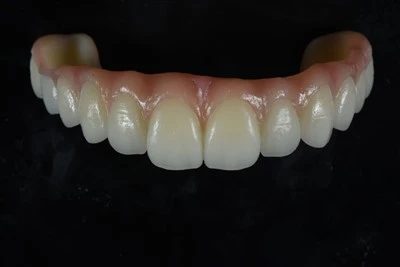
A standard posterior monolithic zirconia crown often falls near the lower or middle part of the laboratory range. Anterior high-translucency zirconia, multilayer zirconia, cut-back designs, and layered restorations usually cost more because they require additional material selection, design control, and technician time.
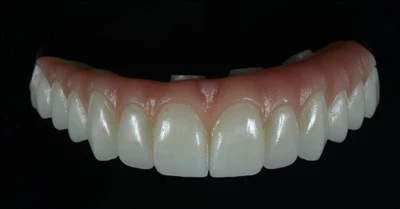
Implant-supported zirconia crowns, long-span bridges, and complex full-arch cases should not be priced as ordinary single crowns. They may require custom abutments, gingival characterization, additional design stages, verification models, or more detailed occlusal planning.
Very low online prices also require careful interpretation. A quotation of only a few dollars may refer to a sample, a semi-finished product, an unusually large order, or a price that excludes design, finishing, inspection, and shipping.
For most overseas buyers, US$20–$50 is a more realistic starting reference for a complete standard zirconia crown from a Chinese dental laboratory.
Why Zirconia Crown Prices Vary Between Chinese Dental Labs
Two restorations may both be called zirconia crowns while requiring very different materials, workflows, and levels of technical involvement. This is why quotations from different laboratories cannot be compared by unit price alone.
Zirconia Type and Material Grade
Zirconia is a polycrystalline ceramic used for dental restorations because of its strength, biocompatibility, and ability to be processed through CAD/CAM workflows. However, zirconia is not one uniform material.
Common options include:
- Conventional high-strength zirconia
- High-translucency zirconia
- Multilayer gradient zirconia
- Pre-shaded zirconia
- Different strength and translucency classes
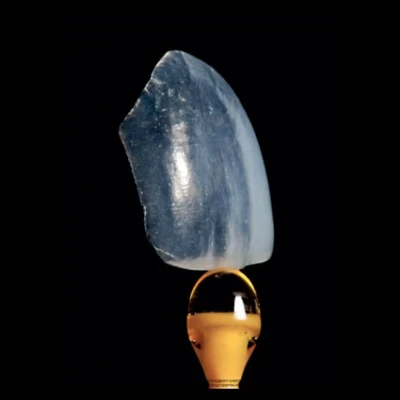
High-strength zirconia is often selected for posterior crowns and bridges where fracture resistance is the priority. High-translucency or multilayer zirconia is more suitable when the restoration must reproduce natural color gradients and light transmission.
The material disc itself is only one part of the price. Still, higher-grade, multilayer, or premium-brand zirconia can increase the unit cost.
Monolithic vs. Layered Zirconia
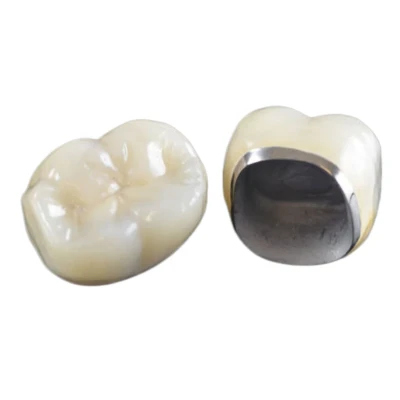
A monolithic zirconia crown is milled from a single zirconia blank and completed through sintering, staining, glazing, and polishing. It is efficient to produce and is widely used for posterior cases.
A layered zirconia crown has a zirconia substructure or reduced-contour framework with porcelain applied over selected areas. The technician must build contour, translucency, surface texture, and shade by hand.
|
Restoration type |
Main production characteristics |
Typical cost position |
|
Monolithic zirconia |
Full-contour milling, staining, glazing, polishing |
Lower |
|
Multilayer monolithic zirconia |
Gradient zirconia blank with more detailed shade control |
Medium |
|
Cut-back zirconia |
Milled zirconia with limited porcelain layering |
Medium to high |
|
Fully layered zirconia |
More manual porcelain application and esthetic characterization |
High |
Layered work costs more because it requires more technician time and a higher level of esthetic judgment. It also introduces additional production stages.
Case Type and Esthetic Complexity
A routine posterior crown with a common shade is easier to standardize than a maxillary central incisor that must match a single adjacent natural tooth.
Price may increase when the case involves:
- High-value anterior esthetics
- Difficult stump shades
- Limited restorative space
- Customized incisal translucency
- Gingival porcelain
- Multi-unit bridges
- Implant interfaces
- Full-mouth rehabilitation
- Complex occlusal schemes
Order volume also matters, but quantity is not the only factor. A consistent monthly flow of standard posterior cases is easier to price efficiently than a one-time order containing many unrelated complex restorations.
The correct quotation depends on what the crown is, where it will be used, and how much technical work is required to make it clinically acceptable.

What Is Included in a China Dental Lab Quote?
A China dental lab quotation should state exactly what the laboratory will provide. Without that detail, two prices that look similar may represent very different service levels.
A basic zirconia crown fee may include:
- Case intake and file review
- CAD design
- Zirconia material
- Milling
- Sintering
- Basic staining and glazing
- Polishing
- Contact and occlusion checks
- Final visual inspection
- Standard packaging
The following items may be charged separately:
- Advanced shade characterization
- Cut-back or porcelain layering
- Printed models
- Custom abutments
- Original implant components
- Gingival characterization
- Rush production
- International shipping
- Special packaging
- Additional design revisions
- Remakes outside the laboratory's responsibility
The phrase "including design" should also be clarified. Some laboratories include a standard design in the unit price but charge more for diagnostic wax-ups, full-arch planning, complex implant cases, or repeated design revisions.
The same applies to staining and glazing. Basic posterior characterization is not equivalent to a highly customized anterior shade match based on multiple clinical photographs.
A useful quotation should identify the restoration type, material, included services, production time, shipping method, and remake terms. Asking only "How much is one zirconia crown?" rarely produces a price that can be compared accurately.
The Real Cost: Shipping, Remakes, and Other Hidden Expenses
The quoted laboratory fee is not the final cost of outsourcing.
The total landed cost is the full amount required to receive and use the restoration. It may include the lab fee, optional services, implant components, shipping, import-related charges, chairside adjustment, and remake expenses.
International Shipping and Import-Related Costs
International shipping can have a major effect on the cost per unit, especially when only a few cases are shipped at one time.
Important variables include:
- Shipment frequency
- Package weight
- Express or standard service
- Remote-area surcharges
- Customs processing
- Import taxes or local fees
- Insurance
- Holiday delays
- Destination-country requirements
Consolidated shipping often lowers the transportation cost per crown. It may also increase the time between case submission and delivery, so the shipping schedule must fit the clinic's appointment planning.
Production time and shipping time should always be stated separately. A laboratory may complete a case in five working days, but the total door-to-door turnaround will be longer after quality control, packaging, transport, customs clearance, and local delivery.
Remakes and Chairside Adjustments
A low unit price loses its value quickly if restorations require repeated adjustment or replacement.
Hidden costs may include:
- Extra chairside time
- Patient rebooking
- New scans or impressions
- Temporary restoration replacement
- Second international shipment
- Delayed treatment completion
- Staff communication time
- Reduced patient confidence
A crown that costs US$5 less but requires substantial occlusal adjustment may be more expensive in practice than a better-fitting restoration from a higher-priced supplier.
Remake policies must define responsibility. A laboratory may offer a free remake when the manufacturing error is clear, but charge for cases involving incomplete margins, changed preparations, inaccurate bite records, or incorrect clinical information.
Optional Components and Case-Specific Charges
Implant cases often involve additional costs that are not part of a basic zirconia crown fee. These may include a titanium base, custom abutment, screw, analog, soft-tissue model, or original manufacturer component.
Advanced esthetic cases may also require extra photographs, custom shade work, a printed model, or an additional design approval stage.
The lowest unit price is not always the lowest total cost. Overseas buyers should calculate the amount required to receive a usable restoration, not only the amount shown beside the product name.
Why Chinese Dental Labs Can Offer Competitive Zirconia Pricing
Chinese dental laboratories can often produce zirconia crowns at lower cost because of structural manufacturing advantages.
These advantages may include:
- A mature dental manufacturing supply chain
- High use of CAD/CAM equipment
- Centralized material purchasing
- Batch milling and sintering
- Specialized technician roles
- High equipment utilization
- Large case volumes
- Consolidated international shipping
- Lower operating costs than many Western markets
Labor cost plays a role, but it is not the only explanation. Large digital laboratories can divide production into specialized stages. One team may review incoming files, another completes CAD design, and separate teams handle milling, finishing, staining, and final quality control.
Batch production also improves efficiency. Multiple restorations can be nested into the same zirconia disc, milled together, and processed through organized sintering cycles.
This does not mean every large Chinese lab provides the same quality. Scale can reduce production cost, but it can also create inconsistency if the laboratory lacks clear design standards, technician training, and inspection procedures.
Equipment and material brands establish production capability. They do not guarantee the final result.
A reliable restoration still depends on accurate clinical data, sound CAD design, correct sintering, proper contour, polished surfaces, controlled contacts, and a disciplined final inspection.

How to Evaluate Quality Beyond the Per-Unit Price
A low zirconia crown cost is useful only when the restoration fits, functions, and arrives consistently. Buyers should assess the laboratory's quality system before moving regular production.
Material Traceability and Documentation
Material traceability means the laboratory can identify the material used for a case and connect it to the relevant product, supplier, or batch information.
Ask the laboratory to clarify:
- Zirconia brand
- Material type
- Strength and translucency class
- Indications for use
- Batch traceability
- Available technical documentation
- Whether the quoted material matches the delivered restoration
Quality and regulatory claims also require careful reading. FDA registration is not the same as FDA approval. CE marking applies to defined products and regulatory responsibilities, not to every service offered by a laboratory. ISO 13485 relates to a medical device quality management system, but the certificate scope, legal entity, site, and validity period still matter.
Certification logos should support due diligence, not replace it.
Fit, Contacts, Occlusion, and Surface Quality
The laboratory should have defined methods for checking the features that directly affect chairside efficiency.
These include:
- Marginal integrity
- Internal fit
- Proximal contacts
- Occlusal contacts
- Minimum material thickness
- Bridge connector dimensions
- Emergence profile
- Surface smoothness
- Polishing quality
- Shade and characterization
A single micrometer target does not describe the full quality of a crown. Measurement methods differ, and a restoration can meet one numerical specification while still creating clinical problems elsewhere.
Ask how margins, contacts, occlusion, shade, and surface quality are checked before shipment. A laboratory that can explain its process clearly is easier to evaluate than one that relies only on general claims such as "high precision."
Communication and Remake Policy
Good communication is a technical function, not only a language service.
A competent overseas dental lab should be able to identify missing information before production. This may include unclear margins, incomplete bite records, insufficient restorative space, missing implant information, or contradictory shade instructions.
The remake policy should explain:
- What counts as a laboratory error
- What counts as a clinical data issue
- Whether a new scan is required
- Whether the remake is free
- Who pays the second shipping cost
- How long the policy applies
- How esthetic complaints are handled
- Whether implant components are covered
A dependable laboratory helps prevent problems before manufacturing begins. That is more valuable than offering a generous remake policy after repeated failures.
How to Compare Quotes from Different China Dental Labs
A fair comparison requires equivalent specifications.
Before comparing prices, confirm that each laboratory is quoting the same:
|
Comparison item |
Questions to ask |
|
Zirconia material |
Which brand, type, strength, and translucency? |
|
Construction |
Monolithic, multilayer, cut-back, or fully layered? |
|
Indication |
Posterior, anterior, bridge, or implant restoration? |
|
Esthetic level |
Basic stain and glaze or advanced characterization? |
|
Model |
Model-free, printed model, or physical model? |
|
Production time |
Standard or rush? |
|
Shipping |
Included or charged separately? |
|
Remakes |
What is covered, and who pays shipping? |
|
Volume terms |
Based on one order or regular monthly volume? |
|
Technical support |
Is design review and case consultation included? |
A lower price may reflect a different material, fewer finishing steps, no model, limited technical review, or narrower remake coverage.
Ask whether the first quotation is a sample price, promotional price, or long-term production price. Some offers apply only to a test case and do not reflect the rate for regular orders.
Volume discounts should also be examined carefully. A laboratory may offer lower prices when the monthly case flow is stable, product types are standardized, and shipments are consolidated. Mixed complex cases may not qualify for the same rate.
The most useful quotation is not the shortest one. It is the one that clearly shows what the laboratory will deliver and under which conditions.
What Information Should You Send for an Accurate Quote?
A precise quotation requires precise case information.
For a standard zirconia case, provide:
- Tooth number
- Restoration type
- Number of units
- Anterior or posterior location
- Preferred zirconia type
- Upper and lower arch scans
- Bite scan
- Clearly captured margins
- Shade information
- Clinical photographs
- Required delivery date
- Destination country
For implant cases, also provide:
- Implant system
- Platform size
- Connection type
- Scan body information
- Titanium base or custom abutment requirement
- Screw-retained or cement-retained design
- Gingival contour requirements
Open digital formats such as STL are widely used for transferring dental geometry. PLY files may also carry color information, depending on the scanner and software workflow. File compatibility alone does not make a case complete.
An open file with unclear margins or an inaccurate bite will still produce uncertainty.
For regular outsourcing, the buyer should also state expected monthly volume, preferred shipping frequency, common product types, and any internal design standards. This helps the laboratory provide a more realistic long-term price.
A practical quotation request might read:
Please quote a monolithic zirconia crown for tooth #30, including material information, standard production time, shipping options, and remake terms.
The more complete the case information, the more reliable the price and delivery estimate will be.
Choosing Cost-Effective Zirconia Crowns Without Compromising Consistency
A standard zirconia crown from a Chinese dental laboratory may cost roughly US$20–$50 before shipping and optional services. Standardized volume orders may be lower, while anterior, layered, implant-supported, and complex restorations usually cost more.
The unit price is only the beginning. Material selection, design quality, esthetic work, shipping, remake terms, communication, and clinical adjustment determine the real cost.
The right outsourcing partner is not simply the laboratory with the lowest quotation. It is the one that delivers consistent restorations, predictable turnaround, clear technical communication, and a transparent cost structure.
ADS Dental Laboratory Ltd is a China-based high-end dental laboratory providing custom zirconia restorations and long-term outsourcing support for overseas dentists and dental labs. Send us your case specifications or digital files to receive a detailed quotation based on the restoration type, material, volume, turnaround time, and shipping destination.
FAQ
Does the Quoted Price Include International Shipping?
Not always. Many laboratory prices cover manufacturing only. Ask whether shipping is included, which courier service will be used, and whether cases will be shipped individually or consolidated.
Are Volume Discounts Available?
Many laboratories offer lower rates for stable, standardized case volume. The discount may depend on monthly quantity, restoration type, shipping frequency, payment terms, and the percentage of rush or complex cases.
Does a Lower Price Mean Lower Quality?
Not necessarily. Chinese laboratories may have lower operating and production costs. However, an unusually low price may exclude important services or reflect differences in material, finishing, inspection, or remake coverage.
How Long Do Production and Shipping Take?
Production time depends on the restoration type and laboratory workload. Shipping time depends on the courier, destination, customs, and local delivery. Always ask for production time and total door-to-door turnaround separately.
What Happens If a Crown Needs to Be Remade?
The answer depends on the laboratory's written policy. Confirm the reason for the remake, whether new clinical data is needed, whether the manufacturing fee is waived, and who pays for the second shipment.
Can Chinese Dental Labs Accept Intraoral Scan Files?
Most digital dental labs can accept common open scan formats. They still need complete arches, an accurate bite, clear margins, shade information, and detailed clinical instructions.