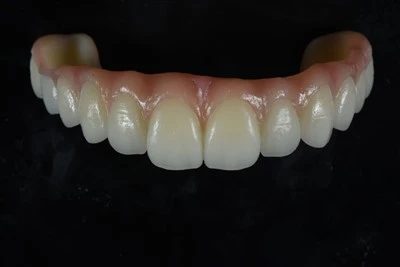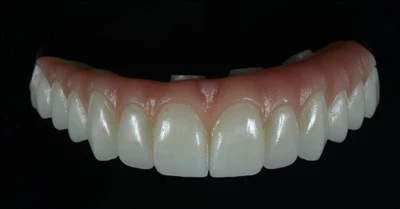
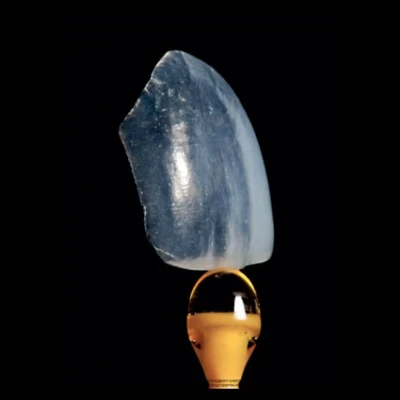
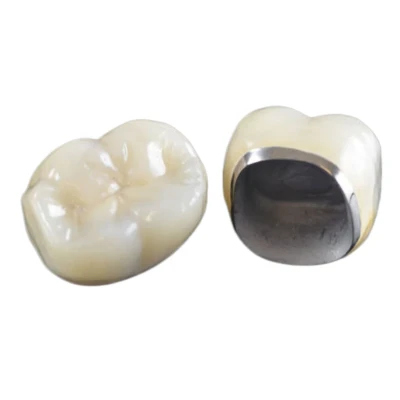
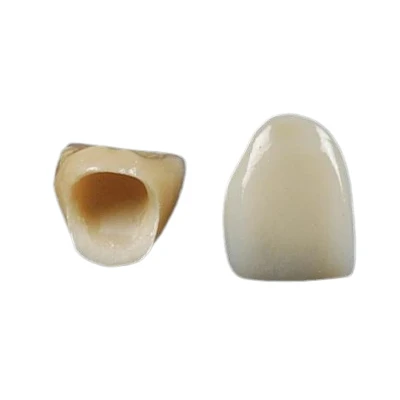
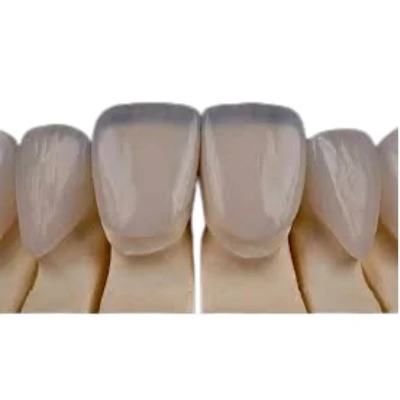
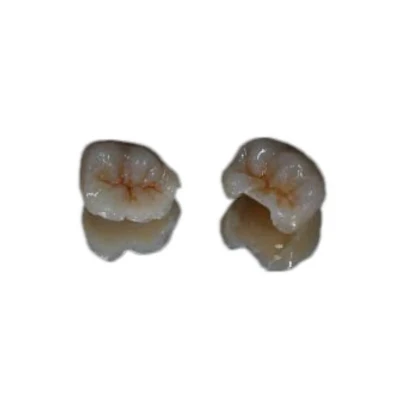
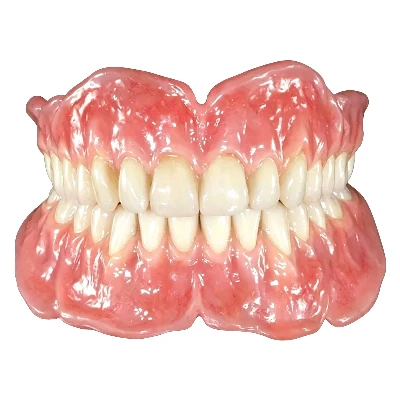


Zirconia sintering is the controlled high-temperature process that converts a milled, pre-sintered zirconia restoration into its final dense ceramic form. During this stage, the restoration shrinks, its microstructure develops, and its final mechanical and optical properties are established.
That is why sintering affects more than production time. The selected temperature profile, holding time, heating and cooling cycle can influence zirconia strength, dimensional accuracy, translucency, and final shade. For predictable results, the sintering cycle must match the specific zirconia material being used.

What Is Zirconia Sintering and Why Is It Necessary?
Dental zirconia is commonly milled from a pre-sintered zirconia blank, sometimes called a soft or partially sintered blank. At this stage, the material is easier for CAD/CAM milling equipment to process, but it has not yet reached its final density, strength, or dimensions.
During zirconia sintering, the zirconia particles densify and bond more completely. Microscopic porosity decreases, grain structure develops, and the restoration contracts toward its final size.
This process is important because the material that leaves the milling machine is not yet the finished zirconia crown or bridge. Sintering is what transforms that milled structure into a clinically usable ceramic restoration.
The basic sequence is:
CAD design → oversized milling → sintering shrinkage → final dimensions → finishing and quality control
For a broader view of how these stages connect, see our guide to the CAD/CAM dental workflow from scan to final restoration.
Why Is Zirconia Milled Oversized?
Pre-sintered zirconia undergoes substantial dimensional shrinkage during densification. For that reason, CAD/CAM systems do not mill the crown at its final intended dimensions.
Instead, the restoration is enlarged according to the shrinkage factor assigned to the zirconia blank.
In one published in-vitro study of monolithic zirconia crowns, restorations were milled approximately 20% larger before sintering to compensate for subsequent shrinkage. In commercial dental zirconia systems, shrinkage compensation is often in roughly this range, although the exact value is material-specific.
This distinction matters. A laboratory should not manually assume that every zirconia disc shrinks by the same percentage. The correct scaling factor comes from the material system and must be integrated accurately into the CAD/CAM workflow.
Sintering shrinkage is therefore not a manufacturing defect. It is an expected part of zirconia production that must be controlled and compensated for.
Which Zirconia Sintering Parameters Matter Most?
A common mistake is to reduce the entire process to one number: the peak zirconia sintering temperature.
Peak temperature is important, but it is only one part of the sintering cycle.
|
Sintering Parameter |
What It Mainly Influences |
|
Peak temperature |
Densification, grain development, mechanical and optical properties |
|
Heating rate |
Thermal uniformity and development of the material during the cycle |
|
Hold or dwell time |
Completion of densification and grain growth |
|
Cooling profile |
Thermal stress management and process stability |
|
Furnace loading and positioning |
Uniform heat exposure and dimensional consistency |
|
Furnace accuracy |
Repeatability between cases and production batches |
Peak Temperature
Many conventional dental zirconia systems use peak temperatures somewhere between the mid-1300°C range and 1500°C or higher. Some material systems may specify temperatures approaching 1600°C.
This does not mean there is one universal dental zirconia sintering temperature.
3Y-TZP, 4Y zirconia, 5Y zirconia, high-translucency zirconia, and multilayer materials differ in composition and microstructure. Different manufacturers may also design materials to respond differently to heat.
The correct peak temperature is therefore the one specified in the validated processing instructions for that particular zirconia.
Heating Rate and Hold Time
The heating rate determines how quickly the restoration moves through the thermal cycle. Hold time, or dwell time, refers to how long the zirconia remains at or near the peak temperature.
Both affect densification and grain development.
A longer cycle is not automatically better, and a shorter cycle is not automatically harmful. What matters is whether the complete cycle has been validated for the zirconia being processed.
Two furnaces can reach the same peak temperature but still expose a restoration to very different thermal histories because their heating rates, hold times, and cooling profiles differ.
Cooling and Furnace Conditions
Cooling should also be treated as part of the sintering program rather than as dead time after the peak temperature has been reached.
Abruptly modifying a validated cooling cycle can affect thermal stresses and process consistency. Furnace loading, restoration positioning, support, and temperature accuracy also become more important with long-span bridges and complex zirconia structures.
The practical rule is straightforward: use the material-specific cycle as a complete program rather than copying one temperature setting from another zirconia system.
How Does Sintering Affect Zirconia Strength?
Zirconia strength is strongly related to its final density, grain structure, phase stability, and material composition. Sintering affects several of these factors at the same time.
If zirconia is inadequately sintered, residual porosity and incomplete densification may remain. That can limit the mechanical performance the material was designed to achieve.
Increasing temperature within an appropriate range can improve densification and, for some zirconia systems, improve mechanical strength. Research on zirconia sintering temperature and mechanical properties shows why temperature should be considered together with material composition and microstructure rather than as an isolated parameter.
A useful example comes from an in-vitro study of 30 monolithic Y-TZP crowns. Half were sintered at 1450°C, while the other half were sintered at 1550°C.
The mean compressive fracture loads were:
- 1450°C: 1514.27 ± 455.11 N
- 1550°C: 1988.27 ± 635.09 N
The difference was statistically significant.
This result shows that even a 100°C change can meaningfully affect the mechanical behavior of a specific zirconia under controlled conditions.
It does not show that 1550°C is the correct temperature for every zirconia.
Higher sintering temperatures generally promote grain growth. Within an appropriate range, that change can accompany better densification and favorable mechanical behavior. Beyond the material's optimal processing window, however, excessive grain growth and other microstructural changes may reduce mechanical stability.
For zirconia, hotter is not automatically stronger.
The more useful concept is an optimal material-specific sintering window. Strength is maximized when the material reaches the intended density and microstructure without being under-sintered or excessively heat-treated.
How Does Sintering Affect Crown Fit and Marginal Accuracy?
Zirconia crown fit depends heavily on dimensional control.
Because a pre-sintered restoration shrinks during firing, an accurate final fit requires the CAD/CAM system, zirconia blank, milling process, and sintering cycle to work together.
Several variables can affect the final result:
- Material-specific shrinkage compensation
- CAD design parameters
- Milling accuracy
- Restoration geometry
- Furnace consistency
- Sintering support and positioning
- The selected thermal cycle
Poor control in any of these areas can contribute to internal misfit, marginal discrepancy, altered proximal contacts, or occlusal discrepancies. A broader discussion of these variables is available in our article on common zirconia crown fit problems and how dental labs prevent them.
However, peak sintering temperature alone does not determine fit.
The same in-vitro study comparing crowns sintered at 1450°C and 1550°C measured mean marginal discrepancies of:
|
Sintering Temperature |
Mean Marginal Misfit |
|
1450°C |
51.35 ± 4.33 μm |
|
1550°C |
48.18 ± 4.60 μm |
The difference was not statistically significant.
Published research on sintering temperature and marginal fit of zirconia crowns also shows why dimensional accuracy needs to be evaluated across the complete manufacturing process.
This is important because it prevents an overly simple conclusion such as "higher temperature improves marginal fit." Sintering influences dimensional behavior, but a controlled change in peak temperature does not necessarily produce a meaningful change in crown margins.
Long-span zirconia bridges deserve even greater attention. Larger structures shrink across a greater distance, and inadequate support or inconsistent heating can increase the risk of distortion.
For clinical fit, the better model is:
Scan → CAD design → shrinkage compensation → milling → sintering → fit, contact and occlusion QC
Fit is the result of the whole workflow, not one furnace setting.

How Does Sintering Affect Zirconia Shade and Translucency?
Sintering changes zirconia shade indirectly by changing the way the material interacts with light.
As zirconia densifies, residual porosity decreases and grain structure develops. These microstructural changes influence light scattering and light transmission, which in turn affect translucency and the visual appearance of the restoration.
This is one reason the natural appearance of zirconia depends on much more than the nominal shade designation. Our guide to zirconia esthetics, translucency, and shade matching explains these optical factors in greater detail.
Temperature is one important variable. A temperature below the validated range may leave the material incompletely densified. Excessive heat may promote additional grain growth or alter the intended optical behavior.
Hold time can also influence the final microstructure. Furnace accuracy and consistency become especially important when several crowns must match one another or when a laboratory needs to reproduce a previous case months later.
Shade and Translucency Are Not the Same Thing
Translucency describes how much light passes through and is scattered within a material.
Shade describes the perceived color and includes factors such as hue, chroma, and value.
Sintering can change translucency and therefore influence perceived shade, but it is only one part of the final color result.
Zirconia shade also depends on:
- Zirconia composition
- Pre-shaded or white zirconia blank
- Multilayer position
- Restoration thickness
- Coloring liquids where used
- Stump shade
- Characterization stains
- Glaze
- Clinical shade photographs and lighting
This is why a zirconia shade mismatch should not automatically be diagnosed as a sintering problem.
Why Can the Same Zirconia Look Different After Processing?
Even when the same pre-colored blank is used, variation can appear when production conditions are inconsistent.
Possible causes include different furnace programs, inconsistent loading, variation in coloring procedures, changes in restoration thickness, different staining and glazing techniques, or differences in the underlying preparation color.
Relatively small departures from a validated firing program may also affect optical consistency in some zirconia systems.
For anterior and multi-unit cases, this matters more because subtle differences in value or translucency are easier to notice.
The correct conclusion is not that sintering alone determines color. Final zirconia shade is a system outcome.
Do 3Y, 4Y, 5Y, and Multilayer Zirconia Need the Same Sintering Cycle?
No. Dental zirconia is not one uniform material.
The amount of yttria stabilizer and the resulting phase composition influence the balance between strength and translucency. Research comparing 3Y, 4Y, and 5Y dental zirconia helps explain why these materials should not automatically share the same processing assumptions.
For a more detailed material overview, see what zirconia crowns are made of and how composition affects their properties.
|
Zirconia Type |
General Material Profile |
Common Priority |
|
3Y-TZP |
Higher strength, lower translucency |
Posterior crowns, bridges, higher-load situations |
|
4Y zirconia |
Intermediate strength/translucency balance |
Broader esthetic and functional indications |
|
5Y zirconia |
Higher translucency, lower strength than typical 3Y |
Anterior and esthetic applications |
|
Multilayer zirconia |
Optical and/or compositional gradient depending on product |
Natural transition across the restoration |
3Y Zirconia
3Y-TZP contains a high proportion of transformation-capable tetragonal zirconia and is generally selected when mechanical performance is the main priority.
Its higher strength makes it useful for posterior crowns and many bridge applications, although the exact indication depends on the specific product.
4Y and 5Y Zirconia
Higher-yttria formulations generally increase translucency but reduce the transformation-toughening contribution that gives conventional 3Y zirconia much of its strength.
That trade-off makes 4Y and 5Y zirconia crowns attractive for esthetic applications, but they should not simply be processed as if they were 3Y zirconia.
Their sintering cycle should follow the manufacturer's material-specific instructions.
Multilayer and Gradient Zirconia
Modern multilayer zirconia can combine different optical zones and, in some systems, different compositional zones within the same blank.
This can create a more natural cervical-to-incisal transition without relying entirely on external staining. The trade-offs between these materials are discussed further in our guide to high-translucency zirconia and multilayer zirconia.
It also makes process consistency important. A zirconia blank engineered to produce a controlled gradient can only deliver predictable results when milling position, sintering, finishing, and shade control remain consistent.
A restoration's clinical indication should not be used to invent a sintering program. The specific zirconia product should determine the cycle.
Common Zirconia Sintering Problems and What They Usually Mean
Sintering-related problems are often blamed on the furnace first, but most problems involve several parts of the production workflow.
Poor Fit or Marginal Discrepancy
Possible contributors include:
- Incorrect shrinkage compensation
- Wrong zirconia/program combination
- Milling inaccuracies
- Unstable furnace conditions
- Inadequate support
- Restoration design or geometry
Peak temperature is only one possible factor.
Warping or Distortion
Warping is more relevant to long-span bridges, thin zirconia structures, and complex frameworks.
Potential causes include uneven support, unsuitable positioning, inconsistent shrinkage, or a thermal cycle that does not match the material.
Proper sintering supports and loading procedures should follow the zirconia and furnace manufacturer's instructions.
Unexpected Opacity, Translucency, or Shade
Unexpected color does not always mean the wrong shade was selected.
Possible factors include:
- Zirconia formulation
- Pre-shaded blank selection
- Sintering conditions
- Coloring-liquid technique
- Restoration thickness
- Staining and glazing
- Stump shade
- Furnace contamination or process inconsistency
Shade problems should therefore be evaluated across the complete material and finishing workflow.
Fast Sintering vs. Conventional Sintering
Fast or speed sintering has become more common because selected zirconia systems can now be processed in much shorter cycles.
That does not make fast sintering universally suitable.
Accelerated cycles should only be used when the zirconia material and furnace are specifically validated for fast sintering. A conventional zirconia should not be placed into a shortened program simply to reduce turnaround time.

Why Sintering Consistency Matters in a Dental Laboratory
A reliable zirconia workflow is not defined by a laboratory claiming to use one ideal temperature.
It is defined by repeatability.
For a dental laboratory producing zirconia restorations at scale, consistent results require control over material identification, CAD/CAM compensation, validated sintering programs, furnace condition, restoration positioning, and final inspection.
This becomes particularly important in outsourcing work. A dentist or partner laboratory may submit similar cases months apart and still expect comparable fit, occlusion, surface quality, and shade.
Production traceability also matters. When a laboratory can track the case through design, milling, finishing, and quality control, it becomes easier to identify the cause of a problem and reproduce successful results.
At ADS Dental Laboratory Ltd, zirconia production is integrated with CAD/CAM design, milling, case tracking, technician traceability, magnification-assisted inspection, and final checks for margins, contacts, occlusion, shade, and overall restoration quality.
For outsourced zirconia cases, process consistency is often more important than any single furnace setting.
There Is No Universal "Best" Zirconia Sintering Temperature
Zirconia sintering determines how a pre-sintered restoration reaches its final density, dimensions, mechanical behavior, and optical appearance.
For strength, proper sintering promotes densification and the intended microstructure, but excessive temperature is not automatically beneficial.
For fit, sintering shrinkage must be compensated accurately, yet final marginal accuracy depends on the entire CAD/CAM and laboratory workflow.
For shade, sintering affects grain structure, porosity, translucency, and perceived color, but the final result also depends on the zirconia material, thickness, coloring, stump shade, staining, and glazing.
The most reliable rule is simple: use the validated sintering cycle for the specific zirconia material rather than applying one universal temperature to every crown or bridge.
ADS Dental Laboratory provides customized zirconia crowns, bridges, implant restorations, and other digital dental restorations for overseas dentists and dental laboratories. If you would like to discuss zirconia material selection, case requirements, or long-term dental lab outsourcing, contact our team for technical and case support.