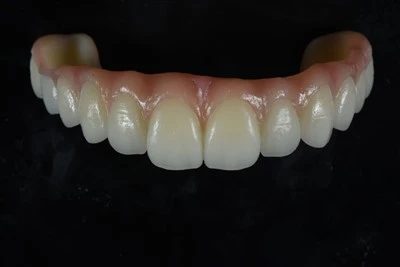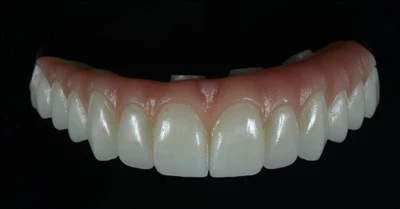
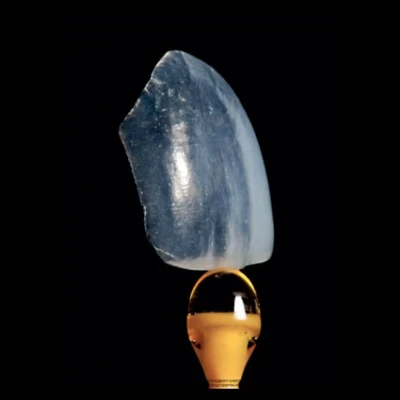
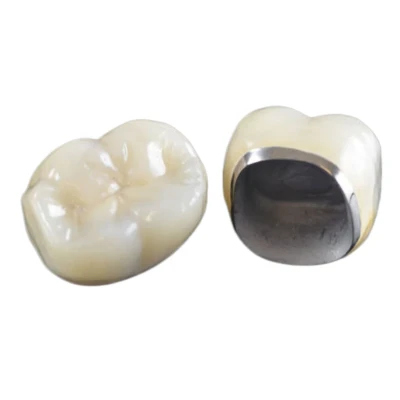
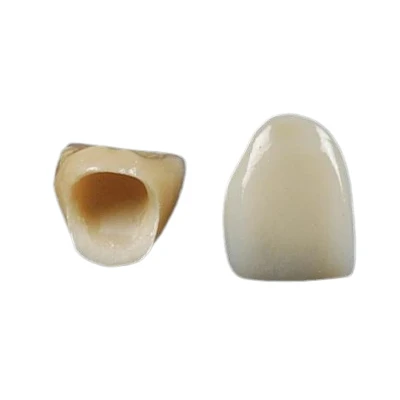
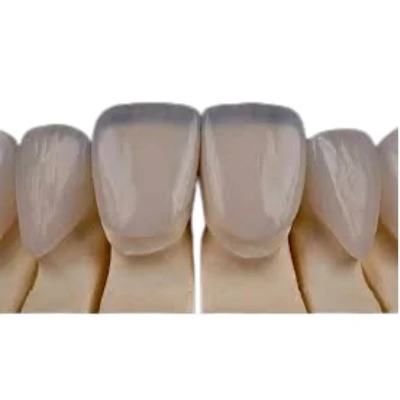
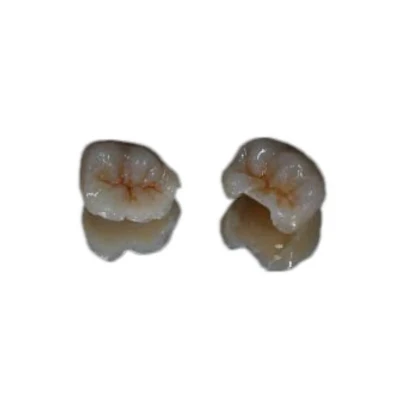



Zirconia crown preparation requires enough space for the restoration without removing more tooth structure than necessary. The exact preparation depends on the tooth position, zirconia type, restoration design, and occlusal load. A monolithic posterior crown may require less space than a layered anterior restoration.
For predictable results, preparation should provide adequate reduction, a clear finish line, rounded internal geometry, a practical path of insertion, and sufficient static and functional clearance.

Zirconia Crown Preparation Guidelines: Quick Reference
Tooth reduction is the amount of natural tooth structure removed during preparation. Restorative clearance is the space available between the prepared tooth and the opposing dentition. Restoration thickness is the final thickness of the zirconia crown itself.
These measurements are related, but they are not interchangeable.
The following zirconia crown preparation dimensions are practical clinical reference ranges rather than universal specifications.
|
Preparation Parameter |
Typical Clinical Reference |
|
Monolithic posterior occlusal reduction |
Approx. 1.0–1.5 mm |
|
Layered posterior zirconia reduction |
Approx. 1.5–2.0 mm |
|
Functional cusp reduction |
Approx. 1.5–2.0 mm |
|
Non-functional cusp reduction |
Approx. 1.0–1.5 mm |
|
Anterior incisal reduction |
Approx. 1.5–2.0 mm |
|
Axial reduction |
Approx. 1.0–1.5 mm |
|
Finish line |
Chamfer or rounded shoulder |
|
Margin width |
Commonly about 0.5–1.0 mm, depending on the restoration |
|
Total occlusal convergence |
Modest taper; approximately 6–10° can serve as a practical reference |
|
Internal line angles |
Rounded |
|
Undercuts |
Avoid |
|
Occlusal clearance |
Verify according to material, restoration design, and function |
A manufacturer's minimum zirconia thickness should not automatically become the clinical preparation target. Minimum thickness is a material limit. The ideal space for a particular crown may be greater because of anatomy, esthetics, occlusal loading, or veneering requirements.
How Much Tooth Reduction Is Needed for a Zirconia Crown?
The correct zirconia crown reduction depends first on what type of restoration is being made. Applying one preparation number to every zirconia crown can create either unnecessary tooth reduction or inadequate restorative space.
Uniform reduction also matters. A preparation with adequate clearance in the central fossa but insufficient space over a functional cusp may still force the laboratory to compromise crown contour or material thickness.
Anterior Zirconia Crown Reduction
Anterior zirconia crowns generally require enough facial and incisal space to reproduce natural contour, translucency, shade transition, and incisal form.
A practical reference for anterior incisal reduction is approximately 1.5–2.0 mm. Axial or facial reduction is commonly around 1.0–1.5 mm, depending on the restoration design.
More esthetically demanding anterior cases may require greater space, particularly when the restoration includes veneering ceramic or more extensive incisal characterization. The laboratory needs enough room to develop the final contour without making the crown bulky.
The preparation should also maintain smooth transitions rather than sharp incisal or internal angles.
Posterior Monolithic vs. Layered Zirconia
The distinction between monolithic and layered zirconia is important.
Monolithic zirconia is fabricated primarily as a full-contour zirconia restoration. Because there is no separate veneering ceramic layer over most or all of the crown, it can generally be used with a more conservative preparation. An occlusal reduction of approximately 1.0–1.5 mm is a useful reference for many monolithic posterior applications.
Layered zirconia requires additional space because the restoration includes a zirconia substructure plus veneering ceramic. A typical preparation may therefore require approximately 1.5–2.0 mm of occlusal restorative space.
|
Factor |
Monolithic Zirconia |
Layered Zirconia |
|
Typical posterior occlusal reduction |
About 1.0–1.5 mm |
About 1.5–2.0 mm |
|
Veneering ceramic |
None or limited |
Yes |
|
Space requirement |
Generally more conservative |
Generally greater |
|
Main preparation concern |
Adequate zirconia thickness and anatomy |
Space for framework, ceramic, and contour |
The selected zirconia material and manufacturer's instructions should still determine the final minimum thickness requirement.
Functional vs. Non-Functional Cusps
Posterior reduction should follow occlusal anatomy rather than create a flat preparation.
Functional cusps carry greater occlusal load and commonly require approximately 1.5–2.0 mm of reduction. Non-functional cusps may often be prepared within an approximate 1.0–1.5 mm range.
Functional cusp reduction should create adequate material space without destroying the anatomical form needed for resistance and retention. Depth cuts, reduction guides, or digital measurements can help maintain a more controlled result.
The practical goal is not to remove the greatest amount of tooth structure. It is to create sufficient and reasonably uniform restorative space in the areas that need it.
What Margin Design Is Best for a Zirconia Crown?
The finish line, or crown margin, is the boundary between the prepared and unprepared tooth structure. Its geometry affects margin visibility, digital scanning, crown design, milling, and final marginal adaptation.
For most zirconia crown preparations, a well-defined chamfer or rounded shoulder is the most practical choice.
Chamfer Margin
A chamfer creates a curved transition between the axial wall and the finish line. It is widely used for zirconia because it can provide a clear margin while preserving more tooth structure than a large shoulder preparation.
A margin width of approximately 0.5–1.0 mm is a useful reference range, depending on the zirconia system and restoration design.
A good chamfer should be:
- Continuous around the preparation;
- Clearly identifiable;
- Smooth rather than irregular;
- Deep enough to provide adequate marginal zirconia;
- Rounded internally rather than sharply cut.
For digital cases, clarity is especially important. If the clinician cannot clearly identify where the finish line begins and ends, the scanner and CAD technician may face the same difficulty.
Rounded Shoulder
A rounded shoulder provides a broader finish line and more restorative space. It can be useful for anterior esthetic restorations or layered zirconia crowns where additional material space is required.
The key word is rounded. A defined external margin is desirable, but the internal transition should not create a sharp corner.
A rounded shoulder also gives the laboratory greater control over crown contour and emergence profile when more ceramic thickness is required.
What About Feather-Edge or Knife-Edge Margins?
Feather-edge and knife-edge preparations are generally less forgiving for zirconia. They can create very thin zirconia at the margin and may make the finish line harder to identify during scanning and CAD design.
They should not be the routine default for zirconia crowns unless the selected material system and laboratory protocol specifically support that preparation design.
For most cases, a clear chamfer or rounded shoulder gives both the clinician and laboratory a more predictable margin to work with.

How Much Occlusal Clearance Does a Zirconia Crown Need?
Occlusal clearance is the actual space available between the prepared tooth and the opposing dentition. It should be evaluated separately from the amount of tooth reduction performed.
A clinician may reduce a cusp by a measured amount and still have inadequate clearance if the opposing tooth anatomy or occlusal relationship limits the available space.
Static vs. Functional Clearance
Static occlusal clearance refers to the available restorative space when the patient is in normal occlusion. A minimum of around 1.0 mm is a useful reference in suitable zirconia applications, while many cases benefit from approximately 1.5–2.0 mm depending on material and design.
Functional or dynamic clearance refers to the available space during mandibular movements such as lateral excursion and protrusion.
A crown may have adequate clearance in static occlusion yet encounter heavy contact during function. For this reason, functional movements should be checked when they are relevant to the prepared tooth.
High-load situations, deep bites, and patients with heavy parafunctional activity deserve particular attention. In such cases, preparing only to the lowest permitted material thickness may not provide the most practical restorative design.
How to Verify Occlusal Clearance
Clearance should be confirmed rather than estimated visually.
Useful methods include:
- Silicone indexes or bite registration material;
- Clearance tabs or reduction gauges;
- Intraoral scanning systems with digital clearance analysis.
Digital tools can be especially useful because they identify localized areas where restorative space remains inadequate.
Measure the preparation during tooth reduction, then verify the actual space before taking the final impression or submitting the scan.
Taper, Rounded Line Angles, and Path of Insertion
Zirconia crown preparation is also defined by its geometry.
Total occlusal convergence (TOC) describes the combined angle created by opposing axial walls as they converge toward the occlusal surface. A modest taper is needed so the restoration can seat while maintaining useful resistance and retention.
Approximately 6–10 degrees of total occlusal convergence can serve as a practical clinical reference, although exact recommendations vary with tooth form and preparation protocol.
Excessive taper reduces the amount of axial wall available for resistance and retention. At the other extreme, preparations with almost parallel walls may become less forgiving of minor irregularities or undercuts and can complicate complete seating.
A clear path of insertion is essential.
Internal line angles should also be rounded. Sharp incisal, occlusal, or axial transitions can create unfavorable geometry for the final restoration and are less compatible with CAD/CAM milling than smooth, rounded surfaces.
Undercuts are another important concern. They can interfere with the path of insertion, require digital block-out, or prevent the crown from seating completely.
The preparation should therefore be tapered enough to seat predictably, but not so heavily that useful resistance form is unnecessarily lost.
Common Zirconia Crown Preparation Mistakes and Why They Matter
Many zirconia crown problems begin before the laboratory receives the case. The preparation may technically be complete, yet still leave the technician with insufficient space, unclear margins, or a difficult path of insertion.
Insufficient or Uneven Reduction
Under-reduction is one of the most important zirconia crown preparation errors.
When the available space is inadequate, the laboratory may have limited options. Maintaining the required material thickness may produce an overcontoured crown. Preserving normal external contour may leave insufficient material in a localized area.
Possible consequences include:
- Bulky axial or occlusal contour;
- Compromised occlusal anatomy;
- Inadequate esthetic space;
- Localized thin zirconia;
- Additional clinical adjustment or case clarification.
Uneven clearance can be just as problematic as generally inadequate reduction. A preparation may appear generous overall while still containing one critical high-contact area.
Excessive Reduction
More reduction does not automatically improve a zirconia crown.
Excessive preparation removes healthy tooth structure without providing a corresponding restorative benefit. It may also increase the risk of pulpal irritation, postoperative sensitivity, and loss of useful resistance form.
The objective is controlled, sufficient reduction-not maximum reduction.
Sharp Angles and Undercuts
Sharp internal angles create abrupt transitions in the preparation. A smoother, rounded preparation is more compatible with zirconia restoration geometry and CAD/CAM manufacturing.
Undercuts can be even more disruptive because they interfere directly with crown seating. The CAD technician may need to block them out digitally, potentially increasing the internal space of the restoration in that region.
Severe undercuts may require clinical correction before a predictable crown can be fabricated.
Poorly Defined or Irregular Margins
Jagged or indistinct margins create problems throughout the digital workflow.
A poorly defined finish line may be difficult to capture with an intraoral scanner. Even if the scan contains the area, the CAD technician may have difficulty determining the intended crown boundary.
That can lead to manual margin correction, additional communication with the clinic, or a request for a new scan.
A smooth, continuous, clearly visible finish line is therefore not only a clinical preparation requirement. It is also a digital manufacturing requirement.
Preparing a Zirconia Crown for Digital Scanning and Laboratory Fabrication
A clinically acceptable preparation still needs to produce usable digital data.
The sequence is straightforward:
Preparation → margin exposure → intraoral scanning → margin detection → CAD design → milling → final seating
Before scanning, the entire finish line should be visible. Gingival tissue, saliva, or bleeding should not obscure the margin. Gingival retraction may be required where the finish line is close to or below the gingival margin.
The scan should capture:
- The complete preparation;
- The entire finish line;
- Adjacent teeth and proximal areas;
- The opposing dentition;
- An accurate bite record.
The scan should then be reviewed before submission. Look for missing data, distorted proximal surfaces, unclear margins, and areas where the preparation is difficult to interpret.
Digital clearance analysis can add another useful check. If software shows insufficient occlusal space, the clinician can address it before the case reaches the manufacturing stage.
From the laboratory perspective, unclear margins, undercuts, incomplete scan data, and insufficient clearance create avoidable design limitations. A clean preparation and complete scan allow CAD/CAM design to follow the clinical prescription rather than compensate for missing information.

Zirconia Crown Preparation Checklist Before Impression or Scanning
Before completing a zirconia crown case, confirm the following:
Case planning
- Determine whether the restoration will be monolithic or layered zirconia.
- Consider anterior versus posterior requirements.
- Evaluate occlusal load and parafunctional activity.
- Assess remaining tooth structure.
Preparation
- Provide adequate occlusal or incisal reduction.
- Maintain reasonably uniform axial reduction.
- Round internal line angles.
- Eliminate undercuts.
- Maintain a practical path of insertion.
- Avoid unnecessary over-reduction.
Margin
- Use an appropriate chamfer or rounded shoulder where indicated.
- Keep the finish line smooth and continuous.
- Make the margin clearly identifiable.
Before impression or scanning
- Verify static occlusal clearance.
- Check relevant functional movements.
- Confirm that the entire margin is visible.
- Control moisture and bleeding.
- Review scan completeness.
- Confirm the bite record before case submission.
A short final check at this stage can prevent much more time being spent correcting the case later.
Conclusion
Successful zirconia crown preparation depends on more than reaching a minimum reduction number. The preparation should provide enough space for the selected restoration, an appropriate chamfer or rounded shoulder, smooth internal geometry, a usable path of insertion, and verified static and functional clearance.
The exact dimensions should always be adjusted to the zirconia system, crown design, tooth position, esthetic requirements, and occlusal conditions.
ADS Dental Laboratory Ltd provides custom zirconia crown and bridge production for overseas dentists and dental laboratories through a digital dental workflow. If you have a case with limited clearance, uncertain margin design, or other preparation concerns, contact our team to discuss the case before production.
FAQ
How much reduction is needed for a zirconia crown?
There is no single reduction number for every zirconia crown. Monolithic posterior zirconia commonly uses about 1.0–1.5 mm of occlusal reduction, while layered zirconia generally requires more space, often around 1.5–2.0 mm. Anterior incisal reduction commonly falls around 1.5–2.0 mm.
The final requirement depends on the zirconia material, restoration design, tooth position, and occlusal conditions.
What is the best margin for a zirconia crown?
A well-defined chamfer or rounded shoulder is generally the most predictable margin design. The finish line should be smooth, continuous, and easy to identify clinically and digitally.
A width of approximately 0.5–1.0 mm is commonly used, but the exact dimension should match the material system and restoration design.
How much occlusal clearance does zirconia need?
A useful minimum reference is approximately 1.0 mm in suitable applications, while many zirconia crowns benefit from around 1.5–2.0 mm of restorative space.
Clearance should be checked in both static occlusion and relevant functional movements rather than relying only on the amount of tooth reduction.
Can zirconia crowns use a feather-edge margin?
Feather-edge and knife-edge preparations are generally not the first choice because they may create a thin zirconia margin and can be more difficult to identify during digital scanning.
They should be used only when the selected zirconia system and laboratory protocol specifically support that preparation.
Is monolithic zirconia prepared differently from layered zirconia?
Yes. Monolithic zirconia generally requires less restorative space because the restoration does not need a separate veneering ceramic layer over the full contour.
Layered zirconia usually requires more reduction so the laboratory has room for both the zirconia substructure and veneering ceramic without creating an overcontoured crown.