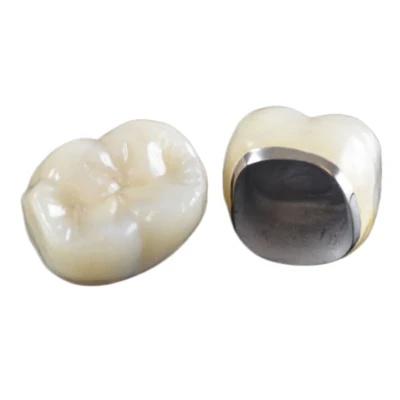
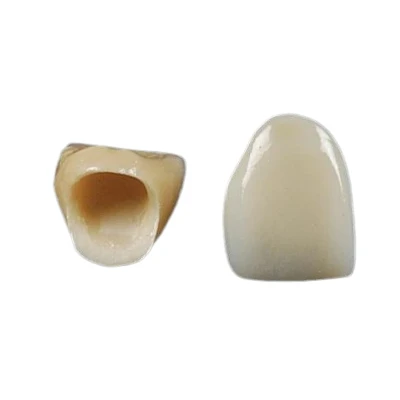
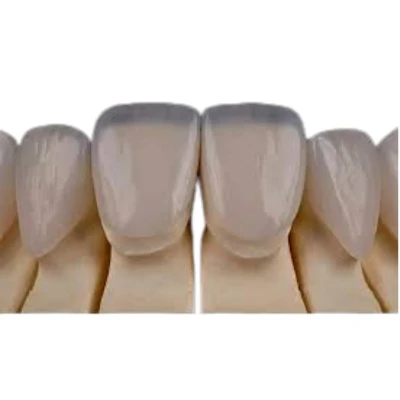


Every dental technician and clinician who has worked on anterior restorations knows the challenge: you prepare the tooth, the stump underneath is dark grey, brown, or even near-black, and the desired final shade is much lighter. The patient may want a bright, natural A1 while the preparation is closer to C4-or darker.
Dark or discolored preparations are among the most demanding situations in restorative dentistry. The wrong material choice can turn a discolored tooth preparation into a grey, lifeless restoration that cement alone cannot rescue. The right combination of restorative material, ceramic thickness, masking strategy, and luting cement can make even a severely discolored stump much easier to manage.
Choosing materials for dark or discolored preparations is therefore not simply about selecting the most opaque ceramic available. The real objective is to balance masking ability, opacity, translucency, thickness, and cement shade so the final restoration looks like a natural tooth rather than an opaque white cap over a dark substrate.
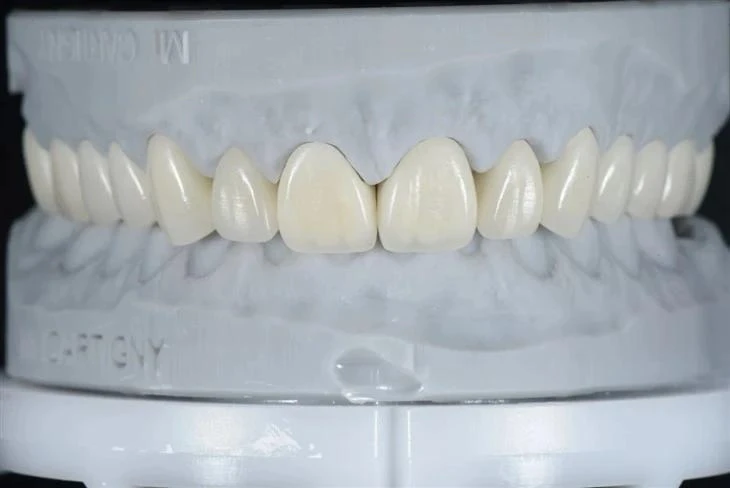
Why Dark or Discolored Preparations Are Difficult to Mask
Natural teeth get their appearance from a layered optical interplay: translucent enamel over a more opaque, colored dentin core. A restoration must reproduce a similar effect-but instead of sitting over healthy dentin, it may be placed over a stump that is grey from amalgam show-through, brown from tetracycline staining, darkened after pulp necrosis, or affected by a metal post or core.
The core problem is that translucent ceramics allow some of the underlying color to influence the final restoration.
A lithium disilicate veneer designed for a normal-shade preparation may look beautiful under ideal conditions, but the same translucency can allow a dark stump shade to show through, producing a grey, dull, or muddy final appearance. The more translucent the ceramic, the more important the color of the underlying substrate becomes.
The opposite approach can also create problems. Simply choosing the most opaque restorative material may block the discoloration effectively, but excessive opacity can leave the crown or veneer looking flat, chalky, or lifeless.
Successful masking therefore depends on finding the right point on the opacity-translucency spectrum and supporting that choice with adequate preparation depth, the appropriate cement shade, and-when necessary-internal masking or ceramic layering.
How Opacity and Translucency Affect Material Selection
Before choosing a crown material for a dark stump, it helps to understand the optical trade-off involved in every ceramic system.
Translucency creates lifelike depth. Light penetrates the restoration, scatters within the ceramic, and reflects back, contributing to the depth and vitality associated with natural enamel. Lithium disilicate, such as IPS e.max, and feldspathic ceramics perform particularly well in this area.
However, translucency is a double-edged sword. The same optical property that creates vitality can also transmit the color of the preparation underneath.
Opacity provides masking ability. More opaque ceramic systems can reduce the influence of a dark substrate, metal post, or discolored stump. The trade-off is that increasing opacity can reduce optical depth and make the restoration appear more monolithic.
There is no single restorative material that provides maximum translucency and maximum masking at the same time. Material selection for dark or discolored preparations therefore depends on several case-specific factors:
- How dark is the preparation? A mildly grey stump presents a different challenge from a near-black or heavily discolored preparation.
- Where is the restoration located? Anterior teeth generally demand greater control of translucency and characterization, while posterior restorations may tolerate greater opacity.
- How much restorative space is available? Masking ability is strongly influenced by material thickness. A very thin veneer cannot provide the same masking effect as a substantially thicker crown.
This is also why the stump shade should be evaluated separately from the desired final shade. Two restorations prescribed as A1 may require very different material strategies if one preparation is light natural dentin and the other is dark grey or contains a metal post.
For clinicians comparing the two most common ceramic approaches, this broader guide to zirconia vs. E.max crowns provides additional context on strength, translucency, and aesthetic indications.
Choosing the Right Material for a Dark Stump
Lithium Disilicate (IPS e.max Press / CAD)
Lithium disilicate glass-ceramic is a widely used material for anterior aesthetics. It offers excellent translucency, enamel-like optical effects, and a strong clinical track record. For normal-shade preparations, it is often an attractive option.
On dark preparations, however, that translucency can become a disadvantage. Standard lithium disilicate may transmit stump color readily. This does not automatically rule out E.max for a dark stump, but the level of discoloration, ceramic opacity, thickness, and cement strategy all need to be considered together.
- Use LT (Low Translucency) or MO (Medium Opacity) options rather than HT (High Translucency) when greater masking is needed. LT provides additional masking while retaining useful translucency. MO provides stronger opacity for moderately discolored preparations.
- Thickness matters enormously. With glass-ceramics, each additional 0.2–0.3 mm of ceramic thickness can shift the perceived shade by roughly one Vita Classic shade tab. A 0.6 mm LT restoration therefore provides meaningfully more masking than a 0.4 mm restoration. When the preparation is dark, adequate restorative thickness should be considered during treatment planning rather than left for correction at cementation.
- Consider a layered approach. A pressed lithium disilicate coping can be cut back and layered with dentin and enamel porcelains. This allows a more opaque dentin layer to contribute masking while the outer enamel ceramic restores translucency and depth.
Lithium disilicate can work well on mild-to-moderate discoloration when the appropriate opacity is selected, sufficient thickness is available, and the cement strategy supports the desired shade. For severe or near-black stumps in the aesthetic zone, a more masking-oriented or layered solution may be more predictable.
At ADS Dental Laboratory, E.max crowns are produced for a range of aesthetic indications. In dark-stump cases, the material decision is not based on the desired shade alone; stump shade, available thickness, aesthetic expectations, and the required balance between masking and translucency all matter.
For preparation planning, see our guide to E.max crown thickness and preparation requirements.
Zirconia (Full-Contour and Layered)
Zirconia offers substantially greater masking ability than highly translucent glass-ceramics and is often considered when treating moderate-to-severe discoloration, metal show-through, dark devitalized teeth, or other difficult substrates.
The trade-off is aesthetics. Traditional full-contour zirconia can look relatively flat or opaque in demanding anterior situations, but modern zirconia systems provide a wider range of optical properties.
- High-translucency and ultra-translucent zirconia offer improved light transmission compared with earlier generations while retaining useful masking ability. They may be considered for anterior dark-stump cases where a more translucent glass-ceramic does not provide sufficient control of the substrate.
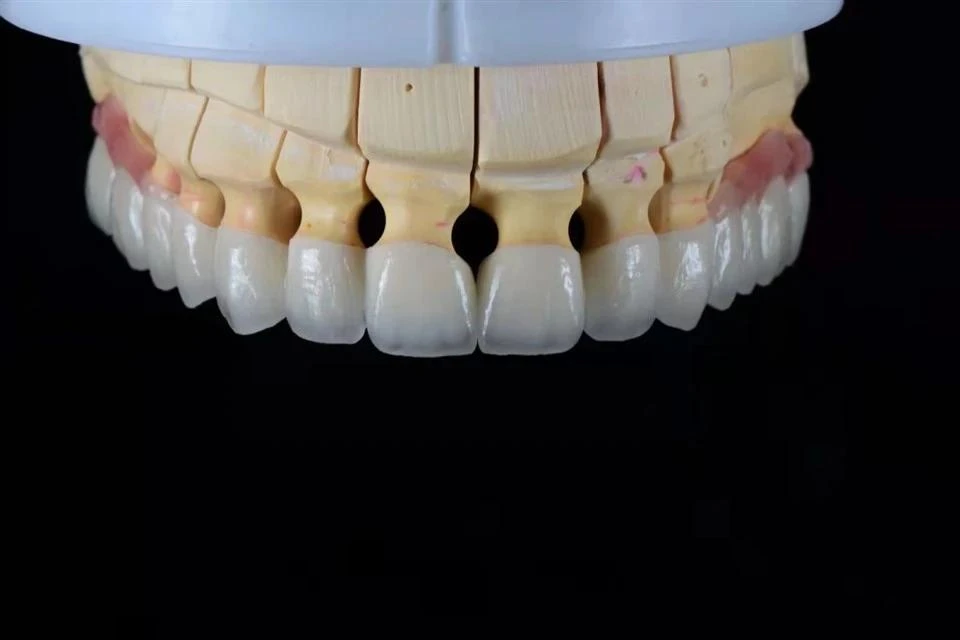
- Layered zirconia combines a zirconia coping with veneering porcelain. The zirconia substructure provides the primary masking effect, while the outer ceramic layer contributes translucency, morphology, shade transitions, and surface characterization.
- Even zirconia requires adequate thickness. Very thin zirconia under 0.5 mm may still show some influence from an extremely dark substrate. For severe cases, 0.6–0.8 mm of zirconia in the masking zone may be required.
For moderate-to-severe discoloration, zirconia is often one of the most reliable restorative materials for controlling a dark stump. The specific zirconia type should still be selected according to the location of the restoration, required translucency, available thickness, strength requirements, and aesthetic expectations.
This distinction is important because "zirconia" is not one single optical category. ADS works with full-contour, solid, layered, high-translucency, and anterior zirconia restorations, allowing the ceramic system to be matched more closely to the clinical and aesthetic demands of the case rather than treating every zirconia restoration the same way.
For cases where greater light transmission is desirable, high-translucency zirconia crowns may be considered. When a case requires a more deliberate combination of masking and surface aesthetics, layered zirconia crowns can provide another option.
Clinicians who want to explore the limitations of more translucent zirconia can also read High-Translucency Zirconia: Where It Works and Where It Does Not.
Feldspathic Porcelain in Layered Restorations and PFM
Feldspathic porcelain is a traditional aesthetic ceramic with excellent translucency and is frequently used to create enamel-like effects in layered restorations.
Used by itself over a severely dark preparation, however, its high translucency provides limited masking. The underlying stump color can strongly influence the final appearance.
Feldspathic porcelain plays an important supporting role in two situations:
As the aesthetic veneer over a PFM coping. The metal substructure provides strong masking, while the porcelain provides the visible aesthetic surface. PFM can remain a practical option in difficult situations where strong substrate masking is required.
As the enamel layer over a zirconia or lithium disilicate coping. In a layered restoration, the underlying structure or dentin ceramic contributes masking while feldspathic enamel porcelain provides translucency, texture, and optical depth.
For dark stump shades, feldspathic porcelain is therefore more useful as part of a layered restorative system than as the sole masking material.
ADS produces a broad range of fixed restorations, including zirconia, lithium disilicate, PFM, and other crown-and-bridge solutions, which allows material selection to be matched to the clinical requirements of each case.
Hybrid Ceramics and Nano-Ceramics
Ceramic-polymer hybrids and related materials can provide moderate translucency, efficient milling, and reasonable optical performance.
For dark or heavily discolored preparations, however, their masking ability generally falls below that of more opaque zirconia systems, while their aesthetic performance may not exceed that of a well-planned layered ceramic restoration.
They may be suitable for selected cases involving mild discoloration and an appropriate cement strategy, but they are generally not the first choice when substantial substrate masking is required.
How Cement Shade Helps Mask a Dark Preparation
Material selection is only part of the equation. The luting cement is another important variable because its color and opacity can influence how much of a dark preparation is visible through the final restoration.
Opaque and Tinted Cements
For dark preparations, opaque white or heavily tinted luting cements can provide an additional masking effect. Many cement systems offer several opacity and shade options.
- Use try-in pastes before final cementation. A cement shade that looks appropriate on a shade guide may behave differently when placed between a dark stump and a translucent ceramic. The corresponding try-in paste allows the clinician to evaluate the combined effect of the preparation, cement, and restoration before committing to final cementation.
- White or opaque shades can provide greater masking for moderate-to-severe discoloration.
- Tinted shades may help fine-tune the result-for example, warming a restoration that would otherwise appear too grey or overly white.
The final shade should therefore be evaluated as a complete optical system rather than as the color of the ceramic alone.
Match the Cement to the Ceramic
Ceramic and cement should be selected as a system rather than as two independent decisions.
- A more translucent ceramic places greater masking responsibility on the cement.
- A more opaque ceramic, such as many zirconia restorations, provides greater control of the substrate and may allow more flexibility in cement shade.
The goal is not for cement to compensate for an unsuitable restorative material. It should complement the ceramic strategy.
A translucent cement under an inadequately masking restoration may allow a grey halo or dark substrate to influence the result. At the other extreme, a strongly opaque cement beneath an already opaque restoration can contribute to an overly chalky appearance.
Preparation Design for Better Masking
Material and cement selection are limited by the restorative space created during preparation. When treating a dark or discolored tooth preparation, adequate reduction needs to be considered from the beginning.
Plan Reduction Around the Masking Requirement
If a stump is severely discolored, greater restorative thickness may be needed than in a normal-shade case.
- For veneers on discolored teeth: A conventional 0.3–0.5 mm veneer preparation may provide insufficient space for masking. In selected situations, 0.6–0.8 mm or more in the cervical and middle thirds may be required where discoloration is most difficult to control. Within appropriate biological and adhesive limits, additional restorative space allows the technician to incorporate more effective masking layers.
- For full crowns: A standard 1.0–1.5 mm reduction may need to increase to approximately 1.5–2.0 mm on the facial aspect when the stump is severely discolored. This gives the technician additional space for masking and aesthetic layering.
- When reduction extends substantially into dentin: If achieving sufficient masking with a veneer would require extensive dentin preparation, a full crown may become a more predictable restorative option. Excessively aggressive veneer preparation can compromise adhesive predictability.
The preparation should therefore be planned around the actual substrate and restorative objective rather than automatically following a preparation design developed for normal-shade teeth.
For zirconia cases specifically, zirconia crown thickness and minimum clearance should be considered together with the amount of masking required.
Consider the Cervical Margin and Soft Tissue
Dark stumps may also show discoloration near the cervical region or around a metal post.
Subgingival margin placement can hide part of the underlying discoloration, but it can also introduce periodontal, scanning, and impression challenges. Where anatomy and clinical conditions permit, keeping the margin at or slightly supragingival while relying on an appropriate masking ceramic and cement may be preferable.
When subgingival margins are unavoidable, a restorative material with stronger masking ability can provide greater control of cervical show-through.
Internal Staining and Masking Liners for Severe Discoloration
When the combination of restorative material, thickness, and cement is still insufficient, additional masking strategies may be considered.
Internal Characterization
The internal surface of a restoration may be characterized with appropriate ceramic stains or masking materials before cementation.
A carefully controlled opaque layer can provide targeted masking without eliminating the translucency of the external surface.
This can be particularly useful for localized discoloration, such as a dark area associated with a metal post or core rather than uniform discoloration across the entire preparation.
Opaque Liners and Bonding Agents
Some restorative and bonding systems include opaque or white-tinted liners that can be used to reduce the visual influence of the underlying stump.
These may be useful when the restoration material has already been selected and additional masking is required.
Any liner must be applied carefully. Excessive thickness can interfere with seating, internal fit, or marginal accuracy.
Using Multiple Masking Layers
For very challenging dark or discolored preparations, several strategies may be combined:
- An opaque liner on the stump when indicated for extreme discoloration.
- Opaque or tinted luting cement as an additional masking layer.
- Zirconia or a lower-translucency lithium disilicate coping as the structural masking component.
- Layered feldspathic enamel porcelain as the aesthetic outer surface.
The purpose of this layered approach is not simply to maximize opacity. It is to distribute the masking function across several controlled layers while preserving enough external translucency, characterization, and surface texture to maintain a natural appearance.
These are also the cases where technician judgment matters most. Digital design can control geometry, thickness, and restorative space with considerable precision, but final shade control may still depend on ceramic layering, staining, glazing, surface texture, and other manual aesthetic procedures.
Material Selection by Discoloration Severity
The following framework can be used as a starting point when choosing dental materials for dark or discolored preparations:
|
Discoloration Level |
Recommended Material |
Cement Strategy |
Notes |
|
Mild, slightly yellow or grey |
Lithium disilicate HT or LT |
Translucent to lightly tinted |
Standard aesthetic case with minimal masking requirement |
|
Moderate brown or grey discoloration |
Lithium disilicate LT or MO |
Opaque or white-tinted |
Plan for approximately 0.6 mm or more where needed; verify with try-in paste |
|
Severe dark grey/brown discoloration, tetracycline staining, or metal show-through |
High-translucency zirconia, full-contour or layered |
Opaque white |
Approximately 0.6–0.8 mm zirconia may be needed in the masking zone; consider layering |
|
Extreme near-black discoloration or heavy metal post show-through |
Layered zirconia coping with feldspathic veneer |
Opaque white plus additional internal masking when indicated |
Multi-layer masking strategy may be required |
This table is a decision framework rather than a rigid protocol. Occlusion, remaining enamel, stump shade, restoration thickness, tooth position, patient expectations, functional requirements, and the optical properties of the chosen ceramic can all change the final recommendation.
The key principle is simple: material selection should begin with the substrate, not only with the target shade.
Common Mistakes When Restoring Dark Preparations
Mistake 1: Choosing the Most Translucent Ceramic and Expecting Cement to Fix It
Cement can contribute useful masking, but it cannot reliably compensate for a highly translucent ceramic placed over a near-black stump.
When the preparation is dark, start by choosing an appropriate restorative material and opacity level. Cement should support that decision, not rescue it.
Mistake 2: Maximizing Opacity Until the Restoration Looks Flat
Strong opacity can block discoloration effectively, but it can also eliminate the depth and vitality expected from an aesthetic restoration.
The question is not only, "Is the stump hidden?" It is also, "Does the restoration still look like a natural tooth?"
Mistake 3: Skipping the Try-In Paste
Try-in pastes are particularly valuable for dark-preparation cases because they allow the clinician to preview how the stump, cement shade, and ceramic will interact before final cementation.
A short try-in can prevent a permanent shade error that would otherwise require replacing the restoration.
Mistake 4: Leaving Too Little Restorative Space
A very thin veneer over a severely dark preparation gives the dental laboratory limited room to control opacity and translucency.
Adequate restorative space is not simply a laboratory preference-it is part of the masking strategy.
Mistake 5: Ignoring the Cervical Third
The cervical area is often one of the most difficult zones to manage. The restoration may be thinner there, the underlying dentin can appear more saturated, and the margin is located close to the gingiva.
If the cervical third remains grey, the entire restoration may appear compromised even when the incisal area looks natural.
What Your Dental Laboratory Needs to Know
Treating dark or discolored preparations is a collaborative process. The clinician and dental laboratory should ideally discuss challenging cases before the final restoration enters production.
What the Clinician Should Communicate
- The actual stump shade, not only the desired final shade. A stump photograph or stump shade tab reading can be extremely valuable.
- The type and source of discoloration, such as tetracycline staining, a devitalized tooth, metal post, or amalgam influence.
- The available restorative space. If the preparation is highly conservative, the laboratory may need to recommend a more opaque material or a different layering strategy.
- The patient's aesthetic expectations. A patient seeking a very bright result may require a different optical strategy from one seeking a warmer, more natural result.
- Useful clinical photographs, ideally including the preparation and shade reference under consistent lighting conditions.
For more detail on this step, see our guide on how to communicate stump shade to a dental lab.
What the Dental Laboratory Contributes
- Material selection experience, including choosing the appropriate lithium disilicate opacity, zirconia type, or layered restorative design for the stump shade.
- Custom staining and characterization, which can help create shade transitions and optical effects that cannot always be achieved with a purely monolithic restoration.
- Control of restoration geometry and thickness through digital design and manufacturing.
- Technician judgment during layering, staining, glazing, surface texturing, and shade matching.
At ADS Dental Laboratory, our case work order allows clinicians and laboratory partners to specify the restoration material, final shade, stump shade, gingival/body/incisal characterization, margin design, occlusion, and special instructions. This is especially useful in challenging aesthetic cases because the desired final shade alone does not fully describe the optical conditions the technician must manage.
ADS combines CAD/CAM design, digital scanning, milling, and other digital manufacturing processes with technician-led ceramic layering, staining, glazing, shade matching, contouring, and final finishing. For a dark-stump case, digital precision helps control the restorative space and geometry, while experienced dental craftsmanship remains important for the final aesthetic result.
The most predictable dark-preparation cases are usually those in which the clinician and laboratory begin with the same information: stump shade, target shade, restorative thickness, material options, and the intended masking strategy.
Final Thoughts
Choosing materials for dark or discolored preparations is ultimately a balance between masking the substrate and preserving natural translucency. Lithium disilicate can be effective for selected mild-to-moderate discoloration when opacity, thickness, and cement are properly managed, while zirconia and layered restorative designs generally provide greater control when the stump is significantly darker. No material should be selected from the target shade alone-the underlying stump shade, available restorative space, cement, aesthetic requirements, and case location all influence the final result.
ADS Dental Laboratory Ltd is a full-service digital dental laboratory in Shenzhen, China, providing customized restorations and long-term dental lab outsourcing for dentists and dental laboratories worldwide. If you are planning a difficult dark-stump or discolored-preparation case, send us the stump shade, preparation photos, target shade, and restoration requirements to discuss an appropriate material and masking strategy.
FAQ
What is the best crown material for a dark or discolored tooth preparation?
There is no single best material for every dark preparation. Mild discoloration may be manageable with a lower-translucency or more opaque lithium disilicate option, while moderate-to-severe discoloration often requires the stronger masking ability of zirconia or a layered restoration. The final choice should also consider restoration thickness, tooth position, strength requirements, and the desired aesthetic result.
Is zirconia better than E.max for a dark stump?
Zirconia generally provides stronger masking than highly translucent lithium disilicate, making it useful for darker preparations, metal show-through, or severely discolored teeth. E.max can still be appropriate for some mild-to-moderate cases when a suitable opacity, sufficient ceramic thickness, and appropriate cement are used. The decision should therefore be based on the substrate and aesthetic objective rather than material name alone.
Can opaque cement completely hide a dark preparation?
Opaque cement can improve masking, but it should not be expected to compensate for an unsuitable restorative material. A highly translucent ceramic over a severely dark stump may still be affected by the underlying color even when an opaque cement is used. The ceramic, thickness, cement, and stump shade need to be planned together.
Why should I send the stump shade to the dental laboratory?
The final shade and the stump shade describe two different parts of the case. A restoration prescribed as A1 may require a very different material and opacity strategy when placed over a light preparation compared with a dark grey or metal-containing stump. Providing the stump shade helps the laboratory plan masking, material selection, ceramic thickness, and characterization more accurately.
Can a veneer be used on a severely discolored tooth?
It may be possible in selected cases, but severe discoloration can require more ceramic thickness than a conservative veneer preparation provides. If adequate masking would require excessive removal of enamel or extensive preparation into dentin, another restorative design such as a crown may offer greater predictability. The decision should be based on the degree of discoloration, available enamel, restorative space, and aesthetic requirements.