
Zirconia crowns can now be produced through two common CAD/CAM workflows: milled chairside through a CEREC system in a single appointment, or fabricated in a dental laboratory and returned days later. Both paths use CAD/CAM technology and yttria-stabilized zirconia, yet they diverge sharply in workflow speed, aesthetic finish, and the types of cases they handle well.
Choosing the wrong route wastes chair time, compromises aesthetics, or delays delivery. For dentists comparing CEREC vs lab zirconia crowns, understanding these differences is essential. This article compares both approaches across workflow, material finish, and clinical case selection so dentists and lab managers can make informed routing decisions.

What Is CEREC Chairside Zirconia Crown Fabrication?
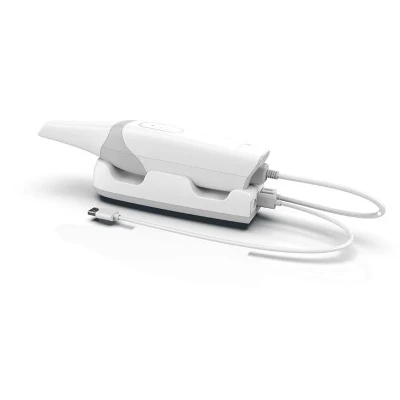
CEREC (Chairside Economical Restoration of Esthetic Ceramics) is a proprietary CAD/CAM system developed by Dentsply Sirona that enables dentists to design, mill, and deliver ceramic restorations within a single patient visit. Introduced in 1985 and refined over four decades, the system integrates an intraoral scanner (Primescan), design software (CEREC Dental Design), a milling unit (CEREC Primemill or MC XL), and a compact sintering furnace (SpeedFire).
The defining feature is that every step - from digital impression to final crown - happens inside the dental practice. No physical model is poured, no impression is shipped, and no lab technician is involved unless the practice chooses to use CEREC inLab for in-house lab production.
What Is Dental Lab Zirconia Crown Fabrication?
Dental lab zirconia fabrication refers to the outsourced production of CAD/CAM zirconia crowns and bridges by a professional dental laboratory using industrial-grade CAD/CAM equipment. The workflow begins when a dentist sends either a physical impression or a digital intraoral scan to the lab. Lab technicians then design the restoration in open-architecture CAD software such as exocad or 3Shape, mill it from pre-sintered zirconia blanks using industrial multi-axis milling machines, and complete sintering, characterization, and glazing before returning the finished restoration.
The key distinction is separation of time and place. The lab operates on a turnaround measured in days, not minutes. But that time buys access to a broader material inventory, layered aesthetic techniques, and technician-driven customization that chairside systems cannot match.
Chairside CEREC vs Dental Lab Zirconia Crown Workflow
CEREC Chairside Workflow
The chairside workflow compresses what traditionally takes two appointments into roughly 90 to 120 minutes of total chair time. After tooth preparation, the dentist scans the prep, opposing arch, and bite registration with an intraoral scanner. The CEREC software auto-generates a proposal for the restoration morphology, which the dentist adjusts for contacts, occlusion, and margin design. The design file is sent directly to the milling unit.
Milling a monolithic zirconia crown from a pre-sintered blank takes approximately 5 to 15 minutes depending on the machine and material. The milled crown is then transferred to the SpeedFire furnace for rapid sintering. For CEREC Zirconia and compatible materials, sintering can be completed in roughly 15 to 20 minutes - a fraction of the multi-hour cycles required by conventional lab furnaces. After sintering, the crown is characterized with staining liquids if needed, glazed, and ready for try-in and cementation.
The entire arc from scan to seated crown happens while the patient remains in the chair.
Dental Lab Workflow
The lab workflow starts identically at the data-acquisition stage - a digital scan or conventional impression - but then enters a multi-day production cycle. The lab receives the case file, designs the restoration in CAD software, and mills the zirconia framework or full-contour crown. This CAD/CAM dental workflow supports digital design and manufacturing while allowing additional laboratory finishing steps. Sintering alone in a conventional lab furnace typically runs 2 to 5 hours at temperatures around 1,450 to 1,550°C, depending on the material.
After sintering, the restoration undergoes characterization: technicians apply layering stains, incisal effects, and glaze to replicate natural tooth structure. For layered zirconia restorations, a veneering ceramic is hand-stacked and fired onto the zirconia framework. This artisan step is where the lab's value is concentrated - it is the stage that chairside systems cannot replicate.
Total turnaround from impression to delivered restoration typically ranges from 5 to 10 business days for single units, and longer for multi-unit bridges or full-arch cases.
Table 1. CEREC Chairside vs Dental Lab Workflow Comparison
|
Parameter |
CEREC Chairside |
Dental Lab |
|
Total turnaround |
Same visit (90–120 min) |
5–10 business days |
|
Digital impression |
Primescan intraoral scanner |
IOS or conventional impression |
|
Design software |
CEREC proprietary |
exocad, 3Shape, or similar |
|
Milling equipment |
CEREC Primemill / MC XL |
Industrial multi-axis milling systems |
|
Sintering time |
~15–20 min (SpeedFire) |
2–5 hours (conventional furnace) |
|
Characterization |
Limited staining and glazing |
Full layering, multi-shade staining, custom glazing |
|
Patient visits |
1 |
2–3 |
|
Lab technician involvement |
None (unless inLab) |
Full technician-driven production |
The chairside workflow wins decisively on speed and patient convenience. The dental lab workflow wins on finish complexity and material range. Neither replaces the other - they serve different clinical priorities.
Zirconia Materials and Finishing: Chairside vs Dental Lab
Zirconia Generations and Translucency
Zirconia used in dental restorations is classified by yttria content, which directly governs the trade-off between strength and translucency. Understanding the differences among 3Y, 4Y, and 5Y zirconia is essential for selecting between chairside and lab-made zirconia crowns.
- 3Y-TZP (3 mol% yttria): The original and strongest formulation. Flexural strength typically 900–1,200 MPa. High opacity, making it suitable for posterior crowns and bridges where load-bearing matters more than aesthetics. Early-generation 3Y-TZP was too opaque for anterior use.
- 4Y-PSZ (4 mol% yttria): A balanced intermediate. Flexural strength roughly 500–800 MPa with noticeably improved translucency. Suitable for monolithic single crowns in both anterior and posterior regions.
- 5Y-PSZ (5 mol% yttria): The most translucent formulation. Flexural strength drops to approximately 400–600 MPa, approaching the range of lithium disilicate. Best for anterior aesthetic cases where translucency is critical and occlusal load is moderate.
The strength-translucency trade-off is not a flaw in the material. It is a fundamental property of zirconia's crystal structure: increasing yttria raises the cubic-phase fraction, which transmits more light but reduces fracture toughness.
What Chairside Systems Can Deliver
CEREC-compatible zirconia blocks - such as CEREC Zirconia, chairside zirconia blocks from established dental material manufacturers, and CEREC MTL Zirconia - are engineered for rapid sintering. They are typically 3Y-TZP or optimized 4Y formulations that achieve adequate strength after the abbreviated SpeedFire cycle. The trade-off is that rapid-sintered zirconia may exhibit slightly lower translucency and marginally reduced aging resistance compared to conventionally sintered lab zirconia of the same composition.
Characterization options chairside are limited to surface staining and glazing. The dentist or assistant applies liquid stains to the external surface, then fires a glaze layer. This produces an acceptable aesthetic result for posterior teeth and many single anterior crowns, but it cannot replicate the depth, incisal translucency, or multi-layer chromatic gradient that layered lab fabrication achieves.
What Dental Laboratories Can Deliver
Dental laboratories work with a full material inventory: high-strength 3Y-TZP for posterior bridges, high-translucency 5Y-PSZ for anterior aesthetics, and multilayer gradient zirconia blanks that transition from dentin-shaded cervical to translucent incisal within a single block. These multilayer materials reduce or eliminate the need for external staining, producing lifelike restorations from monolithic milling alone.
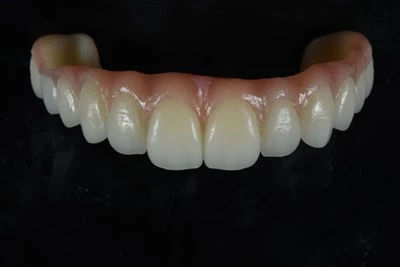
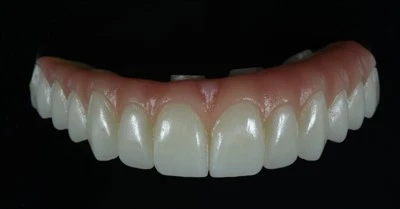
For cases demanding maximum aesthetic control, labs can produce layered zirconia restorations: a milled zirconia framework is veneered with hand-stacked feldspathic or lithium disilicate ceramic. This technique allows the technician to build incisal halos, mamelons, crack lines, and surface texture that mimic natural enamel. It is the gold standard for anterior aesthetic restorations and high-smile-line cases.
Understanding the differences between monolithic and layered zirconia crowns is particularly important when selecting the appropriate finishing technique for each clinical situation.
Labs also offer custom zirconia crown shading and characterization under the microscope, and patient-specific color matching using spectrophotometric data - none of which are feasible chairside.
Table 2. Material and Finish Capability Comparison
|
Capability |
CEREC Chairside |
Dental Lab |
|
3Y-TZP (high strength, posterior) |
Yes (rapid sinter) |
Yes (conventional sinter) |
|
5Y-PSZ (high translucency, anterior) |
Limited |
Yes, full range |
|
Multilayer gradient zirconia |
Limited options |
Full selection |
|
Layered zirconia (veneered) |
No |
Yes |
|
Surface staining |
Yes (basic) |
Yes (advanced, multi-shade) |
|
Custom incisal effects (mamelons, halo) |
No |
Yes |
|
Spectrophotometric shade matching |
No |
Yes |
|
Rapid sintering (~15–20 min) |
Yes |
Not typical |
|
Conventional sintering (2–5 hrs) |
No |
Standard |
Chairside zirconia delivers functionally excellent restorations with acceptable aesthetics for the majority of posterior cases. Labs deliver superior aesthetics for demanding anterior work and complex shade matching. The finish gap is real, and it narrows for posterior teeth but widens for the aesthetic zone.
Marginal Fit and Accuracy of CEREC vs Lab-Made Zirconia Crowns
Marginal fit - the gap between the restoration margin and the prepared tooth - is a primary determinant of clinical longevity. Gaps exceeding 120 μm invite cement dissolution, microleakage, and recurrent caries. The clinically acceptable threshold for CAD/CAM restorations is generally cited as below 90 μm.
Both CEREC and lab-based systems produce restorations within acceptable fit ranges. Intraoral scanners like Primescan capture data at approximately 20 μm precision, and CEREC milling units achieve dimensional accuracy of roughly ±25 μm. Lab-based systems using model scanners and multi-axis mills report similar or marginally tighter tolerances, partly because model scanning under controlled conditions eliminates variables like intraoral moisture, soft tissue interference, and patient movement.
A direct in vitro comparison of chairside CEREC and laboratory CAD/CAM milling workflows for monolithic zirconia crowns found both systems produced clinically acceptable adaptation, with differences in marginal and internal fit that were measurable but within the range that would not change clinical outcomes for single-unit restorations.
The practical takeaway: for single crowns, marginal fit differences between the two systems are not clinically decisive. Fit quality depends more on preparation design, scan quality, and cementation technique than on whether the crown was milled chairside or in a lab. Understanding common zirconia crown fit problems can also help dentists and laboratories improve restoration consistency.

When to Choose Chairside CEREC or Dental Lab Zirconia Crowns
This is where the decision matters most. The right routing depends on tooth position, aesthetic demand, occlusal load, case complexity, and patient scheduling constraints.
Cases Best Suited for CEREC Chairside
- Posterior zirconia crowns where aesthetics are not critical and occlusal load is normal. This is the bread-and-butter chairside case.
- Emergency or fracture cases where immediate restoration is clinically preferable to a temporary.
- Patients with scheduling difficulty - those who cannot return for a second appointment, including elderly patients, those traveling from remote areas, or patients with anxiety who minimize visits.
- Endodontically treated teeth requiring a same-visit crown to seal the access opening and prevent fracture.
- Inlays and onlays in posterior teeth, where CEREC's material options (lithium disilicate, hybrid ceramic) and single-visit delivery are well established.
The common thread is straightforward: when the case does not demand layered aesthetics, and speed or patient convenience carries clinical value, chairside is the right call.
Cases Best Suited for Dental Lab
- Anterior crowns and bridges in the aesthetic zone, especially for patients with high smile lines or specific shade requirements. Layered zirconia or high-translucency monolithic zirconia with custom characterization produces results chairside cannot match.
- Multi-unit bridges (3+ units) where structural integrity, precise pontic design, and connector dimensions require lab-level control. Chairside systems are generally limited to 3-unit bridges and perform best on single units.
- Full-arch restorations and implant-supported fixed prostheses, which demand sequential design, try-in verification, and material combinations beyond chairside capability.
- Cases requiring custom shading or shade matching against existing dentition - tetracycline-stained teeth, peg laterals, or patients with non-standard shades.
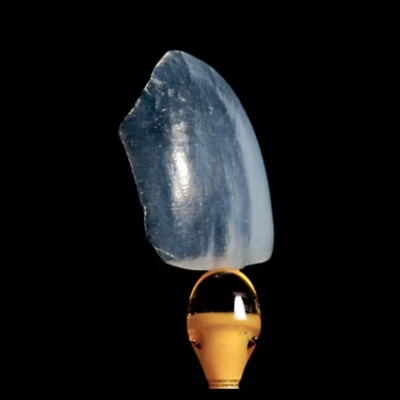
- Veneers and anterior aesthetic work where incisal translucency, mamelons, and surface texture define success.
Labs also serve as the fallback when chairside milling capacity is exceeded - complex cases, unusual preparations, or when the practice does not own CEREC equipment.
Table 3. Case Selection Quick Reference
|
Clinical Scenario |
Recommended Route |
Rationale |
|
Posterior single crown, normal occlusion |
CEREC Chairside |
Speed, adequate aesthetics, single visit |
|
Anterior crown, high smile line |
Dental Lab |
Layered zirconia, custom characterization |
|
Emergency fracture restoration |
CEREC Chairside |
Immediate delivery, no temporization |
|
3-unit posterior bridge |
Either (lab preferred) |
Lab offers tighter control on connectors |
|
Full-arch implant restoration |
Dental Lab |
Material range, sequential try-in |
|
Inlay / onlay, posterior |
CEREC Chairside |
Established workflow, single visit |
|
Veneers, aesthetic zone |
Dental Lab |
Incisal effects, translucency control |
|
Multi-shade matching (existing dentition) |
Dental Lab |
Spectrophotometric matching |
|
Patient cannot return for second visit |
CEREC Chairside |
Single-visit necessity |
|
Bruxer, high occlusal load |
Dental Lab |
3Y-TZP conventional sinter, full-contour |
The routing decision should be made before tooth preparation, not after. Preparation design differs slightly depending on whether the restoration will be monolithic chairside zirconia or a layered lab crown - particularly in reduction depth and margin type. Following appropriate zirconia crown preparation guidelines helps ensure sufficient material clearance and suitable margin geometry.
Chairside CEREC vs Dental Lab: Costs and Practice Economics
Chairside CEREC requires significant upfront capital investment: a complete system (scanner, mill, furnace, software) typically represents a six-figure expenditure. But once installed, the per-unit cost is limited to material blocks, burs, and staining kits - roughly the cost of a single zirconia block per crown, with no lab fee.
Lab-fabricated zirconia crowns carry a per-unit lab fee that varies by case complexity and material choice. For practices without CEREC equipment, this is the only option, and the fee structure is straightforward.
The economic crossover point depends on case volume. Practices placing more than approximately 15 to 20 indirect restorations per month can justify the CEREC investment on lab-fee savings alone. Below that volume, the lab model remains more cost-effective without the equipment depreciation, maintenance, and training overhead.
Neither model is inherently cheaper. The cost equation depends on practice size, case mix, and whether the practice values the marketing and patient-retention benefits of same-visit dentistry.
Final Thoughts
CEREC chairside and dental lab zirconia crowns are not competing technologies - they are complementary tools serving different clinical scenarios. Chairside excels at speed, convenience, and single-visit delivery for posterior single units and straightforward cases. Lab fabrication excels at aesthetic complexity, material range, and multi-unit precision. The dentist's job is to match the case to the right production route before preparation begins.
For practices and dental laboratories seeking reliable custom zirconia crown production, ADS Dental Laboratory Ltd is a full-service digital dental laboratory based in Shenzhen, China, offering CAD/CAM design, zirconia milling, technician-led finishing, structured quality control, and long-term dental lab outsourcing services for overseas dental professionals. Contact our team to discuss your zirconia restoration cases, material requirements, production volumes, and turnaround expectations.
FAQ
Are CEREC zirconia crowns as good as lab-made zirconia crowns?
Both CEREC and lab-made zirconia crowns can provide clinically acceptable fit, strength, and function when the appropriate materials and manufacturing protocols are used. CEREC offers faster delivery and convenience for straightforward single crowns, while dental laboratories provide additional options for material selection, detailed characterization, and complex aesthetic cases. The better choice depends on the clinical requirements rather than the manufacturing location alone.
What is the main difference between CEREC and dental lab zirconia crowns?
The primary difference is the fabrication workflow. CEREC zirconia crowns are designed, milled, sintered, and delivered within a single dental visit. Lab-made zirconia crowns are produced through a separate digital dental laboratory workflow, typically involving CAD/CAM design, industrial milling, conventional sintering, and technician-led finishing. Laboratory production takes longer but allows greater flexibility in customization and complex restoration planning.
When should dentists choose lab-made zirconia crowns instead of CEREC?
Lab-made zirconia crowns are generally preferable when a case requires detailed anterior shade matching, layered ceramics, complex occlusal design, or multi-unit restorations. Dental laboratory fabrication is also valuable for implant-supported restorations and cases requiring extensive technician involvement. For straightforward posterior single crowns where speed is a priority, chairside CEREC may be the more convenient option.
Do lab-made zirconia crowns have better marginal fit than CEREC crowns?
Not necessarily. Both chairside and laboratory CAD/CAM workflows can achieve clinically acceptable marginal adaptation. Differences depend on preparation geometry, digital impression accuracy, CAD design parameters, milling performance, sintering protocols, and final adjustments. A well-controlled workflow is more important than whether the crown is produced chairside or in a dental laboratory.
Can a dental practice use both CEREC and an outsourced dental laboratory?
Yes. A hybrid workflow allows dentists to produce straightforward same-day restorations with CEREC while outsourcing more demanding zirconia crowns, bridges, and aesthetic cases to a professional dental laboratory. This approach can help practices balance patient convenience, chairside capacity, material selection, and access to specialized dental technicians.