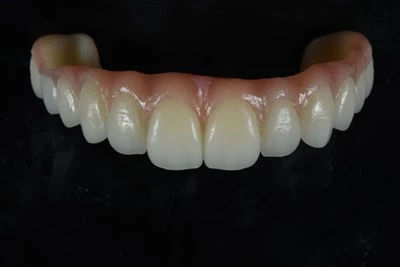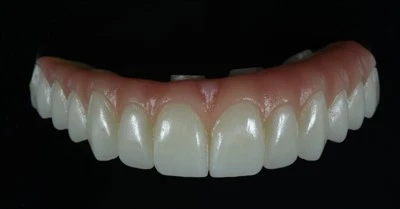

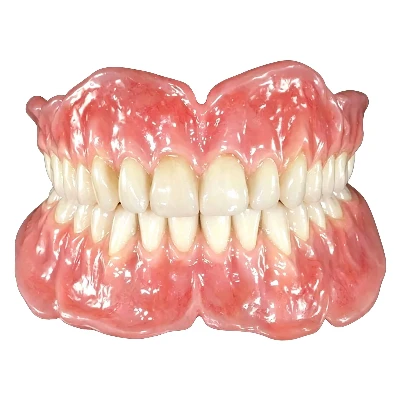
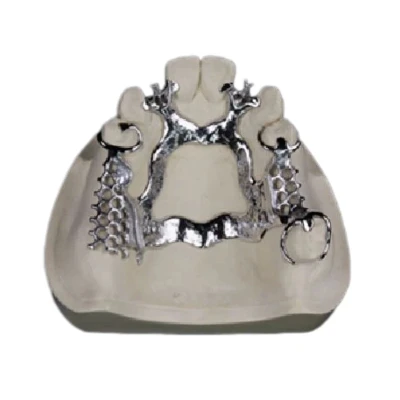
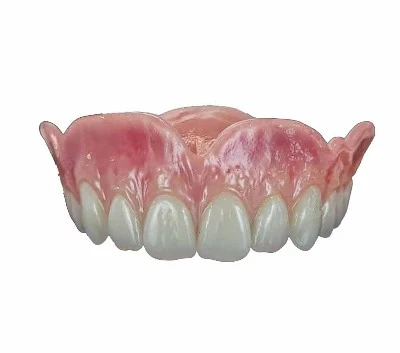
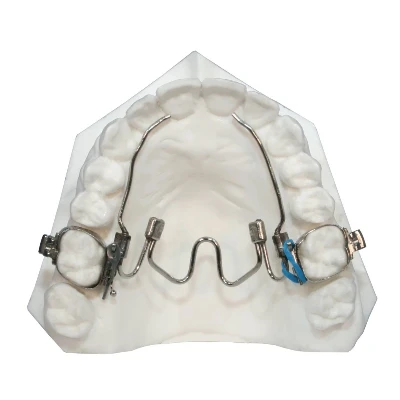
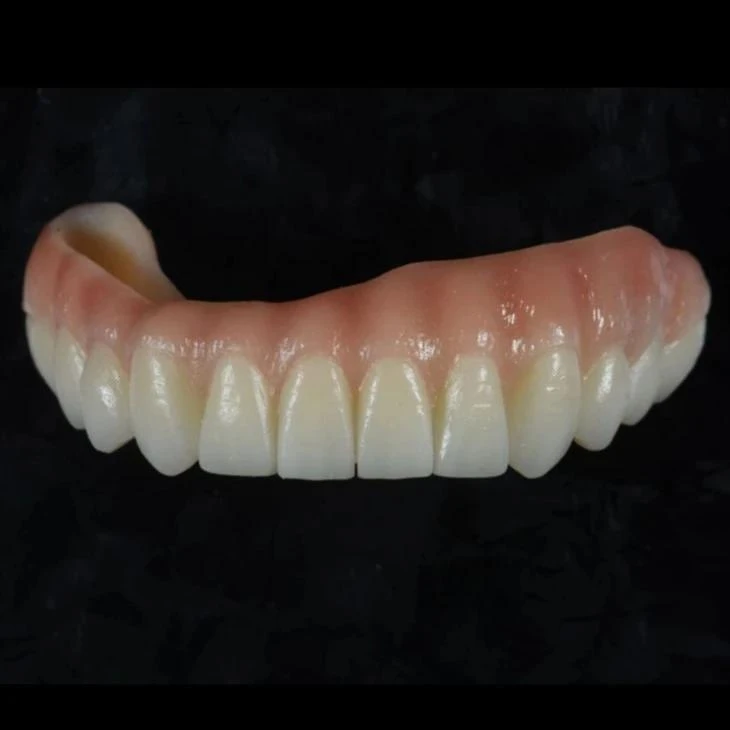
A full-arch implant restoration is a fixed dental prosthesis, such as an implant-supported full-arch bridge, supported by 4 to 6 implants that replaces an entire arch of missing teeth, restoring chewing function, facial aesthetics, and phonetics for edentulous or soon-to-be edentulous patients. The All-on-4 concept uses four implants per arch, with the posterior implants placed at tilted angles to maximize bone engagement and reduce the need for sinus grafting.
Scope of This Article
Successful full-arch implant restorations depend on two tightly linked phases: prosthetically-driven surgical planning and precision laboratory fabrication, each feeding data into the other. This article examines the essential planning steps and the corresponding laboratory production process required to execute these complex prostheses predictably.
Essential Planning Steps for Full-Arch Implant Restorations
Data Acquisition and Fusion
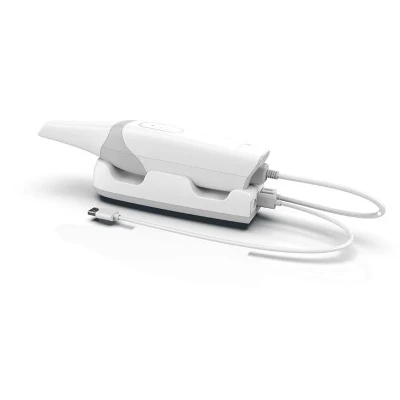
Full-arch implant restoration planning begins with comprehensive data acquisition. CBCT imaging evaluates bone height, width, density, and critical anatomy including the inferior alveolar nerve and maxillary sinus. Simultaneously, intraoral scanning captures the soft-tissue surface and remaining dentition in STL format, replacing conventional elastomeric impressions for full-arch cases. DICOM data from CBCT and STL data from intraoral scans are fused in implant planning software to create a unified 3D model for virtual implant placement.
Table 1: Planning Data Sources and Their Roles
|
Data Source |
Format |
What It Captures |
Planning Role |
|
CBCT |
DICOM |
Bone height, width, density, nerve and sinus position |
Implant site selection and angle |
|
Intraoral scan |
STL |
Soft-tissue surface, remaining teeth, interarch space |
Prosthetic design and tooth position |
|
Diagnostic wax-up / try-in |
STL / physical |
Vertical dimension, midline, tooth arrangement |
Prosthetic blueprint for implant placement |
|
Facebow / jaw tracking |
JSON / STL |
Centric relation, excursive movements |
Occlusal scheme and articulator setup |
Prosthetically-Driven Planning
Prosthetically-driven planning designs the final restoration first, then reverse-engineers implant positions to support it, ensuring functional and aesthetic outcomes. A diagnostic try-in or wax-up establishes vertical dimension, midline, and tooth arrangement before surgery, serving as the prosthetic blueprint. This approach dictates that implants are placed to serve the prosthesis, not the other way around.
Surgical Guide Design
Once virtual implant placement is finalized, the digital workflow translates the plan into a physical surgical guide. Guides are 3D-printed from the virtual plan to transfer implant position, angle, and depth to the operative site with sub-millimeter control. For All-on-4 cases, distal implants are typically tilted up to 30 to 45 degrees to extend the prosthetic support span and engage denser anterior bone. The guide stabilizes the surgical execution, ensuring the placed implants perfectly match the prosthetically-driven virtual setup.
Full-Arch Implant Restoration Laboratory Production Process
The full-arch implant restoration laboratory production process transforms verified clinical data into the definitive screw-retained prosthesis. A strict digital workflow dictates this progression, moving from data validation directly to final delivery.
Impression Verification and CAD Design
After implant osseointegration, the laboratory receives the final impression, either digital via intraoral scan or conventional via pickup impression copings, to record implant positions. A verification jig is fabricated to confirm impression accuracy before proceeding, preventing passive-fit errors in the final framework.
CAD software designs the prosthetic framework, incorporating the occlusal scheme, tooth morphology, and soft-tissue contour established during planning. This CAD/CAM dental workflow directly drives the subsequent manufacturing phases.
Try-in and Framework Milling
A PMMA try-in prosthesis is milled or printed for clinical evaluation of aesthetics, phonetics, and occlusion before final material commitment.
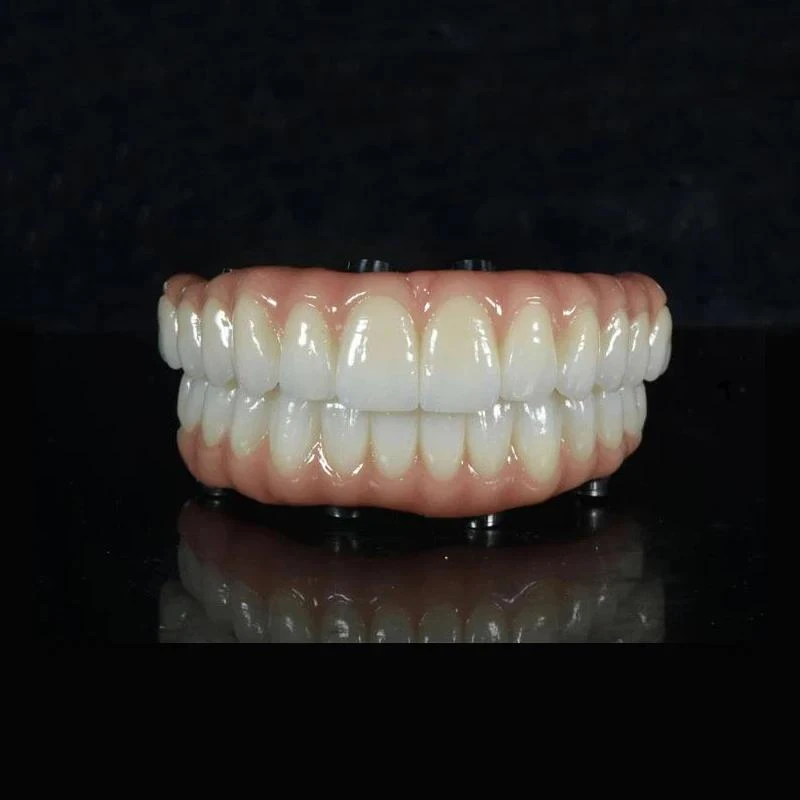
The definitive framework is milled from titanium or cobalt-chromium for structural rigidity, then veneered or used as a substructure for the final restoration. Alternatively, monolithic zirconia full-arch restorations, such as an All-on-X zirconia bridge, are increasingly used as a single-unit alternative to metal-acrylic hybrids, offering superior wear resistance and reduced chipping risk.
CAM milling of zirconia full-arch restorations uses 5-axis machines from pre-sintered blanks, followed by sintering, staining, and glazing to achieve final aesthetics.
Finishing and Quality Control
Quality control includes verifying passive fit on the master cast, checking occlusal contacts, and confirming screw-access channel alignment before delivery.
Table 2: Laboratory Production Steps and Key Deliverables
|
Step |
Input |
Laboratory Output |
Clinical Check |
|
Impression verification |
Final impression (digital or conventional) |
Verification jig |
Passive fit confirmation |
|
CAD design |
Verified implant positions, bite registration |
Digital framework and tooth design |
Design review with clinician |
|
Try-in prosthesis |
CAD design file |
Milled or printed PMMA try-in |
Aesthetics, phonetics, occlusion |
|
Framework milling |
Approved try-in and design |
Titanium or Co-Cr framework / monolithic zirconia |
Fit on master cast |
|
Finishing and delivery |
Milled framework, stain and glaze |
Definitive prosthesis |
Occlusal adjustment, screw torque |
Rigorous dental laboratory quality control ensures the milled prosthesis transfers seamlessly from the master cast to the patient.
Materials Used for Full-Arch Implant Prostheses
Material selection dictates the mechanical longevity and maintenance profile of a full-arch implant restoration. Three primary material systems dominate full-arch prostheses: metal-acrylic hybrids, monolithic zirconia, and PMMA provisionals.
Table 3: Material Comparison for Full-Arch Prostheses
|
Property |
Metal-Acrylic Hybrid |
Monolithic Zirconia |
PMMA Provisional |
|
Framework material |
Titanium or Co-Cr |
Zirconia (single block) |
PMMA |
|
Flexural strength |
Framework > 900 MPa; acrylic ~90 MPa |
> 800 MPa |
~90 MPa |
|
Wear resistance |
Moderate (acrylic wear) |
High |
Low |
|
Chipping risk |
High (acrylic veneer) |
Very low (monolithic) |
N/A (interim use) |
|
Repairability |
Easy (re-veneer teeth) |
Difficult (remake) |
Easy (adjust or reprint) |
|
Typical use |
Definitive prosthesis |
Definitive prosthesis |
Immediate load / try-in |
Metal-Acrylic Hybrids
Metal-acrylic hybrids use a milled titanium or cobalt-chromium framework with acrylic resin teeth, offering repairability but higher long-term maintenance due to acrylic wear and chipping. Acrylic chipping is the most frequently reported prosthetic complication in All-on-4 restorations, driving the shift toward monolithic zirconia for definitive prostheses. While easy to repair intraorally, the ongoing maintenance burden makes hybrids a less predictable definitive option.
Monolithic Zirconia
Monolithic zirconia full-arch restorations are milled as a single block, eliminating the interface between framework and veneer that causes chipping in hybrid designs. Zirconia exhibits flexural strength above 800 MPa and fracture toughness significantly higher than layered ceramics, making it suitable for full-arch load-bearing applications. This monolithic structure provides superior fracture resistance but sacrifices intraoral repairability, requiring a complete remake if catastrophic failure occurs.
PMMA Provisionals
PMMA is used for provisional and immediate-load prostheses, including a PMMA temporary All-on-X bridge, providing a lightweight, adjustable, and cost-effective interim solution during osseointegration. PMMA allows clinicians to easily adjust occlusion and esthetics before fabricating the final prosthesis. It serves strictly as a transitional material, as its low wear resistance precludes definitive long-term use.
Selecting monolithic zirconia for definitive prostheses minimizes mechanical complications, while reserving PMMA strictly for the provisional phase optimizes both adjustability and final structural integrity.
Common Complications and How Planning Reduces Risk
Mechanical and Biological Complications
Prosthetic complications include screw loosening, acrylic fracture, framework fracture, and occlusal wear, with acrylic chipping being the most common. Biological complications include peri-implant mucositis, peri-implantitis, and soft-tissue recession, often linked to excess cement or inadequate hygiene access.
Table 4: Common Complications and Mitigation Strategies
|
Complication |
Type |
Primary Cause |
Planning Mitigation |
|
Acrylic chipping |
Mechanical |
Material wear under occlusal load |
Monolithic zirconia or group function occlusion |
|
Screw loosening |
Mechanical |
Non-passive fit or excessive cantilever |
Verification jig and prosthetically-driven positioning |
|
Peri-implantitis |
Biological |
Cement residue or poor hygiene access |
Screw-retained design with accessible contours |
|
Framework fracture |
Mechanical |
Material fatigue or design flaw |
Adequate framework thickness and material selection |
|
Soft-tissue recession |
Biological |
Thin tissue biotype or implant malposition |
Proper implant depth and tissue management |
Risk Mitigation Through Planning
Prosthetically-driven implant positioning reduces cantilever forces and improves load distribution, directly lowering mechanical complication rates. Group function occlusion distributes lateral forces more evenly across the arch than canine-guided schemes in full-arch restorations, reducing stress concentration on posterior implants. Appropriate occlusal planning with dental articulators can also support the evaluation of occlusal relationships during laboratory production.
A screw-retained prosthesis eliminates cement residue risk and allows retrievability for maintenance, making it the preferred retention method for full-arch prostheses. Achieving a strict passive fit through verification jigs prevents screw loosening and subsequent framework fatigue. Rigorous prosthetically-driven planning directly dictates occlusal scheme, material choice, and retention type, neutralizing the primary drivers of both mechanical and biological failures before fabrication begins.
These planning and verification steps also contribute to reducing dental restoration remakes by helping clinicians and laboratories identify potential problems before final fabrication.

Conclusion
Planning-Production Integration
Full-arch implant restoration outcomes hinge on the seamless transfer of prosthetic data from planning through laboratory production, with each step building on the accuracy of the previous one. Digital workflow integration from CBCT to CAD/CAM milling has measurably improved fit accuracy and reduced turnaround time for full-arch prostheses.
ADS Dental Laboratory Ltd is a Shenzhen-based digital dental laboratory producing custom full-arch implant restorations, including All-on-X prostheses, implant-supported bridges, and implant bars, for overseas dentists and dental laboratories. Contact our team to discuss the design requirements, case records, and production stages for your next full-arch restoration project.
FAQ
What records should be provided to the dental lab for a full-arch implant restoration?
The laboratory generally needs accurate implant-position records, the implant system and component details, bite registration, and information about the planned prosthesis. Intraoral scans, CBCT data, diagnostic wax-ups, and aesthetic references may also be required depending on the clinical workflow and the laboratory's prescription requirements.
How is passive fit checked during full-arch implant prosthesis fabrication?
A verification jig may be used to confirm the accuracy of the recorded implant positions before framework production. The dental lab also checks the framework fit on the master cast, while final clinical fit must be verified by the treating dentist.
What is the difference between monolithic zirconia and metal-acrylic full-arch prostheses?
Monolithic zirconia offers high wear resistance and a low risk of veneer chipping, but major fractures can be difficult to repair. Metal-acrylic hybrids use a metal framework with acrylic teeth, making repairs easier while generally requiring more maintenance because of acrylic wear and chipping.
Can full-arch implant restorations be manufactured using a digital dental lab workflow?
Yes. A digital workflow can combine CBCT and intraoral scan data with CAD design, 3D-printed try-ins, and CAM milling. However, accurate data capture, clinical verification, technician finishing, and quality control remain important throughout production.