
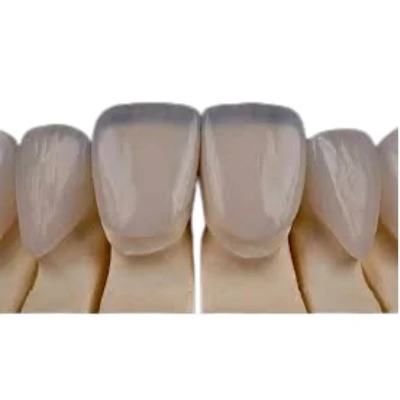
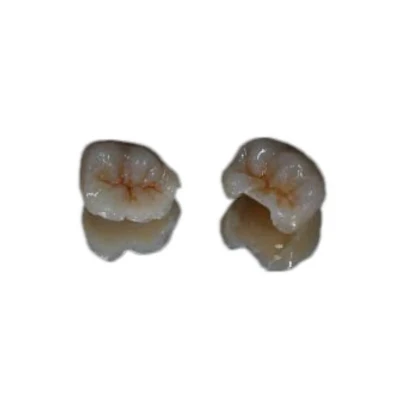
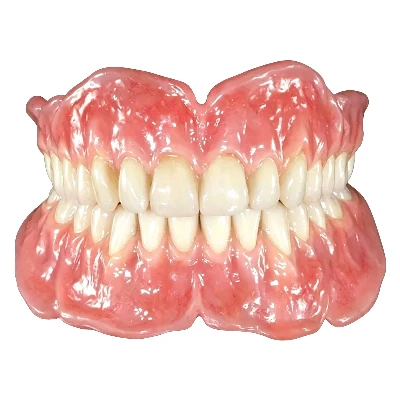
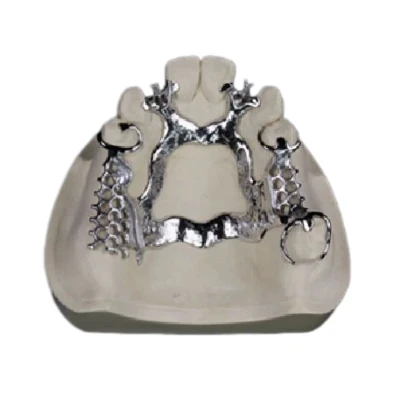

A dental articulator is one of the most practical tools in restorative dentistry. It helps dental labs understand not only how a restoration fits on a model, but how it will function in the patient's bite. For crowns, bridges, dentures, veneers, and implant restorations, that difference matters. A restoration that looks accurate on a static model can still create discomfort if the occlusion is wrong.
What Is a Dental Articulator?
A dental articulator is a mechanical or digital device used to mount upper and lower dental casts so the relationship between the maxilla, mandible, and temporomandibular joints can be studied outside the patient's mouth.
In simpler terms, it allows a dental technician to see how the upper and lower teeth meet and move against each other.
In dental lab work, the articulator acts as a controlled platform. The maxillary cast and mandibular cast are mounted according to the patient's bite record. Once mounted, the technician can check occlusal contacts, available restorative space, bite balance, and possible movement-related interferences.
Occlusion means the way the upper and lower teeth come together. It is not just about whether the patient can close their mouth. It includes how teeth contact during chewing, side movements, and forward movements of the jaw.
That is why a dental articulator is not just a model holder.
It is a functional tool for restoration design and quality control.
Why Dental Labs Use Articulators in Restoration Work
Dental labs use articulators because dental restorations must work in a moving mouth, not only on a bench.
A crown, bridge, or denture may look correct when the teeth are closed together. But during chewing or lateral jaw movement, the same restoration may create a high spot, an interference, or an unstable contact. These problems often lead to chairside adjustment, patient discomfort, or remake requests.
A dental lab articulator helps technicians evaluate these risks before the restoration reaches the clinic.
For restorative work, articulators are mainly used to:
- Reproduce the patient's bite relationship
- Check contacts against the opposing arch
- Identify premature contacts
- Evaluate functional movement
- Adjust occlusal anatomy before delivery
- Reduce unnecessary chairside grinding
- Support more predictable crown, bridge, denture, and implant restoration work
This is especially important in cases where occlusion affects long-term performance. Posterior crowns need controlled contact. Long-span bridges need stable distribution of force. Dentures need balanced function. Implant-supported restorations need careful force control because implants do not have the same periodontal ligament cushioning as natural teeth.
A good lab does not only make a restoration look like a tooth.
It makes sure the restoration can work as part of the patient's bite.
What Does a Dental Articulator Actually Simulate?
A dental articulator simulates the movement of the mandible in relation to the maxilla. Depending on the type of articulator and the records provided, it can reproduce opening and closing, protrusive movement, lateral excursion, and other functional jaw movements.
The temporomandibular joints, often called TMJs, are the joints that connect the lower jaw to the skull. In real function, mandibular movement is guided by the TMJs, the muscles, the teeth, and the patient's existing occlusal pattern. An articulator gives the dental lab a practical way to approximate that relationship.
It is not a perfect copy of the patient's mouth.
But when used correctly, it is much better than working from unmounted casts or guessing from static digital files.
Static Occlusion vs Functional Movement
Static occlusion is the contact between upper and lower teeth when the patient simply bites together. Functional movement is what happens when the jaw moves forward, backward, or side to side.
This distinction is critical.
A posterior crown may have acceptable contact in centric occlusion but create interference during lateral movement. A veneer case may look beautiful from the front but disturb anterior guidance. A denture may appear balanced on the model but become unstable if the occlusal relationship is poorly controlled.
Articulators help technicians move beyond static fit. They make it possible to evaluate how a restoration behaves during movement.
Common Occlusal Problems Articulators Help Detect
Articulators are useful because many occlusal problems are easier to correct in the lab than in the chair.
Common issues include:
- High spots on crowns or bridges
- Premature contacts
- Bite misalignment
- Lateral interferences
- Insufficient restorative space
- Excessive force on implant restorations
- Instability in removable dentures
- Uneven occlusal load across multiple units
These problems do not always come from poor fabrication. Sometimes they come from incomplete bite records, inaccurate opposing arch data, or unclear clinical instructions. The articulator helps reveal the issue before it becomes a clinical adjustment problem.
The earlier an occlusal error is found, the easier it is to control.
Main Types of Dental Articulators Used in Dental Labs
Different dental articulators provide different levels of movement simulation. The right choice depends on the complexity of the case, the accuracy of the records, and the level of occlusal control required.
|
Type of articulator |
Main feature |
Common use in dental labs |
|
Simple or hinge articulator |
Opens and closes on a basic hinge path |
Simple single crowns, temporary restorations, basic model work |
|
Average-value articulator |
Uses average anatomical values for jaw movement |
Routine restorative cases with moderate occlusal requirements |
|
Semi-adjustable articulator |
Allows adjustment of settings such as condylar inclination and Bennett angle |
Crowns, bridges, partial dentures, and moderately complex restorative cases |
|
Fully adjustable articulator |
Allows highly individualized jaw movement simulation |
Full-mouth rehabilitation, complex prosthodontics, advanced occlusal cases |
|
Digital or virtual articulator |
Simulates occlusion inside CAD/CAM software |
Digital dental lab workflows, intraoral scan cases, virtual occlusion analysis |
Simple or Hinge Articulators
Simple hinge articulators reproduce basic opening and closing movement. They are useful for straightforward cases where complex mandibular movement is not a major concern.
Their limitation is clear: they do not accurately simulate lateral or protrusive movements. For simple single-unit work, they may be enough. For complex occlusion, they are too limited.
Semi-Adjustable Articulators
Semi-adjustable articulators are widely used because they offer a practical balance between accuracy and efficiency. They allow technicians to adjust key movement settings, such as condylar inclination and Bennett angle, based on the case requirements and clinical records.
For many crown and bridge cases, a semi-adjustable articulator gives the lab enough information to make better occlusal decisions without slowing down the workflow unnecessarily.
This is the workhorse category for many restorative labs.
Fully Adjustable Articulators
Fully adjustable articulators provide a higher level of individual movement simulation. They are valuable in complex full-mouth rehabilitation, advanced prosthodontic cases, and situations where the patient's jaw movement must be reproduced with more detail.
They are not required for every crown.
Using a fully adjustable articulator for a routine case does not automatically guarantee a better restoration. Accurate records, correct mounting, and technician judgment still matter more than the device alone.
Digital or Virtual Articulators
A digital articulator, also called a virtual articulator, is a software-based tool inside dental CAD/CAM systems. It allows technicians to check occlusal contacts and simulate jaw movement during digital restoration design.
For modern digital dental labs, virtual articulation is increasingly important. It helps connect intraoral scan data, bite scans, opposing arch data, and CAD design into one functional workflow.
The tool has changed. The occlusal principle has not.
How Articulators Improve Crowns, Bridges, Dentures, and Implant Restorations
The value of an articulator becomes clearer when it is connected to specific restoration types. Each type of case has different occlusal risks.
Crowns and Bridges
For crowns and bridges, the articulator helps the dental technician check contact with the opposing arch and control the occlusal anatomy before delivery. This is especially important for posterior crowns, long-span bridges, and multi-unit restorations.
A crown that is too high may need chairside grinding. A bridge with poor force distribution may create discomfort or long-term stress. With proper articulation, the lab can reduce these risks before the case leaves the laboratory.
The goal is not to eliminate every clinical adjustment. That is unrealistic.
The goal is to avoid preventable occlusal errors.
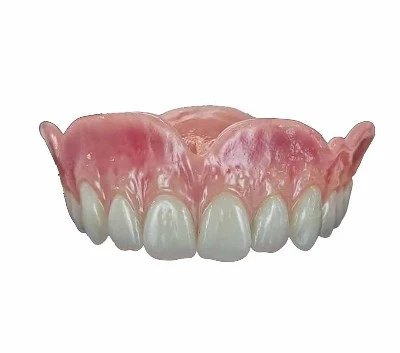
Dentures and Removable Prostheses
For dentures and removable prostheses, articulation helps improve stability, chewing comfort, and balanced contact. Denture teeth must work together as a system. If the occlusion is poorly arranged, the denture may lift, rock, or feel unstable during function.
Articulators allow technicians to arrange teeth and adjust occlusion in a more controlled way. For full dentures and removable partial dentures, this can make a meaningful difference in patient comfort.
Implant-Supported Restorations
Implant-supported restorations require careful occlusal planning. Natural teeth have periodontal ligaments that provide some shock absorption. Implants are more rigidly integrated with bone, so excessive or poorly directed force can become a problem.
An articulator helps the lab check whether the implant crown, bridge, or full-arch restoration is likely to receive excessive contact or unfavorable force during function.
This is one reason implant restorations should not be treated as simple "shape and shade" cases.
Function matters.
Veneers and Anterior Restorations
Veneers and anterior restorations are often discussed in terms of aesthetics, but occlusion is still important. Anterior guidance, edge-to-edge movement, and lateral excursions can all affect the performance of the restoration.
A veneer that looks natural but interferes with movement can chip, debond, or feel uncomfortable. Articulation helps technicians evaluate these functional details while still achieving the desired esthetic result.
A beautiful restoration still has to survive the bite.
Articulators, Bite Registration, and Case Data: What Dentists Should Send to the Lab
An articulator is only as accurate as the records used to mount the case.
Bite registration is the clinical record that captures how the upper and lower teeth come together. In digital workflows, this may be captured as a digital bite scan. In traditional workflows, it may be captured with physical registration material. Either way, the information must be stable and accurate.
For predictable articulation, dental labs need complete case data. Missing or inaccurate records can lead to incorrect mounting, wrong occlusal assumptions, and more chairside adjustment.
Dentists should provide:
- Accurate impression or intraoral scan
- Opposing arch
- Reliable bite registration
- Photos when esthetics or anterior guidance is involved
- Shade information
- Implant scan body data for implant cases
- Clear case instructions
- Notes about existing bite problems
- Occlusal scheme requirements when relevant
For overseas dental lab outsourcing, this information is even more important. The dentist and lab are not working in the same physical location. The case data must do the communication work.
A complete case file helps the lab make better decisions. A vague case file forces the lab to guess.
When Is a Facebow Record Useful?
A facebow record is used to transfer the spatial relationship of the maxillary arch to the articulator in relation to the TMJs. It is not required for every routine case, but it can be useful in more complex restorative situations.
Examples include full-mouth rehabilitation, cases involving changes in vertical dimension, complex anterior guidance, and advanced prosthodontic treatment.
The key point is practical: the more the case depends on precise jaw relationships, the more valuable accurate transfer records become.
Are Digital Articulators Replacing Mechanical Articulators?
Digital dentistry has changed how dental labs receive, design, and fabricate restorations. Intraoral scans, CAD/CAM dental software, milling, 3D printing, and virtual occlusion analysis have made the workflow faster and more consistent.
But digital workflows do not remove the need for occlusal understanding.
A virtual articulator allows the technician to simulate mandibular movement inside CAD software. It can help check occlusal contacts, movement paths, and possible interferences before the restoration is milled or printed. For digital dental labs, this is a major advantage.
Still, the software depends on the quality of the input data. A poor bite scan will not become accurate just because it is processed digitally. A missing opposing arch will still limit the technician's judgment. An unclear occlusal requirement will still create uncertainty.
Mechanical articulators and digital articulators should not be seen as enemies. They are tools for the same purpose: helping the lab understand how the restoration will function in the patient's bite.
In many modern dental labs, the two approaches work together. Digital tools improve efficiency and repeatability. Mechanical articulation remains useful for verification, complex cases, and workflows that still rely on physical models.
Digital dentistry changes the tools, not the principles.
Why Articulator-Based Occlusal Control Matters in Dental Lab Outsourcing
For overseas dental lab outsourcing, occlusal control is not a small technical detail. It affects the real cost of the case.
A low unit price means little if the restoration requires heavy adjustment, remake, repeated communication, or delayed seating. Dentists and partner labs need restorations that arrive with stable margins, correct contacts, acceptable esthetics, and controlled occlusion.
Articulator-based workflow supports that goal.
It helps the dental lab translate clinical bite records into practical restoration design. It also gives the technician a way to check function before shipment. In long-distance cooperation, this reduces avoidable uncertainty.
For dental clinics and labs working with an outsourcing partner, the quality of communication is part of the product. Clear records, careful articulation, digital design control, and experienced technical review all work together.
A reliable dental outsourcing lab should not only ask, "Does this restoration look right?"
It should also ask, "Will this restoration function correctly in the bite?"
That is the difference between simple production and long-term restorative support.
Conclusion
A dental articulator is a device used to mount dental casts and simulate the patient's occlusion and jaw movement. In dental labs, its importance is direct: it helps technicians design restorations that fit better, function more naturally, and require fewer preventable adjustments.
It is not just a traditional lab device. It is part of the quality-control process behind crowns, bridges, dentures, veneers, implant restorations, and complex full-mouth cases.
Digital tools have made articulation faster and more flexible, but they have not replaced the need for sound occlusal judgment. The restoration still has to work in the patient's mouth.
At ADS dental laboratory Ltd, we use genuine Amann Girrbach articulators as part of our restorative workflow. These original articulator systems help our technicians simulate mandibular movement more precisely, check occlusal contacts more consistently, and reduce unnecessary chairside adjustments for our overseas dental clients.
ADS dental laboratory Ltd is a China-based digital dental lab providing custom restoration outsourcing services for overseas dentists and dental laboratories. If you need a long-term lab partner that understands digital workflow, case communication, and functional restoration quality, contact us to discuss your cases.