

Dental lab quality standards are the systems, controls, and verification procedures used to produce restorations that are accurate, consistent, traceable, and suitable for their intended clinical use. For dentists and dental laboratories, quality should not be judged only by price, turnaround time, or one successful case. It depends on how a laboratory manages case information, materials, digital workflows, inspection, documentation, communication, and corrective action across hundreds or thousands of cases.
A reliable dental laboratory builds quality into the workflow before the restoration ever reaches final inspection.

What Do Dental Lab Quality Standards Actually Mean?
Dental laboratory quality is broader than whether a crown looks good when it arrives. A complete quality system connects regulatory compliance, production controls, restoration-level inspection, and long-term consistency.
In practice, four layers matter:
- Quality and regulatory framework: documented procedures, applicable certifications, records, and regulatory compliance.
- Controlled production: standardized case intake, material management, calibrated equipment, and repeatable manufacturing processes.
- Restoration verification: checking fit, contacts, occlusion, surface quality, shade, and prescription requirements.
- Consistent outcomes: producing predictable results across different technicians, materials, case types, and production volumes.
Consistency is especially important. A dental lab may produce an excellent single crown, but that does not prove the reliability of its system. Dentists and outsourcing laboratories need to know whether similar quality can be reproduced across single units, bridges, implant restorations, veneers, dentures, and more complex cases. This becomes even more important when laboratories need to scale production without losing quality.
This is why dental lab quality assurance should be evaluated as a repeatable process rather than a visual judgment made at final delivery.
Certifications and Quality Management Systems: What Really Matters?
Certifications help show whether a dental laboratory operates within a documented quality framework, but they should not be treated as proof that every restoration will be clinically perfect.
For dental laboratories manufacturing medical devices, ISO 13485 medical device quality management systems is one of the most relevant standards. It focuses on controlled medical-device manufacturing and supports areas such as:
- Documented production procedures;
- Supplier and purchasing controls;
- Traceability;
- Quality records;
- Nonconformance management;
- Corrective actions;
- Risk-based process control.
For dentists and dental labs evaluating an outsourcing partner, the value of an ISO 13485-certified dental lab is not simply the certificate on the wall. The more important question is whether the requirements are visible in daily production. For a more detailed explanation of how ISO 13485, FDA registration, and related credentials apply to laboratory evaluation, see our guide to dental lab certifications.
Regulatory requirements also depend on the destination market and the products being supplied.
For the United States, laboratories should understand the FDA Device Registration and Listing requirements that apply to their manufacturing activities and relevant device categories. One distinction is important: FDA Registered does not mean FDA Approved or FDA Certified. Establishment registration is a regulatory status, not an endorsement of the clinical quality of every restoration.
For European cases, laboratories supplying custom-made dental devices should also maintain the appropriate documentation and regulatory arrangements under the applicable EU Medical Device Regulation (EU) 2017/745.
Certifications establish the framework. Actual dental laboratory quality depends on how well that framework controls everyday work.
Quality Control Should Start Before Manufacturing
Strong dental lab quality control begins when the case enters the laboratory.
Before design or fabrication starts, the laboratory should review whether the information supplied is sufficient to produce the prescribed restoration. Depending on the case, this may include checking:
- Impression or intraoral scan quality;
- Margin visibility;
- Completeness of scanned anatomy;
- Occlusal records;
- Tooth number and restoration type;
- Material prescription;
- Shade and stump shade information;
- Implant system and component details;
- Special design instructions.
A laboratory that immediately manufactures every case it receives is not necessarily efficient. If the margin is unclear, the bite is questionable, or critical prescription information is missing, proceeding without clarification can move a preventable error further into production.
A quality-focused lab should flag significant problems early and communicate with the clinician or outsourcing customer before irreversible work is completed. Dentists working digitally should understand what dental labs need from an intraoral scan for predictable restorations, because incomplete scan data can compromise even a well-controlled downstream workflow.
This matters because many restoration problems begin upstream. An inaccurate bite may later appear to be an occlusal problem. Missing scan data may affect contact or margin design. An incomplete implant prescription can lead to component or emergence-profile issues.
Clarifying an inadequate case before production is a quality-control action, not unnecessary delay.
Material Quality, Supplier Control, and Traceability
High-quality dental restorations depend on appropriate materials, but material quality is not simply a question of using a famous brand.
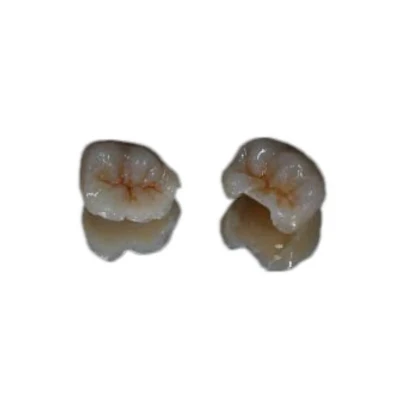
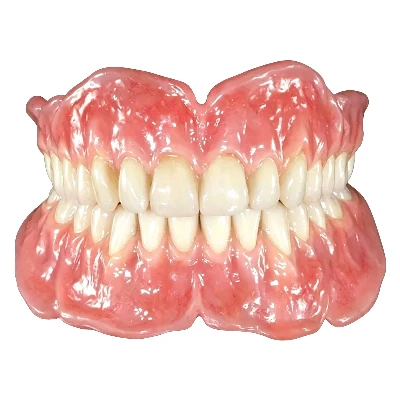
A professional laboratory should select materials according to the clinical indication, functional requirements, esthetic goals, restoration design, and customer prescription. A posterior monolithic zirconia crown, an anterior veneer, an implant framework, and a removable denture do not have the same material requirements.
The laboratory should also be able to control and document where its materials come from.
A useful way to evaluate material traceability is to look at the chain:
Supplier → Material → Lot or Batch → Storage → Production → Finished Case
Dentists and dental labs can ask practical questions such as:
- Who supplies the material?
- Is the supplier qualified or reviewed by the laboratory?
- Can the lot or batch be traced to a completed case?
- How are materials checked when they arrive?
- How are expiration dates and storage conditions managed?
- Are relevant COA, SDS/MSDS, or biocompatibility documents available where required?
This becomes particularly important when investigating a repeated fracture, shade inconsistency, processing issue, or other nonconformity.
Material traceability allows a laboratory to determine whether several affected cases came from the same batch, supplier, process, technician, or manufacturing period. Without that information, root-cause analysis becomes much more difficult.
Good material management therefore means more than purchasing premium zirconia, ceramics, alloys, titanium, or resins. The laboratory should know exactly what entered the workflow and where it was used.
Digital Technology Only Works When the Process Is Controlled
A modern digital dental lab may use CAD/CAM software, scanners, milling machines, 3D printers, sintering furnaces, and digital case-management systems. These technologies can improve precision and repeatability, but the presence of advanced equipment does not automatically demonstrate quality.
Technology becomes a quality advantage only when it is controlled.
Important controls include:
- Equipment calibration;
- Preventive maintenance;
- Validated manufacturing parameters;
- Tool and consumable management;
- Software and system updates;
- Trained designers and technicians;
- Documented production procedures.
CAD design also requires verification. A digital design should not automatically move from the designer to the milling machine simply because the software generated a complete restoration.
Depending on the case, design review may need to evaluate margin placement, restoration thickness, proximal contact, occlusion, connector dimensions, emergence profile, screw-channel position, or other prescription requirements before manufacturing begins.
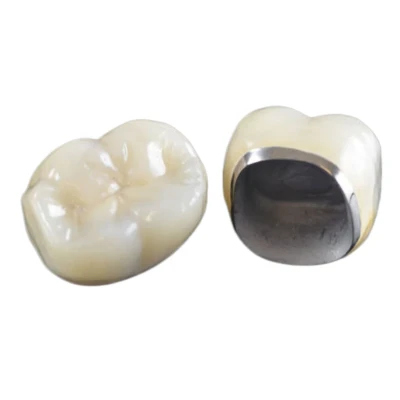
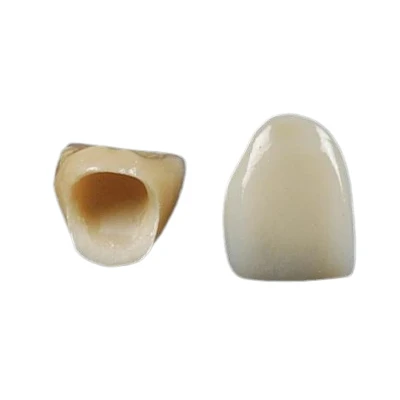
A controlled CAD/CAM dental workflow connects scan review, digital design, manufacturing, technician finishing, and QC rather than treating these as isolated steps. Products such as a CAD/CAM zirconia crown are good examples of why digital accuracy still depends on design settings, milling control, sintering, finishing, and final verification.
Digital workflows also improve traceability and reproducibility. Case files can document design versions, production stages, and other information that helps the laboratory review previous work or investigate a problem.
Some advanced dental laboratory quality-control systems also use post-production scanning or digital comparison to compare a completed restoration with its design data. This can supplement visual and manual inspection where dimensional verification is useful.
Digital technology should reduce variability. If results still depend heavily on which individual happens to operate the system that day, the workflow is not yet well controlled.

What Should a Dental Lab Check Before a Restoration Leaves the Lab?
Final inspection remains essential even when strong controls are already in place earlier in production. The purpose of final dental restoration quality control is to confirm that the finished product meets the prescription and relevant functional and esthetic requirements before shipment.
Different restorations require different checks, but most fixed and implant cases can be evaluated through three broad areas.
Fit and Marginal Accuracy
Fit affects whether the restoration seats properly and how much adjustment may be required clinically.
Inspection should consider:
- Marginal integrity;
- Complete seating;
- Internal interference;
- Proximal contact;
- Restoration-to-model or digital-design relationship.
A laboratory may use magnification-assisted quality inspection, models, digital verification, fit-checking methods, or a combination of techniques depending on the restoration and workflow.
Universal numerical tolerances should be used cautiously because acceptable limits vary with restoration type, material, measurement method, and clinical situation. The important point for customers is whether the laboratory has defined criteria and a repeatable method for checking them. Our guide to common zirconia crown fit problems explains how margin interpretation, seating, contacts, design, and manufacturing variables can affect final fit.
Occlusion and Functional Accuracy
A restoration that fits the preparation but creates excessive occlusal adjustment still creates additional chair time.
Functional inspection can include:
- Centric contacts;
- Excursive contacts where relevant;
- Opposing clearance;
- Morphology;
- Connector integrity;
- Pontic or emergence-profile design.
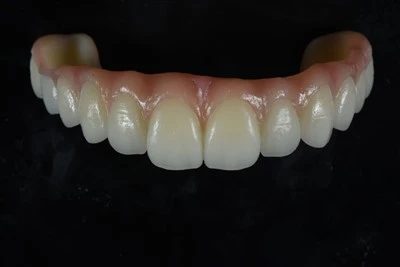
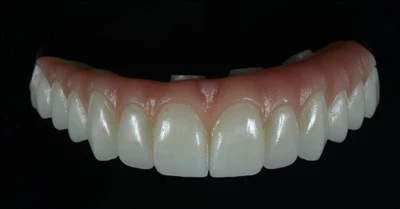
Complex bridges, implant-supported restorations, and full-arch cases usually require more extensive functional evaluation than a straightforward single crown. For example, an implant-supported full-arch bridge requires coordinated evaluation of fit, framework integrity, implant relationships, occlusion, and esthetics across the entire arch.
Shade, Surface, and Esthetics
Esthetic inspection goes beyond matching a shade tab.
Depending on the case, technicians may need to evaluate:
- Shade and value;
- Translucency;
- Incisal characterization;
- Surface texture;
- Contour and morphology;
- Staining;
- Glaze or polish;
- Visible defects or contamination.
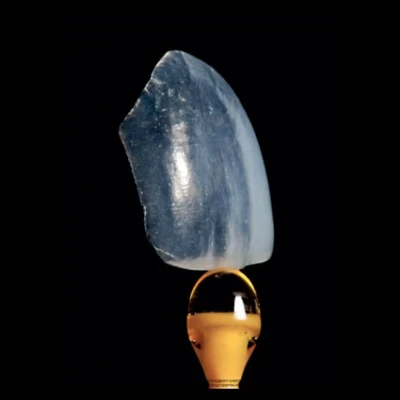
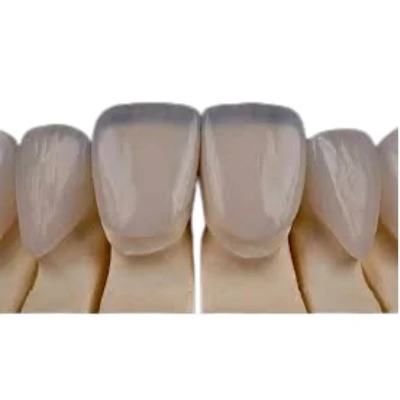
The priorities also change by restoration type. High-esthetic products such as E.max veneers, for example, place greater emphasis on translucency, contour, surface texture, shade integration, and incisal characterization.
|
Restoration Type |
Key QC Priorities |
|
Crown & Bridge |
Margin, seating, contacts, occlusion |
|
Veneers |
Shade, translucency, texture, contour, thickness |
|
Implant Restorations |
Fit, component accuracy, emergence profile, screw channel, occlusion |
|
Dentures |
Fit, occlusion, tooth setup, vertical relationship, esthetics |
|
Full-Arch Cases |
Passive fit, occlusal coordination, framework integrity, esthetic consistency |
A reliable dental laboratory should therefore use case-specific verification rather than applying one generic inspection checklist to every product.
Traceability, Remakes, and Corrective Action Reveal the Real Quality System
Mistakes and remakes are useful indicators of how mature a dental laboratory quality-management system really is.
The important question is not whether a laboratory claims to have zero remakes. The better indicator is what happens when a problem occurs.
A traceable laboratory should be able to identify relevant information such as:
- Case number;
- Material and batch;
- CAD designer;
- Production technician;
- Manufacturing stage;
- Inspection or QC records.
This information makes root-cause analysis possible.
For example, repeated fractures may relate to material selection, restoration thickness, connector design, processing conditions, or another production variable. Frequent contact adjustments may indicate a design or model workflow problem. Repeated occlusal discrepancies may point to scan, bite, mounting, or design issues.
A mature quality system should move through a process such as:
Problem identified → Root cause investigated → Corrective action taken → Recurrence monitored
Formal medical-device quality systems may describe this through CAPA, or Corrective and Preventive Action.
Remake rate can still be useful, but the number should never be viewed in isolation. Definitions differ between laboratories. A more useful evaluation asks how remakes are categorized, whether trends are tracked by case type or material, and whether repeated failures trigger process changes. Practical strategies for reducing remakes in dental restorations usually involve both the laboratory and clinician, especially where scans, preparation, occlusion, prescription information, or manufacturing variables interact.
Free remakes solve the immediate case. Corrective action improves the next hundred cases.
Communication and Reliability Are Part of Dental Lab Quality
Communication should be treated as part of quality control rather than only customer service.
Restorative cases often contain information that requires technical judgment. A laboratory should be willing to contact the dentist or outsourcing lab when it identifies a questionable margin, conflicting prescription, insufficient space, unusual implant component, or other issue that may affect the final restoration.
A lab that asks the right questions may be demonstrating stronger quality control, not slower service.
Long-term partners should also provide a reliable communication structure. Depending on the size of the account, this may include a consistent case coordinator, technical contact, or customer-service team that can communicate with production departments.
Turnaround should be evaluated the same way.
A published five-day or seven-day turnaround means little if delivery performance varies widely from case to case. Dentists and labs should look for turnaround reliability, not simply the shortest advertised production time. Understanding what determines dental lab turnaround time helps distinguish realistic production scheduling from aggressive promises that may not reflect case complexity.
Useful questions include:
- How often are cases delivered within the quoted schedule?
- How are technical delays communicated?
- Who contacts the customer when clarification is required?
- How are adjustments and remakes handled after delivery?
For dental lab outsourcing, predictable communication and production are often more valuable than an aggressive turnaround promise.
Dental Lab Quality Checklist: Questions to Ask Before Choosing a Partner
A structured checklist makes it easier to compare laboratories objectively rather than relying on samples, pricing, or marketing claims alone. A broader guide to what makes a good dental laboratory can also help when evaluating technical capability, communication, scalability, and long-term partnership fit.
Quality System and Compliance
Ask:
Do you operate under a documented quality-management system?
Do you hold ISO 13485 or another relevant certification?
Which regulatory registrations or requirements apply to the products you supply?
Can current certificates or regulatory documents be verified?
Materials and Production
Ask:
- What materials are used for each restoration type?
- Can materials and batches be traced to individual cases?
- How are suppliers evaluated and incoming materials controlled?
- How are CAD designs reviewed before manufacturing?
- How are scanners, mills, printers, and furnaces calibrated and maintained?
Quality Control and Problem Resolution
Ask:
- What incoming, in-process, and final QC checks are performed?
- How are margins, contacts, occlusion, and esthetics verified?
- Can technicians and production stages be traced?
- How are remake causes recorded and investigated?
- What happens when the same quality problem appears repeatedly?
Communication and Reliability
Ask:
- What happens when a scan, impression, or prescription is incomplete?
- Who handles technical questions during production?
- How consistently does the lab meet its quoted turnaround?
- What is the process for adjustments, remakes, and after-sales support?
The best dental laboratory is not simply the one that can produce a good restoration once. It is the one with a controlled system capable of reproducing acceptable quality across changing case types, technicians, materials, and production volumes.

Choosing a Dental Lab Based on Quality, Not Claims
Dental lab quality standards should help dentists and laboratories answer one practical question: Can this laboratory consistently produce restorations through a controlled, traceable, and verifiable process?
Certifications matter, but they are only the foundation. Reliable quality also requires careful case review, appropriate materials, supplier control, calibrated digital workflows, in-process verification, final inspection, traceability, corrective action, and clear technical communication. Dentists and laboratories evaluating overseas production can also review how the complete dental lab outsourcing workflow connects case submission, communication, manufacturing, QC, and delivery.
That is what makes quality repeatable rather than accidental.
ADS Dental Laboratory Ltd is a full-service digital dental laboratory in Shenzhen, China, providing long-term outsourcing support for dentists and dental laboratories worldwide. Our quality framework includes ISO 13485, FDA registration for applicable product categories, digital case tracking, technician traceability, structured inspection, and final QC across fixed restorations, implant, removable, and other custom dental restorations. Contact ADS to discuss your case requirements, quality expectations, or long-term dental lab outsourcing needs.