

A dental lab prescription - also called a dental laboratory prescription, work authorization, lab work order, or lab slip - is the written instruction a dentist sends to a dental laboratory specifying every clinical and technical detail required to fabricate a restoration or appliance. When that document is incomplete, ambiguous, or contradictory, the lab has no choice but to pause the case, contact the practice for clarification, and wait. That back-and-forth communication is one of the most common sources of avoidable delays in dental case production.
Writing a clear and complete dental lab prescription helps a dental laboratory understand exactly what is required before production begins. It can reduce unnecessary clarification, production holds, and dental restoration remakes while creating a more efficient workflow between the dentist and dental lab.

What a Dental Lab Prescription Is
The dental lab prescription is a legally binding work authorization, not a casual note. In many jurisdictions where dental laboratories operate, the prescribing dentist retains clinical responsibility for the treatment while the lab fabricates the restoration or appliance according to the instructions and records provided.
This division of accountability is why the prescription must be complete: anything not specified may require additional clarification or a technical decision from a dental technician who has never examined the patient clinically.
A dental laboratory prescription that omits shade, material, or design preferences does not save time. It redistributes delay from the writing stage to the production stage, where it can contribute to remakes, missed patient appointments, and eroded trust between the practice and the lab.
What Every Dental Lab Prescription Should Include
No matter the product type, a clinically usable dental lab work order carries a baseline set of fields. Leaving critical information blank is the equivalent of asking the dental laboratory to guess.
|
Field |
What to Specify |
Why It Matters |
|
Patient & case ID |
Name or reference number, avoiding unnecessary patient information beyond what the lab needs in accordance with the HIPAA Minimum Necessary Requirement where applicable |
Tracks the case through production and return |
|
Tooth / arch position |
Tooth number(s) using a recognized notation, such as the FDI tooth numbering system or Universal notation |
Wrong notation can result in the wrong tooth being restored |
|
Product type |
Crown, bridge, veneer, implant restoration, denture, splint, etc. |
Determines the entire production path |
|
Material |
Zirconia, lithium disilicate, PFM, PMMA, cobalt-chromium, etc. |
Drives manufacturing strategy, shade layering, and cost |
|
Shade |
Recognized shade system or custom shade with stump shade |
Incomplete shade information can contribute to aesthetic remakes |
|
Margin design |
Chamfer, shoulder, feather-edge, or knife-edge |
Affects die trimming and emergence profile |
|
Occlusal scheme |
Desired occlusal contact pattern, cuspal guidance |
Helps reduce occlusal adjustment problems at delivery |
|
Pontic design |
Sanitary, ridge-lap, modified ridge-lap for bridges |
Tissue contact and hygiene depend on it |
|
Implant system |
Manufacturer, platform diameter, connection type, abutment screw |
Mismatched components may be unusable |
|
Return date |
Specific calendar date, not "ASAP" |
Lets the lab schedule realistically |
|
Special instructions |
Stain preferences, characterization, incisal translucency, photos |
Communicates aesthetic and functional expectations |
For additional terminology consistency, the international ISO 3950 designation system for teeth and areas of the oral cavity provides a standardized reference for dental notation.
The fields above are not aspirational. Each one corresponds to a specific decision point in the lab's CAD/CAM or conventional workflow, and each blank field is a potential phone call or message that can stop the dental case from moving forward.
Why Dental Lab Cases Get Delayed
Several recurring dental lab prescription problems account for a large share of avoidable production delays.
Missing or Ambiguous Shade Information
Shade is one of the most frequently incomplete fields in dental case submissions. Writing "A2" without specifying the shade system, or noting a shade without recording the prepared stump shade, leaves the ceramist working against an unknown background.
A stump that has darkened after endodontic treatment can shift the final value of a translucent restoration in ways a shade tab alone cannot predict.
The fix is simple: record the shade system, shade tab, stump shade, and attach an intraoral photograph whenever aesthetics are critical. For a more detailed workflow, see our guide on how to communicate shade to a dental lab.
Impression and Scan Quality Problems
A dental lab prescription can be perfect on paper and still stall if the physical or digital record it accompanies is unusable.
Torn impression margins, distorted alginate, inadequate tray coverage, and voids in the critical area can all force the lab to request a new impression before work begins.
Digital dental cases have their own failure modes: incomplete scan paths, missing buccal or lingual data, an unscanned opposing arch, and bite registrations that do not match the scanned arch relationship. The lab cannot fabricate against data it cannot trust.
Material and Design Conflicts
When a dental restoration prescription requests a material that is mechanically incompatible with the clinical situation - for example, a thin lithium disilicate veneer over a heavily discolored stump, or a monolithic zirconia bridge where the connector area is too narrow for the span - the lab must stop and flag the conflict.
These are fabrication problems that can result in a restoration unsuitable for the intended clinical situation. Identifying the issue during prescription review is more efficient than discovering it after production or delivery.
Incomplete Implant Case Documentation
Implant restorations are among the most specification-sensitive cases a dental lab receives.
A prescription that says "implant crown #8" without naming the implant system, platform, abutment type (stock vs. custom), retention method (screw-retained vs. cement-retained), and emergence profile design is effectively unworkable.
The lab cannot select the correct components, accurately design the screw access, or predict the desired soft-tissue contour without sufficient implant information. For practices working across different systems, reviewing the requirements for implant crowns compatible with major implant systems can help clarify which component details should accompany the case.
Implant cases delayed because of missing component information can add several days to turnaround.

What to Include in a Digital Dental Lab Prescription
Digital case submission does not eliminate the need for a detailed dental laboratory prescription. The scan files and the prescription work together: the scan describes the patient's anatomy, while the prescription communicates the clinician's restorative intent.
Intraoral Scan File Requirements
When a practice sends a digital dental case, the prescription travels alongside the scan data - typically as an STL, PLY, or compatible proprietary file.
The intraoral scan should capture the full preparation, adjacent teeth, opposing arch, and bite registration. A common failure is scanning only the prepared arch and assuming the dental lab can infer the rest. It cannot.
Practices submitting digital cases should understand what dental labs need from an intraoral scan, including complete preparation data, opposing dentition, and a usable bite relationship.
Every digital prescription should confirm that the submission includes the opposing arch and a registered bite, and file naming should reference the patient or case ID used on the dental lab prescription form. It is also useful to confirm the laboratory's STL file submission requirements before sending the case.
CAD/CAM Design Specifications
For cases routed through a digital CAD/CAM workflow - including many crown and bridge, implant, and removable cases - the prescription should state relevant design preferences.
Depending on the restoration, this may include the desired cement gap, emergence profile, bridge connector requirements, and whether a restoration should be monolithic or layered.
For example, a CAD/CAM zirconia crown still requires clear clinical instructions regarding margins, occlusion, shade, contacts, and other case-specific preferences even when much of the production workflow is digital.
Without clear design instructions, the dental technician may need to apply laboratory defaults that do not necessarily match the clinician's intent.
|
Digital Prescription Element |
Common Omission |
Consequence |
|
Opposing arch scan |
Sending prep arch only |
Lab cannot design occlusion |
|
Bite registration |
Assuming "normal" bite |
Occlusal remake at delivery |
|
Design file format |
Not confirming STL/PLY compatibility |
File may be unreadable by the lab's CAD system |
|
Margin line marking |
Leaving margin identification to lab |
Margin may be placed too high or too low |
|
Emergence profile |
Not specifying desired contour |
Over-contoured or under-contoured restoration |
Prescription Requirements by Restoration Type
Different restorations require different levels of information. A good dental lab prescription should include the baseline fields above plus any product-specific clinical and technical instructions.
Crown and Bridge
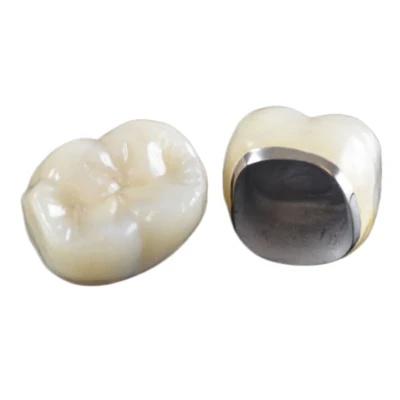
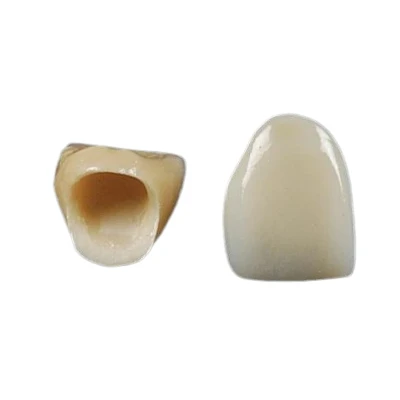
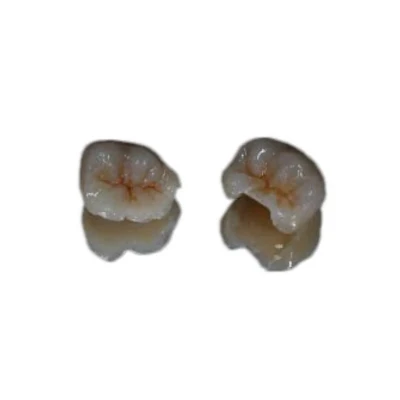
For single crowns and other fixed restorations, the prescription should specify the material - such as zirconia, lithium disilicate, PFM, or full metal - along with the shade including stump shade, margin design, and desired occlusal scheme.
For bridges, add the pontic design and relevant connector requirements, especially for posterior spans where connector dimensions influence fracture resistance.
A prescription that simply says "3-unit bridge, #3–#5, zirconia" leaves the dental technician to determine the connector area, pontic tissue surface, and occlusal design without sufficient clinical direction.
Dental Veneers
Veneer prescriptions fail most often on aesthetics.
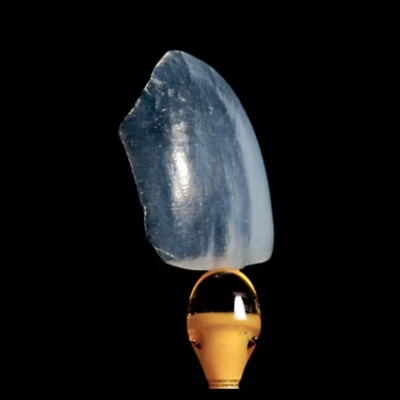
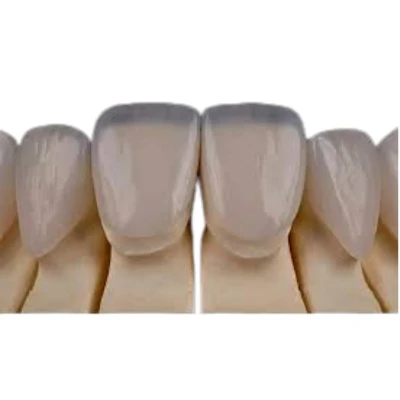
A useful prescription for dental veneers includes the shade system and shade tab, stump shade, desired translucency level, incisal edge characterization - such as halo, mamelons, or none - and photographs of the adjacent dentition for value matching.
For restorations such as E.max veneers, communicating stump shade, translucency expectations, surface characterization, and adjacent-tooth references is particularly important when aesthetics are a primary objective.
Without photographs, the lab is matching a shade tab in a lighting environment that may not accurately represent the patient's mouth. Veneer remakes caused by aesthetic mismatch can often be traced to treating shade as a single data point rather than a multi-dimensional specification.
Implant Restorations
Beyond the implant system and platform, an implant restoration prescription should specify the abutment type - stock titanium, custom zirconia, or a hybrid Ti-base design - the retention method, screw access requirements, and desired emergence profile relative to the healing abutment or temporary restoration.
If a custom abutment is requested, the lab needs sufficient information about the desired soft-tissue emergence shape, either from appropriate digital records or a physical impression that captures the relevant tissue contours.
Implant cases are particularly sensitive to incomplete prescriptions because missing component or design information often cannot be inferred and must come from the clinician.
Full-Arch Restorations
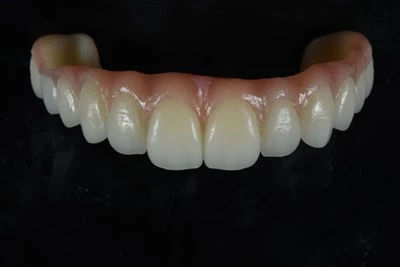
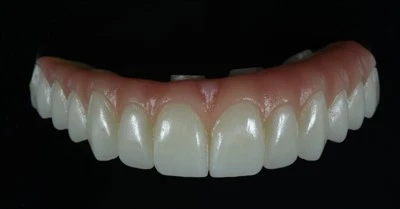
Full-arch cases - whether fixed implant-supported restorations or removable complete dentures - require some of the most comprehensive dental lab prescriptions.
The work order should capture the vertical dimension of occlusion, centric relation record, midline, smile line, lip support requirement, tooth shade and mold, gingival shade where applicable, and the selected material strategy.
A full-arch prescription missing the vertical dimension or bite record is not merely a delayed case - it is a case that often cannot begin.
Removable Dentures
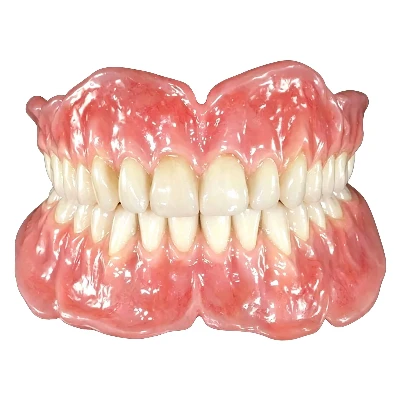
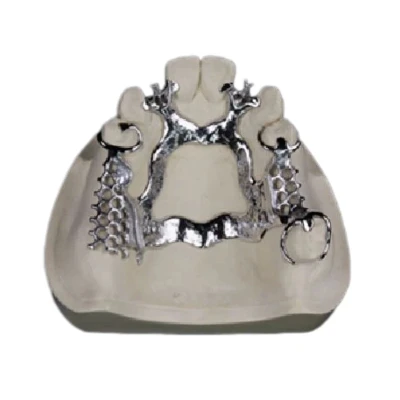
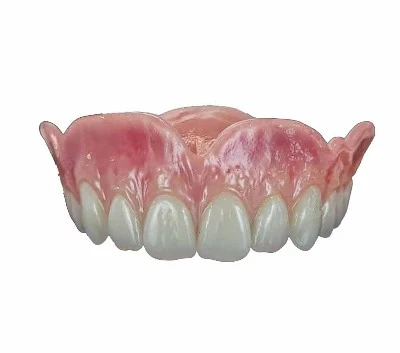
For partial and complete dentures, the prescription should specify the denture base material, tooth shade and mold, clasp design and material where applicable, rest seat design, and desired occlusal scheme.
Partial denture prescriptions frequently omit clasp design, leaving the lab to determine the retentive strategy - a decision that directly affects comfort and long-term function.
Orthodontic Appliances and Guards
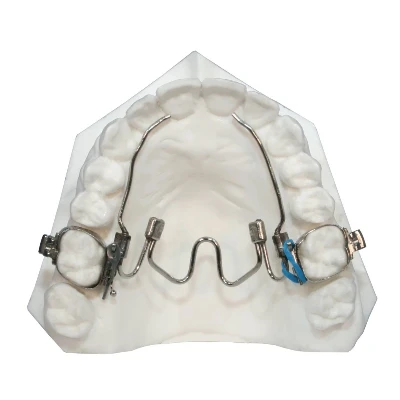
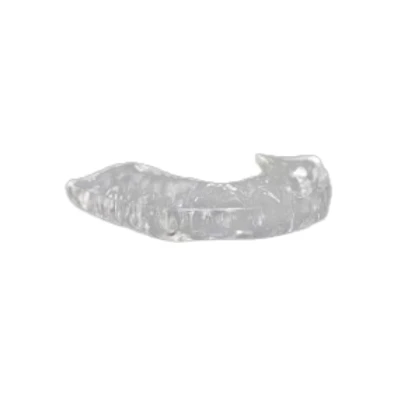
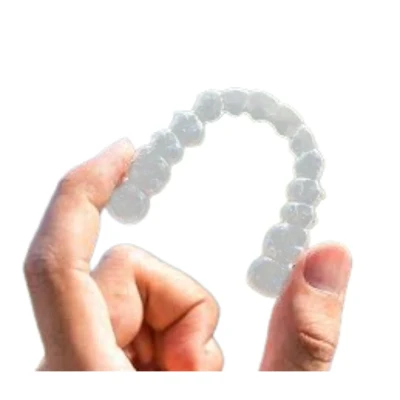
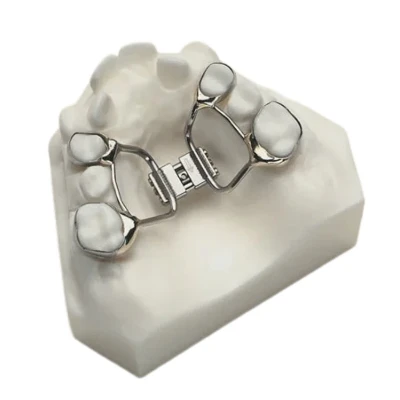
Orthodontic appliance and splint cases need the appliance type - such as a retainer, space maintainer, night guard, sports guard, or occlusal splint - together with the material, required thickness for guards or splints, and any specific tooth movement or expansion requirements for active appliances.
A guard prescription without a thickness specification can result in an appliance that is either too thin for the intended function or unnecessarily bulky for the patient.
How to Communicate Clearly With Your Dental Lab
Even a well-written dental lab prescription works best when the practice and laboratory have a clear communication process for questions that arise during production.
Set a Realistic Return Date
Writing "rush" or "ASAP" on a dental lab work order tells the laboratory little about when the patient is actually scheduled.
A specific date - for example, "return by November 15" - allows the lab to plan production and identify immediately if the requested deadline is unrealistic for the complexity of the case.
Using specific calendar dates makes dental case scheduling more predictable than relying on general urgency language. For more context, see the factors that affect dental lab turnaround time.
Use Photos and Notes Proactively
A single intraoral photograph of the preparation, adjacent teeth, and shade tab held beside the prepared tooth can eliminate ambiguity that is difficult to resolve in writing.
For aesthetic cases, a full-face smile photo and a retracted anterior photograph can provide valuable additional information alongside the dental lab prescription.
The time required to take these photographs is minimal compared with the delays that can result from incomplete aesthetic information.
Establish a Preferred Contact Channel
Specify how the dental laboratory should reach the practice when a technical question arises - whether through a direct phone line, email, digital case portal, or designated case coordinator.
When the lab cannot reach the prescriber, production may have to stop. A responsive dental lab communication channel helps technical questions get resolved before they turn into case delays.

Dental Lab Prescription Quality Checklist
Before a dental case leaves the practice or is submitted digitally, verify the following information:
|
Check |
Pass Criterion |
|
Patient and case ID present |
Name or reference matches the model or scan |
|
Tooth position and notation correct |
FDI or Universal notation clearly indicated |
|
Product type explicit |
Not inferred from the material line |
|
Material specified |
Full name, not an abbreviation that could be ambiguous |
|
Shade system and tab recorded |
Including stump shade for aesthetic cases |
|
Margin design noted |
Chamfer, shoulder, or other - not left blank |
|
Implant system detailed |
Manufacturer, platform, connection, abutment type |
|
Opposing arch and bite included |
Physical model or digital scan confirmed |
|
Return date is a calendar date |
Not "rush" or "ASAP" |
|
Photographs attached for aesthetic cases |
At minimum: prep, adjacent teeth, shade tab |
|
Contact method for lab questions |
Direct line or named contact person |
Running through this dental case submission checklist takes very little time. The cases it catches - those with a missing shade, missing opposing model or scan, or unspecified implant information - are precisely the cases that could otherwise generate a clarification request, production hold, or delayed patient appointment.
Conclusion
Most avoidable case delays occur when the dental laboratory does not have enough information to confidently begin or continue production. A complete, specific, and unambiguous dental lab prescription - with the shade system identified, materials clearly specified, implant components documented, digital records complete, and photographs included when needed - gives the lab a much better foundation for moving the case directly into production.
The principle is straightforward: clearer dental case instructions mean fewer questions, fewer production stops, fewer unnecessary remakes, and a more predictable turnaround time.
ADS Dental Laboratory Ltd (Aesthetic Dental Solutions) is a full-service digital dental laboratory based in Shenzhen, China, providing long-term dental lab outsourcing and customized restoration production for dentists, dental clinics, and dental laboratories worldwide. Our workflow supports digital case receiving, STL and intraoral scan processing, CAD/CAM design, restoration production, structured quality control, and international case coordination.
If you would like to improve your dental case submission workflow or discuss the prescription requirements for a specific crown, veneer, implant, full-arch, denture, or other restorative case, contact ADS Dental Laboratory Ltd to discuss your project and technical requirements.
FAQ
What information should every dental lab prescription include?
At a minimum, a dental lab prescription should identify the patient or case, tooth or arch position, restoration or appliance type, material, shade, relevant margin and occlusal instructions, return date, and any special instructions. Implant, aesthetic, full-arch, removable, and orthodontic cases may require additional information.
How can a better dental lab prescription reduce case delays?
A complete prescription gives the dental laboratory the information required to start design and production without repeatedly contacting the practice. Clear instructions can reduce clarification requests, production holds, incorrect assumptions, and avoidable remakes.
What should be included with a digital dental case submission?
A digital case usually requires the prescription together with complete intraoral scan data. Depending on the case, this may include the prepared arch, adjacent teeth, opposing arch, bite registration, clinical photographs, shade photographs, and implant or soft-tissue information.
What information should be included in an implant restoration prescription?
An implant prescription should clearly identify the implant system, platform or connection, abutment type, retention method, relevant component information, emergence profile requirements, and other restoration-specific design preferences. Complete documentation is especially important because implant components cannot safely be assumed.
Should clinical photographs be sent with every dental lab case?
Not every case requires extensive photography, but photographs are particularly valuable for anterior and aesthetic restorations. Images showing the preparation, adjacent teeth, shade tab, smile, and surrounding soft tissues can help the dental technician understand shade, value, texture, characterization, and overall aesthetic goals.