

Onboarding a new dental lab outsourcing partner while cases are already moving through production creates real operational risk. A single misaligned margin, delayed implant crown, or communication gap can cascade into remakes, rescheduled patients, and lost confidence.
The solution is not to avoid changing or adding a dental laboratory partner. It is to manage the dental lab outsourcing process in a controlled way so that the new partner can learn your clinical preferences, production standards, and communication workflow before taking on a significant share of your case volume.

Why Dental Lab Partner Onboarding Fails
Many practices and dental laboratories treat onboarding as a single event: sign the agreement, send the first case, and hope the relationship works. Successful dental laboratory outsourcing requires more structure. Most early problems cluster around three predictable gaps.
Workflow mismatch. Your previous lab may have accepted physical impressions and returned stone models. The new partner may operate a digital CAD/CAM workflow and expect intraoral scans or digital files. If nobody maps the handoff between your existing process and the new digital dental lab workflow, the first cases can stall at intake.
Undefined quality bar. "Good fit" means different things to different people. Without written acceptance standards covering marginal fit, occlusion, interproximal contacts, shade, anatomy, and surface finish, the laboratory is forced to interpret your preferences, increasing the risk of adjustments and remakes.
No phased ramp-up. Sending your most difficult full-arch implant case on day one is a stress test, not an onboarding strategy. Neither side has had time to calibrate its workflow, communication, or technical expectations.
Qualify the Dental Lab Before You Commit
Before a single impression or digital scan enters production, verify that the prospective dental lab outsourcing partner can meet your clinical, operational, and regulatory requirements. This due-diligence stage helps protect both production continuity and patient care.
Dental restorations are regulated medical devices across major markets. The laboratory should maintain certifications and regulatory documentation appropriate to the regions it serves. ISO 13485:2016, the international quality management system standard for medical devices, is an important benchmark for production control, traceability, risk management, and quality documentation.
In the United States, the FDA Quality Management System Regulation (QMSR), which harmonized the long-standing 21 CFR Part 820 framework with ISO 13485, took effect in early 2026. In the EU, the Medical Device Regulation (MDR) establishes requirements for custom-made medical devices and related manufacturer documentation.
Ask for current documentation and confirm that its scope covers the dental restorations or appliances you intend to outsource.
Qualification Checklist
- Certifications and regulatory documentation: ISO 13485:2016 where applicable; FDA registration for relevant US product categories; applicable EU custom-made medical device documentation; and market-specific requirements where relevant
- Material traceability: Batch or production records for materials such as zirconia, lithium disilicate, PEEK, cobalt-chrome, and PMMA
- Digital capabilities: CAD/CAM design, compatibility with standard dental file formats, digital scanning, milling, and 3D printing where required
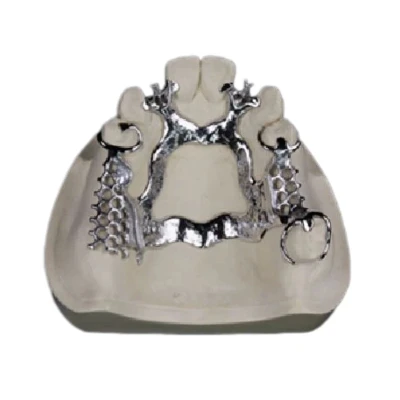
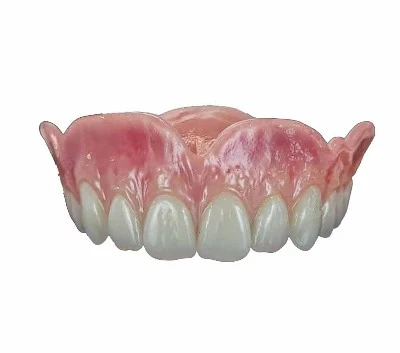
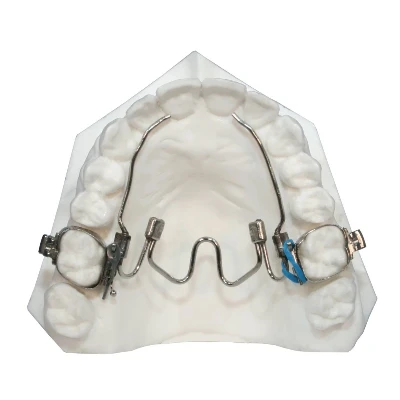
- Product range: Crown and bridge, veneers, implant restorations, full-arch prostheses, removable dentures, orthodontic appliances, guards, and splints
- Turnaround commitments: Defined dental lab turnaround times by restoration or appliance category
- Remake policy: Clear terms covering responsibility, remake conditions, and expected turnaround
- Communication channel: A defined account contact or case coordinator rather than an unmanaged generic inbox
If a laboratory struggles to provide basic qualification information, production specifications, or clear communication before cases begin, that may indicate problems that will become more costly once regular case volume is involved.
Map the Digital Dental Lab Workflow
A common dental lab outsourcing mistake is assuming that "digital" means the same thing to both sides. It does not.
Map every step of the case journey-from preparation and impression capture through design, approval, manufacturing, quality control, and delivery-and confirm compatibility at each handoff point.
Capture and Transfer
Decide whether cases will arrive as intraoral scans, physical impressions, or scanned models.
For digital cases, establish how to send a digital dental case to an overseas lab, including accepted formats such as STL or PLY and how files, prescriptions, photographs, implant information, and other case documentation will be transferred.
If physical impressions are still part of the workflow, confirm how the outsourcing dental lab handles model production, scanning, and subsequent digital design.
Design Approval
Design review is one of the most useful control points in a dental lab production outsourcing workflow.
For cases where margin placement, emergence profile, implant position, aesthetics, or occlusal design is clinically important, establish whether a digital design preview should be approved before milling or printing begins.
|
Case Type |
Design Preview |
Approval Window |
|
Single-unit crown |
Optional |
Same day if requested |
|
Anterior veneers, multi-unit |
Required |
24 hours |
|
Implant-supported bridge |
Required |
24–48 hours |
|
Required plus try-in |
48–72 hours |
|
|
Removable partial or denture |
Required plus try-in |
48 hours |
A defined design approval workflow gives both the clinician and laboratory an opportunity to resolve questions before manufacturing begins, when changes are generally easier to make.
Shade and Aesthetics Protocol
Shade communication is one of the most sensitive parts of dental laboratory outsourcing.
A shade designation such as A2 provides limited information without lighting context, preparation shade, material selection, and characterization requirements.
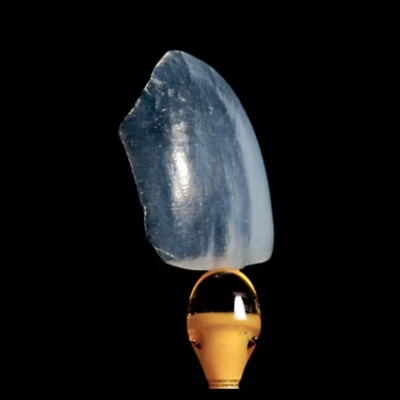
For anterior and high-aesthetic cases, provide photographic documentation with a shade tab positioned beside the relevant tooth, taken under consistent lighting. Add written instructions covering material, stump shade where applicable, translucency, surface texture, incisal characterization, and other aesthetic expectations.
For complex aesthetic work, establish in advance whether additional shade communication or a dedicated aesthetic review will be required.
Shipping and Case Tracking
Physical cases require a reliable, trackable shipping process.
Digital cases also need effective dental lab case tracking. Both sides should be able to identify the current status of a case, outstanding approvals, production stage, and shipping information.
A case management system is ideal, but even a structured shared tracking system is better than relying on repeated "Where is this case?" messages.

Define Written Dental Lab Quality Standards
"It fits" is not a sufficient quality standard.
Before regular production begins, define measurable criteria that both sides understand. Written dental lab quality standards help the outsourcing laboratory understand what constitutes an acceptable restoration while giving the client a consistent basis for evaluating incoming work.
Core Acceptance Criteria
- Marginal fit: Gap within the clinically acceptable range specified for the restoration; the original target of under 120 microns for cemented restorations can be used where appropriate
- Occlusal scheme: Contacts established according to the prescription, without unwanted hyperocclusion
- Interproximal contacts: Floss-snug without being open or excessively tight
- Shade match: Within the prescribed aesthetic expectation, with custom staining or characterization confirmed where required
- Surface finish: Appropriate glaze or polish for the selected material, without visible milling marks or chipped margins
- Implant interface: Passive fit and an appropriately positioned, accessible screw channel where applicable
Production preferences can also cover anatomy, emergence profile, pontic design, embrasures, surface texture, staining, margin design, contact strength, and other case-specific requirements.
Putting these expectations in writing makes the dental lab outsourcing process more repeatable and reduces ambiguity when a case needs correction or remake.
Ramp Up Dental Lab Case Volume in Stages
A phased production ramp-up is one of the most effective ways to onboard a new dental lab outsourcing partner without disrupting production.
Do not transfer your entire case load at once. Start with controlled dental lab pilot cases, evaluate results, correct workflow differences, and scale production without losing quality.
|
Stage |
Case Mix |
Volume |
What You Validate |
|
Calibration |
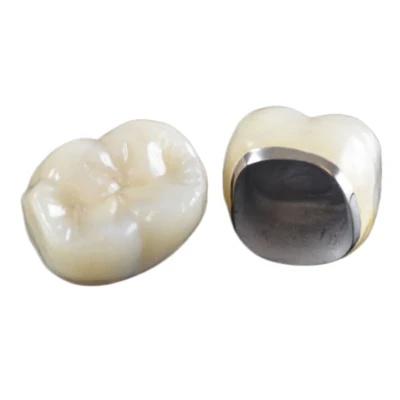
Single-unit posterior CAD/CAM zirconia crowns, simple guards |
3–5 cases |
Workflow, communication, turnaround |
|
Aesthetics |
Anterior crowns, veneers |
5–8 cases |
Shade matching, design review process |
|
Complexity |
Implant restorations, multi-unit bridges |
5–10 cases |
Implant workflow, fit, passive seating |
|
Expanded Production |
Full-arch, removable, orthodontic appliances |
Remaining load |
Full product range and sustained consistency |
At each stage, evaluate three things:
Fit: Did the restoration seat without unexpected adjustment?
Aesthetics: Did shade, morphology, texture, and characterization match the prescription?
Timing: Did the case arrive within the agreed turnaround time?
If the same issue appears in multiple cases, stop increasing volume and identify the cause. The problem may be clinical documentation, design interpretation, production preference, communication, or quality control.
The goal of a phased ramp-up is not simply speed. It is calibration-building shared production standards between your organization and the outsourcing dental laboratory before higher case volume or more complex cases are introduced.
Keep Your Existing Lab During the Production Transition
One of the biggest risks in a dental lab production transition is ending the existing laboratory relationship before the new partner has demonstrated reliable performance.
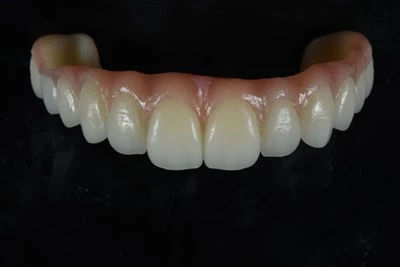
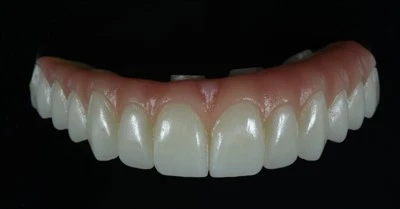
During early onboarding, the current lab can remain a safety net for cases that cannot tolerate disruption, including an All-on-X zirconia bridge or another full-arch implant case already in its final stages, a denture with a scheduled delivery date, or another time-sensitive case already moving through the previous workflow.
Keep the existing laboratory active for high-risk and time-sensitive work until the new dental lab partner has successfully completed the earlier onboarding stages.
Running two relationships temporarily may increase short-term complexity, but it reduces the risk of a production interruption.
This is particularly important when changing an overseas dental lab or establishing a new offshore dental lab outsourcing relationship, because shipping schedules, time-zone differences, digital communication, and production preferences also need time to stabilize.
Common Dental Lab Onboarding Mistakes to Avoid
- Sending the hardest case first. It validates very little and increases the consequences of an early workflow problem. Start with predictable cases.
- Skipping the design preview when it matters. You lose one of the easiest opportunities to correct a problem before manufacturing.
- Using vague shade prescriptions. A verbal "A2, maybe A3" is not enough for predictable aesthetic work. Photograph it, document it, and send clear instructions.
- Having no written remake terms. Ambiguity becomes expensive when a restoration fails the agreed acceptance criteria.
- Migrating all cases at once. This is one of the fastest ways to create a production disruption. Increase case volume gradually.
- Failing to document technical preferences. Margin, contact, occlusion, morphology, surface texture, and implant preferences should not depend on memory.
- Changing too many variables at once. If you simultaneously change the laboratory, materials, prescription format, shipping process, and design approval workflow, diagnosing problems becomes much harder.
Measure Dental Lab Onboarding Success
After approximately 60–90 days of expanded production, evaluate the relationship using actual performance data rather than impressions alone.
Useful dental lab outsourcing KPIs include:
- Remake rate under 3–5% - the benchmark used in the original onboarding plan; higher results may indicate recurring workflow or quality issues
- On-time delivery above 95% - measured against the laboratory's committed turnaround time
- Design approval turnaround under 24 hours - where design approval is part of the agreed workflow
- Zero untracked cases - every active case should have a known production or shipping status
You can also track chairside adjustment frequency, contact issues, occlusal adjustment, shade corrections, communication response time, documentation errors, and the number of cases delayed because information was incomplete.
If performance is stable across multiple case types, the onboarding process is working. If one metric continues to fall below expectations, return to the part of the dental lab workflow that corresponds to that failure and correct it before increasing production further.

Conclusion
The safest way to onboard a new dental lab outsourcing partner without disrupting production is to treat onboarding as a controlled production transition rather than a one-time supplier change. Qualify the laboratory first, map the workflow, document quality standards, begin with pilot cases, measure performance, correct recurring issues, and increase case volume only after the partnership has demonstrated consistency.
ADS Dental Laboratory Ltd (Aesthetic Dental Solutions) is a full-service digital dental laboratory based in Shenzhen, China, specializing in long-term dental lab outsourcing for overseas dentists and dental laboratories. Our capabilities cover crown and bridge, aesthetic veneers, implant restorations, full-arch prosthetics, removable dentures, orthodontic appliances, guards and splints, supported by digital case receiving, CAD/CAM design, milling, 3D printing, structured quality control, and international case coordination.
If you are evaluating a new dental laboratory outsourcing partner, contact ADS to discuss your current workflow, case mix, technical requirements, and a practical phased onboarding approach for your production needs.
FAQ
How long should it take to onboard a new dental lab outsourcing partner?
There is no single timeline because onboarding depends on case volume, restoration mix, shipping requirements, digital workflow compatibility, and the complexity of the cases being transferred.
A practical approach is to begin with a limited number of pilot cases, evaluate quality and communication, then gradually increase production once the laboratory demonstrates consistent results.
How many cases should I send to a new dental lab first?
For an initial calibration stage, 3–5 relatively predictable cases can provide useful information about case submission, communication, turnaround time, fit, and basic quality consistency.
More complex aesthetic, implant, and full-arch cases can be introduced after the basic workflow has been validated.
Should I send complex implant or full-arch cases during the first trial?
Usually not.
Complex cases introduce more variables and make it harder to determine whether a problem comes from case documentation, design, components, production, or communication.
Starting with simpler cases allows both sides to calibrate the dental laboratory outsourcing workflow before higher-risk cases are introduced.
What should I evaluate during a dental lab outsourcing trial?
Evaluate more than the finished restoration.
Key factors include case intake accuracy, communication response, design approval, fit, contacts, occlusion, shade and aesthetics, turnaround time, packaging, shipping reliability, case tracking, and how the laboratory responds when a correction is required.
Can I outsource only part of my dental lab production?
Yes. A dental laboratory does not necessarily need to transfer its entire production workflow to an outsourcing partner.
Depending on the partner's capabilities, outsourcing can begin with a particular product category, selected case types, digital design, frameworks, crown and bridge production, implant restorations, denture production stages, or another defined part of the workflow. This approach can make onboarding more controlled and reduce operational risk.