


Choosing a dental lab partner on price alone is a fast way to erode clinical outcomes. A structured dental lab supplier scorecard converts subjective impressions into measurable criteria, letting you compare labs on the three dimensions that actually move your practice: quality, service, and turnaround.
For dental practices and laboratories conducting a dental laboratory supplier evaluation, the goal is not simply to find the lowest price or fastest stated turnaround. It is to identify a supplier that can deliver consistent quality, reliable communication, and predictable performance across real case volume. This article walks through how to build a dental lab supplier scorecard that supports that decision.

Why a Dental Lab Supplier Scorecard Improves Vendor Evaluation
A dental lab supplier scorecard is a weighted evaluation framework that scores a laboratory across defined performance categories-typically quality, service, and turnaround-using quantifiable metrics rather than impressions. The purpose is not to produce a single ranking number; it is to make trade-offs visible. A lab that delivers in four days but has a remake rate of 8 percent is not "faster"-it is riskier. The scorecard surfaces that.
Most practices evaluate labs informally: a doctor tries a few cases, forms an opinion, and either stays or leaves after a problem. That approach works until case volume grows or a second lab is needed for overflow. Without a consistent dental lab vendor evaluation framework, comparing alternatives means starting from scratch each time.
For practices considering an external production partner, a more structured approach can also complement a broader evaluation of how to choose a dental lab outsourcing partner.
A scorecard also shifts the conversation with your lab from reactive to proactive. When a lab knows it is being measured on marginal fit accuracy and remake rate, it tends to improve those metrics. When the only feedback is "the doctor is unhappy," nothing structural changes.
The labs worth partnering with welcome being measured. The ones that resist it usually have reasons to.
How to Evaluate Quality, Service, and Turnaround
Every scorecard needs a backbone. The three pillars below are not arbitrary-they map directly to what a dental practice loses when a lab underperforms: clinical failure, operational friction, and schedule disruption.
Quality: The Non-Negotiable Pillar
Quality in dental laboratory terms means the restoration meets clinical specification-marginal fit, occlusal accuracy, material integrity, and esthetic outcome-consistently across cases and case types. It is the pillar that most directly affects patient outcomes, and it carries the highest weight in any reasonable scorecard.
Marginal fit is the single most measurable quality indicator. The gap between restoration margin and preparation margin determines cement seal integrity and long-term marginal integrity. Clinical research generally accepts a marginal gap of 120 micrometers or below as clinically acceptable for cemented restorations, though well-fitting CAD/CAM restorations routinely achieve 50 to 80 micrometers. Labs that cannot report their typical fit range are not measuring it, and labs that do not measure it cannot control it.
Material traceability is the second quality checkpoint. Every restoration should be traceable to a material lot with a valid certificate of conformity-whether it is zirconia, lithium disilicate, PFM alloys, or PMMA for provisionals. Established dental material manufacturers provide lot-level documentation. A lab that cannot produce a material certificate on request is cutting a corner you will eventually pay for.
Regulatory compliance underpins everything. ISO 13485 medical device quality management system provides an internationally recognized framework for quality management in medical-device manufacturing. In the United States, applicable medical device manufacturers are also subject to FDA requirements under 21 CFR Part 820 and the Quality Management System Regulation.
It is also important to distinguish quality-system requirements from FDA medical device registration and listing, which is a separate regulatory obligation for applicable establishments and devices.
For suppliers serving European customers, relevant custom-made medical devices may also fall within the framework of the EU Medical Device Regulation (MDR 2017/745).
These factors should form part of a broader dental lab quality standards evaluation rather than relying only on the appearance of individual finished restorations.
Quality is where scorecard weight should be heaviest. A fast, cheap restoration that fails clinically costs more than a slightly slower, pricier one that seats correctly the first time.
Service: Beyond the Restoration Itself
Service in a dental lab context covers everything that surrounds the physical product: case communication, design support, digital workflow integration, problem resolution, and account management. Dental lab service quality is one of the most frequently undervalued areas of supplier evaluation-and one of the factors that determines whether a lab relationship survives its first complication.
Communication responsiveness is measurable. Track how quickly the lab acknowledges a case, responds to a design query, and flags a problem such as an unclear margin or insufficient reduction. A lab that responds within four business hours during normal operations is functioning at a professional standard; one that takes 24 hours or more will bottleneck your schedule on complex cases.
Digital workflow integration has become a service differentiator, not a bonus. A lab that accepts intraoral scan files in standard STL or PLY formats, provides digital case tracking, and returns design previews for approval before manufacturing is operating in the current decade.
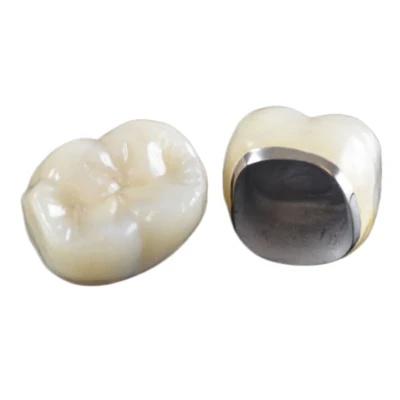
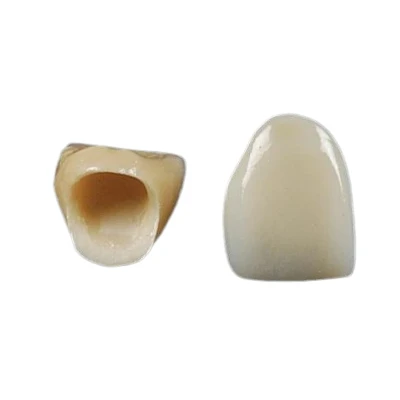
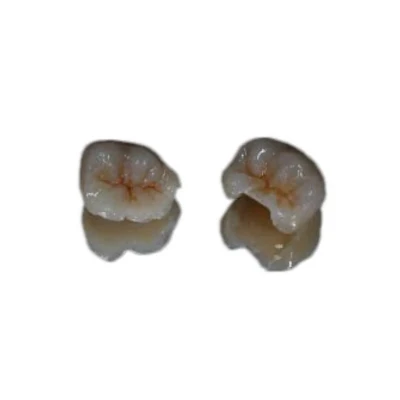
This matters especially for digitally produced restorations such as CAD/CAM zirconia crowns, where scan quality, design communication, and manufacturing workflow directly affect predictability.
Design support matters more as case complexity rises. Implant restorations, full-arch prostheses, and complex shade-matching for esthetic cases benefit from a lab technician who can review the digital design, flag issues pre-manufacturing, and suggest adjustments. The best labs assign a dedicated technician or account contact to your practice; the worst route every question through a general inbox.
The table below summarizes the service metrics worth tracking:
|
Service Metric |
What to Measure |
Strong Performance |
|
Case acknowledgment |
Time from case submission to lab confirmation |
Under 4 business hours |
|
Design query response |
Time to reply to a technical question |
Same business day |
|
Problem notification |
Whether lab flags issues proactively |
Always, before manufacturing |
|
Digital case tracking |
Availability of real-time case status |
Yes, with stage-level updates |
|
Dedicated account contact |
Assigned technician or coordinator |
Yes, named individual |
Service quality reveals itself under pressure. When a case goes wrong, the lab's response tells you more than any marketing claim.
Turnaround: Time Is Clinical and Financial
Dental lab turnaround time-often abbreviated as TAT-refers to the elapsed time from case receipt at the lab to shipment, excluding transit. It is the pillar most visible to patients, because it directly determines how long a temporary restoration stays in place and how many appointments a case requires.
Typical in-lab turnaround varies significantly by product type. The ranges below reflect common industry benchmarks for outsourced dental laboratory work:
|
Product Category |
Typical In-Lab Turnaround |
Notes |
|
Single-unit crown or bridge |
3–5 business days |
Zirconia and lithium disilicate dominate |
|
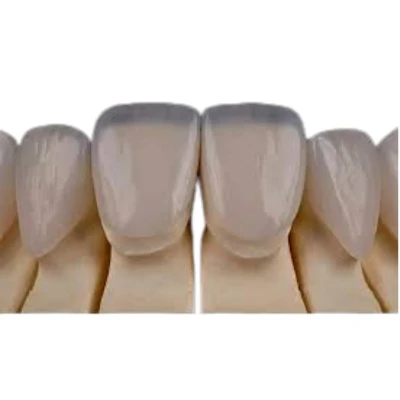
Dental veneers |
4–7 business days |
Esthetic layering extends time |
|
Implant restorations |
5–8 business days |
Custom abutment and screw-retained designs add steps |
|
Full-arch restorations |
7–14 business days |
Complexity and try-in stages drive duration |
|
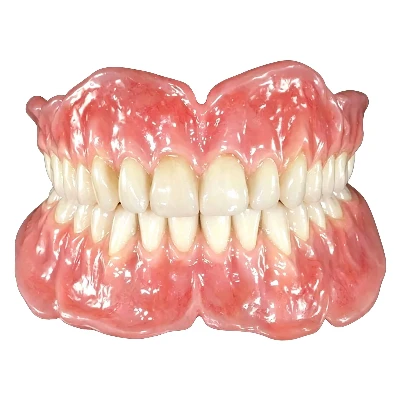
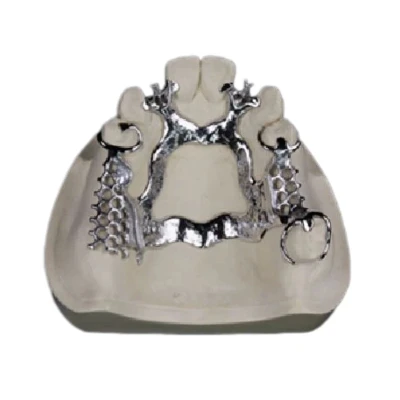
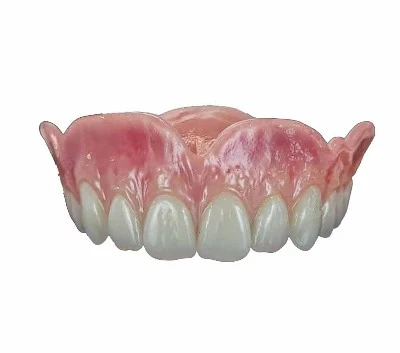
Removable dentures |
5–10 business days |
Framework, setup, and processing stages |
|
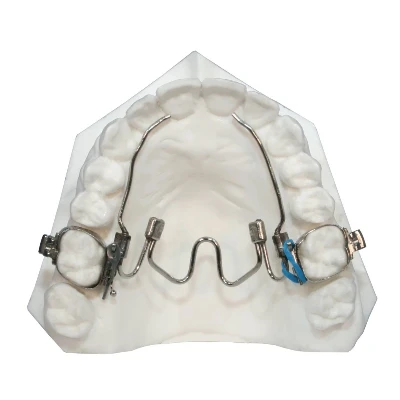
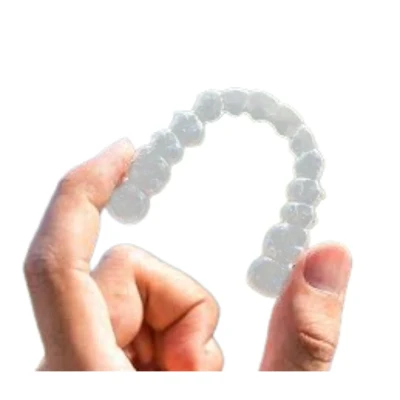
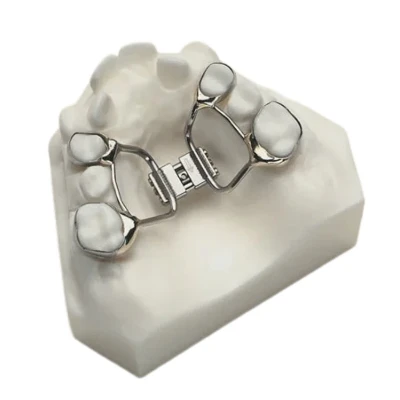
Orthodontic appliances |
3–7 business days |
Varies by appliance type |
|
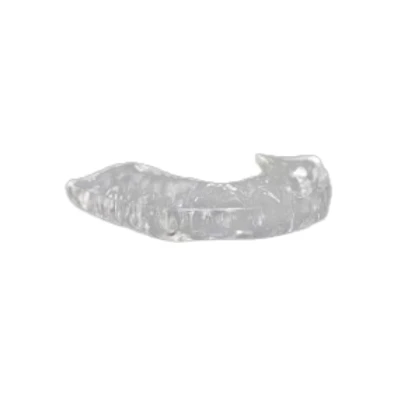
Guards and splints |
2–4 business days |
Simplest production path |
These ranges assume a digitally integrated lab with CAD/CAM capability. Traditional workflow labs using physical impressions and manual fabrication typically add 3 to 5 business days across all categories.
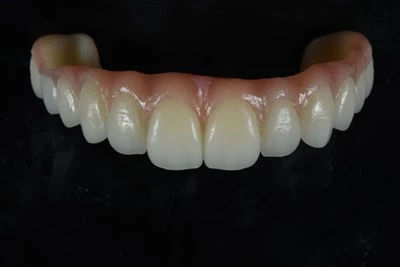
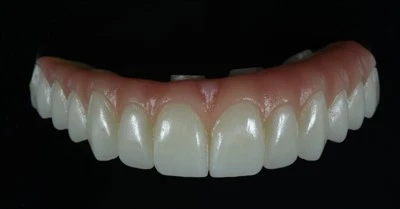
The actual production time also depends heavily on restoration complexity. A routine crown differs substantially from an implant-supported full arch bridge, which may require additional design, verification, try-in, or multi-stage production steps. Likewise, removable cases such as an acrylic full denture may involve several production stages rather than a single manufacturing step.
A lab's stated turnaround is only as good as its consistency. Track on-time delivery rate-the percentage of cases shipped within the promised TAT-rather than the TAT number itself. A lab promising five days and delivering on time 95 percent of cases is more reliable than one promising three days and hitting it 70 percent of the time.
When setting realistic expectations, it is useful to understand the factors that determine dental lab turnaround time, including case complexity, materials, production steps, communication, and shipping requirements.
Turnaround matters most when it disrupts your schedule. A two-day delay on a single-unit crown is manageable; a two-day delay on a full-arch delivery with a patient flying in is not.

How to Weight Quality, Service, and Turnaround
The three pillars are not equal, and your dental lab supplier scorecard should reflect that. A common and defensible weighting for a general restorative practice is:
|
Pillar |
Weight |
Rationale |
|
Quality |
50% |
Clinical outcomes and patient safety are paramount |
|
Service |
30% |
Determines relationship viability under stress |
|
Turnaround |
20% |
Important but negotiable per case urgency |
Weighting should shift with your practice profile. An esthetic-focused practice doing heavy veneer and anterior work should push quality even higher-60 percent or more-because remake cost and patient dissatisfaction are disproportionately expensive.
A high-volume practice doing mostly posterior single-unit crowns may weight turnaround more heavily, since schedule throughput drives revenue. Practices working across different fixed restorations may also find it useful to adjust scorecard weighting by restoration category.
The scorecard only works if you score it consistently. Use the same metrics, the same scale, and the same evaluator over a meaningful sample-ideally 20 to 30 cases per lab before drawing conclusions. Scoring three cases and declaring a winner is not evaluation; it is anecdote.
How to Score Dental Lab Suppliers Consistently
A scorecard needs a scoring scale that produces comparable results across labs and over time. A five-point scale works well: 1 (unacceptable), 2 (below standard), 3 (meets standard), 4 (exceeds standard), 5 (best-in-class). Define what each score means for every metric-vague scales produce vague decisions.
For each pillar, list three to five specific metrics or dental lab KPIs, score them individually, then average them to a pillar score. Multiply by the pillar weight, and sum the weighted pillar scores for a composite.
A lab scoring 4.0 on quality (weighted 50%), 3.5 on service (30%), and 4.2 on turnaround (20%) produces a composite of 3.89 out of 5. That number means nothing in isolation; it means everything when compared to another lab scored the same way.
Track remakes separately and penalize heavily. A remake rate-the percentage of cases returned for correction due to lab error-above 5 percent is a red flag. Above 8 percent is disqualifying for a primary lab partner within this scorecard framework. Remakes cost chair time, material, patient goodwill, and staff time; the scorecard should reflect that cost, not just the inconvenience.
Review scores quarterly. Dental lab supplier performance can drift-technicians leave, equipment ages, volume pressures shift. A lab that scored well in January may underperform by October if it took on too much volume. Quarterly review catches drift before it becomes a pattern.
Common Dental Lab Supplier Scorecard Mistakes
Several errors undermine scorecards in practice:
- Over-weighting price. Price belongs in the conversation, but not in the top three pillars. A cheap lab with a 10 percent remake rate costs more than a premium lab at 2 percent, once remakes and lost chair time are counted.
- Scoring too few cases. Five cases cannot distinguish consistency from luck. Wait for 20-plus before trusting the composite.
- Ignoring product mix. A lab strong on single-unit crowns may struggle with implant screw-retained restorations. Score by product category if your case mix is diverse.
- Confusing responsiveness with quality. A lab that replies instantly but ships poorly fitting restorations is not providing good service; it is providing fast service. Keep the pillars separate.
- No remediation step. A scorecard that only ranks labs without triggering improvement conversations is a report card nobody reads. Share results with your lab and set expectations for the next quarter.
A scorecard is a management tool, not a verdict. Its value is in driving better outcomes over time, not in producing a single ranking you file away.

How to Use the Scorecard in Your Workflow
Start with a pilot. Select one or two labs, define your metrics, and score 20 cases each. Use the results to refine your metric definitions-some will prove impractical to measure, others will need sharper criteria. Then expand to additional labs or formalize the quarterly review.
Integrate scoring into your existing case management. If your lab's case management system tracks delivery dates and case status, on-time delivery scoring can become a report rather than a manual task. Remake tracking should be a field in your practice management system, not a memory exercise.
Assign ownership. One person-typically the office manager or lead assistant-should own the scorecard, collect data, and present quarterly results. Without an owner, the scorecard becomes another initiative that fades after the first month.
The goal is a living document that shapes purchasing decisions, guides lab conversations, and protects your practice from the cost of inconsistent dental laboratory supplier performance. Build it once, maintain it regularly, and it pays for itself within the first avoided remake.
Conclusion
A dental lab supplier scorecard answers the central question of supplier evaluation: how do you compare dental laboratories on quality, service, and turnaround in a way that is repeatable and defensible? The framework is straightforward-define measurable KPIs, weight the pillars according to your clinical priorities, evaluate a meaningful case sample, score consistently, and review supplier performance over time.
ADS Dental Laboratory Ltd is a full-service digital dental laboratory based in Shenzhen, China, specializing in long-term dental lab outsourcing for overseas dentists and dental laboratories. If you are evaluating a new dental laboratory outsourcing partner or want to discuss quality expectations, digital workflows, turnaround requirements, or a trial project, contact ADS to discuss your specific case and production needs.
FAQ
What should be included in a dental lab supplier scorecard?
A dental lab supplier scorecard should include measurable criteria for quality, service, and turnaround. Core metrics may include marginal fit, occlusal accuracy, remake rate, material traceability, communication response time, problem notification, digital case tracking, turnaround time, and on-time delivery rate.
The exact metrics and weighting should reflect your case mix and clinical priorities.
How many cases should I evaluate before scoring a dental laboratory supplier?
A meaningful evaluation generally requires more than a handful of cases. Using approximately 20 to 30 cases per laboratory gives you a better view of consistency and reduces the risk of making a supplier decision based on a few unusually good or poor outcomes.
How often should dental lab supplier performance be reviewed?
Quarterly reviews are practical for most practices and dental laboratories. Regular reviews allow you to identify changes in remake rate, quality consistency, communication, or turnaround before temporary performance issues become long-term patterns.
What remake rate should trigger concern?
In the framework used in this scorecard, a remake rate above 5 percent should be treated as a warning sign, while a rate above 8 percent may be unacceptable for a primary laboratory partner. Remake performance should also be reviewed by restoration category, because complexity varies significantly between routine crown and bridge cases and more advanced implant or full-arch work.
Is the fastest dental lab always the best supplier?
No. Promised turnaround time should be evaluated together with actual on-time delivery and quality consistency. A laboratory that consistently meets a five-day commitment may be a more reliable outsourcing partner than one advertising a three-day turnaround but frequently missing that target or generating more remakes.