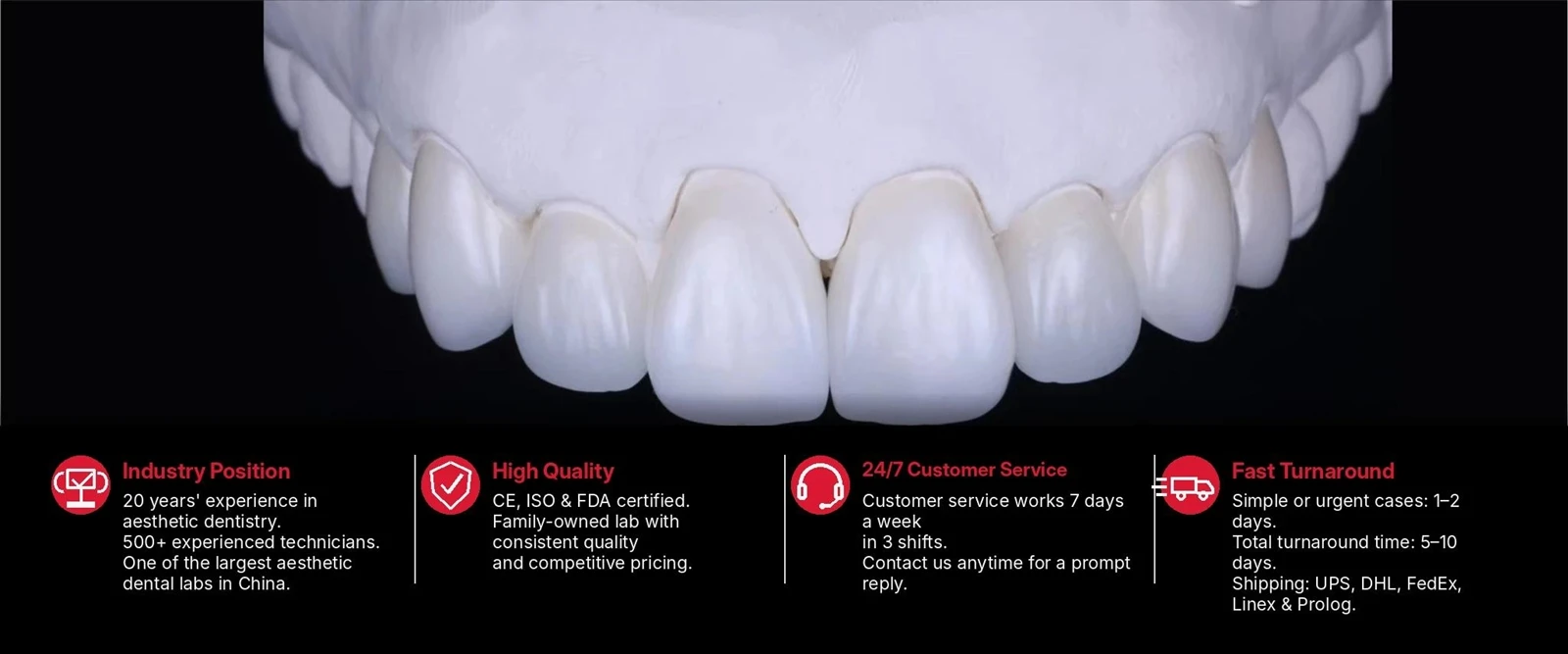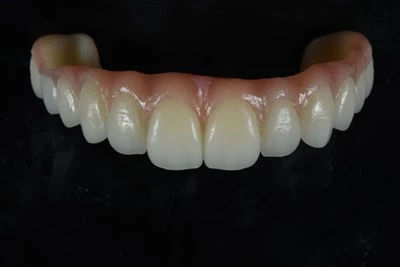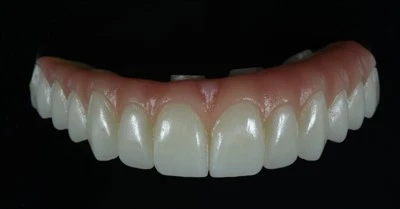
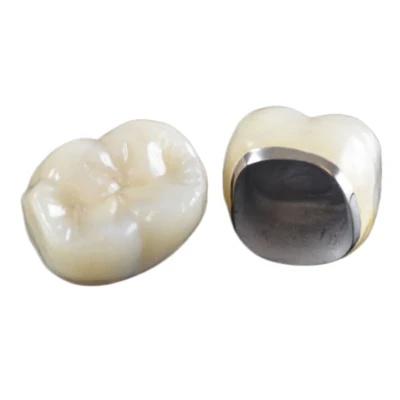
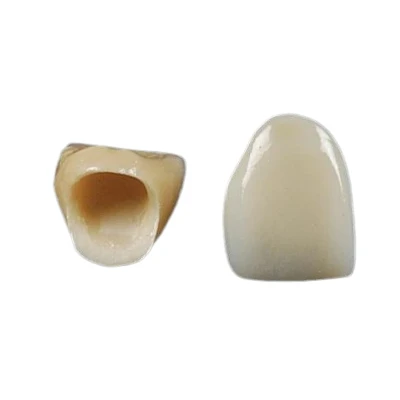
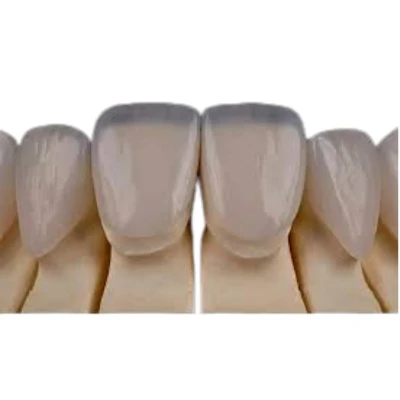


Comparing veneer suppliers on unit price alone is the most expensive mistake a dental practice can make. A per-unit difference of a few dollars evaporates the moment a case comes back with the wrong shade, a fractured margin, or a two-week delay that costs you a patient. The suppliers worth your volume reveal themselves in material consistency, digital workflow integration, turnaround reliability, and the quality of communication when something goes wrong. This veneer supplier comparison guide breaks down the criteria that actually predict long-term performance.
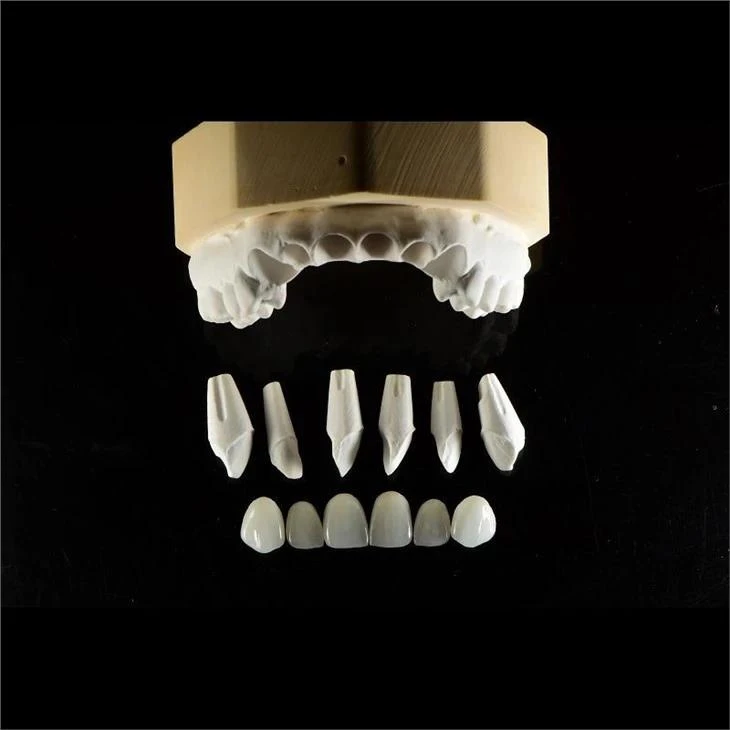
Compare Veneer Materials and Shade Consistency
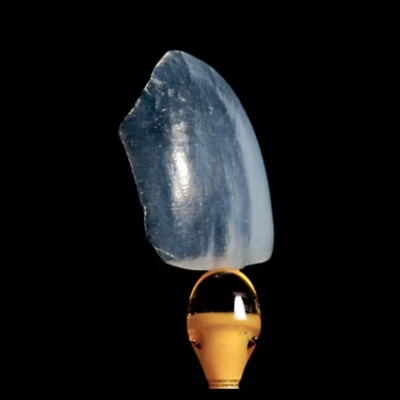
A dental veneer is a thin shell of ceramic or composite resin bonded to the labial surface of a tooth to improve color, shape, or alignment. The material a dental veneer supplier uses determines whether that shell looks alive under natural light or sits on the tooth like a piece of plastic. Two suppliers quoting the same per-unit price may be working with entirely different ceramic systems, and that gap shows up at try-in-if not years later when a veneer degrades or fractures.
Ceramic Systems at a Glance
The three dominant veneer ceramic families differ sharply in optical and mechanical properties. Lithium disilicate (commonly known by the brand name IPS e.max) is a glass-ceramic that balances translucency with flexural strength in the range of 360–400 MPa, making it a workhorse for anterior E.max veneers where esthetics matter most. Feldspathic porcelain is a traditional layered ceramic built by hand on a refractory die; it offers the highest translucency and the most natural depth of color, but its flexural strength is lower-typically below 100 MPa-so it demands meticulous bonding and is unforgiving of occlusal stress. Zirconia veneers, milled from yttria-stabilized zirconia blocks, push flexural strength above 800 MPa but trade away translucency, which limits their use to cases where underlying tooth discoloration requires heavy masking rather than lifelike optics.
|
Material |
Typical Flexural Strength |
Translucency |
Best Use Case |
|
Feldspathic porcelain |
< 100 MPa |
Highest |
High-esthetics anterior veneers on non-stressed teeth |
|
Lithium disilicate (e.max) |
360–400 MPa |
High |
General anterior veneers; balance of esthetics and strength |
|
Zirconia |
> 800 MPa |
Low–moderate |
Masking severe discoloration; bruxism-prone patients |
The international standard governing these materials is ISO 6872, which classifies dental ceramics by clinical application and sets minimum flexural strength and chemical solubility requirements for each class. A supplier that cannot tell you which ISO 6872 class their veneer material falls into-or produce a certificate of conformity from the material manufacturer-is not a partner you can audit. Ask for material batch numbers and traceability documentation on every case. Without batch traceability, a clinical failure cannot be traced back to a defective lot, and you are left absorbing the cost of a remake with no recourse.
Shade Reproducibility
Material choice sets the ceiling. Shade execution determines whether you reach it. A supplier may use the best lithium disilicate on the market and still deliver veneers that miss the target shade by a full Vita tab because their staining protocol is inconsistent or their technicians work from uncalibrated furnaces.
The strongest suppliers have moved beyond visual shade matching with a Vita Classical guide alone. They use digital shade-taking devices-spectrophotometers or colorimeters that quantify tooth shade in Lab* coordinates-and translate those readings into a standardized recipe for their ceramic layering or staining process. When you compare two suppliers, ask whether they accept and work from digital shade data, or whether they rely entirely on the dentist's written shade prescription. The former gives you a measurable, repeatable process. The latter leaves every case to the subjective eye of whoever happens to be at the bench that day.
Material quality is not a single number on a spec sheet. It is the combination of a certified ceramic system, documented batch traceability, and a shade process that can be measured and reproduced case after case.
Compare CAD/CAM Workflows and Digital Integration
CAD/CAM-Computer-Aided Design and Computer-Aided Manufacturing-is the digital workflow that has transformed conventional wax-up and production processes in modern dental laboratories. Digital intraoral scans can replace physical impressions, design software supports virtual restoration design, and milling or 3D printing supports different stages of production. For digital E.max veneers and other aesthetic veneer restorations, experienced ceramic technicians remain important for layering, staining, surface texture, and final characterization. The question is not whether a dental veneer lab uses CAD/CAM but how deeply it is integrated into their case pipeline and how well it connects to yours.
What to Ask About Their Digital Pipeline
A supplier's digital maturity directly affects your turnaround time, your remount rate, and your ability to preview a case before it is finalized. The following points separate a genuinely digital lab from one that simply owns a scanner:
- Inbound format compatibility: Do they accept STL, PLY, or proprietary formats from major intraoral scanner systems? A lab that only accepts physical impressions or a single scanner's proprietary format will bottleneck your workflow.
- Design preview and approval: Do they send a digital design file (commonly an .stl or compatible proprietary design file) for your approval before milling? The ability to review and request adjustments on a screen-before ceramic is cut-eliminates the most common source of remakes.
- Milling vs. pressing: Are they milling from monolithic blocks, pressing from ingots, or using a hybrid approach? Pressed lithium disilicate generally offers better marginal fit and translucency for veneers; milled restorations are faster but may require more adjustment at try-in.
- Software version and update cadence: Labs running outdated design software versions cannot read newer scan files and may produce designs that do not leverage current tooth libraries and morphological databases.
|
Workflow Factor |
High-Integration Supplier |
Low-Integration Supplier |
|
Scan acceptance |
STL, PLY, multiple proprietary formats |
Physical impressions only or single format |
|
Design approval |
Digital preview before fabrication |
No preview; case arrives finished |
|
Shade data input |
Accepts spectrophotometer Lab* data |
Written shade prescription only |
|
File archiving |
Stores digital case files for reorders |
Relies on physical dies; no digital archive |
A supplier with a mature digital dental lab workflow does not just make veneers faster. They make cases that are easier to adjust, easier to reorder, and easier to troubleshoot when something does not fit-because the entire case exists as a reviewable digital record.
Compare Veneer Turnaround Times and Delivery Reliability
Veneer lab turnaround time is the interval between the lab receiving your case (scan or impression) and the finished veneers arriving at your practice. A quoted turnaround of 7 business days means nothing if the supplier hits that target on 60% of cases and blows past it on the rest. What matters is delivery reliability-the percentage of cases that arrive within the promised window, not the promise itself.
Breaking Down Veneer Production and Shipping Time
A typical veneer case moves through several stages, each of which can introduce delay:
|
Stage |
Typical Duration |
Common Delay Points |
|
Case intake and scan validation |
0.5–1 day |
Incomplete prescription; corrupted scan file |
|
Digital design and dentist approval |
1–2 days |
Slow approval turnaround from the practice |
|
Milling or pressing |
1–2 days |
Furnace scheduling; material out of stock |
|
Staining, glazing, and characterization |
1–2 days |
Technician workload; multi-shade cases |
|
Quality inspection and packaging |
0.5–1 day |
Failed QC; remake triggered |
|
Shipping |
1–3 days |
Customs (for cross-border labs); courier delays |
When a supplier quotes a flat "7-day turnaround," ask what that number includes. Does it count from scan receipt or from design approval? Does it include shipping, or is that added on top? Does it account for the QC inspection, or is that an internal step that extends the clock invisibly? A supplier that has broken down their own timeline and can tell you where each day goes is operating with process awareness. One that gives you a single number with no breakdown is guessing.
Cross-border labs-common in the dental outsourcing market-add a customs and logistics layer that domestic suppliers do not face. This is especially important when comparing local vs. overseas dental labs. A lab shipping from overseas may have excellent internal turnaround but inconsistent delivery because of port congestion, customs holds, or courier handoff failures. If you are comparing a domestic supplier at 10 days and an overseas supplier at 7 days, the overseas lab's 7-day quote may not include the 2–4 days of transit and customs that push real delivery to 9–11 days. Ask for door-to-door delivery data, not lab-to-courier handoff times.
Reliable turnaround is not about speed. It is about predictability. A supplier who consistently delivers in 10 days is more valuable than one who delivers in 5 days half the time and 15 days the other half-because you can schedule patients around a predictable timeline, and you cannot schedule around chaos.
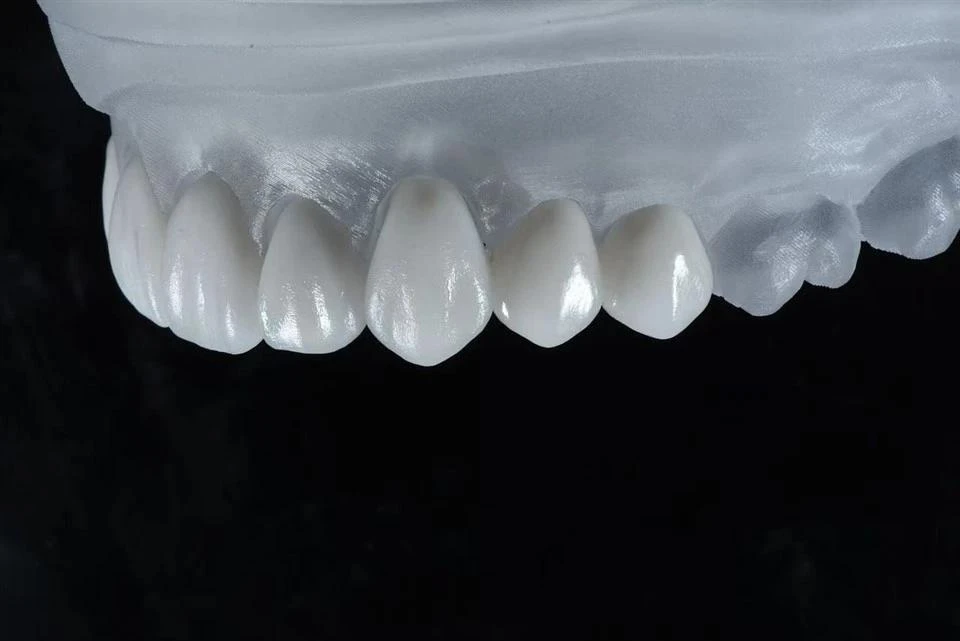
Compare Veneer Quality Control and Remake Policies
Dental veneer lab quality control is the system a supplier uses to catch defects before a case leaves the lab. A remake policy is the commercial agreement that defines who pays when a defect slips through. These are two separate things, and both must be examined.
QC Indicators Worth Asking About
A lab with a real quality system does not just say "we check every case." They can tell you what they check, how they check it, and what their internal reject rate is. Specific indicators to request:
- Marginal fit verification: Do they inspect margins under magnification (microscope or loupes) on every case, or only on high-value cases? Marginal gap is the single most common failure point for veneers and the most expensive to correct after bonding.
- Shade verification before glaze: Do they compare the finished veneer to the prescribed shade tab under standardized lighting (D65 daylight simulator) before final glazing, or only at final inspection when corrections are costly?
- Internal reject rate: What percentage of cases fail their own QC and are remade internally before shipping? A lab that says zero is either not measuring or not being honest. A realistic internal reject rate is 2–5%.
- External remake rate: What percentage of delivered cases are returned by clients for remakes? Industry benchmarks for well-run veneer labs sit below 3%. Anything above 5% signals a systemic problem in design, material handling, or communication.
These quality checks are central to reducing dental restoration remakes and controlling the hidden costs associated with inconsistent laboratory production.
Remake Policy: Read the Fine Print
A veneer remake policy is only as good as its terms. The critical distinctions:
- Cause attribution: Does the lab remake free of charge only for their own errors (wrong shade, poor fit, design deviation), or do they also cover cases where the issue is ambiguous? Ambiguous cases-where it is unclear whether the problem is prep design, impression distortion, or lab fabrication-are where most remake disputes happen.
- Turnaround on remakes: Is the remake expedited (typically 3–5 days), or does it go back into the standard queue? A remake that takes as long as the original case doubles your patient's wait and damages your practice's credibility.
- Time window: Is the remake window 30 days, 60 days, or indefinite? Veneer issues sometimes surface weeks after bonding when the patient returns for a follow-up. A 30-day window may expire before the problem is detected.
- Shipping cost: Who pays for return shipping on a remake? On cross-border cases, this can be a meaningful cost if the lab does not cover it.
|
Remake Policy Element |
Favorable Terms |
Red Flags |
|
Cause attribution |
Covers lab errors and ambiguous cases |
Lab errors only; all ambiguity blamed on clinic |
|
Remake turnaround |
Expedited, 3–5 days |
Same as standard queue |
|
Time window |
60+ days post-delivery |
30 days or less |
|
Shipping cost |
Lab covers both directions |
Clinic pays return shipping |
A supplier's remake policy is a direct signal of their confidence in their own quality system. A lab that offers generous remake terms is betting that they will rarely need to honor them. A lab with a restrictive, fine-print-heavy policy is hedging because they know the remakes will come.
Compare Case Communication and Technical Support
The difference between a good dental veneer supplier and a great one is not visible on the first case. It is visible on the fifteenth case, when something goes wrong and you need a human being who understands the clinical context to help you fix it.
What Good Communication Looks Like
A dedicated case manager-someone who knows your practice's preferences, your typical prep design, and your shade tendencies-is worth more than any per-unit discount. When you call or message about a case, you should reach someone who can pull up the case file immediately, not a general intake line that takes a message and promises a callback.
Evaluate dental lab communication during the evaluation period, not after you have committed volume. Send a test case with an intentional ambiguity in the prescription-a shade that could be interpreted two ways, or a margin line that is unclear on the scan-and see how the supplier handles it. Do they call to clarify before starting fabrication, or do they make an assumption and deliver a finished case that misses the mark? The former is a partner. The latter is a vendor.
Responsiveness Benchmarks
|
Communication Channel |
Reasonable Response Time |
|
Email (case-related) |
Within 4 business hours |
|
Phone (during business hours) |
Immediate or callback within 1 hour |
|
Digital case portal message |
Within 2 business hours |
|
Urgent remake request |
Acknowledged within 1 business hour; resolution plan same day |
Time zone alignment matters for cross-border relationships. A lab operating on a schedule that overlaps with your clinical hours by fewer than four hours per day will create friction on every case that needs real-time discussion. If your lab's business hours and yours barely intersect, even a great case manager becomes effectively unreachable for half the workday.
Communication is not a soft factor. It is the mechanism through which every other quality dimension-material, workflow, turnaround, QC-actually functions. A supplier with excellent technical capability but poor communication will underperform a supplier with slightly lower technical capability but responsive, clinically literate support.
Check Dental Lab Certifications and Regulatory Compliance
Veneers are medical devices. The lab that manufactures them is subject to regulatory requirements that vary by the markets they serve and the markets you practice in. Compliance is not a differentiator among top-tier suppliers-it is a baseline. But the absence of compliance is an immediate disqualifier.
Key Certifications and What They Mean
ISO 13485 is the international standard for medical device quality management systems. A lab certified to ISO 13485:2016 has undergone third-party audit of its design controls, production processes, risk management, traceability, and corrective action procedures. For dental laboratories, this certification is the closest thing to a universal quality benchmark-and in many jurisdictions, it is a regulatory prerequisite for market access.
In the United States, dental laboratories manufacturing custom devices fall under FDA regulations. A lab registered with the FDA and listed as a medical device establishment is operating within the regulatory framework that governs custom dental restorations. FDA registration, however, is not the same as FDA approval or certification of individual restorations. For the European market, the EU Medical Device Regulation (MDR 2017/745) applies, and labs must hold CE marking for their products or operate within the custom-made device framework with appropriate documentation. In Australia, the Therapeutic Goods Administration (TGA) regulates dental devices, and labs supplying the Australian market must be included on the Australian Register of Therapeutic Goods (ARTG) or operate under the custom-made device provisions.
|
Market |
Key Regulatory Framework |
What to Verify |
|
United States |
FDA registration; 21 CFR Part 820 (QMSR) |
Lab's FDA establishment registration number |
|
European Union |
MDR 2017/745; CE marking |
CE certificate or custom-made device documentation |
|
Australia |
TGA regulation; ARTG listing |
ARTG entry or custom-made device compliance |
|
Canada |
Health Canada Medical Devices Regulations |
Medical Device Establishment Licence (MDEL) |
|
United Kingdom |
UK MDR 2001 (amended) |
UKCA marking or custom-made device exemption |
When reviewing dental lab certifications, ask for certificate numbers and registration numbers-not just a claim of compliance. A lab that is genuinely certified will provide the document and the registration number that lets you verify it with the issuing body. A lab that says "we are compliant" but cannot produce supporting documentation is asking you to take their word for it, and that is not how medical device procurement works.
Compliance does not guarantee quality. But non-compliance guarantees that you have no recourse when quality fails-because a supplier operating outside the regulatory framework has no auditable quality system, no traceability obligation, and no accountability structure beyond whatever they choose to offer you informally.
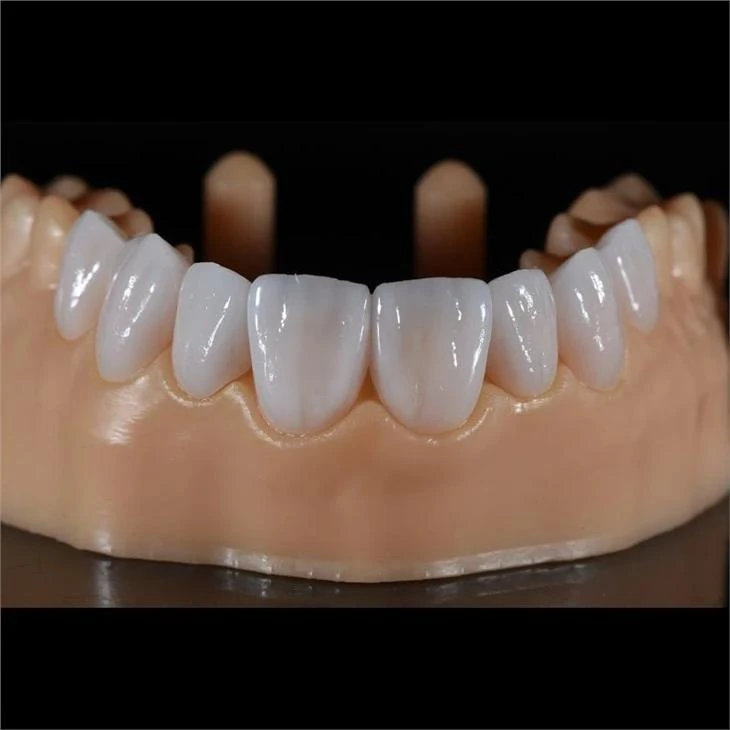
Compare Two Veneer Suppliers Using the Same Evaluation Criteria
When you have two veneer suppliers in front of you, do not compare them dimension by dimension in isolation. Score them across all dimensions and look at the pattern. A supplier that is strong on material and QC but weak on communication may be a good fit for low-complexity, high-volume cases where you rarely need to interact. A supplier that is average on everything but excellent on communication and turnaround may be the better choice for complex anterior esthetic cases where collaboration matters more than marginal cost.
Use the following veneer supplier comparison framework to prioritize evaluation criteria according to the type of cases you outsource.
|
Dimension |
Weight for High-Esthetics Cases |
Weight for High-Volume Routine Cases |
|
Material quality and shade reproducibility |
High |
Medium |
|
CAD/CAM integration and design preview |
High |
High |
|
Turnaround reliability |
Medium |
High |
|
QC and remake policy |
High |
Medium |
|
Communication and case support |
High |
Low–medium |
|
Regulatory compliance |
Pass/fail |
Pass/fail |
Regulatory compliance is a gate, not a scored dimension. If a supplier fails on compliance, they are eliminated before the rest of the comparison begins-no matter how competitive their pricing or how polished their samples.
Conclusion
The cheapest veneer supplier is the one whose total cost per successfully delivered case is lowest. That total includes the unit price, the remake cost, the chair time lost to adjustments, the patient goodwill spent on delays, and the practice reputation risked on inconsistent esthetics. When you compare two suppliers beyond unit price, you are comparing total cost of ownership-and the supplier with the lower unit price is rarely the one with the lower total cost.
At ADS Dental Laboratory Ltd, our Shenzhen-based digital dental laboratory combines a dedicated veneer aesthetic team, CAD/CAM workflows, experienced ceramic craftsmanship, and structured quality control to support overseas dentists and dental laboratories. Contact us to discuss your veneer requirements, submit a test case, or explore a long-term dental lab outsourcing partnership.
FAQ
What Should I Compare Besides the Unit Price of Dental Veneers?
When comparing dental veneer suppliers, evaluate material quality, shade consistency, CAD/CAM workflow compatibility, turnaround reliability, quality control, remake policies, communication, and regulatory compliance. These factors help determine whether a supplier can deliver consistent restorations and support your practice or laboratory over the long term.
How Can I Calculate the Total Cost of Outsourcing Dental Veneers?
The total cost of dental veneer outsourcing includes more than the quoted manufacturing price. Consider shipping expenses, remake costs, additional chairside adjustment time, communication overhead, and costs associated with delayed cases. Comparing the total cost per successfully delivered case provides a more meaningful assessment of supplier value than comparing unit prices alone.
Why Is the Veneer Remake Rate Important When Choosing a Dental Lab?
The dental veneer remake rate helps indicate how consistently a laboratory meets clinical and esthetic requirements. Frequent remakes can increase chairside time, delay patient appointments, and reduce practice profitability. When evaluating suppliers, request documented remake data, clarify how remake rates are calculated, and review the laboratory's quality control and corrective action procedures.
Should I Test a Veneer Supplier Before Starting a Long-Term Outsourcing Partnership?
Yes. Sending representative test cases allows you to evaluate material quality, shade matching, marginal fit, digital workflow compatibility, communication, and actual delivery times before committing larger case volumes. A trial period also helps determine whether the supplier can accommodate your clinical preferences and maintain consistency across different veneer cases.