
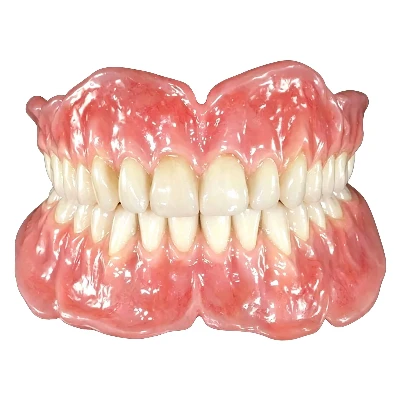
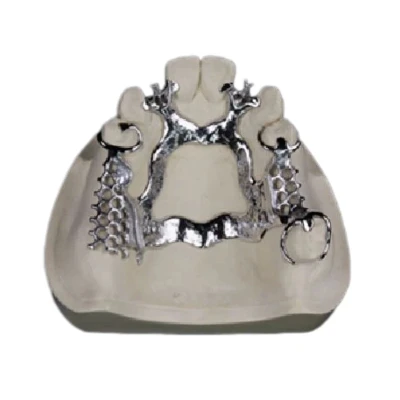
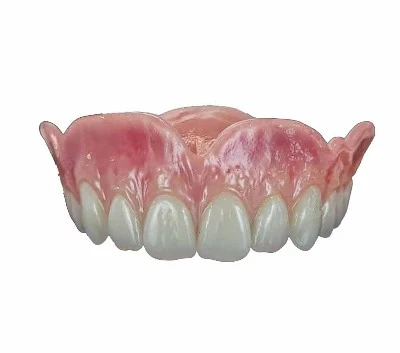
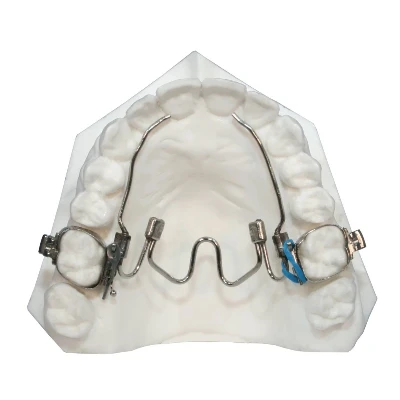

Dental implant prosthetics is the prosthetic phase of dental implant therapy - everything built on top of the surgically placed fixture. Once osseointegration is confirmed, the restorative dentist and dental laboratory collaborate to design, fabricate, and deliver the suprastructure: abutment, crown, bridge, or full-arch prosthesis. This guide covers the major restoration types, the materials that drive clinical outcomes, and the lab procedures that determine whether the final product fits - and lasts.
What Is an Implant Prosthetic Restoration?
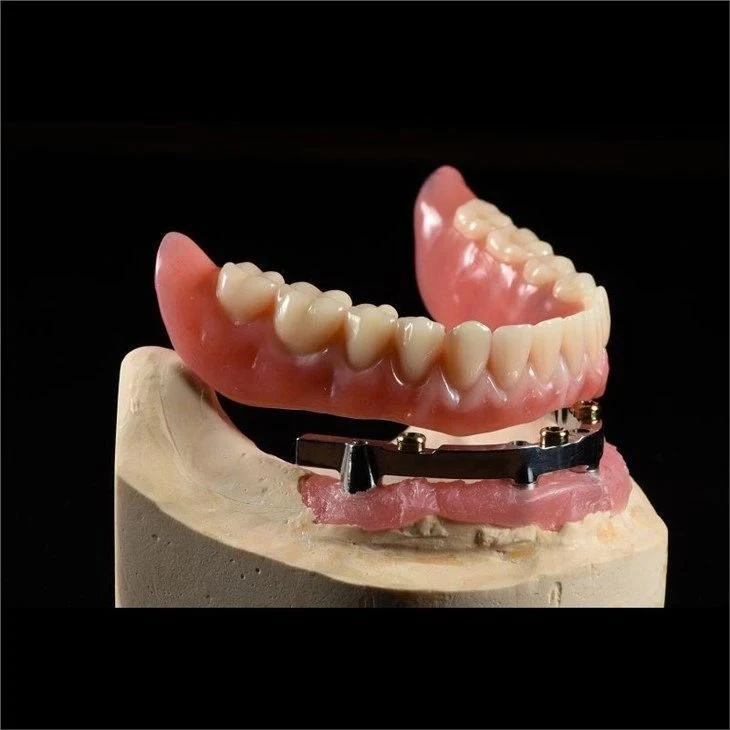
An implant prosthetic restoration replaces a missing tooth or teeth using a dental implant as the support structure rather than natural tooth structure. The implant fixture is surgically placed in the jawbone and, after osseointegration - the direct structural and functional connection between living bone and the implant surface - serves as an artificial root. The prosthetic components sit above the fixture and include the abutment (the connecting piece between implant and restoration) and the visible crown, bridge, or denture.
Unlike tooth-borne restorations, implant prosthetics lack a periodontal ligament. That means no proprioceptive feedback against excessive force, and all occlusal load transfers directly to bone. Every design decision - from abutment material to occlusal scheme - must account for this fundamental difference.
The prosthetic phase is where planning meets execution. A well-placed implant with a poorly designed restoration is a failing case. The reverse is also true: a mediocre implant position can often be rescued by a skilled prosthetic workflow and a capable lab.
Types of Implant Prosthetics
Single-Tooth Implant Crown
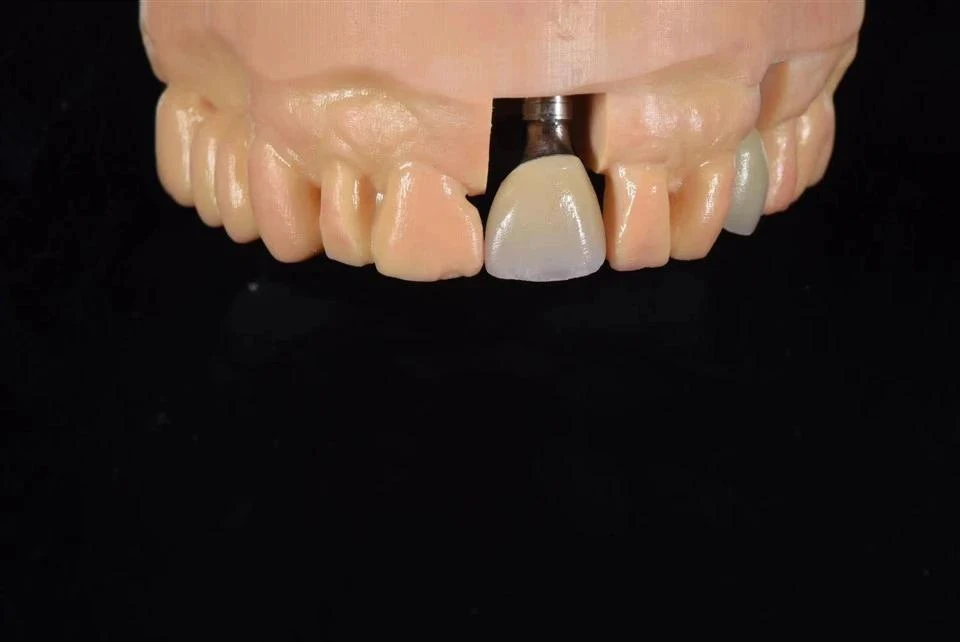
The single-tooth implant crown is the most common and predictable implant restoration. It replaces one missing tooth without involving adjacent teeth, making it the treatment of choice when neighboring teeth are sound. The restoration consists of a stock or custom abutment and a cemented or screw-retained crown.
|
Feature |
Screw-Retained |
Cement-Retained |
|
Retention mechanism |
Screw through access hole |
Cement on abutment |
|
Retrievability |
Fully retrievable |
Difficult to remove |
|
Residual cement risk |
None |
Yes - peri-implantitis risk |
|
Access hole |
Visible, needs composite seal |
None |
|
Indication |
Posterior, full-arch, maintenance-heavy cases |
Anterior esthetic zone, limited interocclusal space |
A screw-retained implant crown is the preferred approach for most posterior and full-arch cases. It eliminates residual cement - a documented cause of peri-implant disease - and allows the clinician to retrieve and service the restoration without destroying it. The trade-off is the access hole, which can compromise esthetics in the anterior region and requires composite sealing.
Cement-retained crowns remain relevant where screw access would exit through the facial or incisal edge of an anterior tooth. When cementation is necessary, the abutment margin should be placed supragingivally or equigingivally wherever possible to minimize trapped excess cement.
Implant-Supported Fixed Bridge
When multiple adjacent teeth are missing, an implant-supported fixed bridge spans the gap using two or more implants as terminal supports. A three-unit bridge on two implants is the classic configuration. The bridge can be screw-retained or cement-retained, and the framework may be metal-ceramic, zirconia, or a hybrid design.
Key biomechanical considerations include span length, implant distribution, and occlusal load. A pontic suspended between two implants concentrates stress at the abutment sites. Longer spans and fewer implants increase that stress concentration. The lab must design the framework with adequate cross-sectional dimension to resist flexure - a thin connector will fracture under function.
The implant-supported bridge is the middle ground between single crowns and full-arch prostheses. It restores a segment efficiently when individual implants are not feasible due to bone volume or cost, but it demands precise framework fit. A passive fit - where the casting seats on all abutments simultaneously without introducing stress - is non-negotiable.
Full-Arch Fixed Restoration
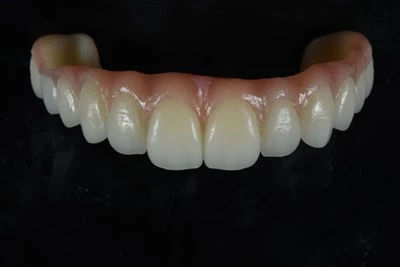
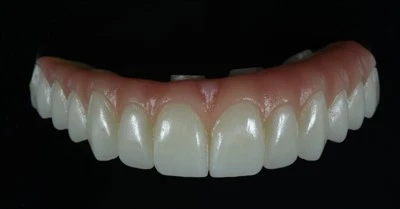
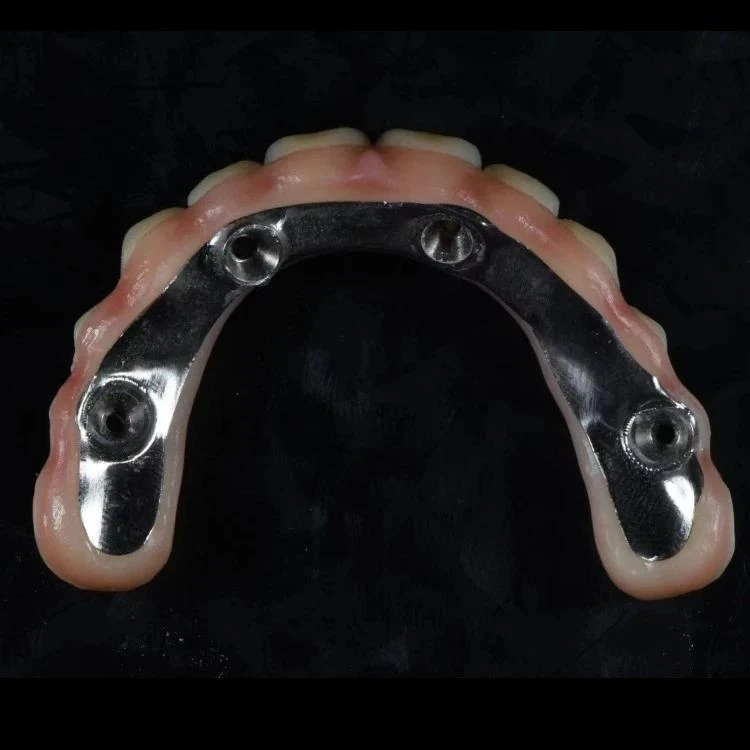
Full-arch implant restorations replace all teeth in one jaw using four to six implants supporting a fixed, non-removable prosthesis. The All-on-4 concept - four implants, two of which are tilted posteriorly to maximize anterior bone and reduce the need for sinus augmentation - is the most widely recognized protocol. All-on-6 adds two more implants for additional support and is preferred when bone volume and distribution allow.
The prosthesis typically consists of a milled titanium or zirconia framework with acrylic or composite teeth, or a fully monolithic zirconia bridge with individual crowns layered or stained for esthetics.
|
Parameter |
All-on-4 |
All-on-6 |
|
Implant count |
4 |
6 |
|
Posterior implants |
Tilted |
Vertical (typically) |
|
Bone grafting need |
Lower |
Lower still |
|
Framework stress |
Higher per implant |
Distributed |
|
Indication |
Atrophic arch, cost-sensitive |
Adequate bone, higher load tolerance |
The full-arch restoration is the most technically demanding implant prosthetic. The framework must achieve passive fit across all implants simultaneously - any discrepancy introduces preload stress that can lead to screw loosening, component fracture, or bone loss. Digital workflow has materially improved fit accuracy here, but the lab's skill in verifying and adjusting passive fit remains the decisive factor.
Implant-Retained Overdenture
An implant-retained overdenture is a removable prosthesis that snaps onto two or more implants via attachment mechanisms - most commonly low-profile stud or ball attachments. It is the standard treatment for the edentulous patient who cannot afford or does not need a fixed full-arch restoration.
An attachment-retained overdenture supported by two implants is considered the minimum standard of care for the edentulous mandible - a position endorsed by multiple international consensus statements. The overdenture provides retention and stability far superior to a conventional complete denture while remaining removable for hygiene and cost-effective.
The overdenture trades the rigidity of a fixed prosthesis for removability and affordability. For many patients - particularly those with limited bone, limited budget, or dexterity issues that make fixed prosthesis hygiene difficult - it is the most practical solution.
Materials Used in Implant Prosthetics
Abutment Materials
The abutment connects the implant to the restoration and shapes the soft tissue emergence profile. In implant prosthetics, material choice affects esthetics, mechanical performance, and soft tissue response.
Titanium abutments are the workhorse. Grade 5 titanium alloy (Ti-6Al-4V) offers high tensile strength, proven long-term biocompatibility, and excellent fatigue resistance. Titanium is the default for posterior restorations where load is high and esthetic demands are moderate. The gray metal color can show through thin gingiva, which is the primary limitation in the anterior zone.
Zirconia abutments address the esthetic shortcoming. Their tooth-colored, non-metallic substrate eliminates gray show-through through thin or translucent gingiva, making them the preferred choice for anterior esthetic cases. Modern zirconia abutments achieve flexural strength in the range of 800–1200 MPa, sufficient for most anterior and premolar applications. Some clinicians remain cautious about using all-ceramic abutments in high-load molar positions, where titanium's superior fracture toughness still holds an edge.
Titanium-base zirconia hybrid abutments combine a titanium connection interface - maintaining the proven implant-abutment junction - with a zirconia transmucosal collar and custom emergence profile. This design has become the standard for custom anterior abutments, capturing the esthetic benefit of zirconia without compromising the implant connection.
|
Material |
Strength |
Esthetics |
Best Use |
|
Titanium (Grade 5 alloy) |
Highest |
Moderate - gray show-through risk |
Posterior, high-load |
|
Zirconia |
High (800–1200 MPa) |
Excellent - tooth-colored |
Anterior esthetic zone |
|
Titanium-base zirconia hybrid |
High |
Excellent |
Custom anterior abutments |
Crown and Bridge Materials
Zirconia dominates the implant crown and bridge landscape. Monolithic zirconia - milled as a single solid piece without porcelain layering - offers flexural strength exceeding 1000 MPa and eliminates the chipping risk that plagues layered ceramics. For posterior implant crowns subjected to high occlusal force, monolithic zirconia is the most fracture-resistant option available. Its opacity has historically been a limitation for anterior esthetics, but newer high-translucency multilayer zirconia blocks have narrowed that gap considerably.
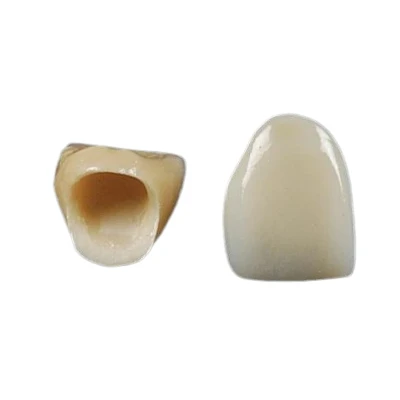
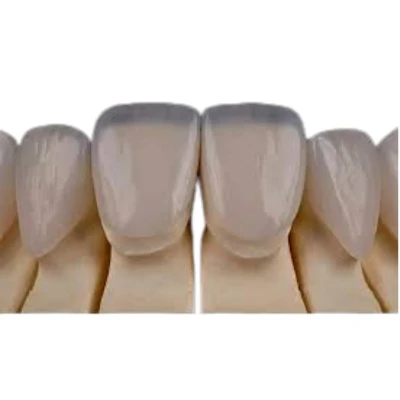
Lithium disilicate is a glass ceramic prized for translucency and esthetic vitality. With a flexural strength around 360–500 MPa, it is well suited for anterior single crowns where esthetics are paramount and occlusal load is manageable. Lithium disilicate is typically used as a cement-retained restoration on a zirconia or titanium abutment. Its strength is adequate for the anterior region but generally insufficient for posterior implant crowns, where the absence of a periodontal ligament concentrates load more severely.
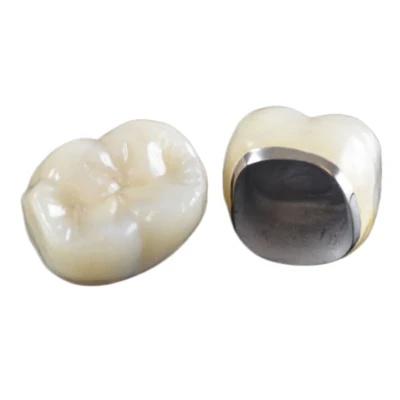
Porcelain-fused-to-metal (PFM) remains relevant, particularly for implant bridges requiring a proven metal framework. PFM offers predictable fit, adjustable esthetics, and decades of clinical data. The metal coping provides framework rigidity for multi-unit bridges, and the porcelain veneering delivers acceptable esthetics. Its weaknesses are the same that have driven the shift to all-ceramic: potential for porcelain chipping, metal margin visibility, and lower esthetic potential than monolithic ceramics.
|
Material |
Flexural Strength |
Esthetics |
Primary Indication |
|
Monolithic zirconia |
>1000 MPa |
Good (high-translucency variants improving) |
Posterior crowns, full-arch bridges |
|
Lithium disilicate |
360–500 MPa |
Excellent |
Anterior single crowns |
|
PFM |
N/A (metal framework) |
Moderate |
Multi-unit bridges, budget cases |
Choosing between zirconia and lithium disilicate is not about finding the single best ceramic. It is about matching mechanical properties to the load environment and esthetic requirements of each specific case. A posterior implant crown needs fracture resistance above all; an anterior crown needs translucency and color match. Getting this backwards - putting lithium disilicate on a molar implant, or opaque zirconia at the central incisor - is a predictable failure path.
Framework Materials for Full-Arch Restorations
Full-arch prostheses rely on a rigid framework to distribute load across all implants. Two materials dominate.
Milled titanium frameworks with acrylic denture teeth represent the traditional and most cost-effective full-arch solution. Titanium provides proven biocompatibility, high strength, and manageable weight. The acrylic teeth are replaceable, which simplifies long-term maintenance. This combination is the standard for immediate-load provisional and many definitive All-on-4 prostheses.
Monolithic zirconia bridges represent the premium full-arch option. A single milled zirconia block replaces the metal framework and individual crowns, delivering superior esthetics, reduced plaque adhesion, and no risk of acrylic tooth debonding. The trade-offs are weight, cost, and the difficulty of repair - a fractured zirconia bridge typically requires complete remake. Some labs offer a hybrid: a zirconia framework with layered porcelain or individual lithium disilicate crowns bonded to it, balancing esthetics and repairability.
How Implant Prosthetics Are Made in a Dental Lab
Impression and Data Capture
The implant prosthetics lab workflow begins with data capture - transferring the implant's three-dimensional position from the mouth to the lab. Two approaches exist, and the choice shapes everything downstream.
Conventional impression uses impression copings (transfer posts) screwed onto the implants, embedded in polyvinyl siloxane or polyether impression material. The open-tray (pick-up) technique leaves the coping embedded in the set impression, offering higher accuracy for multi-unit cases. The closed-tray (transfer) technique allows the coping to remain on the implant and is repositioned in the impression after removal - simpler but less precise for complex cases.
Digital impression uses an intraoral scanner with a scan body - a geometrically coded post screwed onto the implant that the scanner recognizes and translates into implant position, angle, and system data. Digital capture eliminates impression material, improves patient comfort, and feeds directly into CAD design without a physical model. Accuracy for single-unit and short-span cases now matches or exceeds conventional methods. For full-arch cases, digital accuracy continues to improve but some labs still verify against a physical or printed model for passive fit confirmation.
|
Method |
Accuracy |
Patient Comfort |
Workflow Speed |
Multi-Unit Reliability |
|
Open-tray conventional |
High |
Lower (gag reflex, material) |
Slower |
Proven |
|
Closed-tray conventional |
Moderate |
Moderate |
Moderate |
Acceptable for simple cases |
|
Digital (intraoral scan) |
High (single-unit) to improving (full-arch) |
High |
Fast |
Improving rapidly |
Digital is the direction of travel. For single crowns and short bridges, it is already the superior workflow. For full-arch cases, the decision depends on the lab's digital infrastructure and the clinician's confidence in scan accuracy across a long span.
Master Cast and Model Fabrication
From the impression or scan data, the lab produces a master cast - a working model that replicates the implant position, surrounding soft tissue, and adjacent dentition. Conventional impressions are poured in dental stone with implant analogs (replicas) positioned in the impression. Digital scans are used to 3D-print a physical model or to design entirely in software, skipping the physical cast.
The soft tissue replica is critical. A silicone or resin gingival mask simulates the mucosa around the implant, allowing the lab to design the abutment's emergence profile - the shape that guides and supports the gingival contour. A poorly fabricated soft tissue mask produces an abutment that looks correct on the model but creates an unnatural or compressed tissue contour in the mouth.
CAD Design
With the model or digital scan in hand, the lab moves to CAD - computer-aided design of the abutment, crown, bridge, or full-arch framework. Design software allows the technician to define the abutment's emergence profile, angulation, margin placement, and retention form, then design the restoration to fit.
For custom implant abutments, the emergence profile is sculpted to match the root cross-section of the missing tooth at the gingival level. This is not cosmetic detail - it directly determines whether the gingiva heals with a natural contour and whether the patient can clean the area. A cylindrical stock abutment in an anterior position produces a circular gingival opening that traps plaque and looks unnatural.
For full-arch frameworks, CAD design includes the framework geometry, screw access channels, and tooth arrangement. The software verifies clearance, occlusion, and screw path before milling - catching errors that would otherwise surface at try-in or delivery.
CAM Fabrication
The CAD file moves to CAM - computer-aided manufacturing - where the restoration is produced by milling or 3D printing. Zirconia restorations are milled from presintered blocks in a partially sintered (chalk-like) state, then sintered at high temperature to achieve final strength and dimensions. The sintering shrinkage - approximately 20–25% - is pre-compensated in the CAD design, so the milled oversized restoration shrinks to the exact target dimensions.
Titanium frameworks are milled from solid titanium blocks using 5-axis CNC machines. Lithium disilicate restorations are milled from CAD/CAM blocks in a crystallized or partially crystallized state, then heat-treated to achieve final crystallization and strength.
PFM restorations use a lost-wax or milled metal coping process, with hand-layered porcelain applied and fired in a porcelain furnace. This is the most labor-intensive fabrication path and the one most dependent on individual technician skill.
Quality Control and Fit Verification
Before a restoration leaves the lab, it undergoes fit verification. For single crowns, this means confirming the restoration seats fully on the abutment or model with proper marginal adaptation and proximal contacts. For bridges and full-arch frameworks, passive fit is the critical checkpoint.
Passive fit means the framework contacts all abutments simultaneously without introducing stress when screws are tightened. The lab verifies this on the master cast and, for complex cases, may request a try-in appointment to verify fit intraorally before finalizing the restoration. A framework that rocks, binds, or requires screw force to seat is not passive - forcing it into place preloads the implants and sets the stage for mechanical complications.
The lab's quality control process is the last line of defense. A restoration that passes fit verification, occlusal check, and esthetic approval is ready for clinical delivery. One that fails any checkpoint goes back to design or fabrication - not to the patient.
Conclusion
Implant prosthetics spans a defined set of restoration types - single crowns, bridges, full-arch fixed prostheses, and overdentures - each matched to specific clinical scenarios. Material selection follows function: titanium and zirconia abutments serve different zones, monolithic zirconia handles posterior load while lithium disilicate serves the anterior esthetic demand, and full-arch frameworks choose between titanium-acrylic and monolithic zirconia based on budget and esthetic priority. The lab procedure - from impression through CAD/CAM fabrication to passive fit verification - determines whether the design becomes a functioning restoration or a future complication.
ADS Dental Laboratory Ltd is a full-service digital dental laboratory in Shenzhen, China, supporting overseas dentists and dental laboratories with custom implant crowns, bridges, abutments, and full-arch prosthetics through CAD/CAM manufacturing and structured quality control. Contact our team to discuss your implant system, case requirements, or long-term implant restoration outsourcing needs.
FAQ
What are the main types of implant prosthetics?
The main types include single-tooth implant crowns, implant-supported fixed bridges, full-arch fixed restorations, and implant-retained overdentures. The appropriate design depends on the number and distribution of missing teeth, implant positions, available bone, occlusal demands, hygiene needs, and patient preferences.
What is the difference between screw-retained and cement-retained implant crowns?
A screw-retained crown attaches through a screw access channel and is generally easier to retrieve for maintenance, without the risk of residual cement. A cement-retained crown attaches to an abutment with cement and avoids a visible screw access opening, but excess cement must be carefully controlled.
Which materials are commonly used for implant prosthetics?
Titanium and zirconia are common abutment materials. Monolithic zirconia, lithium disilicate, and porcelain-fused-to-metal are used for crowns and bridges, while full-arch prostheses may combine titanium frameworks with acrylic teeth or use monolithic zirconia. Material selection depends on mechanical load, esthetic requirements, prosthesis design, and clinical conditions.
How does CAD/CAM technology support implant prosthesis fabrication?
CAD/CAM workflows use impression or scan data to design custom abutments, crowns, bridges, and full-arch frameworks, followed by milling or other appropriate manufacturing steps. Digital design helps technicians evaluate geometry, clearance, and screw access before production, but fit verification and quality control remain essential.
What information should be sent to a dental lab for an implant restoration case?
A dental lab typically needs the restoration prescription, implant system and connection details, impression or scan files with appropriate scan-body information, opposing dentition and bite records, material and shade instructions, and the preferred retention type. Complex full-arch cases may also require verification records and a planned try-in stage.