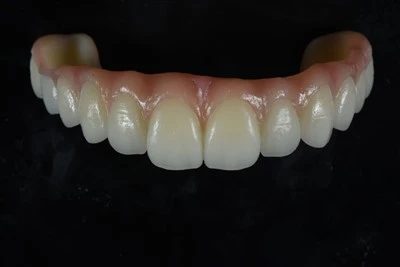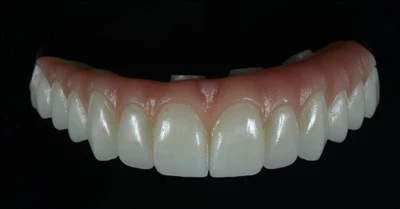
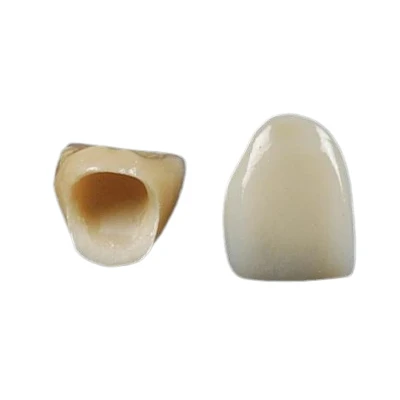
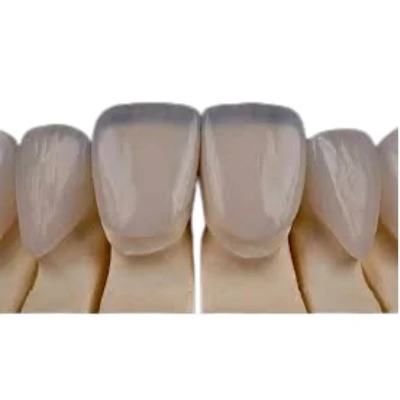
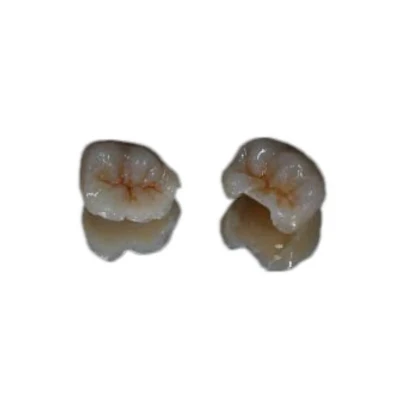


Customized veneers are patient-specific restorations designed around the anatomy, optical characteristics, smile, and functional requirements of an individual case. Shape and shade remain important starting points, but they do not fully describe how a veneer should look or behave.
For dentists and dental laboratories handling demanding anterior cases, customization extends into tooth proportions, line angles, surface texture, translucency, incisal characterization, substrate management, restorative space, and occlusal relationships. The quality of the final result depends on how clearly those details are designed, communicated, and reproduced.

What Does "Customized Veneers" Really Mean?
A standard tooth library can provide a useful starting morphology, and a conventional shade guide can establish a color reference. Neither contains enough information to define a highly individualized veneer on its own.
A customized veneer is developed for a particular tooth and a particular clinical situation. Its final design may account for the preparation, adjacent dentition, gingival architecture, available restorative space, facial contours, smile line, and the appearance expected by the dentist and patient.
This is why two veneers prescribed as the same basic shape and the same shade can still look very different.
One may have softer line angles, lower surface luster, subtle cervical chroma, and controlled incisal translucency. Another may use stronger facial anatomy, a brighter value, and a cleaner, more uniform incisal appearance. Both can be appropriate because the design goal is case-specific.
In practical terms, veneer customization usually involves several related decisions:
- External morphology and tooth proportions;
- Optical properties such as value, chroma, opacity, and translucency;
- Surface texture and luster;
- Incisal effects and internal characterization;
- Integration with adjacent teeth and the full smile;
- Preparation, restorative space, and underlying tooth color;
- Phonetic and occlusal relationships.
These decisions are especially relevant in modern dental veneer cases where clinicians expect the restoration to integrate with the surrounding dentition instead of following a generic anterior template.
The useful question is therefore not whether a veneer is "custom made" in the general sense. It is how much case-specific information has actually been incorporated into its design and fabrication.

Beyond Standard Shape: Designing Patient-Specific Tooth Morphology
A veneer shape cannot be reduced to labels such as square, oval, or triangular. Those categories describe only a broad visual direction. The details that determine how the tooth is perceived are much more specific.
Proportion, Contour, and Line Angles
Width-to-length ratio is one of the first variables considered in anterior design, but proportion works together with facial contour and line angles.
Line angles are especially influential because they control how broad or narrow the facial surface appears when light reaches the tooth. Moving or softening those transitions can visually change a veneer without creating the same degree of change in its actual mesiodistal width.
Other details include cervical contour, facial convexity, proximal transitions, and the emergence of the restoration from the gingival area.
Facial characteristics can provide an aesthetic reference. A more elongated morphology may create a slender visual effect, while softer corners can reduce the apparent squareness of an anterior tooth. These are design tools rather than fixed formulas. Lip position, smile width, gingival display, adjacent teeth, and the desired aesthetic character still need to be considered together.
Incisal Design and Controlled Tooth-to-Tooth Variation
The incisal area strongly influences the character of a smile. Central incisor dominance, lateral incisor length, canine transition, incisal embrasures, and edge position all affect how the anterior segment is read as a whole.
Perfect mirror-image symmetry is not always the most natural objective.
Natural dentitions contain small variations. In a customized veneer case, those differences can be controlled rather than eliminated. A lateral incisor may be slightly shorter or softer than the central. Incisal embrasures may gradually open toward the canine region. A younger visual character can use more pronounced incisal variation, while a mature design may appear calmer and more restrained.
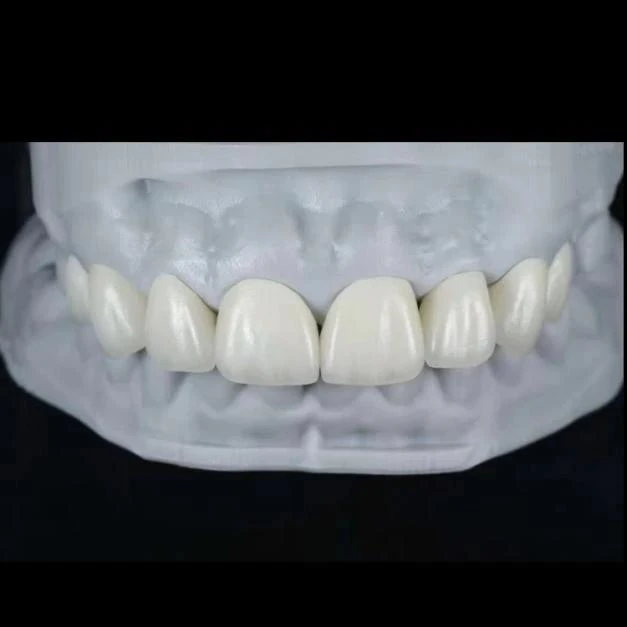
This kind of controlled morphology is particularly important in high-end layered veneers designed for a natural smile, where form, optical depth, and surface detail need to work together.
The aim is coherent morphology with enough individuality to avoid a repetitive, template-like appearance.
Beyond the Shade Tab: Value, Chroma, Translucency, and Substrate
Shade selection becomes much more predictable when color is treated as a group of variables instead of a single code.
A notation such as A1, B1, or a bleach shade provides a useful reference. It does not describe how bright the restoration should appear in the face, how much chroma should remain cervically, how translucent the incisal third should be, or how the ceramic must manage the color underneath it.
Three concepts are particularly important:
|
Optical variable |
What it describes |
Why it matters in veneers |
|
Value |
How light or dark the tooth appears |
Excessive value can make a veneer visually prominent even when the general color family is correct |
|
Chroma |
The intensity or saturation of color |
Controlled chroma gives the restoration depth and prevents a flat appearance |
|
Translucency |
How light passes through the restoration |
Appropriate translucency helps reproduce the optical depth of natural enamel, especially incisally |
Natural teeth are not uniformly colored from cervical to incisal. The cervical and body areas generally have different optical behavior from the incisal edge, where translucency and other enamel effects become more apparent.
That gradient matters.
A uniformly opaque veneer may achieve the requested shade numerically and still look dense beside natural teeth. Conversely, excessive translucency can allow an unfavorable substrate to influence the final appearance.
For cases in which the material itself affects the available optical strategy, the choice between ceramics also matters. Our guide to Feldspathic vs. E.max veneers discusses how the two systems differ in fabrication and clinical use. For reference, IPS e.max lithium disilicate ceramics are widely used for aesthetic ceramic restorations where strength and optical control both matter.
Why Stump Shade and Veneer Thickness Matter
The final color of a veneer is produced by a system, not by the ceramic layer in isolation.
Underlying tooth color, ceramic thickness, ceramic opacity, material selection, and the optical characteristics of the luting interface can all influence the result. A dark or heavily discolored preparation therefore presents a different design problem from a light, enamel-dominant substrate.
Two patients may request the same final shade and still require different veneer constructions.
For that reason, stump shade information is particularly valuable in demanding aesthetic cases. It helps the dental laboratory decide how much masking is required and how much translucency can safely be preserved. For a deeper look at how photographs, stump shade, and characterization should be communicated, see our guide on how to communicate veneer shade to a dental lab.
The number of teeth being restored also changes the strategy. In a two-veneer case, integration with adjacent natural teeth usually takes priority. In an eight- or ten-unit smile design, the clinician and technician have more freedom to establish a new overall value, proportion, and optical direction across the visible anterior segment.
Surface Texture and Incisal Characterization: Where Natural Details Appear
Surface design is one of the clearest differences between a generic-looking veneer and a carefully individualized one.
Natural enamel is not perfectly flat. It contains subtle macro- and micro-anatomy that changes the way light travels across the tooth. These details may be difficult to notice individually, yet their combined effect is obvious when the restoration is viewed in the smile.
Micro-Texture, Perikymata, and Surface Luster
Fine ridges, grooves, developmental surface anatomy, and perikymata-like details can break up uniform reflection and give the facial surface more depth.
Luster also matters. A highly polished surface reflects light differently from a softer satin-like finish. When veneers are placed beside natural teeth, excessive gloss can be as visible as an incorrect shade.
This makes surface texture part of optical design.
The technician is effectively controlling where highlights form, how broad they appear, and how quickly they transition across the facial surface. That affects the perceived width, convexity, and naturalness of the restoration.
Final ceramic finishing also has a direct effect on surface appearance. The principles behind staining and glazing dental ceramics help explain how external color refinement, gloss, and final surface treatment influence a restoration after basic morphology has already been established.
Incisal Translucency and Internal Characterization
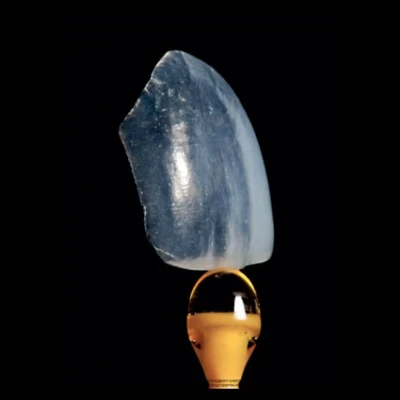
The incisal third provides another layer of customization. Depending on the case, technicians may reproduce subtle translucency, opalescent effects, halo characteristics, mamelon-like structures, or variations within the ceramic layering.
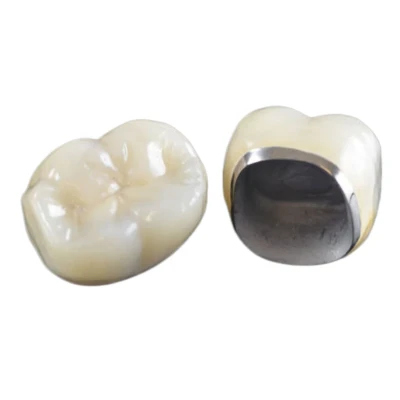
Feldspathic veneers with incisal translucency demonstrate one fabrication direction where this type of optical layering can be emphasized. Layered lithium disilicate can also be used when the case calls for a combination of a ceramic substructure and refined surface characterization, as in E.max layered veneers.
The degree matters more than the number of effects.
A veneer does not become more natural because more characterization has been added. Some patients benefit from visible incisal complexity and pronounced texture. Others require a quieter surface and cleaner optical transition.
Good customization controls characterization instead of maximizing it.
Customization Must Fit the Whole Case
An attractive veneer still has to make sense within the available clinical space.
Existing tooth position, preparation depth, enamel preservation, restorative thickness, and the degree of masking required all place limits on the design. A major change in tooth position or brightness may require a different material or opacity strategy from a conservative case with favorable underlying enamel.
This is particularly important when planning minimal-prep or thin ceramic veneers. The desired external contour must remain compatible with the volume available for the restoration. Our clinical overview of veneer preparation guidelines covers reduction, preparation design, and related planning considerations in more detail.
Facial and smile information adds another layer. Full-face photographs, smile photographs, lip dynamics, gingival display, dental midline, smile arc, and neighboring teeth help place the restoration into context. Facial scanning can provide additional information when it forms part of the digital workflow, but good photography remains highly useful for routine dentist–laboratory communication.
Functional factors deserve attention as well.
Incisal edge position can influence phonetics, particularly sounds involving interaction between the maxillary incisors and lower lip, such as "F" and "V." The palatal or lingual design must also respect functional contacts and anterior guidance where relevant.
The objective is a veneer that looks appropriate and works comfortably within the patient's existing functional environment.
How Digital Dentistry Supports Customized Veneer Design
Digital workflows give dentists and technicians a more controlled way to transfer case information and evaluate design decisions before fabrication.
An intraoral scan can record preparation geometry, margins, adjacent dentition, opposing teeth, and occlusal relationships. The quality and completeness of that dataset matter, particularly when a case is submitted remotely. Dentists working digitally can review our guide to intraoral scan requirements for dental labs for practical case-submission considerations.
Combined with clinical photographs, bite information, and an approved wax-up or mock-up, the scan provides the laboratory with a more complete description of the intended outcome.
Digital Case Data and Design
CAD software allows the technician to evaluate and modify:
- Tooth proportions;
- Facial contour;
- Incisal edge position;
- Symmetry and intentional asymmetry;
- Proximal relationships;
- Occlusal relationships;
- The transition between restored and natural teeth.
Designs can also be reviewed before final fabrication, which is especially useful when several anterior units are being coordinated.
For a broader view of how scanning, design, manufacturing, and finishing connect, see our guide to the CAD/CAM dental workflow.
Digital design improves control over geometry. It does not automatically determine the final optical character of a veneer.
Digital Precision and Technician Refinement
Much of the final aesthetic result still develops during ceramic processing and finishing.
Depending on the material and fabrication method, an experienced technician may refine contour, layer ceramic, adjust translucency, apply internal or external characterization, create surface texture, control luster, and complete final polishing or glazing.
A practical customized veneer workflow may therefore look like this:
Case Data → Digital Design → Design Review → Fabrication → Ceramic Characterization → Surface Finishing → Quality Verification
Digital tools establish a repeatable framework. The technician uses that framework to make aesthetic decisions that are difficult to reduce to geometry alone.
What Should Dentists Send the Lab for a Truly Customized Veneer Case?
Detailed prescriptions reduce guesswork. They are especially important when the requested result depends on matching natural teeth or reproducing a very specific aesthetic character.
For the clinical side of the case, useful records can include:
- Intraoral scan or impression;
- Opposing arch and bite record;
- Clear preparation and margin information;
- Pre-operative records;
- Diagnostic wax-up or approved mock-up when available;
- Notes on occlusal requirements or other clinical constraints.
Aesthetic communication needs its own set of information. A shade code is useful, but it should be supported by enough visual and clinical context to explain what the code is meant to achieve.
Useful aesthetic records include:
- Target shade;
- Stump shade;
- Retracted intraoral photographs;
- Smile and full-face photographs;
- Adjacent tooth references;
- Preferred incisal translucency;
- Desired surface texture and luster;
- Special characterization instructions;
- The intended degree of symmetry;
- Whether the desired direction is highly natural, brighter and cleaner, youthful, mature, or another clearly defined visual style.
"B1" is a shade reference. It is not a complete veneer prescription.
For laboratories receiving cases remotely, this communication becomes even more important. Clear records allow the technician to understand what should be preserved, what should change, and where aesthetic freedom is appropriate.
Customized Veneers Are About Controlled Individuality
Customized veneers go beyond standard shape and shade because a convincing anterior restoration depends on many connected variables. Tooth morphology, value, chroma, translucency, underlying tooth color, surface texture, incisal effects, restorative space, phonetics, and occlusion can all influence the final result.
The strongest cases usually share one principle: controlled individuality. The veneer is designed to belong to the patient instead of looking like a repeated ceramic form.
Achieving that consistently requires accurate clinical information, thoughtful digital design, skilled ceramic finishing, and clear dentist–laboratory communication.
ADS Dental Laboratory Ltd supports overseas dentists and dental laboratories with customized veneer production and long-term dental lab outsourcing. If you have a veneer case that requires specific morphology, shade characterization, surface texture, or a coordinated digital workflow, contact our team to discuss the case requirements and production options.