
Learn the common causes of denture remakes, from impression and bite errors to try-in and lab issues, and how dentists and labs can reduce them.
A denture remake means more than producing the same prosthesis again. It adds chair time, delays treatment, consumes laboratory resources, and can reduce patient confidence. Most preventable denture remakes can be traced to problems with impressions, jaw relation records, tooth setup, try-in verification, laboratory processing, or communication. The most effective way to reduce remakes is to identify these problems before final processing, when corrections are still relatively simple.

What Is a Denture Remake-and When Is a Full Remake Necessary?
A denture remake is the fabrication of a new denture because the existing prosthesis cannot be corrected predictably through routine adjustment, repair, or relining. This distinction matters because not every loose, uncomfortable, or damaged denture needs to be remade.
|
Situation |
Typical Use |
|
Adjustment |
Minor pressure areas, small occlusal discrepancies, localized border correction |
|
Repair |
Fracture, detached denture tooth, or other localized structural damage |
|
Reline |
The denture design remains acceptable, but the base no longer adapts closely to the supporting tissues |
|
Remake |
Major errors in fit, jaw relation, occlusion, tooth position, esthetics, or overall denture design |
A denture that fitted well at delivery may also become loose after years of use because the residual ridge and supporting tissues continue to change. Material wear, severe fracture, or long-term changes in oral anatomy can eventually make replacement more appropriate than repeated adjustment.
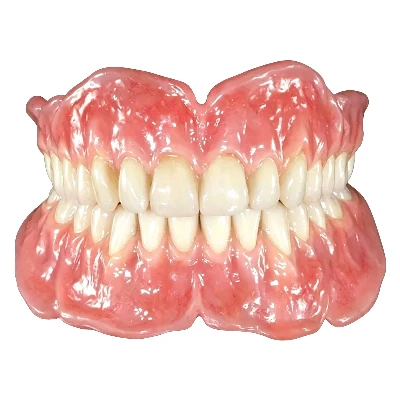
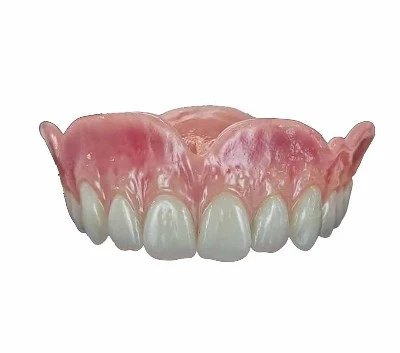
This distinction is particularly relevant for conventional acrylic full dentures, where fit, base adaptation, occlusion, and long-term tissue changes all influence whether adjustment, relining, or a full remake is the more appropriate solution.
This is different from an early remake caused by inaccurate clinical records or an error during fabrication. Identifying which type of problem is present helps prevent unnecessary full remakes and directs the case toward the correct solution.
1. Inaccurate Impressions Can Create Poor Fit From the Start
The final impression records the tissues that will support the denture. If that record is inaccurate, the denture base is being designed on an inaccurate foundation.
Common denture impression errors include incomplete border capture, underextension, overextension, tray movement, distortion during removal, and poor recording of mobile soft tissues. For a maxillary complete denture, an inadequate record of the posterior palatal area can also compromise retention.
These errors often appear later as:
- Poor denture retention
- Rocking or instability
- Repeated sore areas
- Inadequate peripheral seal
- Excessive chairside adjustment
- A denture that never feels fully seated
The basic relationship is straightforward:
Inaccurate impression → inaccurate denture base adaptation → poor fit or stability → adjustment, reline, or remake
Conventional impression materials can also be affected by handling, removal distortion, storage, and other material-related variables. A physical impression should therefore be inspected before the patient leaves. Obvious pulls, voids, incomplete borders, or deformation should be corrected before the case enters production.
Digital scanning can remove some material-related sources of distortion because there is no impression material to deform during removal or transport. It does not eliminate clinical recording errors. Incomplete soft-tissue capture, scan gaps, poor scan strategy, or inadequate recording of movable tissues can still produce an unreliable digital denture record.
Research evaluating the accuracy of digital impressions also reinforces an important point: the quality of a digital workflow still depends on how accurately the clinical data are captured. For clinicians submitting digital cases, understanding what dental labs need from an intraoral scan can help identify incomplete or unreliable records before production begins.
The key is not whether the case is conventional or digital. The key is whether the laboratory receives a clinically accurate representation of the supporting tissues.
2. Incorrect Jaw Relation and Bite Records Can Make a Denture Functionally Wrong
Jaw relation records tell the laboratory how the maxilla and mandible should relate when the denture is designed and mounted. In complete denture treatment, this commonly includes centric relation, vertical dimension of occlusion, and the information recorded with stable record bases and wax rims.
Errors at this stage can be more difficult to correct than minor fit problems.
Common causes include:
- Unstable record bases
- Incorrect centric relation
- Inaccurate vertical dimension
- Distorted bite registration material
- Wax rims that move during recording
- Inconsistent jaw records taken at different appointments
A denture fabricated from an incorrect jaw relation may show premature contacts, unstable occlusion, denture displacement during function, difficulty chewing, soreness, or an incorrect facial appearance caused by inappropriate vertical dimension.
This is also why a denture can look correct on an articulator or in CAD software and still feel wrong in the mouth. The laboratory works from the record it receives. If that relationship does not represent the patient's actual clinical position, the downstream design is based on incorrect information.
Minor occlusal discrepancies can often be adjusted. A major centric-relation or vertical-dimension error may affect the entire tooth arrangement and can require substantial reset or complete remake.
Reliable jaw relation records therefore deserve the same attention as the impression itself. Stable record bases, repeatable centric relation, and verified vertical dimension are among the most important controllable factors in reducing denture occlusion problems and preventable remakes. Laboratories that use dental articulators for more predictable occlusion can evaluate mounted relationships more consistently, but no articulator can compensate for an inaccurate clinical bite record.
3. Tooth Setup and Esthetic Errors Can Cause Remakes Even When Fit Is Acceptable
Not every denture remake begins with poor retention. A denture may fit the tissues reasonably well but still fail because tooth position, function, facial support, or esthetics are unacceptable.
Functional Tooth Setup Problems
Posterior tooth position affects both occlusion and denture stability. Problems with the occlusal plane, arch form, interarch relationship, or tooth arrangement can introduce contacts that displace the prosthesis during function.
The setup should reflect the available supporting anatomy and the selected occlusal concept rather than simply filling the available space with teeth.
Esthetic Tooth Setup Problems
Anterior tooth arrangement has a different set of risks. Common causes of esthetic remakes include:
- Incorrect dental midline
- Excessive or inadequate incisal display
- Unsuitable tooth size or mould
- Inappropriate tooth shade
- Poor lip support
- Anterior teeth positioned too far facially or lingually
- A smile line that does not match the clinical plan
These problems are especially important in complete dentures because tooth position influences appearance, phonetics, and facial support at the same time.
The laboratory also cannot see the patient directly. A prescription that only lists a tooth shade may not communicate the patient's existing appearance, facial proportions, smile line, or specific esthetic expectations. Clinical photographs and clear markings on wax rims can provide information that models alone cannot show.
A technically functional denture can still require major revision when the tooth setup does not match the clinical and esthetic plan. That is why tooth position should be verified before final processing, not judged for the first time at delivery.

4. Problems Missed at the Try-In Stage Often Become Expensive Remakes Later
A denture try-in is the stage at which the planned tooth arrangement and jaw relationship are evaluated before the denture is permanently processed. It should not be treated as a formality or only as an opportunity for the patient to look at the teeth.
The try-in is one of the most important remake-prevention points in the entire workflow.
Before approving the case for final processing, the dentist should verify:
- Centric relation
- Vertical dimension
- Occlusal contacts
- Midline and smile line
- Incisal display
- Lip support
- Tooth position
- Phonetics
- Overall esthetics
- Patient acceptance of the setup
If the jaw relationship at try-in does not reproduce the original record, that discrepancy should be investigated before processing. The same applies when the patient requests significant changes to tooth position, display, or lip support.
This stage is valuable because the setup is still modifiable.
A problem corrected at try-in is usually a modification; the same problem discovered after final processing may become a remake.
For complex complete denture cases, confirming the setup before processing can prevent both functional and esthetic errors from becoming permanently incorporated into the finished prosthesis.
5. Laboratory Processing, Design, and Quality-Control Errors Also Cause Remakes
Clinical records are not the only source of denture remakes. Errors can also be introduced after the case reaches the dental laboratory.
Traditional denture processing involves several stages where dimensional or positional changes can occur. Depending on the production method, potential problems include tooth movement during processing, inaccurate mounting, resin processing distortion, acrylic defects, and changes in occlusion between the approved setup and the finished denture.
Design and communication errors can also occur. A technician may misinterpret the prescription, apply the wrong requested production stage, overlook a requested tooth change, or fail to identify a discrepancy before the case reaches final finishing.
A structured denture laboratory quality-control process should therefore evaluate more than surface polish. Final inspection should consider:
- Denture base and border quality
- Tooth position
- Occlusion
- Requested shade and setup
- Finishing and surface quality
- Compliance with the laboratory prescription
- Completion of all requested modifications
For practices and laboratories evaluating an outsourcing partner, clearly defined dental lab quality standards can help distinguish a repeatable production system from one that relies primarily on final-stage inspection.
Digital manufacturing can reduce some processing variability, but manufacturing accuracy still depends on correct design, calibrated equipment, controlled production, and effective QC.
Remakes can originate from the clinical records, the laboratory workflow, or an interaction between both. A reliable remake-prevention system must examine the entire process rather than assuming the problem always started on one side.
6. Incomplete Dentist–Lab Communication Creates Avoidable Remake Risk
The dental laboratory usually does not examine the patient. The technician depends on the clinical records and instructions provided with the case.
That makes dentist–lab communication a technical part of denture fabrication, not an administrative detail.
A useful denture laboratory prescription may need to specify:
- Prosthesis type
- Requested production stage
- Tooth shade and mould
- Midline
- Smile line
- Incisal display
- Lip support requirements
- Occlusal requirements
- Relevant jaw relation information
- Existing denture references
- Clinical photographs
- Special patient or clinician preferences
The principle is simple: a good prescription should reduce the number of clinical decisions the technician must make without seeing the patient.
Research on dentist–laboratory communication through work authorization has also shown why incomplete technical information matters. Even when basic patient information is present, clinically relevant design details may still be omitted.
This becomes even more important in denture outsourcing. When a dental laboratory performs one stage of the case and another laboratory completes the next, the production stage and approval status must be clear. A case sent for tooth setup, for example, should not rely on assumptions about whether the previous jaw relation or esthetic decisions have already been clinically approved.
Digital case submission can make this process easier by keeping prescriptions, scans, photographs, design files, and modification requests together. It does not replace clear instructions.
Consistent communication prevents small ambiguities from becoming expensive corrections later in the workflow.

7. How Digital Denture Workflows Can Help Reduce Remake Risk
A digital denture workflow uses digital records and computer-aided design or manufacturing at one or more stages of denture production. Depending on the case, this can include intraoral or laboratory scanning, CAD denture design, 3D-printed try-ins, milled or printed components, digital models, and stored design files.
Digital technology is useful for remake prevention because it improves how information can be reviewed, stored, reproduced, and communicated. A broader digital dental workflow typically connects scanning, design, manufacturing, case tracking, and quality control rather than treating CAD as an isolated production step.
Where Digital Workflows Can Help
One of the most practical advantages is immediate data review. A scan can often be inspected while the patient is still present, allowing missing or questionable areas to be rescanned before the case reaches the laboratory.
Digital workflows can also improve:
- Reviewability: records can be enlarged, rotated, compared, and checked before design.
- Repeatability: approved tooth setups and design parameters can be retained.
- Traceability: digital records provide a clearer history of design and production stages.
- Communication: dentists and technicians can review the same 3D records and document requested changes more precisely.
If a design change is needed later, stored CAD data may make modification and reproduction more efficient than rebuilding the case from the beginning.
What Digital Workflows Cannot Fix
Digital does not automatically mean accurate.
CAD software cannot reliably correct an inaccurate centric relation, wrong vertical dimension, incomplete tissue record, or unclear clinical instruction. A poor scan simply turns an inaccurate clinical record into an inaccurate digital record.
The strongest digital denture workflows therefore combine accurate clinical records with standardized design, meaningful try-in verification, experienced technician review, controlled manufacturing, and final QC.
Digital technology reduces certain sources of variability. It does not replace clinical verification or sound prosthodontic judgment.
8. A Practical Denture Remake Prevention Checklist
Reducing denture remakes is easier when quality checks are placed throughout the workflow rather than left until final inspection. The same principle applies more broadly when clinicians and laboratories work to reduce remakes in dental restorations: errors should be identified as early as possible, before they become embedded in the final prosthesis.
Before Sending the Case to the Laboratory
Confirm that:
- The impression or scan is complete and clinically acceptable.
- Record bases are stable.
- Centric relation is repeatable.
- Vertical dimension has been verified.
- Midline and smile line are clearly recorded.
- Tooth shade and mould requirements are clear.
- Relevant photographs and existing denture references are included.
- The laboratory prescription states the required production stage and any special instructions.
- Problems found here should be corrected before design begins.
At the Denture Try-In
Confirm that:
- Jaw relation remains correct.
- Occlusion is acceptable.
- Tooth position supports the planned function.
- Midline, smile line, and incisal display are acceptable.
- Lip support and phonetics have been evaluated.
- The patient accepts the esthetic setup.
- All requested changes are clearly documented before processing.
- The try-in should serve as a formal verification point, not just an intermediate appointment.
Before Final Delivery
The laboratory should verify:
- Base and border quality
- Tooth position
- Occlusion
- Final finish
- Prescription compliance
- Completion of requested changes
The dentist should then assess fit, retention, stability, occlusion, comfort, and esthetics clinically before considering the case complete.
The most effective remake-prevention systems catch errors while they are still easy to correct. Accurate records, clear approvals, and staged quality control reduce the chance that one small problem will travel through the entire denture workflow.
Conclusion
Most preventable denture remakes begin with identifiable problems: inaccurate impressions, unreliable jaw relation records, unverified tooth setups, missed try-in issues, processing errors, or incomplete dentist–lab communication. The solution is not simply stricter final inspection. Remake reduction depends on verification at each major stage before the next stage begins.
Digital workflows can strengthen this process through better record review, repeatability, traceability, and communication, but accurate clinical input and experienced technical review remain essential.
ADS Dental Laboratory Ltd provides digital denture design and removable prosthetic production for dentists and dental laboratories worldwide, including staged services from special trays, wax rims, and tooth setup to try-in and final denture production. For clinics or laboratories looking for long-term denture outsourcing support, contact ADS to discuss your workflow and case requirements.