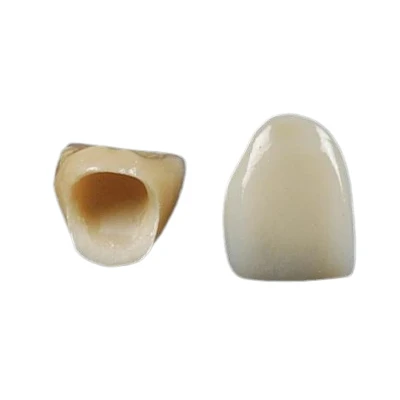
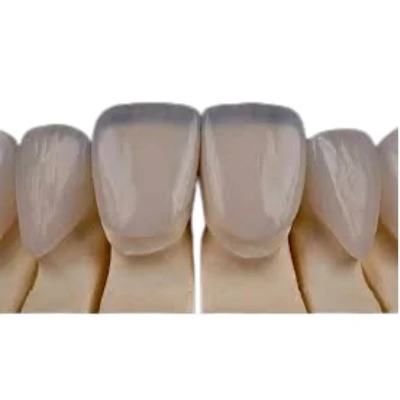
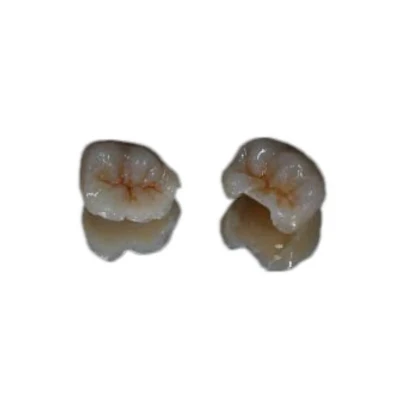
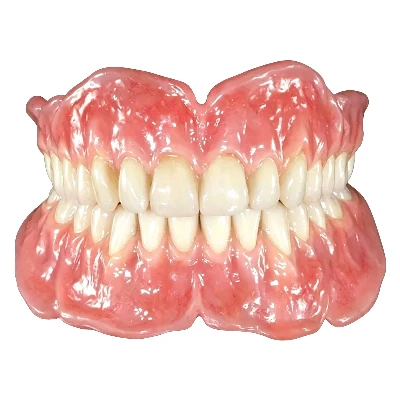

Compare Co-Cr, titanium, and PEEK denture frameworks by rigidity, weight, esthetics, and case indications to choose the right RPD material.
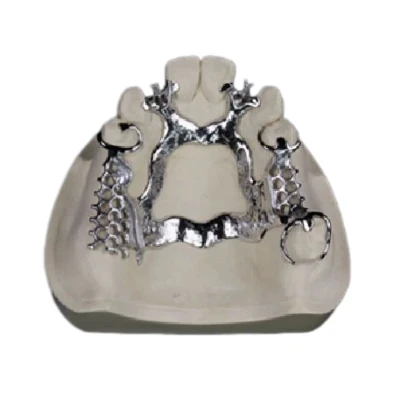
Cobalt-chromium (Co-Cr), titanium, and polyetheretherketone (PEEK) can all be used for removable partial denture frameworks, but they behave very differently under load. Co-Cr provides the greatest rigidity, titanium reduces framework weight while retaining metallic strength, and PEEK offers a lightweight, metal-free alternative with much lower stiffness.
The right choice depends on the support pattern of the RPD, available space, occlusal load, esthetic requirements, framework weight, and the geometry required for each material.

Co-Cr vs. Titanium vs. PEEK: Quick Comparison
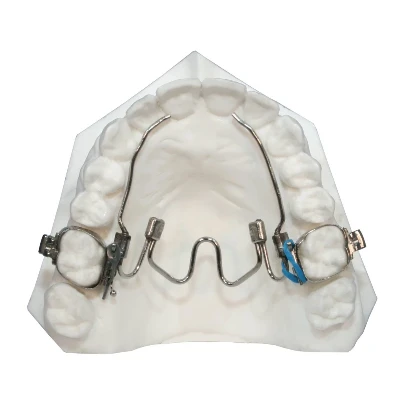
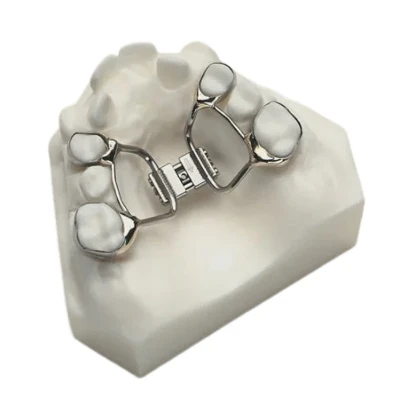
A removable partial denture, or RPD, framework is the structural component that connects rests, clasps, major connectors, minor connectors, and denture bases into one functional prosthesis. Its material affects how much the framework bends, how forces are transferred to abutment teeth and soft tissues, and how much space the design requires.
The three materials differ most clearly in elastic modulus and density.
|
Property |
Co-Cr |
Titanium |
PEEK |
|
Elastic modulus |
Approx. 200–220 GPa |
Approx. 105–115 GPa |
Approx. 3–4 GPa |
|
Density |
Approx. 8.3–8.5 g/cm³ |
Approx. 4.4–4.5 g/cm³ |
Approx. 1.3 g/cm³ |
|
Tensile strength |
Approx. 600–800 MPa |
Approx. 350–1100 MPa, grade-dependent |
Approx. 90–100 MPa |
|
Relative rigidity |
Highest |
Intermediate |
Much lower |
|
Framework weight |
Highest |
Lower |
Lowest |
|
Metal-free |
No |
No |
Yes |
|
Metallic appearance |
Yes |
Yes |
No |
|
Framework bulk |
Can remain relatively thin |
Design-dependent |
Often requires greater cross-section |
|
Distal-extension use |
Strong rigidity advantage |
Case-dependent |
Requires greater caution |
|
Digital fabrication |
Yes |
Yes |
Yes |
Typical material-property ranges show the same overall pattern: Co-Cr is the stiffest, titanium is substantially lighter but less stiff, and PEEK is dramatically less rigid than either metal. For metallic dental framework materials, ISO 22674 - Dentistry: Metallic materials for fixed and removable restorations and appliances provides an important standards reference.
That difference in stiffness matters more to RPD design than simply asking which material has the highest tensile strength.
Why Rigidity Matters More Than Strength Alone in an RPD Framework
Strength and stiffness are not the same property.
Tensile strength describes how much stress a material can withstand before failure. Elastic modulus describes how strongly that material resists elastic deformation. For an RPD framework, resistance to bending is critical because major connectors, rests, and clasp assemblies must maintain their intended relationship under repeated functional loading.
Co-Cr has an elastic modulus of roughly 200–220 GPa. Titanium is around 105–115 GPa. PEEK is only around 3–4 GPa.
That means identical geometry will not produce identical mechanical behavior.
Strength vs. Stiffness in RPD Design
A material can have adequate tensile strength and still flex more than desired in a major connector. This is particularly important when comparing PEEK with metal frameworks.
Lower stiffness may require changes in:
- Major connector thickness;
- Clasp length and cross-section;
- Minor connector dimensions;
- Framework reinforcement;
- Retentive undercut selection.
This is why a PEEK framework should not simply copy the dimensions of a Co-Cr framework.
What Lower Stiffness Can Do Under Function
A finite element analysis comparing PEEK, Co-Cr, and Ti-6Al-4V RPD frameworks in a Kennedy Class I model found clear differences in displacement and tissue loading.
Maximum free-end displacement was approximately:
|
Framework Material |
Maximum Free-End Displacement |
|
Co-Cr |
0.46 ± 0.05 mm |
|
Titanium |
0.52 ± 0.06 mm |
|
PEEK |
0.69 ± 0.07 mm |
PEEK also produced the lowest maximum periodontal ligament stress but the highest maximum mucosal stress in that model.
This is an important distinction. Greater flexibility may reduce stress on an abutment tooth while simultaneously increasing denture-base movement and loading of the supporting mucosa.
Flexibility is therefore not automatically an advantage in an RPD framework.
When Does a Co-Cr Denture Framework Make the Most Sense?
A Co-Cr denture framework remains one of the most established options for removable partial dentures because its high elastic modulus allows a relatively thin framework to remain rigid under function.
That is its main advantage.
Co-Cr is especially useful when the framework must resist deformation across a long span or when there is limited room for a bulky connector. Its higher density makes it heavier than titanium or PEEK, but the material can often be designed with smaller cross-sections while still maintaining rigidity.
Cases That Often Favor Co-Cr
Co-Cr is commonly considered for:
- Kennedy Class I and II distal-extension RPDs;
- Long-span partial denture frameworks;
- Patients with high functional loading;
- Cases with limited vertical or lingual space;
- Designs requiring thin but rigid major connectors;
- Frameworks where minimizing flexure is a priority.
The finite element comparison discussed above also found the least free-end displacement with Co-Cr among the three materials tested.
This does not mean Co-Cr is always the right choice. Its metallic color can affect esthetics, especially when clasps are visible in the smile zone. It is also the heaviest of the three materials discussed here, and patient-specific metal sensitivity should be considered when relevant.
When rigidity and limited framework bulk are the main design priorities, Co-Cr remains a strong reference material.

When Is Titanium a Better Framework Option?
Titanium is a useful alternative when the clinician wants a metallic framework with substantially less weight than Co-Cr.
Its density is approximately 4.4–4.5 g/cm³, compared with roughly 8.3–8.5 g/cm³ for Co-Cr. That difference can be significant in large removable frameworks.
Titanium also has good corrosion resistance and is widely valued for its favorable biological behavior in dental applications.
Its main mechanical trade-off is lower stiffness.
With an elastic modulus around 105–115 GPa, titanium is roughly half as stiff as Co-Cr. A titanium framework therefore cannot always use the same dimensions as a Co-Cr design and be expected to behave identically.
Situations Where Titanium Becomes Attractive
Titanium may be worth considering when:
- Overall framework weight is a major concern;
- A large metallic framework is required;
- The patient has concerns related to specific conventional dental metals;
- Corrosion resistance is an important material consideration;
- The case still benefits from a metallic framework rather than a polymer framework.
Material grade also matters. Commercially pure titanium and titanium alloys such as Ti-6Al-4V do not have identical mechanical properties, so strength values should always be interpreted in relation to the actual material used.
Manufacturing Matters More With Titanium
Titanium is more technically demanding to process than conventional Co-Cr alloys. Traditional casting is sensitive to oxidation and high-temperature interaction with investment materials, which is one reason digital fabrication methods have become important for titanium frameworks.
For laboratories, the key is not simply having access to titanium. The framework geometry and manufacturing process must be controlled together.
Titanium is best understood as a lower-density metallic framework material, not as a lighter version of Co-Cr with identical mechanical behavior.
When Should You Consider a PEEK Denture Framework?
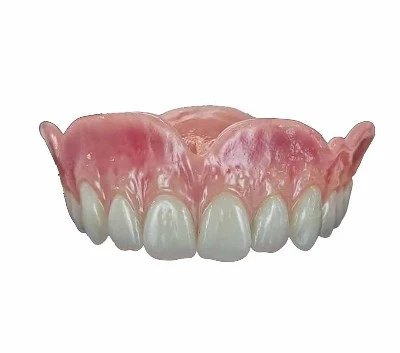
Polyetheretherketone, or PEEK, is a high-performance thermoplastic polymer used in a growing range of dental applications. For RPD frameworks, its main attractions are low weight, metal-free composition, and nonmetallic appearance.
Its density is approximately 1.3 g/cm³, making it considerably lighter than both titanium and Co-Cr.
PEEK can also be milled through CAD/CAM workflows and may provide esthetic advantages in designs where visible metallic components are undesirable.
Why Dentists and Patients Consider PEEK
PEEK can be attractive when the treatment priorities include:
- A metal-free framework;
- Reduced overall prosthesis weight;
- Avoiding visible gray metal;
- Esthetic clasp design;
- Digitally milled framework production.
These are meaningful advantages, particularly in bounded or more esthetically sensitive partial denture cases.
The Main Limitation: Much Lower Rigidity
PEEK's elastic modulus is only around 3–4 GPa, compared with more than 100 GPa for titanium and around 200 GPa for Co-Cr.
This difference is large enough to change the way the framework should be designed.
PEEK components may require a greater cross-sectional thickness to achieve adequate stiffness. Clasps may also require different dimensions and undercut strategies because their flexibility and elastic recovery differ from cast metal clasps.
A PEEK framework should be designed as a PEEK framework, not as a Co-Cr framework manufactured from another material.
Why Distal-Extension Cases Need More Caution
The Kennedy Class I finite element study provides an important warning. Compared with Co-Cr and titanium, PEEK produced lower periodontal ligament stress but greater free-end displacement and higher mucosal stress.
The reported maximum periodontal ligament stresses were approximately:
- Co-Cr: 0.17 MPa
- Titanium: 0.15 MPa
- PEEK: 0.12 MPa
Maximum mucosal stress, however, increased to approximately 0.74 MPa with PEEK, compared with 0.59 MPa for Co-Cr and 0.64 MPa for titanium.
PEEK therefore does not simply "absorb stress." It changes where the load is transferred.
That makes careful case selection especially important in long distal-extension RPDs.
How to Choose: Match the Framework Material to the Clinical Situation
Material selection should begin with the support pattern and mechanical demands of the RPD.
The most useful first distinction is whether the prosthesis is primarily tooth-supported or whether it depends significantly on both teeth and compressible soft tissue, as in many distal-extension cases.
Distal-Extension or Long-Span RPDs
Kennedy Class I and II designs place greater demands on framework rigidity because the distal denture base can move toward the mucosa under function.
In these situations, excessive framework flexure can reduce stability and alter how load is transferred between abutments and the residual ridge.
Co-Cr is often attractive here because of its high elastic modulus. Titanium may also be appropriate when weight reduction is important, but framework dimensions must reflect its lower stiffness.
PEEK requires more caution because its much lower modulus can allow greater displacement if the design does not adequately compensate.
Tooth-Supported or Bounded Edentulous Spaces
In bounded spaces, such as many Kennedy Class III situations, support comes primarily from teeth rather than a long distal tissue-bearing base.
This can make PEEK more practical when:
- Esthetics are important;
- Metal-free construction is preferred;
- Framework weight should be minimized.
Span length, connector design, occlusal load, and available space still matter. "Tooth-supported" does not automatically mean any material will work with the same geometry.
Limited Space or High Functional Load
When vertical space is restricted, a material that can remain rigid at smaller thickness becomes more valuable.
This favors Co-Cr in many cases.
The same principle applies when the patient generates high functional loads. Under heavy loading, framework rigidity becomes more important because repeated flexure may affect stability, clasp behavior, and force transfer.
Tensile strength alone should not drive this decision. The relevant issue is how much the completed framework will deform during function.
When Esthetics, Metal Exposure, or Weight Are the Priority
The material choice becomes clearer when the primary treatment priority is defined.
|
Clinical Priority |
Material to Consider First |
|
Maximum rigidity with limited framework bulk |
Co-Cr |
|
Lower-weight metallic framework |
Titanium |
|
Metal-free framework |
PEEK |
|
Avoiding visible metallic appearance |
PEEK |
|
Long distal extension |
Prioritize rigidity; evaluate Co-Cr or titanium carefully |
|
Large framework where weight matters |
Titanium or PEEK |
|
Bounded esthetic replacement |
PEEK may be appropriate |
|
Very limited connector space |
Co-Cr often has an advantage |
This is a better way to choose than ranking one material as universally superior.
The framework material should match the biomechanics of the case first. Esthetics, weight, and patient preference can then refine the choice.

Why Digital Design and Lab Communication Matter as Much as Material Choice
Digital RPD design allows the framework geometry to be controlled in ways that are difficult to achieve consistently with purely manual workflows.
A well-planned CAD/CAM dental workflow can be used to evaluate the path of insertion, retentive undercuts, clasp geometry, major connector thickness, relief, and cross-sectional dimensions before manufacturing begins.
The important point is that digital design does not make Co-Cr, titanium, and PEEK interchangeable.
Its real value is the ability to adapt the framework to the mechanical properties of each material.
The quality of the design also depends on the quality of the incoming case data. Dentists and laboratories using intraoral scanning should follow appropriate digital scan requirements for dental lab cases so that tooth surfaces, edentulous areas, soft tissues, and relevant anatomy are captured clearly enough for framework planning.
A useful RPD laboratory prescription should identify more than the material name. It should include:
- Framework material;
- Edentulous pattern or Kennedy classification;
- Major connector design;
- Clasp type and location;
- Prepared rest seats;
- Abutment teeth;
- Intended retentive undercuts;
- Areas where visible clasping is unacceptable;
- Opposing arch and occlusal information;
- Requested production stage, such as framework only, try-in, or final finish.
Clear communication becomes even more important when a laboratory produces the same type of restoration in several materials. Framework fit, design consistency, case traceability, and final inspection should also be considered when evaluating dental lab quality standards for outsourced RPD production.
ADS Dental Laboratory provides removable prosthetic production across Co-Cr, titanium, and PEEK framework options, with digital denture design, CAD/CAM manufacturing, framework, try-in, and finishing workflows available for overseas dentists and dental laboratories.
Choosing the Right Denture Framework Material
Co-Cr, titanium, and PEEK each solve a different set of problems.
Co-Cr is the strongest choice when framework rigidity and minimal bulk are the main priorities. Titanium offers a much lighter metallic framework but requires design adjustments for its lower stiffness. PEEK provides the lowest weight and a metal-free, nonmetallic appearance, but its much lower elastic modulus demands different framework geometry and more careful selection in distal-extension cases.
The most appropriate material is the one that matches the support pattern, functional load, available space, and patient priorities of the specific RPD.
ADS Dental Laboratory Ltd provides custom Co-Cr, titanium, and PEEK denture framework production for overseas dentists and dental laboratories. If you are evaluating framework materials for a new RPD case or need a long-term removable prosthetics outsourcing partner, contact our team to discuss the case requirements and production workflow.
FAQ
Is PEEK Better Than Co-Cr for Partial Dentures?
Not generally.
PEEK is lighter, metal-free, and more favorable when visible metal is undesirable. Co-Cr is far more rigid and can achieve adequate framework stiffness with less bulk.
The better choice depends on the support pattern, available space, esthetic requirements, and the amount of framework flexure the case can tolerate.
Is Titanium Lighter Than Cobalt Chrome?
Yes.
Titanium has a density of roughly 4.4–4.5 g/cm³, compared with about 8.3–8.5 g/cm³ for Co-Cr.
Titanium is therefore substantially lighter, but it is also less stiff. Framework dimensions still need to be designed specifically for titanium.
Can PEEK Be Used for Kennedy Class I RPDs?
PEEK can be considered, but distal-extension cases require careful design.
In one Kennedy Class I finite element study, PEEK produced greater free-end displacement and higher mucosal stress than titanium or Co-Cr, despite reducing periodontal ligament stress.
That makes framework rigidity, denture-base support, and load distribution especially important.
Can the Same Framework Design Be Used for Co-Cr, Titanium, and PEEK?
Not reliably.
The elastic modulus of these three materials differs too much to assume that identical thickness, clasp geometry, and connector dimensions will perform the same way.
Material selection and framework design should be planned together.