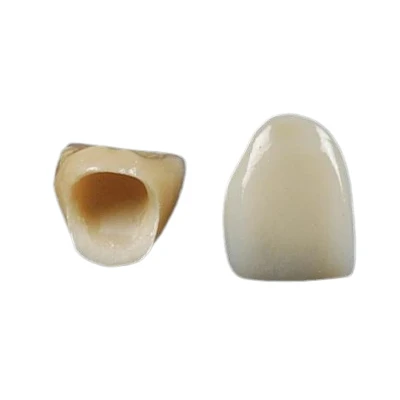
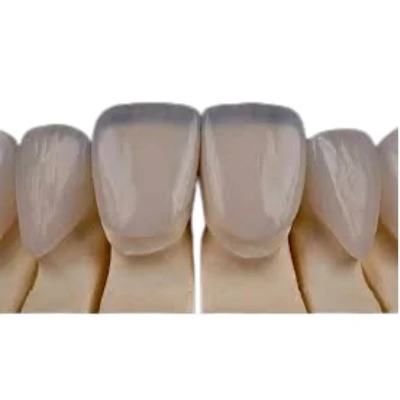
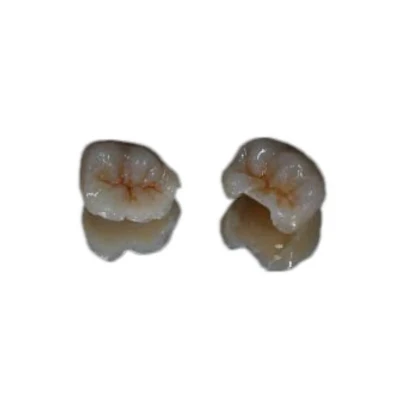
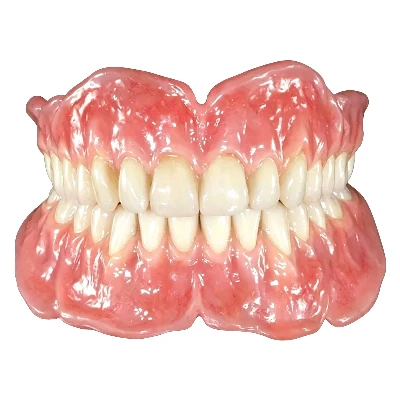

Compare 3D-printed dental models vs. stone models in accuracy, durability, workflow, cost, and case selection. Learn where printed, stone, hybrid, and model-less workflows still make sense.
3D-printed dental models are now routine in many digital workflows, but stone models have not disappeared from dental laboratories. Both can produce useful physical representations of a patient's dentition, yet they reach that result through very different processes. Those differences affect accuracy, turnaround time, durability, storage, and how easily a case can move between a dentist and a laboratory.
For most practices, the best choice depends less on which technology is newer and more on the restoration, the source data, and how the model will actually be used.

3D-Printed vs. Stone Dental Models: The Real Difference Is the Workflow
A stone dental model is a physical cast produced by pouring gypsum-based dental stone into a conventional impression. After the material sets, the cast is separated, trimmed, and used for diagnosis, articulation, appliance fabrication, or restorative laboratory procedures.
A 3D-printed dental model is a physical model manufactured from digital dental data. That data may come directly from a digital intraoral scanner or from a laboratory scan of a conventional impression or stone cast.
The two workflows therefore look very different.
|
Stone Model Workflow |
3D-Printed Model Workflow |
|
Physical impression |
Intraoral scan or digitized impression |
|
Impression transported to lab |
Digital file transferred electronically |
|
Gypsum mixed and poured |
Digital model prepared in software |
|
Setting and separation |
3D printing |
|
Trimming and finishing |
Washing and post-curing |
|
Physical cast stored |
Digital file archived; model stored only if needed |
This distinction matters because errors can enter at every stage.
A conventional workflow may be affected by impression distortion, bubbles, gypsum handling, setting changes, or physical damage. A digital workflow avoids several of those steps but introduces its own variables, including scan quality, data processing, printer calibration, resin behavior, model geometry, and post-curing.
Digital dentistry also does not require an all-or-nothing transition. A dentist can still take a conventional impression and have the laboratory scan it before continuing with digital design and model printing. This is one of the practical differences discussed when comparing a digital dental lab vs. a traditional lab.
The useful comparison is therefore not simply resin versus gypsum. It is one production chain versus another.
Are 3D-Printed Dental Models as Accurate as Stone Models?
Accuracy is often the first concern when comparing 3D printed dental models vs stone models. The short answer is that both can be suitable for dental laboratory work, but printed-model accuracy varies by anatomical area and by the workflow used to produce the model.
In dimensional measurement, accuracy describes how closely a result agrees with an accepted reference, while trueness and precision describe related but distinct aspects of measurement performance. These terms are formally addressed in ISO 5725 guidance on accuracy, trueness, and precision.
What the Accuracy Data Shows
One study evaluated ten mandibular stone models made from alginate impressions. The stone casts were scanned, reproduced as 3D-printed acrylic models, and then compared using surface deviation analysis.
The reported matching thresholds differed substantially by area:
|
Area Evaluated |
Reported Deviation |
|
Cusp peaks |
Average about 0.21 mm |
|
Occlusal surfaces |
About 0.35–0.56 mm |
|
Whole crown surfaces |
Average about 0.64 mm |
The printed replicas matched the reference casts most closely around cusp peaks. Larger differences appeared across complete tooth surfaces, particularly in areas such as occlusal grooves and spaces between teeth.
That finding is useful because "dental model accuracy" should not be treated as a single number. A model may reproduce major reference points closely while showing larger surface deviations in anatomically complex regions.
The study also compared printed models with scans of existing stone casts. It did not compare every modern intraoral-scanner-to-printer workflow against every conventional impression technique. Its data are therefore best used to show how printed replicas reproduce different parts of a reference model, not to claim universal superiority.
Different Workflows Have Different Error Chains
Stone models may accumulate variation from:
- Impression material and technique;
- Impression distortion or defects;
- Gypsum mixing and pouring;
- Setting expansion;
- Model separation and trimming;
- Physical handling.
Printed models have different variables:
- Intraoral or laboratory scanning;
- Scan stitching and incomplete data;
- Digital model processing;
- Printer technology and calibration;
- Build orientation and model-base geometry;
- Resin characteristics;
- Washing and post-curing.
For clinical scan submission, the quality of the original data matters before model production even begins. Clear margins, complete arch capture, usable bite records, and clean scan data are among the issues covered in our guide to what dental labs need from an intraoral scan.
Printer calibration is only one part of the manufacturing chain. Resin handling, build strategy, washing, curing, and other additive manufacturing and post-processing variables can also affect the final manufactured result.
Digital production removes several analog error sources. It does not remove error itself.
For routine dental laboratory work, accuracy depends on the complete acquisition and manufacturing process rather than on whether the final model is white gypsum or printed resin.

Beyond Accuracy: Durability, Reprinting, Storage, and Turnaround
Model accuracy matters, but a working model must also survive laboratory handling.
In the comparative study above, the modified acrylic resin showed higher mechanical values than the Type III dental stone tested.
|
Mechanical Property |
Printed Acrylic |
Dental Stone |
|
Impact strength |
1.5 ± 0.7 kJ/m² |
0.3 ± 0.1 kJ/m² |
|
Shore D hardness |
76.0 ± 0.4 |
68.4 ± 1.4 |
|
Flexural strength |
31.6 ± 2.5 MPa |
9.1 ± 1.3 MPa |
|
Compressive strength |
93.0 ± 1.1 MPa |
17.7 ± 2.5 MPa |
These figures apply to the materials tested, not to every resin and every type of dental stone. They do show why printed models can be useful when a model will be repeatedly handled, articulated, transported, or used during appliance production.
Stone has another practical weakness: once a critical cast is fractured or badly chipped, recreating exactly the same physical record may be difficult if the original impression is no longer usable.
A digital model changes that problem. The physical print can be disposable because the source file remains reproducible. If a model is damaged, another can be printed later.
That does not mean printed resin is dimensionally permanent. Some acrylic materials can change over time, and the literature has noted possible dimensional concerns during prolonged storage. The important distinction is that the digital source can be preserved even when an individual print should no longer be treated as the master reference.
Digital files also reduce physical storage requirements. A laboratory or practice does not need to keep every printed model indefinitely if its clinical, regulatory, and record-retention requirements allow digital archiving.
Turnaround is another major difference. When an intraoral scan is submitted, the laboratory can receive the case electronically instead of waiting for a physical impression shipment. One referenced laboratory workflow estimated that impression shipping alone could add two or more days before production begins.
For international dental lab outsourcing, avoiding that initial shipping step can be especially valuable.

Where 3D-Printed Dental Models Work Especially Well
Printed models offer the clearest advantages where the case already begins digitally, where models must be reproduced, or where the laboratory needs a physical verification step inside a CAD/CAM workflow.
Diagnostic, Study, and Orthodontic Models
Diagnostic models are physical or digital representations used for examination, treatment planning, documentation, and comparison over time.
Research comparing printed acrylic models with stone casts found that printed models can be suitable for diagnostic use and record keeping.
This is a strong application for digital models because the physical print is no longer the only record. The archived file can be retrieved and printed again when required.
Orthodontic workflows benefit from the same reproducibility. Sequential models, retainers, and other appliances may require repeated production from planned digital tooth positions. Generating those models from stored data is much more scalable than repeatedly creating conventional impressions and casts.
Crowns, Bridges, and Other Fixed Restorations
Printed working models are also used in digital crown-and-bridge workflows.
A technician may use the model to check:
- Restoration seating;
- Proximal contacts;
- Margins;
- Occlusal relationships;
- Finishing and final quality control.
This is particularly relevant to digitally designed restorations such as a CAD/CAM zirconia crown, where the model may serve as a physical verification stage within an otherwise digital production process.
A physical model, however, is not mandatory for every digitally manufactured crown. If the scan, CAD design, manufacturing process, and quality-control protocol are validated, some simpler restorations can be completed without producing a model at all.
Implant and Full-Arch Cases
Implant models are more demanding because the laboratory must reproduce not only teeth and soft-tissue contours but also implant or analog positions.
Digital workflows can support implant planning, printed gingival models, implant analog positioning, and physical verification. They also integrate well with CAD/CAM production of implant restorations.
Full-arch cases deserve more caution. Errors in scan capture or implant-position transfer can accumulate across the arch. Physical verification may therefore become more important as case complexity increases.
For restorations such as an All-on-X zirconia bridge, the digital model is only one part of a larger verification process involving implant positions, occlusion, articulation, and passive-fit considerations.
A printed model is useful here, but printing alone does not guarantee passive fit. The workflow still depends on accurate clinical data, verification, articulation, and laboratory control.
Splints, Guards, and Other Appliances
Printed models are well suited to splints, nightguards, retainers, and other appliances where a reproducible physical form is needed for fabrication or checking. They can also support thermoforming workflows and repeat production when the original digital data remain valid.
These applications make 3D printing particularly useful for laboratories processing a high volume of repeatable digital cases.
Where Stone Models Still Make Sense
Stone models remain practical where the production chain is already conventional and where converting the case into a printed workflow adds little benefit.
Established Conventional and Removable Workflows
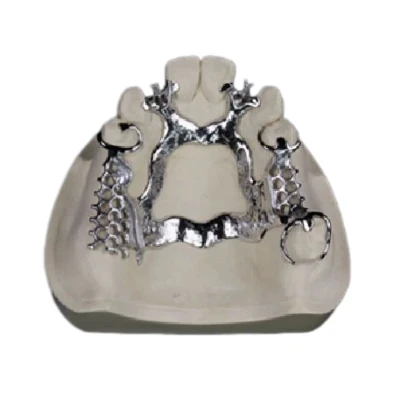
Some removable prosthetic and traditional laboratory procedures are still built around physical impressions, stone master casts, conventional articulators, waxing, and manual processing.
In these workflows, stone is familiar, inexpensive to produce, easy to mark and modify, and compatible with equipment and techniques the laboratory already uses. Conventional removable partial denture production is one example where plaster or stone master casts are still commonly encountered.
Digital alternatives exist, but replacing a reliable analog procedure only makes sense when the digital workflow improves production, communication, repeatability, or cost.
When Digitizing Adds an Extra Step Without Adding Value
Consider a straightforward case that arrives as an accurate conventional impression and will be completed entirely through an established analog workflow.
Scanning the impression, processing a digital model, and printing a new physical model may simply add another conversion step.
Technician familiarity also matters. Experienced technicians may prefer the trimming, marking, waxing, or handling characteristics of stone for specific conventional procedures. That is a workflow preference, not evidence that stone is inherently more accurate.
Stone models are therefore most defensible where the analog process itself remains efficient and predictable.
The Middle Ground: Hybrid and Model-Less Dental Workflows
Modern dental production increasingly operates between fully analog and fully digital systems.
Physical Impression to Digital Production
A clinic does not need an intraoral scanner to work with a digital dental laboratory.
A conventional impression can be sent to the lab, scanned there, and then used for:
- Digital model design;
- CAD/CAM restoration design;
- 3D printing;
- Milling;
- Digital case archiving.
This hybrid workflow allows a practice to retain its preferred impression technique while moving downstream production into a digital environment.
Digital Scan to Printed Model Only When Needed
The opposite approach is also common.
A case can begin with an intraoral scan and remain digital through CAD design. A physical model is printed only when it adds a useful verification or fabrication step.
Dentists and laboratories working this way can review the broader CAD/CAM dental workflow from scan to final restoration rather than treating model production as an automatic requirement.
When a Physical Model May Not Be Needed at All
Some validated CAD/CAM workflows for routine fixed restorations can move from scan to design to manufacturing without producing a working cast.
That means the decision sequence has changed.
Before deciding between a 3D printed dental model and a stone model, determine whether the case requires a physical model at all.
Hybrid production is not a compromise between "old" and "new" dentistry. It is often the most efficient way to use each process only where it contributes something useful. Digital planning, physical verification, printed models, and stone models can all coexist within one production system.
Cost, Turnaround, and International Dental Lab Collaboration
Material price alone gives an incomplete picture of cost.
One referenced comparison estimated approximately $5 per stone model versus $18 for a printed resin model. That illustrates an important point: the printed object itself is not automatically cheaper.
A proper cost comparison should include the entire workflow.
For stone models, costs can include impression materials, courier transport, gypsum, pouring and trimming labor, storage, and replacement when a cast is damaged.
For printed models, costs may include scanners, printers, software, resin, washing and curing equipment, calibration, maintenance, and operator training.
The cheaper model is not always the cheaper workflow.
This becomes especially important in international dental lab outsourcing. Digital case submission allows clinical files to reach an overseas laboratory without waiting for an impression to cross borders. Design review and production planning can begin earlier, while the final restoration can still be shipped through the normal logistics process.
File quality and organization matter in this workflow. Laboratories receiving open digital cases commonly work with STL and related dental file formats, so practices sending cases internationally should understand basic STL file quality and submission requirements for dental labs.
ADS Dental Laboratory Ltd supports digital case receiving, STL and intraoral scan processing, CAD/CAM design, digital scanning, milling, 3D printing, and digital model production. Its workflow also retains technician-based procedures such as ceramic layering, contouring, margin finishing, and occlusal adjustment rather than treating automation as a substitute for laboratory craftsmanship.
For overseas dentists and dental laboratories, that combination is often more useful than simply owning another printer.
Which Model Should You Use? A Practical Case-by-Case Guide
The most practical choice depends on how the case enters the laboratory, what must be verified physically, and whether the model needs to be reproduced later.
|
Case or Workflow |
Practical Direction |
|
Diagnostic and study models |
Digital/printed models work especially well for archiving and reproduction |
|
Orthodontic sequential models |
Strong use case for digital design and printing |
|
Routine crown and bridge |
Printed, stone, or model-less depending on the production workflow |
|
Implant restoration |
Digital/printed models are useful; positional verification remains critical |
|
Full-arch implant case |
Digital workflow plus strong verification rather than relying on model type alone |
|
Conventional removable workflow |
Stone remains practical in established analog systems |
|
Clinic without an intraoral scanner |
Conventional impression can enter a hybrid digital workflow at the lab |
|
Simple validated CAD/CAM case |
A physical working model may not be necessary |
3D-printed dental models are the better fit when digital transmission, repeatability, CAD/CAM integration, or easy reprinting matters. Stone models still work well in established conventional procedures where their handling characteristics and low equipment requirements remain useful. Many restorative workflows sit between those two extremes.
The correct model is the one that supports the restoration and verification process with the fewest unnecessary steps.
ADS Dental Laboratory Ltd combines digital case processing, CAD/CAM, 3D printing, and conventional dental craftsmanship for dentists and dental laboratories worldwide. If you are evaluating whether a case should follow a printed, stone, hybrid, or model-less workflow, contact our team to discuss the case requirements and the most appropriate production route.