
Meta Description
Compare zirconia full-arch vs. hybrid prostheses for strength, esthetics, maintenance, repairability, cost, and case-specific clinical selection.
Choosing between a zirconia full-arch prosthesis and a hybrid prosthesis affects far more than appearance. The decision influences restorative space, occlusal behavior, repair options, hygiene, long-term maintenance, laboratory workflow, and cost.
Zirconia generally offers greater wear resistance and color stability. A titanium-acrylic hybrid is lighter, easier to adjust, and often easier to repair. Neither option is automatically better. The correct choice depends on the prosthetic design and the clinical conditions of the case.

Zirconia Full-Arch vs. Hybrid Prosthesis: What Is the Actual Difference?
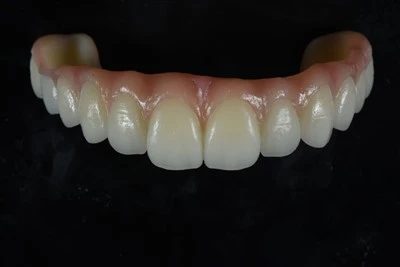
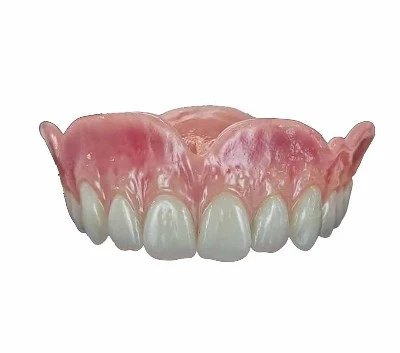
A zirconia full-arch prosthesis is a fixed implant-supported restoration in which zirconia forms the primary restorative structure. In many contemporary designs, the prosthesis is milled with CAD/CAM technology as a monolithic or predominantly monolithic restoration, with additional staining, glazing, or gingival characterization as needed. An All-on-4 zirconia bridge is a common example of this type of full-arch implant restoration.
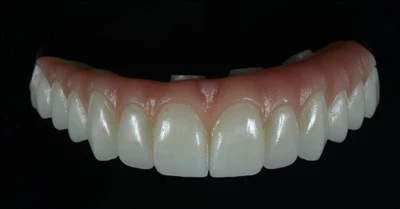
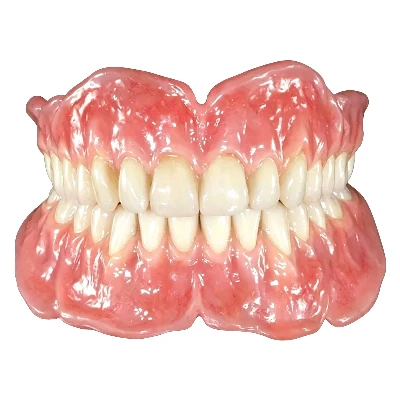
A hybrid prosthesis is a broader prosthetic category rather than one specific material. In full-arch implant dentistry, the term usually describes a fixed restoration that replaces both teeth and missing gingival tissue while being supported by implants rather than removed by the patient. Hybrid designs may use different material combinations.
For the purpose of this comparison, "hybrid prosthesis" refers mainly to the common titanium-framework acrylic hybrid, which typically includes:
- A milled or cast titanium framework
- Acrylic or resin denture teeth
- Pink acrylic gingival material
A typical monolithic zirconia full-arch, by contrast, uses a CAD/CAM-milled zirconia structure for the tooth and gingival form, often connected to multi-unit abutments through titanium interfaces. A traditional implant bar hybrid prosthesis uses a titanium bar as the rigid framework and acrylic components for the visible restorative portion.
This distinction matters because comparing zirconia with "acrylic" alone is misleading. In a hybrid restoration, the titanium framework provides most of the structural rigidity, while the acrylic teeth and gingiva determine much of the wear, repair, and esthetic behavior.
Zirconia vs. Hybrid Full-Arch: Quick Comparison
The major differences can be summarized as follows:
|
Factor |
Zirconia Full-Arch |
Titanium-Acrylic Hybrid |
|
Primary structure |
Zirconia-based rigid prosthesis |
Titanium framework with acrylic/resin components |
|
Wear resistance |
High |
Acrylic components wear faster |
|
Weight |
Usually heavier |
Usually lighter |
|
Color stability |
High |
Acrylic may stain or lose surface luster over time |
|
Chairside adjustment |
More limited |
Usually easier |
|
Local repairability |
More difficult |
Usually easier |
|
Routine material maintenance |
Often lower |
Usually higher |
|
Gingival characterization |
Ceramic/composite characterization depending on design |
Acrylic gingiva is highly adjustable |
|
Initial cost |
Usually higher |
Usually lower |
|
Provisional use |
More commonly definitive |
Common for provisional and definitive workflows |
These differences reflect how both architectures behave in current full-arch workflows: zirconia offers high wear resistance and structural stability, while acrylic hybrids provide lower weight, easier modification, and more accessible repair pathways.
The table should not be read as an indication list. A strong material can still perform poorly when restorative space, implant position, cantilever, or occlusion are unfavorable.
The Clinical Factors That Should Drive the Choice
Material selection should follow the prosthetic design, not replace it.
The most useful comparison begins after implant position, tooth setup, restorative space, and occlusal relationships are understood. This is why full-arch material selection should occur as part of treatment planning rather than as an isolated "zirconia or acrylic" decision.
Restorative Space and Prosthetic Volume
Vertical restorative space is one of the most important variables in a full-arch implant prosthesis.
The restoration must accommodate:
- Implant and abutment components
- Screw-access channels
- Framework or zirconia thickness
- Tooth height
- Gingival replacement
- Required connector dimensions
Some monolithic zirconia full-arch designs are commonly discussed in the range of approximately 12–15 mm of restorative space, although the exact requirement depends on the implant system, prosthetic architecture, material formulation, and laboratory design.
Available space also affects how much lost bone and soft tissue must be replaced prosthetically. When substantial gingival volume and lip support are required, the overall prosthetic bulk becomes a major design consideration. Acrylic-based designs are often easier to modify during adaptation when contour, lip support, or phonetics require refinement.
The zirconia formulation itself also matters. Differences among 3Y, 4Y, and 5Y zirconia affect strength, translucency, and how the material is selected for different restorative requirements.
Implant Distribution, Cantilever, and Passive Fit
A stronger restorative material cannot compensate for poor implant distribution.
Implant position affects:
- Anterior-posterior spread
- Screw-access location
- Cantilever length
- Framework support
- Emergence profile
- Load distribution
Excessive cantilever remains a mechanical concern regardless of whether the final restoration is zirconia or acrylic hybrid. Material strength does not eliminate unfavorable biomechanics.
Passive fit is especially important with rigid full-arch restorations. Zirconia has very little flexibility, so inaccuracies in implant position capture, multi-unit abutment records, or framework verification can create misfit. Full-arch workflows may therefore include verification jigs, digital verification, or additional try-in stages before final milling.
The same principles that apply to preventing zirconia fit problems-accurate records, controlled design, and careful laboratory verification-become even more important across a full arch.
Occlusion, Bruxism, and Opposing Dentition
Heavy occlusal loading should influence design, but it should not produce an automatic "bruxer equals zirconia" rule.
Zirconia has high wear resistance and high flexural strength, which can make it attractive for demanding occlusal situations. However, bruxism still requires a broader strategy that may include:
- Controlled cantilever
- Appropriate occlusal contacts
- Evaluation of implant distribution
- Opposing-arch assessment
- Nightguard use when indicated
Patients with heavy bruxism require explicit occlusal planning regardless of material. Careful management of occlusion and restoration accuracy helps reduce unnecessary adjustment, technical complications, and remakes.
The opposing dentition also matters. A zirconia arch opposing natural enamel behaves differently from acrylic opposing ceramic, another zirconia arch, or a complete denture. Wear pairs influence polishing, occlusal adjustment, and guard recommendations.

Esthetics, Lip Support, Phonetics, and Hygiene
Zirconia is often chosen for its surface stability and ability to maintain detailed tooth morphology. Modern zirconia can provide strong color stability and stain resistance, while monolithic designs reduce the risk associated with veneering interfaces.
However, zirconia restorations are not all constructed in the same way. The choice between monolithic and layered zirconia changes the balance between structural simplicity, characterization, translucency, and the risk associated with veneering layers.
Acrylic hybrids can also provide excellent initial esthetics. Denture teeth and pink acrylic are easy to characterize, and the gingival portion can be adjusted when tissue replacement or lip support is significant.
The relevant esthetic question is not simply "which material looks more natural?" Full-arch cases also require evaluation of the pink-white transition.
A high smile line may expose the junction between the prosthesis and natural tissue. In these cases, tooth position, gingival characterization, lip support, and the extent of pink material all become important.
Photographs and provisional stages are particularly useful before final fabrication.
Phonetics should be evaluated in the same way. Tooth position, palatal or lingual contour, and prosthetic bulk can affect sounds such as "S" and "F." A provisional restoration gives the dentist and patient an opportunity to refine these details before the definitive full-arch prosthesis is made.
Hygiene is another area where oversimplified material comparisons can be misleading.
Zirconia has favorable surface characteristics and is less porous than acrylic. Polished zirconia surfaces may also show lower plaque affinity than some other restorative surfaces.
But surface material is only part of the issue.
If the intaglio surface is overcontoured or traps plaque, either prosthesis can become difficult to maintain. Tissue contact, convexity, embrasure design, retrievability, and cleaning access are critical.
For full-arch restorations, good hygiene depends on both material properties and prosthetic design.
Maintenance, Repairability, and Long-Term Complications
The most practical difference between zirconia and an acrylic hybrid is often not how strong they are on the day of delivery, but how they behave over years of service.
Typical Maintenance With a Hybrid Prosthesis
The titanium framework in a hybrid prosthesis is structurally strong. Most long-term maintenance involves the acrylic or resin components.
Common issues include:
- Occlusal wear of denture teeth
- Fracture of individual teeth
- Tooth debonding
- Separation between acrylic and the titanium framework
- Gingival acrylic staining
- Surface degradation
The advantage is repairability. A worn or fractured acrylic tooth can often be replaced without remaking the entire prosthesis. Pink acrylic can also be modified more easily than a monolithic ceramic structure.
What Happens When Zirconia Needs Repair?
Zirconia removes several common acrylic-related problems. It does not contain denture teeth that can debond, and its surface resists wear and staining more effectively.
However, zirconia is less forgiving when a major change is required.
Chairside modification is more limited, and a significant fracture, design error, or major occlusal correction may require laboratory intervention or complete remanufacture. This is why accurate planning and verification matter so much before final delivery.
Longevity Is Not the Same as Maintenance
Zirconia full-arch restorations are frequently associated with service periods extending into the 10–15-year range in appropriately designed and maintained cases. Acrylic hybrid restorations may require more frequent repair, renewal, or component replacement during the same period.
That does not mean an acrylic hybrid has "failed" every time a tooth is repaired.
A repairable maintenance event and complete prosthetic failure are different outcomes. For this reason, zirconia generally offers lower routine material maintenance, while hybrid prostheses generally offer easier localized repair.
Why the Provisional and Digital Workflow Matter Before the Final Prosthesis
The choice does not always need to be zirconia or hybrid from the beginning.
A provisional restoration is often the most useful intermediate step.
Many full-arch workflows use an acrylic or similar provisional to evaluate:
- Tooth position
- Occlusion
- Smile line
- Phonetics
- Hygiene access
- Vertical dimension
- Patient adaptation
Only after these factors are validated is the definitive prosthesis finalized. This means the actual workflow may be:
Provisional hybrid → clinical evaluation → final zirconia or definitive hybrid
rather than a direct material choice on day one.
The manufacturing process also differs.
A typical zirconia workflow may include:
- Digital case receiving and verification
- CAD full-contour design
- Prototype or try-in
- Zirconia milling
- Sintering
- Staining, glazing, and characterization
- Final fit and occlusal QC
A titanium-acrylic hybrid commonly involves:
- Framework design
- Titanium milling or casting
- Tooth setup
- Acrylic processing
- Tooth bonding
- Finishing and polishing
These two workflows require different combinations of digital and manual laboratory work. A structured CAD/CAM dental workflow helps coordinate digital records, design, milling, verification, and final quality control across complex implant cases.
For complex full-arch cases, digital accuracy, implant position verification, and communication between the dentist and dental laboratory are more important than simply selecting the strongest material.
Cost: Initial Price vs. Long-Term Maintenance
Zirconia full-arch restorations usually have a higher initial laboratory cost because of the material, digital planning, milling, sintering, and finishing involved.
Titanium-acrylic hybrids generally have a lower initial cost, although the final price depends on the titanium framework, denture teeth, processing technique, and laboratory workflow.
Initial cost should not be evaluated alone.
A hybrid prosthesis may accumulate additional expense through:
- Tooth replacement
- Acrylic repair
- Rebasing or resurfacing
- Laboratory maintenance
- Additional chairside adjustment
Zirconia may require fewer routine material repairs, but a major remake is usually more involved.
The better comparison is therefore not simply "which one costs less?" It is initial cost versus expected maintenance and repair over the life of the prosthesis.
How to Choose Between Zirconia and a Hybrid Prosthesis
The final decision should come from the complete prosthetic design.
Zirconia May Be Considered When:
- Adequate restorative space is available
- High wear resistance is important
- Long-term color and surface stability are priorities
- Lower routine material maintenance is preferred
- The patient accepts a higher initial cost
- Implant position and passive fit can be verified accurately
- The occlusal scheme is appropriate for a rigid ceramic restoration
High-load or bruxism cases may also benefit from zirconia's material properties, but only when cantilever, implant distribution, occlusion, and opposing dentition are properly controlled.
A Hybrid Prosthesis May Be Considered When:
- Easier repairability is important
- Lower initial cost is a major consideration
- A lighter prosthesis is preferred
- Extensive gingival replacement or contour adjustment is needed
- The restoration will be used in an immediate-load or provisional workflow
- Chairside adjustability during adaptation is valuable
Before finalizing the prescription, review these ten questions:
- How much restorative space is available?
- Where are the implants positioned?
- How long is the cantilever?
- What is the opposing dentition?
- Is the patient a heavy bruxer?
- How much pink tissue replacement is required?
- Is the smile line high?
- Can the intaglio surface be designed for predictable cleaning?
- How important is local repairability?
- What are the patient's long-term maintenance and budget expectations?
The strongest material is not automatically the best material. The more important question is whether the prosthetic architecture matches the mechanical and biological requirements of the case.
For clinicians comparing broader treatment options, an implant-supported full-arch bridge should be evaluated as a complete prosthetic system rather than by restorative material alone.

What Dentists Should Confirm With the Dental Laboratory Before Finalizing the Case
A full-arch prosthesis requires more laboratory communication than a routine single crown.
Before final fabrication, the dental laboratory should have enough information to evaluate the design, not just the requested material.
Important case information may include:
- Implant system and multi-unit abutments
- Verified implant positions
- Intraoral scan or model data
- Available restorative space
- Opposing arch
- Bite records and vertical dimension
- Smile line
- Tooth setup
- Gingival shade
- Preferred prosthetic architecture
- Screw-access position
- Provisional feedback
- Occlusal requirements
For fully digital cases, complete scan data is essential. Dentists working with an external laboratory should understand the intraoral scan requirements for predictable restorations, including scan completeness, implant records, bite information, and usable digital files.
The laboratory should function as a technical manufacturing partner in the case, helping review material requirements, design limitations, and fabrication feasibility before the final prosthesis is produced.
ADS Dental Laboratory Ltd is a full-service digital dental laboratory in China providing custom implant restorations, All-on-X, implant bars, hybrid dentures, and full-arch restorations for overseas dentists and dental laboratories. Our digital workflow includes CAD/CAM design, implant restoration design, full-arch design, milling, 3D printing, case tracking, and structured quality control.
If you are evaluating a zirconia full-arch or hybrid prosthesis for an upcoming case, contact ADS to review the case requirements, digital files, restorative space, material options, and laboratory workflow before production.