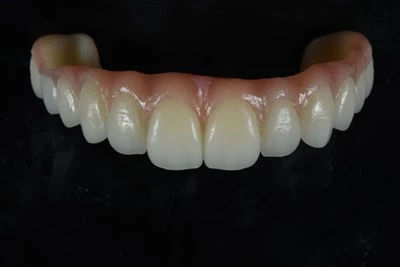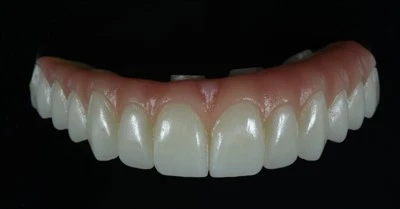
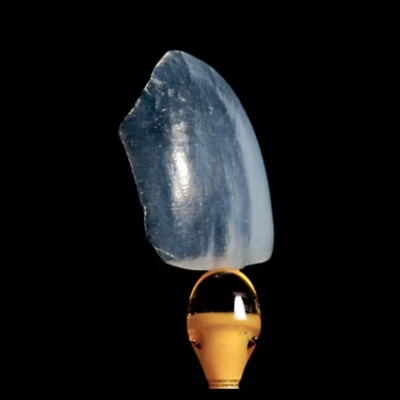
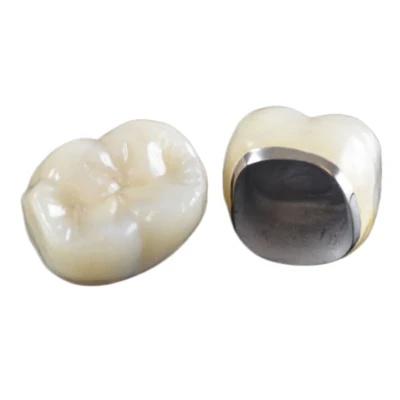
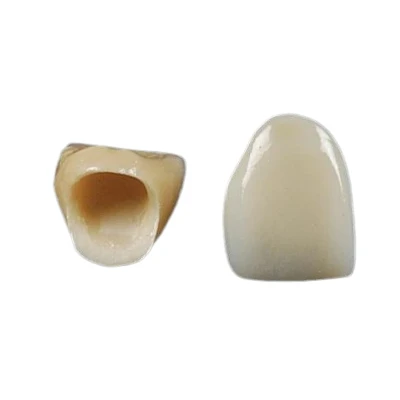
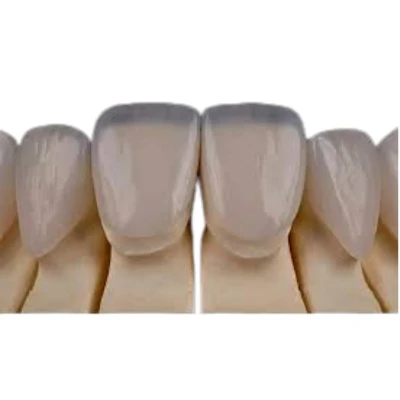
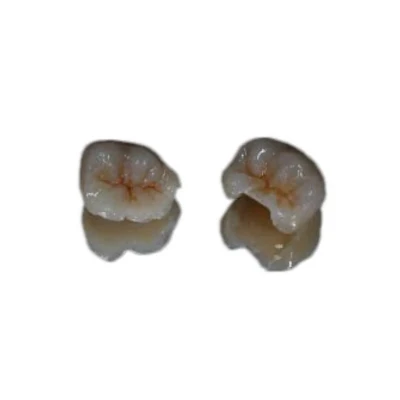


Veneer bonding success depends on more than the ceramic restoration itself. Veneer bonding fails at the interface, not in the ceramic. A perfectly pressed lithium disilicate shell means nothing if the bonding surface arrives unetched, the margins are over-adjusted at try-in, or the dentist does not know whether the intaglio was already conditioned.
The dental lab controls more of the bonding outcome than most prescriptions acknowledge. What the lab communicates-or fails to communicate-about veneer fit, fit tolerances, and ceramic surface preparation directly influences whether a veneer survives five years or debonds in five months.

Why Veneer Fit Affects Bonding Success
Marginal fit describes how precisely a restoration's internal and marginal surfaces conform to the prepared tooth. Following appropriate veneer preparation guidelines helps establish the preparation geometry needed for accurate restoration design and seating.
In veneer dentistry, fit is conventionally measured as the vertical and horizontal gap between the veneer intaglio and the preparation surface, expressed in micrometers. A gap that looks small on the die becomes a resin-cement film of measurable thickness-and thick cement films shrink more, absorb more water, and degrade faster than thin ones.
Resin cement, the adhesive luting agent that bonds the veneer to enamel and dentin, functions best in thin films. Most light-cured resin cements designed for veneer bonding achieve optimal bond strength at film thicknesses below 50 micrometers. Beyond that threshold, polymerization shrinkage generates stresses that pull the cement away from either the tooth or the ceramic interface, creating marginal gaps that invite microleakage and secondary staining.
The lab's responsibility is to deliver dental veneers that seat fully without binding. A veneer that requires aggressive internal adjustment at the chairside has already lost its precision-fit advantage-every bur pass on the intaglio removes the etched surface topography the lab created.
What the dental lab must communicate about veneer fit:
- Whether the veneer was fabricated on a digital or physical model, and the expected marginal gap range
- Whether die spacer was applied and at what thickness, since spacer controls the cement film gap
- Which contacts were adjusted on the model versus left for clinical refinement
- Whether the veneer seats passively or requires a specific seating direction
If the lab does not flag a tight contact or a binding axial wall, the dentist discovers it at try-in-by which point adjustment risks damaging the etched ceramic surface. Clear veneer fit assessment and communication help prevent that scenario.
What the Dental Lab Must Communicate About Ceramic Surface Preparation
Hydrofluoric Acid Etching
Hydrofluoric acid (HF) etching is the controlled application of a 4–10% hydrofluoric acid gel to the intaglio surface of a glass-matrix ceramic, dissolving the glass phase to create micromechanical retention. This is an important step in the conventional bonding protocol for applicable glass ceramics. Without appropriate HF etching, the bonding surface may lack sufficient micromechanical retention, and silane or bonding agent alone cannot fully compensate.
The critical variable is etching time, which depends on the ceramic's glass phase content. Lithium disilicate ceramics-such as those used in IPS e.max veneers-contain a glass phase and respond to HF etching. Feldspathic porcelain has a different microstructure and may require longer exposure to achieve an appropriate micromechanical pattern.
|
Ceramic Type |
HF Concentration |
Etching Time |
Surface Result |
|
Lithium disilicate (e.max) |
5% |
20 seconds |
Fine, uniform micropores |
|
Feldspathic porcelain |
5–10% |
60–90 seconds |
Coarser, deeper etch pattern |
|
Leucite-reinforced ceramic |
5% |
60 seconds |
Moderate surface roughening |
|
Zirconia (polycrystalline) |
Not effective |
N/A |
Requires airborne particle abrasion instead |
These values represent commonly referenced preparation conditions. Actual etching concentration and time must follow the specific ceramic manufacturer's instructions, as protocols can vary by product.
Some dental labs etch the intaglio before shipping the veneer. Others ship unetched, expecting the clinician to perform HF etching in-office. Both approaches are legitimate, but the dentist must know which state the veneer arrives in. Unnecessary re-etching of an already-etched surface can over-roughen the ceramic, potentially weakening the interface. Skipping required etching on an unetched surface leaves the bonding surface inadequately prepared.
This is one of the most important communication issues in ceramic veneer bonding.
Silane Coupling Agent
Silane is a bifunctional coupling molecule applied to the etched ceramic surface. One end bonds to the silica in the ceramic; the other end polymerizes with the resin cement's methacrylate groups. Silane creates the chemical bond that complements the micromechanical retention from HF etching. Without silane, the resin cement relies on mechanical interlock alone-a weaker and less durable bond.
The lab should communicate whether silane was applied. If the lab etched and silanated the veneer before shipping, the dentist should confirm whether further silane application is indicated by the bonding system rather than automatically adding another layer. Excess or improperly applied silane can create a thick, unstable layer that reduces bond strength.
If the lab etched only, the dentist applies silane chairside-typically 60 seconds of contact time followed by gentle air drying, subject to the silane manufacturer's instructions.
Ultrasonic Cleaning
After HF etching, the ceramic surface carries acid residue and dissolved glass salts. Ultrasonic cleaning in distilled water or 95% ethanol for four to five minutes removes this debris. Skipping this step leaves contaminants that can interfere with silane penetration and create weak points in the bond.
Labs that etch in-house should perform appropriate cleaning before shipping. The prescription or lab slip should state that the veneer was etched, cleaned, and is ready for silane and bonding-or that it was etched and silanated, with any remaining chairside preparation requirements clearly identified.
What Dentists and Labs Should Include in a Veneer Prescription
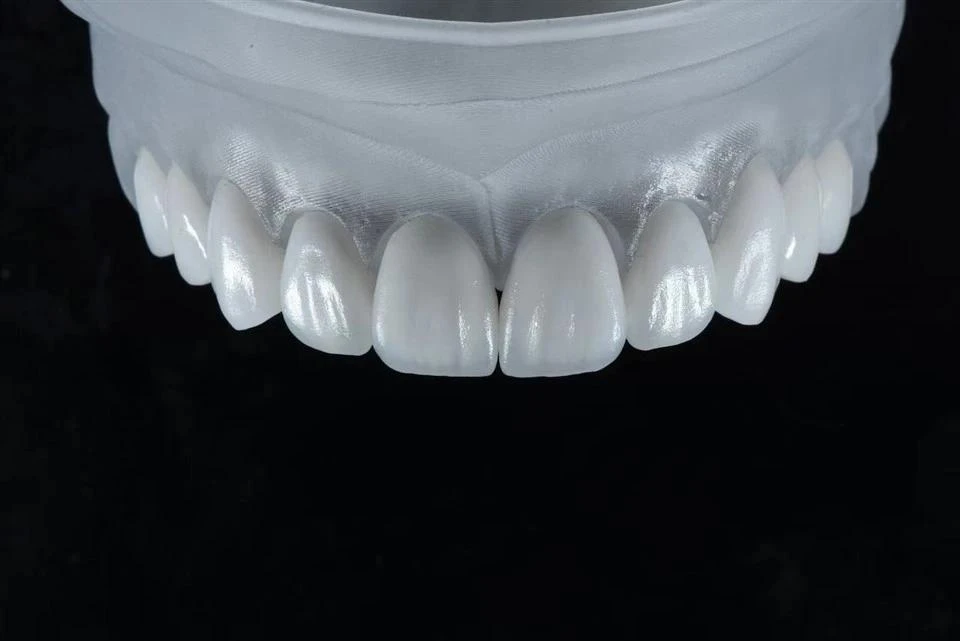
A veneer work authorization (the lab prescription) that reads "6 veneers, A2, return by Friday" is insufficient for bonding success. The prescription is a communication document, and the return slip is equally important-the lab must send back information that affects the veneer bonding protocol.
Information the dentist should send to the lab:
- Ceramic material preference (lithium disilicate, feldspathic, zirconia) and why
- Preparation depth at cervical and incisal, to guide die spacer application
- Shade prescription including dentin shade, incisal translucency, and any characterization
- Whether the lab should etch the intaglio or leave it to the clinician
- Cement shade preference if known (try-in paste selection depends on this)
Information the dental lab must send back:
|
Lab Communication |
Why It Matters for Bonding |
|
Material used (confirmed) |
Determines HF etching time and whether etching is even applicable |
|
Intaglio surface state (etched / etched + silanated / unetched) |
Prevents unnecessary re-etching or skipping required surface preparation |
|
Die spacer thickness applied |
Controls cement film thickness and influences bond durability |
|
Marginal gap range measured |
Tells the clinician whether to expect passive seating |
|
Adjustments made on the model |
Prevents the dentist from adjusting surfaces the lab already refined |
|
Recommended try-in paste shades |
Guides cement selection for the final aesthetic outcome |
When the lab returns a veneer with a note stating "intaglio etched with 5% HF for 20 seconds, ultrasonically cleaned, silane not applied," the dentist has a clearer basis for completing the remaining bonding steps according to the applicable material and adhesive system.
No guesswork. No unnecessary double-etching. No skipped steps.
How Veneer Try-In Affects Fit and Ceramic Surface Cleanliness
Try-in is the moment when veneer fit and ceramic surface preparation intersect. The veneer must seat completely, margins must adapt, and the shade must match-without contaminating the etched intaglio.
Try-in paste is a water-soluble glycerin gel used to simulate the final cement shade and verify seating before bonding. It is not cement. It must be completely removed before bonding because glycerin residue can interfere with adhesive procedures and has been associated with reductions in bond strength of up to 30% under certain testing conditions.
The lab should communicate whether try-in paste is safe to use on the etched surface. If the intaglio was etched and silanated at the lab, try-in paste should be applied sparingly and removed using the cleaning procedure recommended for the ceramic and adhesive system. If the surface is unetched, try-in paste poses less risk to an already-conditioned surface-but the dentist still faces the full etching protocol chairside.
Contamination is the silent killer of veneer bonds. Saliva, blood, or even try-in paste residue on the etched ceramic surface disrupts silane coupling and creates a weak interface. The lab's communication about surface state determines how carefully the clinician must protect that surface during try-in.
Ceramic Surface Treatment Requirements by Veneer Material
Not all veneer ceramics receive the same surface treatment. The dental lab must specify the material because the ceramic veneer bonding protocol differs significantly between glass ceramics, polycrystalline ceramics, and resin-matrix ceramics.
Glass Ceramics
Glass-based ceramics-including lithium disilicate, feldspathic porcelain veneers, and leucite-reinforced ceramics-contain a silica glass phase that responds to HF etching. These are among the most common veneer materials and offer predictable bonding when the appropriate surface treatment and resin cement system are used.
Understanding the differences between feldspathic and E.max veneers also helps clinicians select appropriate materials and distinguish their bonding requirements.
The lab etches the intaglio according to the material-specific protocol and communicates whether silane has already been applied. The clinician can then complete the remaining adhesive steps based on the confirmed surface condition.
Zirconia Veneers
Zirconia is a polycrystalline ceramic with no glass phase. HF etching does not work on zirconia-the acid has no silica glass phase to dissolve. Instead, surface preparation commonly involves airborne particle abrasion (sandblasting) with aluminum oxide particles, such as 50-micrometer particles at low pressure when permitted by the manufacturer's instructions, followed by a primer containing 10-MDP (10-methacryloyloxydecyl dihydrogen phosphate), a phosphate monomer that chemically bonds to zirconia's surface.
If the lab ships a zirconia veneer with a note saying "HF etched," that is a red flag. Conventional HF etching is not effective for zirconia. The lab should identify the appropriate abrasion method and clearly state whether a compatible 10-MDP primer has been applied or is required.
Resin-Matrix Ceramics
Resin-matrix ceramics-such as polymer-infiltrated ceramic networks (PICN) and resin nanoceramics-contain both ceramic and polymer components. Their surface preparation requirements vary by material.
Some PICN materials require manufacturer-specified HF etching and silane application, while many resin nanoceramics are prepared using airborne particle abrasion and a compatible adhesive or primer.
The lab must identify the material clearly so the clinician follows the correct manufacturer-recommended ceramic surface treatment protocol rather than applying a generic preparation procedure.
Veneer Bonding Errors Clear Lab Communication Can Prevent
Most veneer bonding failures trace back to problems involving the adhesive interface, preparation, or bonding protocol. The lab cannot control what happens at the chairside, but clear dental lab communication reduces the ambiguity that can contribute to preventable errors.
Common failures and how lab communication helps prevent them:
- Double etching: The dentist re-etches an already-etched surface, potentially over-roughening the ceramic and weakening the bond. Prevention: The lab states "intaglio etched" on the return slip and documents the relevant preparation details.
- Skipped etching: The dentist assumes the lab etched when it did not. Prevention: The lab states "intaglio unetched, clinician to etch" explicitly when appropriate for the material.
- Wrong etching time: The dentist applies a generic 60-second etch to lithium disilicate when the material protocol specifies only 20 seconds. Over-etching lithium disilicate can create excessively deep pores that trap air and weaken the bond. Prevention: The lab specifies the material and its manufacturer-recommended etching protocol.
- Silane double application: The lab has already applied silane, but the dentist applies an additional layer without confirming whether it is required. Prevention: The lab states "silane applied" or "silane not applied" and identifies the applicable surface treatment system.
- Contaminated surface during try-in: The dentist handles the etched surface without knowing it is etched. Prevention: The lab labels the ceramic surface state clearly and communicates any relevant cleaning or decontamination requirements.
Each of these errors can be addressed with one or two lines of information on the lab return slip. The cost of that communication is negligible. The cost of a debonded veneer-removal, reprep, refabrication, and patient dissatisfaction-is substantial. Better communication is also an important part of reducing dental restoration remakes.
What the Dental Lab Should Communicate About Resin Cement Selection
Resin cement selection depends on the ceramic material, the preparation depth, and the desired aesthetic outcome. The lab influences this decision through material selection and shade communication.
Light-cured resin cements are often preferred for veneers because they offer extended working time, favorable color stability, and controlled polymerization. Dual-cure cements may be necessary when veneer thickness or opacity limits sufficient light penetration-but some dual-cure formulations can carry a color stability penalty over time.
The lab should communicate the veneer thickness, especially at the cervical margin where thickness is greatest and light penetration may be lowest. If the cervical thickness exceeds 1.5 millimeters in a high-opacity shade, the lab should flag this and recommend evaluating whether a dual-cure cement is appropriate, based on the restoration's optical properties and the cement manufacturer's curing instructions.
Try-in paste shade selection is the lab's domain as much as the dentist's. The lab fabricates the veneer to a specific shade and translucency; the try-in paste must match the final cement to avoid shade surprises.
The lab should provide or recommend try-in paste shades that correspond to the resin cement system compatible with the ceramic material used.
What to Include on Every Veneer Lab Return Slip
A return slip that supports veneer bonding success is not lengthy. It is specific. The following elements, communicated on every veneer case, can reduce many common bonding protocol errors:
- Ceramic material identified by brand and classification (e.g., "IPS e.max Press, lithium disilicate")
- Intaglio surface state: etched (concentration and time), etched + silanated, or unetched
- Surface preparation method for non-glass ceramics (abrasion particle size, primer applied)
- Die spacer thickness and marginal gap range
- Adjustments performed on the model (contacts, margins, occlusion)
- Recommended try-in paste shades and compatible cement system
- Veneer thickness at cervical and incisal, flagged if dual-cure cement evaluation is indicated
- Any case-specific notes (e.g., "thin incisal edge-handle with care during try-in")
This is not excessive documentation. It is the minimum information a clinician needs to execute a veneer bonding protocol without guessing. Such documentation also supports consistent dental lab quality standards and more reliable communication between laboratories and clinicians.
Final Thoughts
Veneer bonding succeeds when the lab and the clinician operate as a single workflow, not as two disconnected steps. The lab's ceramic surface preparation and fit precision establish important conditions for reliable bonding. The clinician's protocol execution determines how effectively those conditions translate into the final restoration. The bridge between the two is communication-specific, material-aware, and documented on every case.
If your lab returns veneers with unclear surface preparation notes, missing material identification, or no guidance on etching state, bonding failures may reflect a communication problem as well as a clinical one. A reliable dental laboratory should communicate ceramic surface treatment, provide relevant fit information, and support the clinician with clear case-specific documentation.
At ADS Dental Laboratory Ltd, a digital dental laboratory based in Shenzhen, China, our dedicated Veneer Aesthetic Center produces customized feldspathic and IPS e.max veneers, supported by digital workflows, experienced technicians, structured quality control, and international case coordination. Contact our team to discuss your veneer cases, technical requirements, or long-term dental lab outsourcing needs and explore how we can support your restorative workflow.
FAQ
What information should a dental lab provide before veneer bonding?
A dental lab should identify the ceramic material, document the intaglio surface condition, and communicate relevant veneer fit information, including marginal adaptation, die spacer thickness, and any adjustments performed during fabrication. It should also indicate whether the ceramic surface has been etched, cleaned, or silanated so the dentist can follow the appropriate bonding protocol.
How does marginal fit affect ceramic veneer bonding success?
Marginal fit influences how completely a veneer seats and how consistently resin cement occupies the space between the ceramic restoration and the prepared tooth. Excessive gaps or incomplete seating may increase cement thickness, marginal discrepancies, and the risk of microleakage. Accurate veneer fit assessment and clear laboratory communication help the clinician identify potential problems before final cementation.
Should dentists etch ceramic veneers if the dental lab has already etched them?
Not automatically. If the dental lab has already etched the ceramic veneer, the dentist should verify the material, the surface treatment performed, and whether additional cleaning or conditioning is necessary. Unnecessary re-etching may affect the ceramic surface. The correct next step should follow the ceramic and adhesive manufacturers' instructions and account for any contamination during try-in.
Do lithium disilicate, feldspathic, and zirconia veneers require the same surface treatment?
No. Lithium disilicate and feldspathic veneers are silica-based ceramics commonly treated using material-specific hydrofluoric acid etching and silane protocols. Zirconia does not respond to conventional HF etching and generally requires a different surface preparation approach involving appropriate mechanical treatment and a compatible bonding primer, often containing 10-MDP.
The dental lab should clearly identify the restoration material so the clinician can select the correct veneer bonding protocol.
How can better dental lab communication help prevent veneer debonding?
Clear communication helps dentists avoid errors such as unnecessary re-etching, skipped surface preparation, incorrect bonding protocols, and adjustments that damage a previously conditioned ceramic surface.
A complete lab return slip documenting the restoration material, veneer fit, ceramic surface treatment, and relevant case-specific instructions can improve coordination between the laboratory and clinician. Although bonding success also depends on clinical factors such as tooth preparation, isolation, and adhesive technique, accurate laboratory information reduces avoidable uncertainty.