
A single implant crown is the visible prosthetic tooth that restores one missing tooth atop a dental implant. It sits on an abutment connected to the titanium fixture in the jawbone. Unlike a natural tooth, this assembly has no periodontal ligament-no sensory cushion between bone and crown-which changes how it handles force, how it is designed, and how it must be maintained. Every decision, from abutment geometry to ceramic selection, compounds into either a decade of trouble-free function or a recurring problem.
Understanding the design components, implant crown materials, retention methods, and care requirements is essential for selecting an appropriate single tooth implant crown restoration.
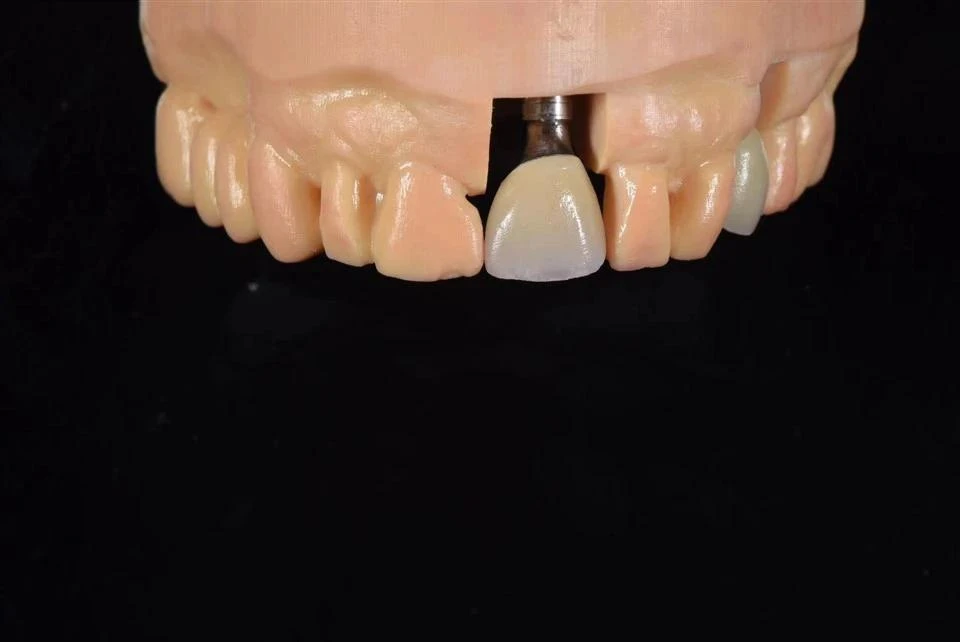
Design Components of a Single Implant Crown
A single implant crown restoration is not one object. It is a stack of precision-machined and hand-finished parts, each with a distinct mechanical role. Understanding what sits in the patient's mouth starts with separating those parts.
The Implant Fixture
The fixture is the screw-shaped titanium root placed into the jawbone during surgery. It is typically made from commercially pure titanium (Grade 4) or titanium-aluminum-vanadium alloy (Grade 5), chosen for osseointegration-the direct structural and functional connection between living bone and the implant surface. Surface treatments such as sandblasting, acid etching, or hydrophilic coatings accelerate bone apposition. The fixture is not part of the crown itself, but its position, angle, and depth dictate every downstream design choice for the superstructure.
The Abutment
The abutment is the transmucosal connector that links the fixture to the crown. It emerges through the gum tissue and establishes the emergence profile-the transition from the circular implant platform to the natural tooth cross-section. Two broad categories exist:
- Stock (prefabricated) abutments: Factory-manufactured from titanium or zirconia, standardized in geometry. Lower cost, faster turnaround, but limited ability to replicate soft-tissue contours.
- Custom (CAD/CAM) abutments: Designed digitally from a soft-tissue scan, milled to match the patient's gingival architecture. Superior emergence profile and margin control, particularly critical in the aesthetic zone.
Abutment material selection carries both mechanical and biological weight. Titanium abutments dominate posterior restorations for their fatigue resistance. Zirconia abutments are preferred anteriorly where tissue translucency makes a metal collar visible through thin gingiva. A hybrid design-zirconia bonded to a titanium base-combines the aesthetic advantage of ceramic with the proven implant–abutment interface integrity of metal.
The Abutment Screw
The abutment screw is the small fastener that locks the abutment to the fixture's internal connection. It is typically titanium alloy, engineered for a specific preload-the clamping force generated when the screw is torqued to the manufacturer's specified value, usually 25–35 Ncm depending on the system. Preload holds the joint together under functional load; insufficient torque invites micromovement, while excess torque risks thread stripping or fatigue fracture.
Screw loosening is the most frequently reported technical complication in single implant crowns, with incidence rates cited in the range of 5–8% over five years of function. The underlying causes are almost always traceable to inadequate preload, poor implant–abutment fit, or off-axis loading that exceeds the joint's clamping capacity.
The Prosthetic Crown
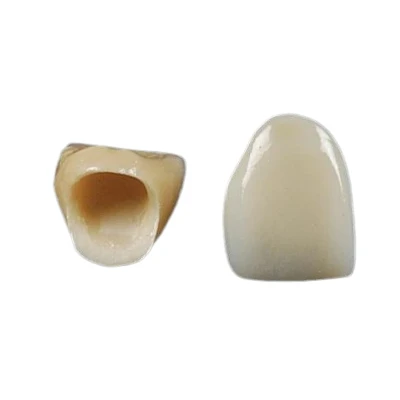
The crown is the final visible restoration. It is either cemented onto the abutment (cement-retained) or secured through a screw accessing the occlusal or lingual surface (screw-retained). The crown replicates the lost tooth's anatomy-cusp inclination, axial contour, proximal contacts, and incisal edge position-while accommodating the implant system's mechanical requirements beneath.
The crown's design must compensate for what the implant lacks. No periodontal ligament means no proprioceptive feedback telling the patient when bite force is excessive. The crown therefore carries the burden of protective occlusion: lighter contacts in centric relation, adjusted excursive guidance, and material choices that absorb or distribute rather than concentrate stress.
Screw-Retained vs Cement-Retained Implant Crowns
The retention method is the single most consequential design fork in a single implant crown. It dictates aesthetics, retrievability, soft-tissue health, and long-term maintenance pathways.
|
Parameter |
Screw-Retained |
Cement-Retained |
|
Retention mechanism |
Abutment screw through crown |
Dental cement bonding crown to abutment |
|
Retrievability |
Fully retrievable; unscrew for maintenance |
Not retrievable without destroying the crown |
|
Aesthetic impact |
Access hole on occlusal/lingual surface |
No access hole; intact surface |
|
Cement residue risk |
None |
Residual cement can cause peri-implant inflammation |
|
Indication |
Posterior teeth, ideal implant position |
Anterior aesthetic zone, limited occlusal clearance |
|
Technical complication profile |
Screw loosening, access-hole composite wear |
Cement washout, residual cement, difficult re-treatment |
Clinical evidence does not show a significant survival difference between the two approaches-both report five-year survival rates above 95%. The decision should be driven by case anatomy. When the implant emerges through the cusp tip or central fossa with an ideal axial path, screw retention is the stronger choice for its retrievability and absence of cement-related biological risk. When the screw path would exit through a visible facial surface or the interocclusal space is limited, cement retention becomes the pragmatic option-provided the abutment margin is placed supragingivally or at the tissue crest to allow complete cement cleanup. For suitable cases, screw-retained zirconia implant crowns combine a ceramic superstructure with the maintenance advantages of screw access.
The angle screw channel (ASC) abutment has narrowed this trade-off. By allowing up to 25° of angular correction in the screw path, ASC technology makes screw retention viable in cases that previously forced a cement-retained design-particularly maxillary anterior immediate placements where only 10–24% of implants traditionally permitted a straight screw channel.
Retrievability is not a convenience feature. It is a maintenance necessity. When peri-implantitis develops or a screw loosens, a screw-retained crown can be removed, cleaned, and reinstalled in minutes. A cement-retained crown must be cut off-destroying the restoration and risking damage to the abutment and implant interface.
Material Choices for a Single Implant Crown
Choosing implant crown materials for the crown proper involves balancing strength, aesthetics, and the implant system's unique loading environment. An implant-supported crown behaves differently from a tooth-supported one: the rigid bone–implant interface transmits force more directly, and the absence of periodontal ligament shock absorption means the crown material must manage stress that a natural tooth would dissipate through its suspensory ligament.
Zirconia (Zirconium Dioxide)
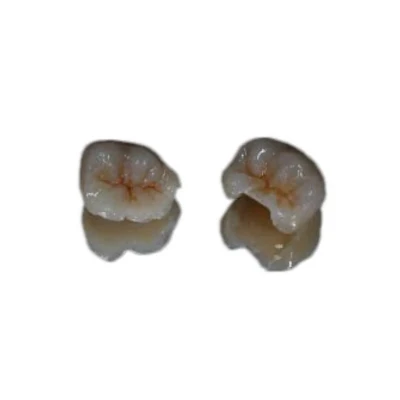
Zirconia is a polycrystalline ceramic with the highest flexural strength among dental ceramics-typically 800–1200 MPa depending on formulation and processing. It is biocompatible, chemically inert in the oral environment, and does not produce the gray gingival discoloration associated with metal-based restorations. Monolithic zirconia-milled as a single solid piece without porcelain veneering-has become the workhorse for posterior implant crowns because it eliminates the chipping failure mode that plagued earlier layered zirconia.
The trade-off is aesthetic. Monolithic zirconia is more opaque than glass ceramics, which limits its use in the anterior aesthetic zone where translucency and enamel mimicry matter most. Multi-layer zirconia blanks, which transition from a high-strength dentin core to a more translucent enamel layer, have narrowed this gap but not closed it.
Lithium Disilicate Glass Ceramic
Lithium disilicate (e.g., IPS e.max) is a glass ceramic with a flexural strength of approximately 360–500 MPa-substantially lower than zirconia but sufficient for many single-unit applications. Its defining advantage is aesthetics: high translucency, excellent color depth, and the ability to mimic natural enamel's light scattering. It bonds adhesively to tooth structure and abutments through silane coupling and resin cement, which enhances fracture resistance beyond the material's intrinsic strength.
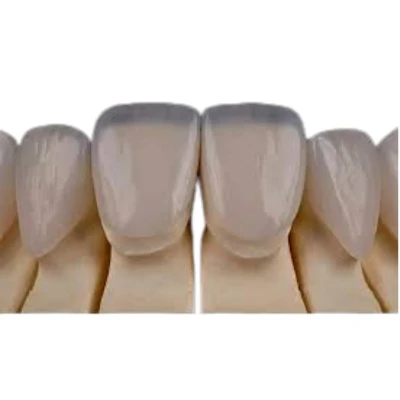
For implant crowns, lithium disilicate is the material of choice for anterior screw-retained or cement-retained restorations where aesthetics are paramount and occlusal forces are moderate. It is less suited for posterior applications involving heavy bruxism or deep overbite, where its lower fracture toughness becomes a liability.
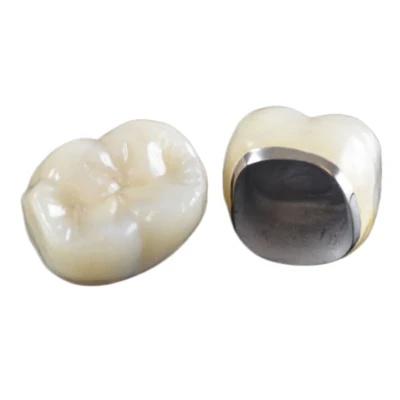
Porcelain-Fused-to-Metal (PFM)
PFM combines a metal substructure-typically cobalt-chromium, nickel-chromium, or gold alloy-with a veneered porcelain layer. It has served as the benchmark restorative material for decades, offering reliable fit, acceptable aesthetics, and proven mechanical performance. Flexural strength of the porcelain veneer is approximately 60–100 MPa, but the metal coping provides structural backup.
For implant crowns, PFM is increasingly displaced by all-ceramic options, but it retains a role in cost-sensitive cases and in patients with heavy occlusion where metal's ductility is advantageous. Its drawbacks are well documented: potential for gingival metal tattooing, opacity at the cervical margin, and porcelain chipping-particularly under the concentrated loads an implant transmits without periodontal ligament buffering.
Comparison of Implant Crown Materials
|
Property |
Monolithic Zirconia |
Lithium Disilicate |
PFM |
|
Flexural strength |
800–1200 MPa |
360–500 MPa |
60–100 MPa (veneer) |
|
Aesthetics |
Moderate (opaque) |
Excellent (translucent) |
Good (limited by metal) |
|
Fracture resistance |
Very high |
Moderate (enhanced by bonding) |
High (metal backup) |
|
Gingival tissue response |
Excellent |
Excellent |
Risk of metal discoloration |
|
Best indication |
Posterior implant crowns |
Anterior aesthetic crowns |
Cost-driven posterior cases |
|
Chipping risk |
Very low (monolithic) |
Low |
Moderate (veneer failure) |
Abutment Material Considerations
The abutment material interacts with both the implant interface and the crown. Titanium remains the default for posterior restorations due to its proven fatigue performance at the screw joint. Zirconia abutments-either one-piece or bonded to a titanium base-are selected for anterior implant crowns when soft-tissue translucency demands a metal-free substructure, typically in the maxillary anterior region. Research indicates zirconia abutments produce lower plaque accumulation and superior pink aesthetic scores compared to titanium, though both achieve comparable implant survival rates.
A practical constraint: when the implant is placed with a facial angulation exceeding 15°, the mechanical advantage of titanium's ductility should override aesthetic considerations. Zirconia's brittleness under off-axis load makes it a poor choice for significantly divergent implant axes.
The right material is not the strongest one. It is the one whose properties match the specific mechanical and aesthetic demands of the tooth position, the occlusion, and the patient's functional pattern.
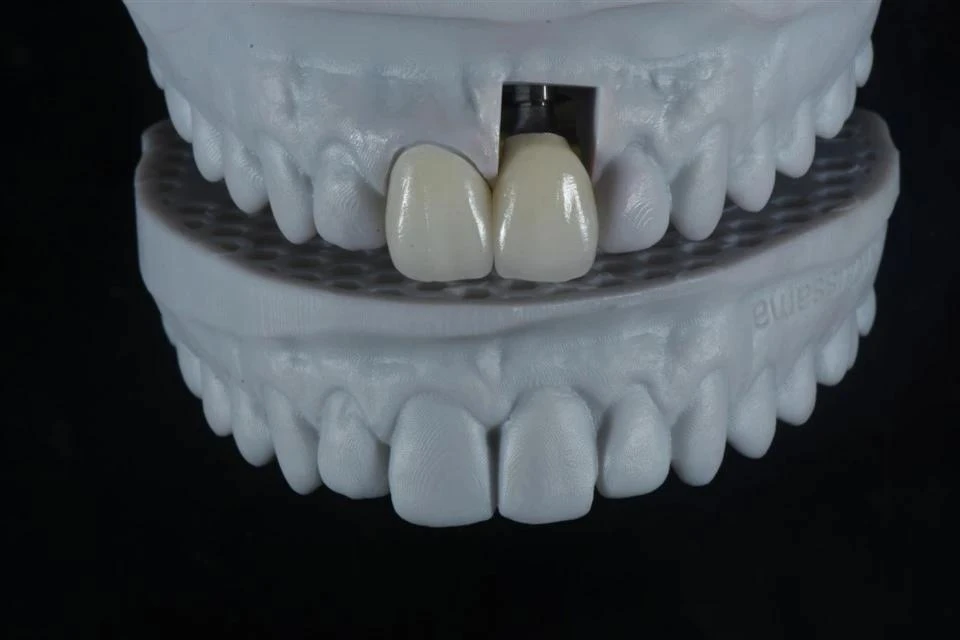
Care Considerations and Long-Term Maintenance for Single Implant Crowns
An implant crown is not a fire-and-forget restoration. The absence of periodontal ligament removes the biological early-warning system that natural teeth possess-patients feel pain when a natural tooth is overloaded, but an implant can accumulate destructive force silently until bone loss becomes radiographically visible. Maintenance is therefore not optional; it is the determinant of whether a well-placed, well-designed crown lasts five years or twenty.
Daily Oral Hygiene for an Implant Crown
The cleaning objective around an implant crown is plaque removal from the abutment–crown junction, the proximal contacts, and the subgingival sulcus where bacteria colonize the machined surfaces more readily than they adhere to natural root structure. The protocol is more demanding than standard tooth care:
- Soft-bristle brushing twice daily, with emphasis on the cervical margin where the crown meets the gingiva. Bass technique at 45° angle to the gingival margin.
- Interdental cleaning daily using implant-safe floss or interdental brushes. PTFE-coated floss prevents shredding against ceramic or metal surfaces. Interdental brushes must be sized correctly-too large risks abrading the abutment surface; too small fails to clean.
- Water flosser (oral irrigator) as adjunct, not replacement for mechanical cleaning. Low pressure setting directed at the gingival margin flushes debris from areas floss cannot reach. Clinical data suggests daily interdental brush users have meaningfully lower peri-implantitis incidence than non-users.
Chlorhexidine rinse is useful short-term-post-surgical or during acute inflammation-but not as a daily long-term agent due to staining and microbial dysbiosis with prolonged use.
Occlusal and Functional Management
The crown's occlusion must be designed and maintained to protect the implant. Key considerations for occlusal contacts and load management in implant crowns include:
- Lighter centric contacts than the contralateral natural tooth (approximately 10–20 μm lighter on articulating paper).
- Narrowed occlusal table to reduce lateral force moments on the implant.
- Elimination of non-working side contacts during excursive movements.
- Material selection that does not generate excessive wear on opposing natural dentition-polished monolithic zirconia is gentler than unpolished; lithium disilicate is gentler still.
Patients with bruxism or clenching require an occlusal guard (night guard) as part of the restoration plan, not as an afterthought. Without it, the implant crown absorbs parafunctional forces that the periodontal ligament would otherwise dissipate, accelerating screw fatigue, abutment wear, and marginal bone loss.
Professional Maintenance Schedule for Implant Crowns
|
Timeframe |
Protocol |
|
Placement to 1 year |
Review every 3–6 months; assess soft tissue, occlusion, screw stability |
|
1 year onward |
Annual review minimum; radiographic baseline at 1 year, then every 2–3 years |
|
Screw-retained crowns |
Consider periodic removal and screw re-torque per manufacturer protocol |
|
High-risk patients (smokers, diabetes, periodontal history) |
3–4 month intervals; enhanced radiographic monitoring |
Professional maintenance includes probing around the implant (using light, consistent force with a plastic or titanium probe), assessment of bleeding on probing, mobility testing, and radiographic evaluation of marginal bone levels. Screw-retained crowns offer the advantage of periodic removal for direct inspection and debridement of the abutment–implant interface.
Peri-Implant Disease: Recognition and Risk
Peri-implant disease exists on a spectrum. Peri-implant mucositis is soft-tissue inflammation reversible with mechanical debridement. Peri-implantitis extends to progressive bone loss and is largely irreversible. Reported prevalence varies widely by study design, but five-year peri-implantitis incidence is commonly cited in the range of 10–15%, with cumulative rates reaching approximately 20% at ten years.
Key risk factors:
- History of periodontitis: Patients with treated periodontitis face elevated peri-implantitis risk; the 10-year implant survival rate in this group remains around 90%, but complication rates are higher.
- Smoking: Impairs wound healing and bone metabolism; failure rates are 2–3 times higher in heavy smokers.
- Poor plaque control: The single most modifiable risk factor. Inadequate hygiene increases peri-implantitis risk approximately threefold.
- Residual cement: In cement-retained crowns, subgingival cement extrusion is a direct inflammatory trigger. This is a design-failure mode, not a patient-failure mode-supragingival margins or screw retention eliminate it.
- Diabetes: Poorly controlled glycemia impairs osseointegration maintenance and soft-tissue healing.
The clinical reality is stark: an implant crown that is well designed and well maintained has a survival probability exceeding 95% at five years and remains functional for decades. One that is neglected-whether through patient non-compliance or inadequate professional follow-up-can fail within the same window. The difference is not the implant or the material. It is the maintenance.
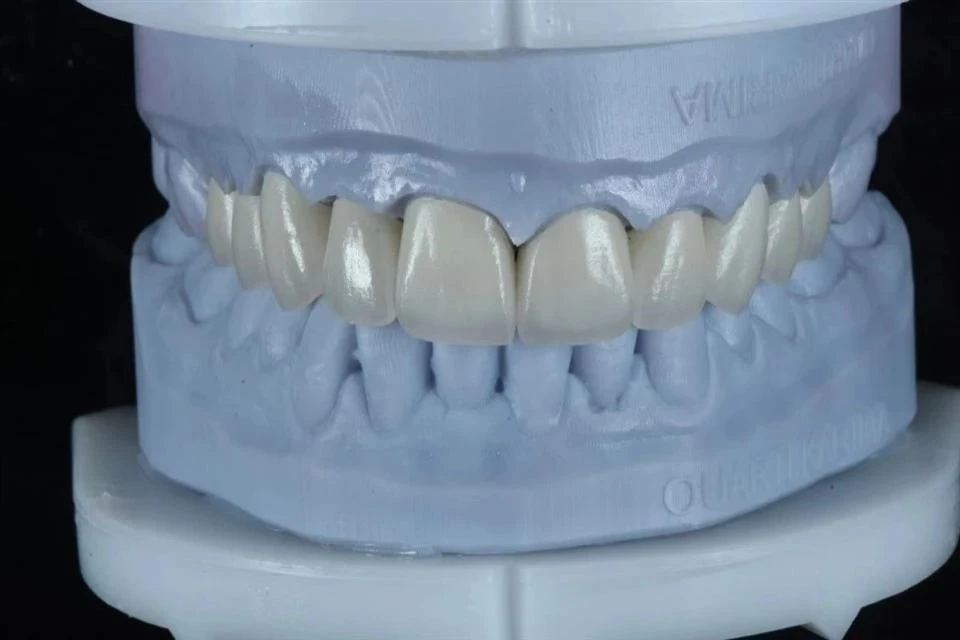
Conclusion
A single implant crown is a four-component restoration system-fixture, abutment, screw, and crown-in which each component influences the overall design and performance. Screw-retained implant crowns provide easier retrievability and avoid cement-related complications, while cement-retained designs offer advantages in selected aesthetic and anatomical situations. Zirconia is commonly favored for posterior strength, while lithium disilicate offers excellent anterior aesthetics. Neither material nor retention method is universally superior; the appropriate choice depends on implant position, angulation, occlusal load, soft-tissue conditions, and long-term maintenance requirements.
Ultimately, successful single implant crown restorations depend on coordinated design, appropriate material selection, accurate fabrication, and consistent patient care.
At ADS Dental Laboratory Ltd, a full-service digital dental laboratory based in Shenzhen, China, we provide custom single implant crowns, titanium and zirconia abutments, and CAD/CAM implant restoration services for overseas dentists and dental laboratories. Contact our team to discuss your implant restoration specifications, case requirements, or long-term dental lab outsourcing needs.
FAQ
What Is the Difference Between a Single Implant Crown and a Dental Implant?
A dental implant is the artificial root surgically placed into the jawbone, while a single implant crown is the visible prosthetic tooth attached to the implant through an abutment. Together, the implant fixture, abutment, connecting screw, and crown form a complete single-tooth implant restoration.
Which Material Is Best for a Single Implant Crown?
The best implant crown material depends on tooth position, occlusal forces, aesthetic requirements, and available restorative space. Monolithic zirconia is commonly selected for posterior implant crowns because of its high strength and resistance to chipping. Lithium disilicate is often preferred for anterior restorations where translucency and natural tooth aesthetics are priorities. PFM remains an option in selected cases.
How Long Does a Single Implant Crown Last?
Single implant crowns can remain functional for many years, with clinical reports indicating five-year survival rates above 95%. However, longevity depends on material selection, implant crown design, bite forces, oral hygiene, and regular professional maintenance. Mechanical complications, such as screw loosening or ceramic chipping, may require repair or replacement even when the underlying implant remains stable.
Can a Single Implant Crown Be Replaced Without Replacing the Implant?
Yes. If the implant fixture remains stable and healthy, a damaged or worn implant crown can often be replaced without removing the implant itself. Screw-retained implant crowns generally offer easier access for removal and maintenance, while cement-retained restorations may require more involved removal procedures. The dentist must evaluate the implant connection, abutment condition, and surrounding tissues before planning a replacement.
How Often Should a Single Implant Crown Be Professionally Checked?
Professional follow-up is generally recommended every 3–6 months during the first year, followed by at least annual evaluations, depending on the patient's risk profile. Patients with a history of periodontitis, smoking, diabetes, or other peri-implant disease risk factors may require more frequent monitoring. The dentist should determine the appropriate maintenance schedule based on individual clinical conditions.