

Compare digital vs. conventional dentures in workflow, accuracy, materials, appointments, and turnaround to choose the right approach for each case.
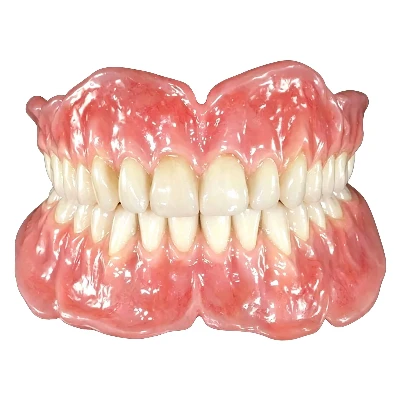
Digital dentures use digital data and CAD/CAM technology for part or all of the design and manufacturing process. Conventional dentures rely more heavily on physical impressions, stone casts, wax setups, and traditional acrylic processing.
The difference affects far more than production technique. It changes where errors can occur, how easily a case can be reproduced, how many laboratory stages are required, and in some cases how quickly the patient can receive the final prosthesis.

Digital vs. Conventional Dentures at a Glance
The clearest advantage of a digital denture workflow is control over data. Once clinical records have been digitized, the denture can be designed, modified, manufactured, and archived without repeatedly transferring the same information between physical materials.
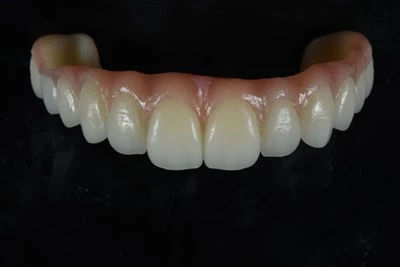
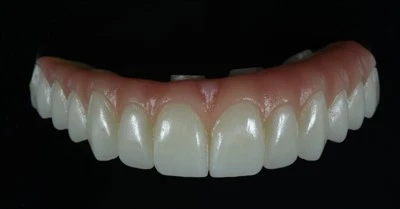
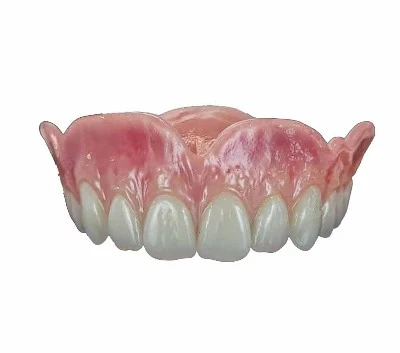
Conventional dentures remain a reliable treatment option, particularly when functional impressions, complex soft-tissue management, or additional clinical verification are important. For clinics comparing material and production options, a conventional acrylic full denture remains a useful reference point against which digital workflows can be evaluated.
|
Comparison |
Digital Dentures |
Conventional Dentures |
|
Clinical records |
Intraoral scan or digitized conventional records |
Physical impressions and casts |
|
Design |
CAD denture design |
Manual wax setup |
|
Try-in |
Can be digital, printed, milled, or omitted in selected cases |
Wax try-in commonly used |
|
Manufacturing |
Milling or 3D printing |
Flasking, packing, polymerization |
|
Reproducibility |
Digital design can be archived and reused |
More dependent on retained physical records and new clinical records |
|
Workflow |
Can reduce physical transfers and laboratory stages |
More manual laboratory stages |
|
Main strength |
Standardization, reproducibility, production flexibility |
Established clinical versatility and technician control |
A digital denture is therefore not necessarily a 3D-printed denture. Digital dentures may be milled from pre-polymerized PMMA or produced through additive manufacturing, and the two methods have different material and processing characteristics.
How the Conventional and Digital Denture Workflows Differ
Conventional Denture Workflow
A conventional complete denture typically moves through a sequence of clinical and laboratory stages:
Preliminary impression → border molding and final impression → master cast → jaw relation and wax rim → tooth setup → wax try-in → flasking and acrylic processing → finishing and polishing → delivery
The clinical records are transferred several times during this process. An impression becomes a stone cast. The cast is mounted. Teeth are arranged manually in wax. After approval, the wax denture is invested, the wax is removed, acrylic resin is packed into the mold, and the definitive denture is polymerized and finished.
This workflow is well established and gives the dentist and technician considerable control over border extension, tooth arrangement, esthetics, and functional verification. It also contains more physical handling and material-processing stages.
Digital and Hybrid Denture Workflows
A highly digital workflow may look like this:
Intraoral scan / digital records → CAD design → optional digital or printed try-in → milling or 3D printing → finishing → delivery
Clinics working with a digital intraoral scanner can transfer digital records directly to the laboratory when the case anatomy and clinical protocol are suitable.
But many digital dentures are actually produced through a hybrid workflow.
For example:
Conventional impression → stone cast or impression scan → CAD design → digital tooth setup → CAM manufacturing
A randomized crossover study comparing digital and conventional complete dentures used exactly this type of hybrid approach. Conventional impressions and master casts were retained, while the casts were scanned and the dentures were subsequently designed and milled digitally.
That distinction matters. A denture can be digitally manufactured without every clinical step being digital.
Hybrid workflows are especially useful when the clinician prefers conventional functional impressions but still wants the repeatability, file storage, and production control of CAD/CAM manufacturing. More broadly, this reflects how a digital dental lab workflow changes selected stages of production without requiring every analog step to disappear.

Are Digital Dentures More Accurate?
"Accuracy" in complete dentures is not a single measurement. Denture quality includes several separate factors:
- Intaglio surface adaptation
- Stability
- Retention
- Border extension
- Tooth position
- Occlusal accuracy
- Vertical dimension
- Manufacturing reproducibility
Digital fabrication performs particularly well where dimensional consistency and repeatability matter. Milling a denture base from a pre-polymerized PMMA blank removes some of the polymerization-related dimensional changes associated with traditional heat-processed acrylic.
Clinical evidence, however, shows why accuracy should be discussed by parameter rather than as one broad claim.
In a randomized crossover study involving 10 completely edentulous patients, the mean Sato score for overall denture quality was 73.2 ± 12.3 for digital dentures and 67.4 ± 11.8 for conventional dentures. The numerical result favored the digital group, but the difference was not statistically significant (p = 0.16).
The stability results were more distinctive. Optimal maxillary stability was observed in:
- 70% of digital dentures
- 20% of conventional dentures
- p = 0.025
Upper retention also numerically favored the digital group-90% versus 70% receiving the highest grade-but that difference did not reach statistical significance.
Digital fabrication did not outperform conventional production in every category. Perfect denture polish was recorded in 80% of conventional dentures versus 20% of digital dentures, with p = 0.034. Other parameters, including several occlusal, esthetic, and phonetic measures, were broadly comparable.
The practical conclusion is straightforward: digital denture accuracy is strongest as a manufacturing and reproducibility advantage. Final clinical performance still depends on the records supplied, jaw relation, border management, CAD decisions, manufacturing method, and technician finishing.
Where Do Errors Come From in Each Workflow?
Both workflows have an error chain. The difference is where the variables are introduced.
A conventional denture can accumulate variation through:
Impression → stone cast → mounting → wax setup → flasking → polymerization → finishing
Possible sources include impression distortion, stone expansion, articulation errors, tooth movement during processing, and acrylic polymerization shrinkage.
A digital denture has a different sequence:
Scanning or digitization → jaw-relation capture → CAD → milling or printing → post-processing → finishing
Here, accuracy can be affected by scan quality, bite registration, CAD design, machine calibration, print orientation, post-curing, bonding, and final adjustment. In additive workflows, digital denture post-curing is a critical manufacturing stage because the post-curing protocol can influence dimensional stability and final material properties.
Milling can remove an important conventional variable. Because the denture base is cut from a pre-polymerized PMMA puck, there is no final denture-base polymerization step that can introduce the same type of processing shrinkage. This was one explanation proposed for the better stability seen in the digital group of the clinical study.
Digital scanning also has limits. Capturing a completely edentulous arch is different from scanning prepared teeth. Broad featureless surfaces, movable mucosa, vestibular anatomy, saliva, and functional border movements can make soft-tissue capture more difficult. For laboratories receiving digital files, understanding intraoral scan requirements for predictable restorations is therefore important before a case enters CAD design.
For that reason, a conventional functional impression combined with digital laboratory production can be an excellent workflow.
Turnaround Time and Appointments: How Much Time Can Digital Dentures Really Save?
Digital dentures can shorten treatment, but there is no universal "digital denture turnaround time."
Some streamlined digital protocols are described as requiring approximately two to three visits, while conventional complete denture treatment often requires four to six visits.
Yet the randomized crossover study tells a different-and useful-story. The average number of appointments was:
- Digital dentures: 5.3 ± 0.5
- Conventional dentures: 5.9 ± 1.0
The reason is simple: the digital group still went through preliminary impressions, border molding, final impressions, jaw registration, try-in, and delivery. The laboratory production method changed, but much of the clinical protocol remained the same.
Other highly streamlined digital workflows can reduce total treatment to a matter of days, while traditional multi-stage workflows may extend over several weeks. These figures can coexist because they describe different systems.
For practical planning, turnaround should be separated into:
clinical appointments + design approval + laboratory production + try-in + quality control + shipping + final insertion
A clinic that captures reliable digital records and proceeds directly to final manufacturing can save substantial time. A complex complete denture requiring functional impressions, repeated jaw-relation verification, an esthetic try-in, or international shipping will take longer.
This is why dental lab turnaround time should be evaluated by case complexity and production stage instead of using one fixed number for every denture.
The strongest time advantage often appears in repeat production. Once a validated denture design has been archived, a lost or damaged denture may be reproduced without rebuilding the complete laboratory workflow from the beginning.

Milled vs. 3D-Printed Digital Dentures
Digital dentures are mainly produced through subtractive milling or additive 3D printing.
Milled Dentures
Milled denture bases are cut from industrially polymerized PMMA blanks. The material is already polymerized before machining, which provides good dimensional stability and avoids the conventional denture-base processing shrinkage associated with pack-and-press acrylic techniques.
Milling is well suited to cases where base adaptation, material consistency, and repeatable manufacturing are priorities.
3D-Printed Dentures
3D printing builds the denture layer by layer from a dental photopolymer resin. The FDA overview of 3D printing of medical devices describes additive manufacturing as a layer-by-layer process used to create medical devices from digital designs.
For denture production, this approach offers efficient material use and makes it practical to manufacture multiple designs or production units from digital files.
The final result depends heavily on the complete printing protocol: resin, printer, orientation, layer settings, washing, post-curing, bonding, and finishing.
|
Factor |
Milled Denture |
3D-Printed Denture |
|
Manufacturing |
Subtractive |
Additive |
|
Typical base material |
Pre-polymerized PMMA |
Photopolymer denture resin |
|
Processing shrinkage |
Low after milling |
Controlled through printing and post-curing |
|
Material use |
More waste from cutting |
More material-efficient |
|
Scalability |
Good |
Very high |
|
Post-processing |
Finishing and polishing |
Washing, curing, finishing and polishing |
|
Digital reproduction |
Excellent |
Excellent |
Both methods belong within digital denture manufacturing. Choosing between them should be based on the clinical indication, required material properties, production volume, and laboratory protocol.
Which Cases Benefit Most from Digital, Conventional, or Hybrid Denture Workflows?
Cases Where Digital Workflows Offer Clear Advantages
Replacement or duplicate dentures are one of the strongest digital indications. If a clinically successful design has been archived, the laboratory already has a reliable reference for future production.
Digital workflows are also attractive when reproducibility is important across repeated cases, when physical impression material causes significant patient discomfort, or when the dentist and laboratory want a faster transfer of case data.
Straightforward complete denture cases with reliable digital records can often use a streamlined CAD/CAM dental workflow with fewer physical stages.
Cases Where a Hybrid Workflow May Be More Predictable
Some cases still benefit from retaining selected conventional steps.
Highly mobile mucosa, difficult vestibular anatomy, complex jaw relations, uncertain lip support, or cases requiring detailed esthetic verification can justify conventional impressions, record bases, or an additional try-in.
Severely resorbed ridges also deserve careful case-by-case planning. The randomized study discussed earlier excluded severely atrophic Class V and VI ridges, so its results should not be extended automatically to these more difficult cases.
Try-in remains useful in digital dentistry as well. In the clinical study, additional corrections were required for issues including occlusal-plane alignment, midline position, incisal-edge position, lip support, individual tooth axes, and-in one case-the interocclusal relationship.
Digital design improves control. It does not remove the need for clinical verification when the case requires it.
What Digital Denture Outsourcing Means for Dentists and Dental Labs
Digital denture outsourcing allows a clinic or dental laboratory to use CAD/CAM production without building every manufacturing capability in-house.
A typical outsourced workflow can be:
Case records → laboratory review → CAD denture design → optional try-in → milling or 3D printing → technician finishing → QC → delivery
The quality of the result still starts with the information sent to the laboratory. Depending on the case, useful records may include:
upper and lower scans or digitized impressions
- Jaw-relation record
- Scan of an existing denture
- Midline and smile information
- Tooth mold and shade
- Gingival shade
- Requested try-in stage
- Case-specific prescription
ADS Dental Laboratory Ltd supports digital denture design, STL and intraoral scan file processing, 3D printing, digital models, tooth setup, try-in stages, finishing, and complete denture production. Cases can be outsourced as a complete workflow or divided into selected production stages.
For routine cases, ADS reports a typical production and delivery cycle of approximately 5–10 days, while multi-stage dentures and cases requiring try-in are scheduled according to complexity and production stage.
Digital dentures offer their clearest advantages in workflow standardization, reproducibility, record retention, and production flexibility. Milled digital dentures may also improve denture-base stability by reducing processing-related dimensional change. Conventional and hybrid techniques remain valuable when soft-tissue recording, functional borders, jaw relations, or esthetic verification require additional clinical control.
For dentists and dental laboratories evaluating a digital or hybrid denture workflow, ADS can review your case records, production requirements, and preferred workflow before manufacturing. Contact our team to discuss digital denture design, staged production, or long-term removable prosthetic outsourcing.