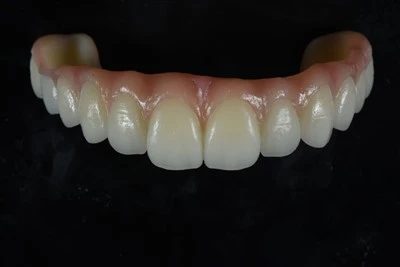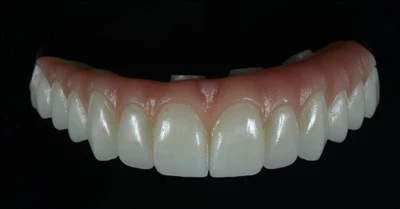
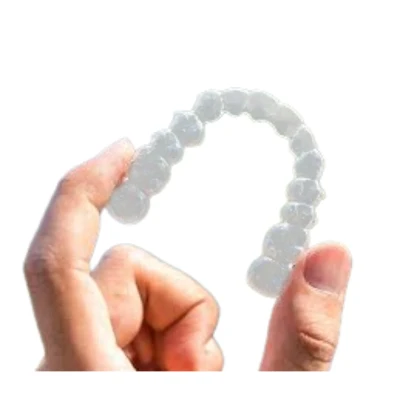
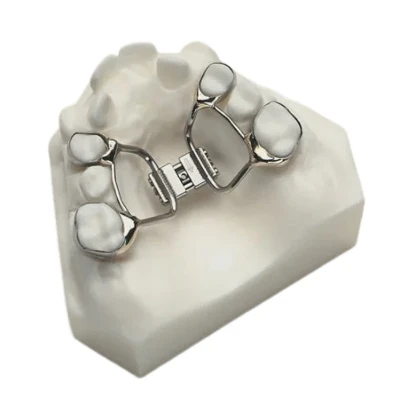

Compare Valplast vs. acrylic partial dentures by material, design, esthetics, retention, repairability, and case selection for better RPD planning.
Valplast and acrylic partial dentures can both restore missing teeth, but they behave very differently once placed in the mouth. Valplast is a flexible thermoplastic polyamide material, while conventional acrylic partial dentures are primarily made from polymethyl methacrylate (PMMA). That difference affects clasp design, rigidity, repairability, long-term maintenance, and case selection.
For dentists, the practical decision comes down to anatomy, support, retention, esthetic priorities, occlusal demand, and how much future modification the prosthesis may require.

Valplast vs. Acrylic Partial Dentures: Quick Comparison
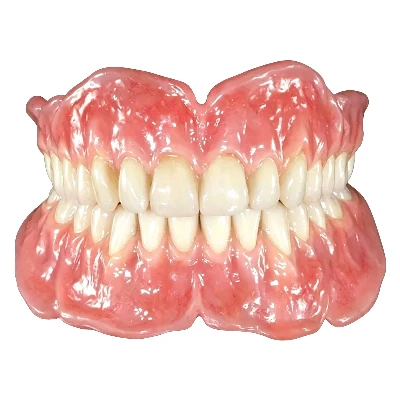
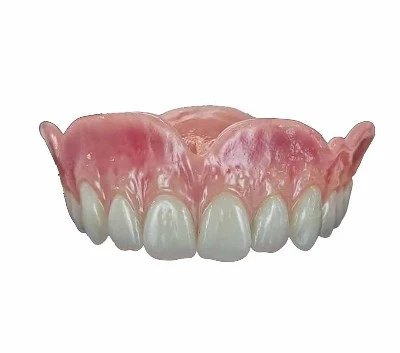
A Valplast partial denture uses a proprietary flexible denture material based on thermoplastic polyamide, commonly described as nylon. Its flexibility allows the denture base and clasping components to engage suitable tooth and tissue undercuts through elastic deformation. The material can also be produced in gingiva-colored, translucent shades that reduce visible metal display.
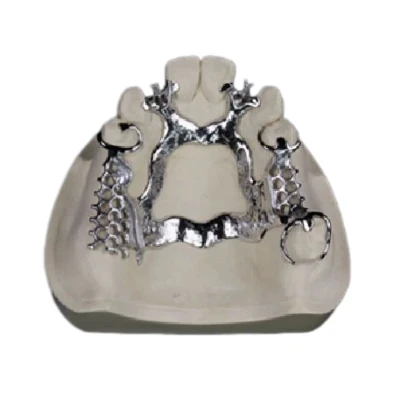
An acrylic partial denture generally uses PMMA as the denture-base material. PMMA is substantially more rigid and has a long history in removable prosthodontics. Acrylic partials may incorporate wrought-wire clasps, rests, reinforcement, or other retentive features depending on the case.
|
Factor |
Valplast Partial Denture |
Acrylic Partial Denture |
|
Base material |
Thermoplastic polyamide / nylon |
PMMA |
|
Material behavior |
Flexible |
Relatively rigid |
|
Clasp appearance |
Gingiva-colored, metal-free designs possible |
Wire clasps may be visible |
|
Initial esthetics |
Often very favorable |
Depends heavily on clasp and base design |
|
Repair |
More specialized |
Generally easier |
|
Reline |
More technically demanding |
Generally straightforward |
|
Tooth addition |
Possible, but more complex |
Usually easier |
|
Future modification |
More limited |
More flexible from a laboratory standpoint |
|
Typical strengths |
Esthetics, flexibility, undercut engagement |
Repairability, modification, established processing |
|
Case selection |
Selected esthetic or anatomical situations |
Broad range of straightforward and transitional cases |
There is no universal winner. A Valplast denture can be an excellent solution for the right anatomy and esthetic requirement, while acrylic often becomes the more practical choice when the treatment plan is likely to change.
Material Differences: Flexible Polyamide vs. Rigid PMMA
PMMA remains one of the reference denture-base materials because it combines rigidity, established processing methods, acceptable dimensional behavior, and relatively simple repair procedures. Testing of denture-base polymers commonly refers to standards such as ISO 20795-1: Denture Base Polymers, which covers relevant material requirements and test methods.
Valplast behaves differently. As a thermoplastic polyamide, it can flex during insertion and removal, making it possible to engage undercuts that would be difficult to use with a more rigid base. That flexibility also explains why Valplast clasps can be less visually obvious than conventional metal clasps.
Mechanical performance needs to be interpreted property by property.
In one comparative hardness study, PMMA materials produced Vickers hardness values of 82.5 ± 3.779 VHN and 76.9 ± 4.771 VHN, while Flexident measured 67.4 ± 1.955 VHN and Valplast 66.0 ± 2.78 VHN. In practical terms, PMMA showed the harder surface in that test.
Flexural strength is less straightforward. Some studies have reported higher values for Valplast than certain heat-cured acrylics, while others found PMMA to outperform Valplast. Commercial formulation, processing method, specimen geometry, and testing protocol all influence the result. Flexural-strength data therefore should not be used as a single reason to select one denture material.
Impact behavior is different again. Polyamide materials can perform well under impact because they deform instead of fracturing in the same manner as a rigid resin. That helps explain why flexible dentures are often considered resistant to accidental drop fracture. It does not mean they are mechanically superior in every respect.
Surface behavior also matters. Multiple studies have reported greater surface roughness for Valplast or other polyamide materials than for some PMMA materials. Polyamide has also shown less favorable color stability in several comparisons.
This creates an important distinction: Valplast can provide excellent initial esthetics while still requiring careful long-term surface and color maintenance.
How Material Choice Changes Partial Denture Design
Changing from PMMA to a flexible polyamide affects how the removable partial denture is designed.
Three concepts are central to any RPD: support, retention, and stability. These concepts form part of the broader clinical principles used in removable prosthodontics; the American College of Prosthodontists' denture resources provide additional professional context on denture treatment and patient care.
Support, Retention, and Stability
Support describes how the prosthesis resists movement toward the underlying tissues during function. Depending on the design, forces may be carried by abutment teeth, the residual ridge, mucosa, or a combination of these structures.
Retention is resistance to removal along the path of displacement.
Stability is resistance to horizontal and rotational movement.
A flexible denture may engage tooth and tissue undercuts through elastic deformation, while an acrylic partial often relies on a more rigid base combined with wire clasps, rests, or other mechanical components. The design strategy changes with the material.
Flexibility can be useful. It does not automatically improve support or stability, especially in cases with long edentulous spans or distal-extension saddles.
Clasp and Undercut Design
Flexible partial dentures use several clasp configurations, including standard, circumferential, continuous, combination, and reach-around designs. The appropriate form depends on the abutment arrangement, available undercut, saddle configuration, and esthetic requirement.
A flexible clasp can extend into a useful undercut and recover elastically during insertion or removal. That is one of Valplast's main design advantages.
The amount and position of the undercut still need to be controlled. Excessive deformation, poor clasp positioning, or inadequate support can compromise long-term function.
Artificial Tooth Retention in Flexible Dentures
The connection between acrylic denture teeth and a polyamide denture base deserves attention because chemical bonding is limited. Mechanical retention becomes particularly important.
Laboratory studies comparing different mechanical designs have shown stronger tooth retention when grooves, slots, or diatoric features are added to the ridge-lap surface. In one comparison, a T-shaped diatoric design produced the highest bond strength. Other work has shown further improvement when mechanical features are combined with appropriate surface treatment.
For a flexible denture, denture-tooth retention is therefore partly a design and processing issue.
Clinical Performance: Esthetics, Comfort, Retention, and Durability
Valplast has a clear esthetic advantage in cases where visible clasps are a major concern. Its translucent, gingiva-colored material can make clasping components less noticeable around anterior and premolar teeth.
Long-term esthetics need a broader view. Polyamide materials can stain or lose surface polish over time, and several studies have reported less favorable color stability than PMMA. Good initial appearance and long-term color behavior are separate considerations.
Comfort is more individual. Many patients perceive flexible dentures as light and less bulky, particularly when the design avoids prominent rigid components. Fit, border extension, tissue condition, occlusion, and the pattern of missing teeth still have a major influence on how comfortable any partial denture feels.
Retention deserves equally careful interpretation. Flexible materials can engage undercuts effectively, but that does not guarantee greater overall denture retention.
In one crossover clinical study, patients wore flexible and acrylic dentures for three months each. The acrylic dentures demonstrated better retention. In another study involving Kennedy Class I designs, Valplast showed lower retention than the other materials tested.
The practical conclusion is clear: undercut engagement and total prosthesis retention are related, but they are not the same thing.
Durability also depends on what is being measured. Impact resistance, flexural strength, surface hardness, fatigue resistance, clasp deformation, and tooth retention describe different failure mechanisms. Calling either material simply "stronger" loses too much useful information.

Case Selection: When to Consider Valplast or Acrylic
Material choice becomes much easier once the clinical priorities are defined.
When Valplast May Be Considered
Valplast is particularly useful when esthetics or flexibility provide a meaningful clinical advantage.
Common situations include:
- Anterior or premolar cases where visible metal clasps are undesirable
- Patients who strongly prefer a metal-free removable option
- Cases with useful anatomical undercuts that can be engaged by a flexible design
- Selected severe ridge-undercut situations
- Restricted mouth opening where flexible insertion may be helpful
- Selected patients in whom conventional acrylic monomer or metallic components are undesirable
The condition of the abutment teeth and supporting tissues still needs to be evaluated carefully. A good esthetic indication does not compensate for poor support or unstable biomechanics.
When Acrylic May Be More Practical
Acrylic becomes especially attractive when future modification is likely.
Examples include:
- Transitional treatment plans
- Cases where additional tooth loss is expected
- Situations where denture teeth may need to be added later
- Patients likely to require future relining
- Cases where straightforward laboratory repair is important
- Cost-sensitive treatment
- Simple or short-span removable cases
- Treatment plans that may change while periodontal, implant, or restorative treatment continues
Acrylic's repairability is a major clinical advantage that is sometimes overshadowed by its lower cost.
A useful planning question is: How likely is this prosthesis to need modification in the next few years?
If the answer is "very likely," PMMA often offers greater laboratory flexibility.
Kennedy Classification and the Extent of Tooth Loss
The pattern of missing teeth matters.
A Kennedy Class III case has teeth both anterior and posterior to the edentulous space. Tooth support may therefore be more favorable, and material selection can focus more heavily on clasp position, esthetics, available undercuts, and maintenance requirements.
Kennedy Class I and II cases introduce distal-extension saddles. These cases have a greater tendency toward rotational movement because tooth support and tissue support behave differently under load. Ridge anatomy, extension, occlusion, indirect retention, and stability become more important.
A flexible denture may still be considered in selected distal-extension cases, but the decision should come from the biomechanics of the case.
Repair, Reline, Tooth Addition, and Long-Term Maintenance
Long-term maintenance is one of the biggest practical differences between Valplast and acrylic partial dentures.
Can Valplast Be Repaired or Relined?
Valplast can be repaired or modified using appropriate laboratory techniques, but the process is more material-specific than conventional PMMA repair. Relining can also be more technically demanding.
This matters in patients whose residual ridge is changing or whose denture is expected to remain in service through future treatment.
Is Acrylic Easier to Modify?
In most laboratories, yes.
Conventional acrylic partial dentures are generally easier to:
- Repair after fracture
- Reline or rebase
- Add denture teeth to
- Modify after extraction
- Adjust or replace certain retentive components
These advantages are important in transitional dentistry, geriatric cases, and patients with a changing dentition.
What If Another Tooth Is Lost?
This possibility should be discussed before the denture is made.
When additional extractions are likely, acrylic often offers a simpler pathway for adding a replacement tooth and modifying the base. A flexible prosthesis may still be appropriate, but the laboratory procedure is usually more involved.
Future treatment therefore belongs in the original material-selection decision.
When Neither Valplast nor Acrylic Is the Best First Choice
Some removable partial denture cases require more rigid control of support, force distribution, and rotational movement than either a basic flexible or acrylic design can provide.
Alternatives may include:
- Co-Cr framework dentures
- Titanium frameworks
- PEEK frameworks
- Implant-assisted removable partial dentures
- Fixed bridges
- Implant-supported restorations
A rigid framework can be particularly useful when cross-arch stabilization, defined rests, and controlled force distribution are important.
This is why complex RPD cases should be evaluated as prosthetic designs first. Material selection follows that design decision.

What Dentists Should Send to the Dental Laboratory
A well-designed partial denture depends on the quality of the prescription as much as the manufacturing process.
For Valplast, acrylic, or other removable prosthetic cases, the laboratory should receive clear information about:
- Missing tooth numbers
- Requested denture-base material
- Condition of the remaining abutment teeth
- Relevant undercuts
- Preferred clasp position
- Esthetic priorities
- Shade
- Tissue and ridge condition
- Opposing dentition
- Occlusal requirements
- Intended treatment duration
- Expected future extractions
- Whether future tooth addition or relining is anticipated
- Any special functional or design instructions
Digital scans can improve communication and repeatability, but the prescription still needs to explain the intended prosthetic design. For clinics working digitally, understanding what dental labs need from an intraoral scan can help reduce missing information before production begins.
For distal-extension cases, mobile tissues, or more complex removable prosthodontics, the clinical recording method also deserves careful consideration. Digital files are highly useful, yet they do not remove the need for accurate tissue and functional information.
For overseas clinics and laboratories, it is also useful to understand how dental lab outsourcing works from case submission to delivery, particularly when cases involve staged try-ins, material confirmation, or additional design communication.
FAQ
Are Valplast Dentures Better Than Acrylic Partial Dentures?
Neither material is better for every case.
Valplast is often preferred when metal-free esthetics, flexible clasping, or selected undercut anatomy are important. Acrylic is usually more convenient when future repair, relining, tooth addition, or treatment-plan changes are expected.
Are Valplast Dentures Stronger Than Acrylic?
That depends on the property being measured.
Polyamide can show favorable impact resistance, while PMMA may provide greater hardness and rigidity. Studies comparing flexural strength have produced mixed results.
"Stronger" is therefore too broad to be clinically useful.
Are Valplast Partial Dentures More Comfortable?
They can be.
Some patients find flexible dentures lighter and less bulky. Comfort also depends on fit, extension, tissue condition, occlusion, clasp design, and the amount of movement under function.
Can Teeth Be Added to a Valplast Denture?
Yes, depending on the prosthesis and laboratory technique, but adding teeth to a Valplast denture is generally more specialized than adding teeth to a conventional acrylic partial.
If future tooth loss is expected, this should influence the original material choice.
Which Material Is Better for a Transitional Partial Denture?
Acrylic is often more practical when repeated modification, relining, or tooth additions are expected.
Valplast can still be useful for selected transitional cases where esthetics, flexibility, or avoidance of visible metal are high priorities and major future modification is less likely.
The expected treatment pathway matters more than whether the prosthesis is simply labeled "temporary."
Valplast and acrylic partial dentures serve different clinical priorities. Valplast offers flexible undercut engagement, a metal-free appearance, and strong esthetic potential in selected cases. PMMA acrylic provides rigidity, established processing, and much easier repair, relining, and future modification. The final choice should reflect support, retention, stability, tooth-loss pattern, abutment condition, tissue anatomy, occlusal demand, esthetic expectations, and the likelihood of future change.
ADS Dental Laboratory Ltd provides Valplast flexible partial dentures, acrylic partial dentures, and other removable prosthetic solutions for overseas dentists and dental laboratories. If you would like to discuss material selection, case design, digital files, or staged denture production for a specific case, contact our team with the clinical prescription and case records.