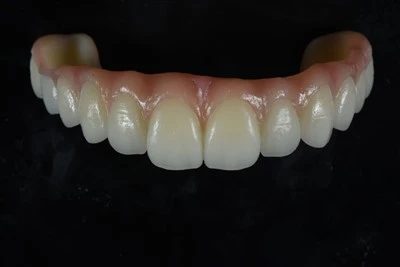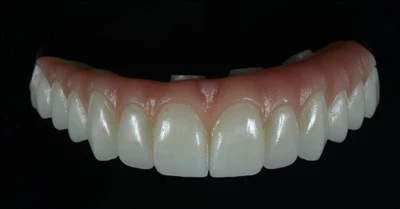


A dental laboratory is the technical manufacturing partner behind many restorative and prosthetic dental treatments. Dentists diagnose conditions, plan treatment, prepare teeth, and treat patients clinically. Dental laboratories use the dentist's prescription, impressions, intraoral scans, bite records, photographs, and other case information to design and manufacture patient-specific restorations and appliances.
Modern dental laboratories may produce everything from a single crown or veneer to removable dentures and complex implant-supported restorations. Their work combines dental technology, material processing, digital manufacturing, skilled technician finishing, and quality control.

What Is a Dental Laboratory?
A dental laboratory, or dental lab, is a specialized facility where dental technicians design and manufacture custom dental restorations and appliances according to prescriptions and clinical records provided by dentists.
Unlike a dental clinic, a dental laboratory generally does not diagnose oral conditions or determine a patient's clinical treatment plan. The dentist handles the clinical side of treatment. The laboratory handles the technical design and manufacturing side.
A typical case sent to a laboratory may include:
- A dental laboratory prescription
- A conventional impression or intraoral scan
- Bite registration
- Tooth shade information
- Clinical photographs
- Restoration material requirements
- Implant system and component information when applicable
- Special instructions for contacts, margins, occlusion, or aesthetics
These records allow the laboratory to reproduce the patient's oral anatomy and manufacture a restoration that follows the dentist's prescribed requirements.
This distinction is important: the dentist determines what the patient needs clinically, while the dental laboratory turns those clinical requirements into a physical restoration or appliance.
What Services Does a Dental Laboratory Provide?
Dental laboratory services go beyond simply "making teeth." A full-service dental laboratory may support the case from technical review through design, production, finishing, inspection, and delivery.
One of the first tasks is case review. Before production begins, the laboratory may check whether the impression or digital scan is complete, whether the preparation margins are visible, whether the bite record is usable, and whether the prescription clearly identifies the restoration type, material, shade, and other technical requirements.
The laboratory then determines how the prescribed restoration can be produced. Depending on the case, services may include CAD/CAM design, framework fabrication, ceramic processing, implant prosthetic design, denture production, appliance fabrication, and aesthetic finishing.
Technical communication is another important part of dental laboratory service. Cases sometimes require clarification about restorative space, implant components, retention type, material choice, occlusion, contacts, or aesthetic characterization. Addressing these issues before manufacturing can prevent avoidable errors later in the workflow.
For digital cases, the laboratory may also receive and process intraoral scan files, create CAD designs, produce digital models, mill restorations, or manufacture selected components through 3D printing.
A modern dental laboratory is therefore both a manufacturing facility and a technical production partner. Its role is to convert clinical instructions into a restoration that can be evaluated and delivered by the dentist.
What Products Does a Dental Laboratory Make?
Dental laboratory products can be divided into several main categories. The exact product range varies by laboratory, but full-service labs commonly work with fixed restorations, implant prosthetics, removable prosthetics, and custom dental appliances.
Fixed Restorations
Fixed restorations are restorations that are placed permanently or semi-permanently in the mouth by the dentist rather than routinely removed by the patient.
Common products include:
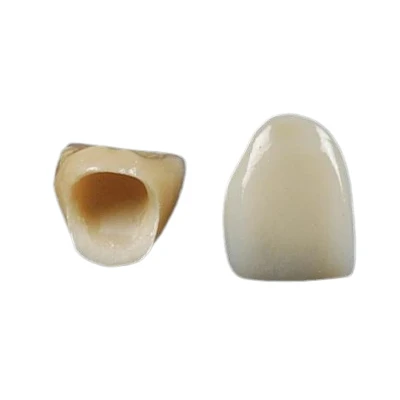
- Dental crowns
- Dental bridges
- Zirconia restorations
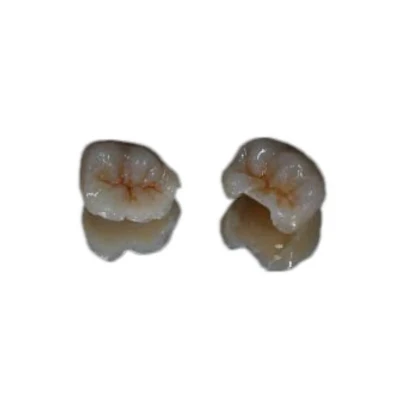
- Lithium disilicate and other ceramic restorations
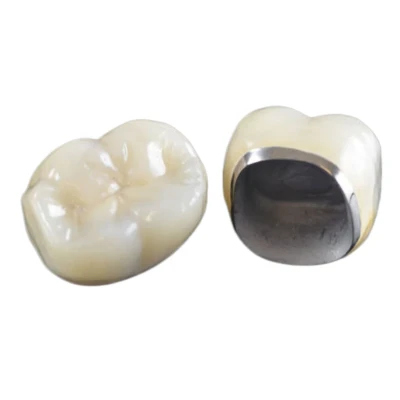
- Porcelain-fused-to-metal restorations
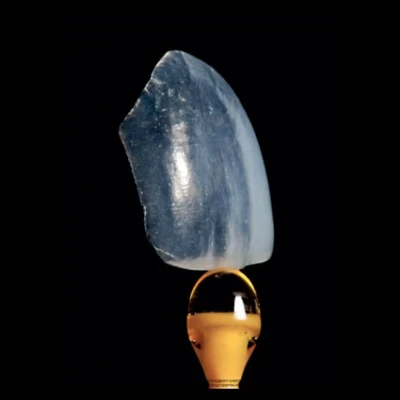
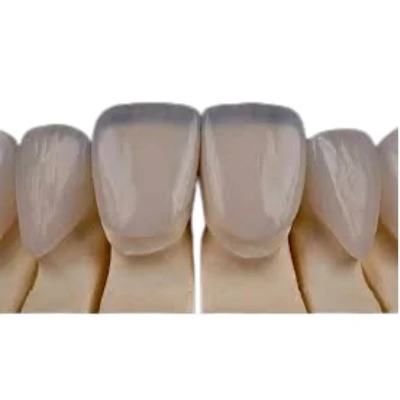
- Dental veneers
- Inlays and onlays
A crown may restore a damaged or prepared tooth, while a bridge can replace one or more missing teeth by connecting multiple units. Modern laboratories may produce restorations such as CAD/CAM zirconia crowns through digital design and milling.
Veneers and ceramic restorations often require additional attention to shade, translucency, morphology, incisal characteristics, and surface texture.
Implant Restorations
Dental laboratories also manufacture the prosthetic components used after dental implants have been clinically placed.
These may include:
- Implant crowns
- Screw-retained implant crowns
- Cement-retained restorations
- Custom abutments
- Implant-supported bridges
- Full-arch implant restorations
- Prosthetic components for implant-supported overdentures
Implant laboratory work can be more technically demanding because the restoration must correspond with the prescribed implant system, restorative platform, available space, soft-tissue profile, occlusion, and retention method.
Complex cases may extend from a single implant crown to an implant-supported full-arch bridge, requiring careful coordination of restorative design, components, occlusion, and prosthetic space.
The dentist or surgeon handles implant diagnosis and placement. The laboratory manufactures the prescribed prosthetic restoration that fits the implant-related components.
Removable Prosthetics
Removable prosthetics are restorations that the patient can remove from the mouth.
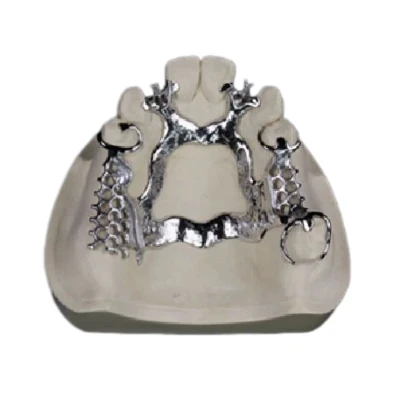
Common examples include:
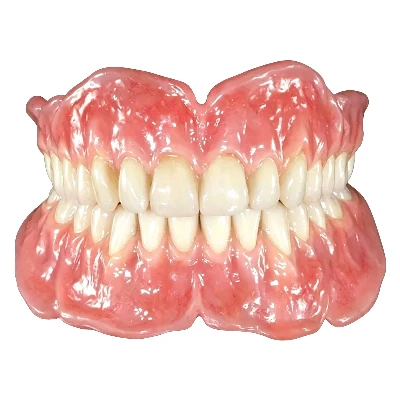
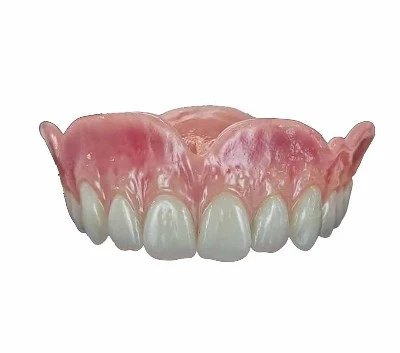
Complete dentures
Acrylic partial dentures
Flexible partial dentures
Metal-framework partial dentures
Overdentures
Immediate dentures
An acrylic full denture, for example, requires more than producing a base and attaching denture teeth. The laboratory may need to work with jaw-relation records, tooth setup, occlusion, tissue contours, try-in stages, and final finishing.
Some laboratories use a combination of digital denture design and traditional technician procedures depending on the clinical records and production requirements.
Orthodontic and Other Custom Appliances
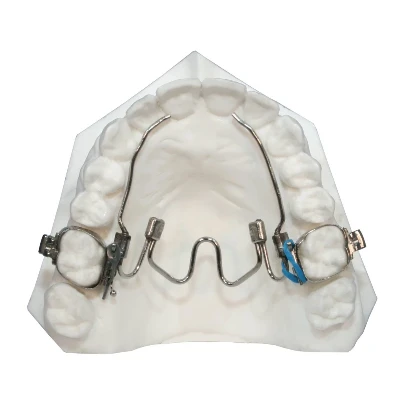
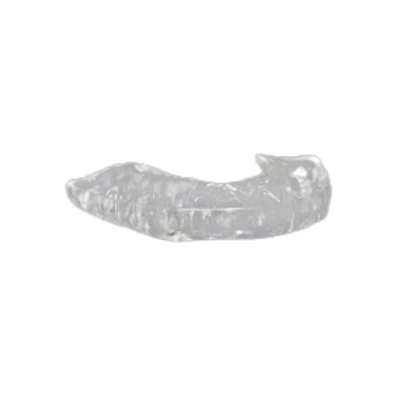
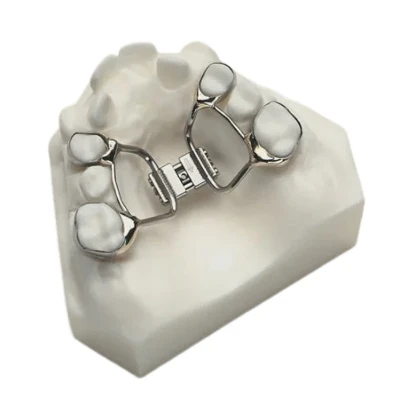
Dental laboratories may also produce appliances that are not conventional crowns or dentures, including:
- Orthodontic retainers
- Functional orthodontic appliances
- Night guards
- Occlusal splints
- Sports mouthguards
- Surgical guides
- Temporary restorations
- Diagnostic wax-ups and models
These products require different materials and manufacturing techniques, but the underlying principle remains the same: the laboratory manufactures a patient-specific appliance from the dentist's prescription and case records.
A full-service dental laboratory therefore supports a much broader range of dentistry than crown and bridge work alone.
Dentist vs. Dental Laboratory: Who Does What?
Dentists and dental laboratories work on the same restorative case, but their responsibilities are different.
|
Dentist / Dental Clinic |
Dental Laboratory |
|
Examines the patient |
Receives the prescribed case |
|
Diagnoses dental conditions |
Reviews technical case information |
|
Develops the treatment plan |
Designs the restoration |
|
Prepares teeth or implant sites |
Processes impressions or digital records |
|
Takes impressions or intraoral scans |
Manufactures the restoration |
|
Records shade and bite information |
Reproduces prescribed anatomy, contacts, and aesthetics |
|
Tries in and places the restoration |
Performs laboratory quality control |
|
Provides clinical follow-up |
Provides technical case support |
The dentist remains responsible for clinical diagnosis, treatment planning, preparation, and final delivery. The laboratory does not replace that role.
At the same time, the final restoration depends heavily on the quality of information moving between the clinic and the lab. A clear prescription, accurate records, visible margins, reliable bite data, and complete implant information give the laboratory a stronger technical foundation for production.
Restorative dentistry is therefore a collaborative process: clinical accuracy and laboratory accuracy have to work together.

How Does a Dental Laboratory Workflow Work?
The exact dental lab workflow depends on the restoration, material, and production method, but most cases follow the same general sequence.
1. Clinical records and prescription
The workflow begins in the dental clinic. The dentist determines the treatment plan and collects the information required by the laboratory.
This may include an impression or intraoral scan, bite registration, shade, photographs, tooth numbers, restoration type, material choice, implant information, and special instructions.
2. Case submission
A conventional case may be shipped to the laboratory with physical impressions or models. A digital case can be transmitted electronically through intraoral scan files and digital prescriptions.
STL is one of the common file formats used to transfer digital dental geometry. For predictable digital cases, it is also important to understand what dental labs need from an intraoral scan, including complete margin capture, usable occlusal records, and sufficient surrounding anatomy.
3. Case review
A professional laboratory should review the case before moving directly into production.
For example, the technical team may check:
- Whether the impression or scan is complete
- Whether preparation margins are clearly captured
- Whether the bite information is usable
- Whether there is sufficient restorative space
- Whether material and shade requirements are clear
- Whether implant components are correctly identified
If critical information is missing, resolving the issue before fabrication is usually more efficient than discovering it after manufacturing has begun.
4. Restoration design
The restoration is then designed using CAD software or an appropriate conventional technique.
Design decisions may include anatomy, proximal contacts, occlusion, contour, thickness, pontic form, and emergence profile for implant restorations. The design must follow the prescription while remaining manufacturable in the selected material.
For a more detailed view of how digital design connects with production, see the CAD/CAM dental workflow from scan to final restoration.
5. Manufacturing
The manufacturing process varies by product.
Zirconia and some ceramics may be milled. Other restorations may involve pressing, casting, thermoforming, resin processing, or 3D printing. Dentures and implant prostheses may combine several manufacturing techniques within one case.
There is no single manufacturing method that applies to every dental restoration.
6. Technician finishing
Digital manufacturing does not mean the restoration is automatically complete when it leaves a machine.
Depending on the product, dental technicians may still perform ceramic layering, staining, glazing, contouring, polishing, shade characterization, or surface texturing. These stages are especially important for restorations where natural morphology and aesthetics matter.
7. Quality control
Before delivery, the laboratory checks the completed restoration against the prescription and production requirements.
Common inspection points include seating, margins, proximal contacts, occlusion, morphology, shade, and surface finish.
8. Delivery and clinical placement
The completed case is returned to the dentist. The dentist then evaluates the restoration clinically, performs any required chairside adjustment, and completes the final placement or delivery to the patient.
The dental lab workflow is therefore not just a manufacturing sequence. It is a controlled transfer of clinical information into design, production, finishing, inspection, and final clinical use.
Who Works in a Dental Laboratory?
The professionals who manufacture dental restorations are generally known as dental laboratory technicians.
Their work requires knowledge of dental anatomy, occlusion, dental materials, restoration design, shade matching, manufacturing techniques, and laboratory quality standards. Digital dentistry has also made CAD/CAM design and digital file handling increasingly important technical skills.
In larger full-service laboratories, technicians may specialize rather than work on every type of restoration. Teams can include:
- CAD/CAM designers
- Ceramic and aesthetic technicians
- Implant technicians
- Crown and bridge technicians
- Denture technicians
- Orthodontic appliance technicians
- Quality control personnel
Specialization is particularly important in complex implant, full-arch, denture, and high-aesthetic cases.
Digital equipment has changed how technicians work, but it has not removed the need for technical judgment and manual skill. The quality of morphology, shade characterization, ceramic layering, contouring, and finishing can still depend heavily on experienced laboratory craftsmanship.
How Digital Technology Has Changed Dental Laboratories
A digital dental laboratory uses digital case data and computer-assisted design or manufacturing technologies as part of its production workflow.
Traditional laboratories relied more heavily on physical impressions, stone models, hand wax-ups, casting, and manual fabrication. Many of those techniques are still used, but modern laboratories can now integrate intraoral scans, CAD/CAM systems, milling, 3D printing, and digital case records. The practical differences between these approaches are explored further in Digital Dental Lab vs. Traditional Lab.
|
Workflow Stage |
Traditional Approach |
Digital / Modern Approach |
|
Case data |
Physical impression |
Intraoral scan or digital file |
|
Design |
Manual wax-up |
CAD design |
|
Manufacturing |
Casting and manual techniques |
Milling or 3D printing where appropriate |
|
Case records |
Mainly physical records |
Digital case data and tracking |
|
Finishing |
Technician finishing |
Technician finishing remains important |
CAD/CAM stands for computer-aided design and computer-aided manufacturing. In dentistry, CAD software is used to create a digital restoration design, while CAM equipment converts that design into a manufactured component.
Milling is common for zirconia, ceramics, polymers, and selected other dental materials. 3D printing is frequently used for models, surgical guides, temporary components, and other suitable applications.
The accuracy and clinical application of intraoral scans have also become an important research topic in fixed prosthodontics as digital workflows have expanded.
Many modern workflows are actually hybrid rather than completely digital.
A restoration may begin with an intraoral scan, be designed in CAD software and milled, then return to a skilled technician for staining, glazing, layering, polishing, or surface characterization. Digital technology improves how data and manufacturing steps are handled; it does not eliminate the value of dental craftsmanship.
How Do Dental Laboratories Control Restoration Quality?
Dental laboratory quality control should evaluate more than whether a restoration looks finished.
For fixed restorations, important technical checks may include seating, margin areas, proximal contacts, occlusion, contour, morphology, shade, and surface finish. Implant and removable cases introduce additional checkpoints related to components, framework fit, insertion, retention, or jaw relationships.
Laboratory quality control can generally be considered in three areas:
Fit and precision
- Seating
- Margins
- Proximal contacts
- Dimensional consistency
Function
- Occlusal contacts
- Bite relationships
- Contour
- Path of insertion where relevant
Aesthetics and finish
- Shade
- Morphology
- Translucency where required
- Surface texture
- Polish or glaze quality
Modern laboratories may support these inspections with magnification-assisted quality control, digital scanning, case tracking, technician traceability, or standardized inspection procedures.
For laboratories operating within medical-device quality frameworks, the ISO 13485 medical device quality management system is also an important reference for documented quality processes, traceability, risk-based controls, and corrective actions.
Consistency matters as much as isolated inspection. For dentists and dental laboratories that send cases regularly, a reliable production partner needs to understand recurring preferences for contacts, occlusion, morphology, shade communication, and case handling-not simply produce one acceptable restoration.
Quality control is therefore part of the production workflow itself, not an inspection that should be treated as an afterthought.

Why Dentists Work With Dental Laboratories-and How Digital Outsourcing Fits In
Dentists work with dental laboratories because restorative treatment often requires specialized design, materials, equipment, production capacity, and technical skills that belong outside the clinical treatment room.
A capable laboratory can provide:
- Specialized restoration manufacturing
- CAD/CAM design and digital production
- Experienced dental technicians
- Implant and full-arch prosthetic support
- Aesthetic ceramic work
- Removable prosthetic production
- Structured quality inspection
- Technical communication throughout the case
Over time, a stable dentist-lab relationship can also make communication more efficient. The laboratory becomes familiar with the client's preferences for contacts, occlusion, morphology, material selection, aesthetic style, and case submission procedures.
Digital dentistry has also changed where that laboratory can be located.
With intraoral scans, STL files, digital prescriptions, photographs, and online case communication, clinical information can be transferred to a laboratory without sending a physical impression for every case. Dentists or laboratories considering international production can follow a structured process for sending a digital dental case to an overseas lab.
This digital infrastructure makes remote collaboration and dental lab outsourcing more practical.
Outsourcing can involve an entire restoration or only selected production stages. A dental laboratory may outsource CAD design, frameworks, crown and bridge manufacturing, implant prosthetics, dentures, or other defined parts of its workflow depending on its internal capacity. A more detailed guide to how dental lab outsourcing works from case submission to delivery can help laboratories understand how these stages are coordinated.
The same digital infrastructure that supports a local CAD/CAM workflow can therefore support long-term collaboration between dental professionals and laboratories in different regions or countries.
Conclusion
A dental laboratory designs and manufactures custom dental restorations and appliances from the prescriptions and clinical records supplied by dentists. Its work covers much more than fabrication alone. Case review, restoration design, material processing, technician finishing, digital manufacturing, communication, and quality control all contribute to the final product delivered back to the clinic.
Modern dental laboratories combine CAD/CAM technology, milling, 3D printing, and digital case handling with the practical knowledge and craftsmanship of trained dental technicians.
ADS Dental Laboratory Ltd is a full-service digital dental laboratory in China providing custom restorations and long-term dental lab outsourcing for dentists and dental laboratories worldwide. If you are looking for a production partner for fixed restorations, aesthetic cases, implant prosthetics, removable work, or digital case manufacturing, contact ADS to discuss your workflow and case requirements.