
Improving dental practice profitability is not only about increasing fees or adding more patients. In restorative dentistry, a large amount of profit can be lost through remakes, chairside adjustments, repeated appointments, shipping delays, incomplete prescriptions, and inefficient communication with the dental laboratory.
A better restorative workflow reduces that waste. Digital case capture, standardized lab communication, predictable production, and stronger quality control can lower the total cost of completing each case while freeing more clinical time for productive treatment.

Look Beyond the Lab Fee: Understand the True Cost of a Restorative Case
The total restorative case cost is the combined clinical, laboratory, administrative, and logistical cost required to complete a restoration successfully. It is more useful than the laboratory invoice alone when evaluating dental practice profitability.
A zirconia crown with a lower laboratory fee is not necessarily the less expensive crown for the practice.
The direct cost may include the restoration, impression or scanning expenses, temporary materials, and shipping. The less visible costs can be more significant:
- Dentist and assistant time
- Impression or scan retakes
- Laboratory clarification
- Chairside occlusal and contact adjustments
- Remakes
- Additional patient appointments
- Rescheduling and administrative follow-up
This is why dental practices should evaluate the cost per successful restoration, not simply the price per unit.
The same principle applies when comparing conventional and digital impressions. Source material reviewed for this article estimates direct costs of approximately $38–$75 per case for a conventional impression workflow, compared with roughly $11–$17 per case for a digital impression workflow. Actual costs vary by scanner utilization, materials, software, equipment depreciation, and practice volume, but the comparison illustrates an important point: the economics extend well beyond the impression material itself.
Digital workflows can also remove costs associated with physical model handling, packaging, and shipping. More importantly, they can help prevent problems that later consume valuable clinical time.
The lowest lab fee does not necessarily create the lowest cost per successful restoration.
That distinction should guide every decision about dental lab costs, digital equipment, and restorative workflow optimization.
Protect Productive Chair Time by Reducing Retakes, Remakes, and Adjustments
Chair time is one of the most valuable resources in a dental practice. A restoration that requires repeated adjustment may not generate any additional revenue, but it still occupies the dentist, assistant, operatory, and appointment schedule.
A remake creates an even larger loss.
If a crown must be remade, the financial impact may include another seating appointment, additional staff time, temporary restoration management, patient communication, and laboratory rework. The laboratory also loses technician time, materials, machine capacity, and production space.
A remake consumes capacity twice-once in the laboratory and again in the dental practice.
Some source material reviewed for this article reports remake rates of approximately 8%–12% in traditional workflows, compared with around 2% or lower after digital workflow optimization.
Consider a practice completing 500 restorative cases a year. At a 10% remake rate, about 50 cases require additional work. At 2%, that falls to about 10.
That difference represents roughly 40 cases that no longer require the same level of repeated clinical and laboratory effort.
Not every inefficient case becomes a full remake. Small chairside corrections also accumulate. A crown may seat successfully but still require:
- Reduction of high occlusion
- Adjustment of proximal contacts
- Contour modification
- Additional polishing
- Shade correction or further laboratory characterization
Ten extra minutes on one case may seem minor. Repeated across hundreds of restorations, it becomes a meaningful loss of productive clinical capacity.
For this reason, restoration consistency has economic value. Reducing remakes and unnecessary chairside adjustments can improve dental practice productivity without adding another operatory or extending working hours.
Use Digital Case Capture to Remove Friction Before the Case Reaches the Lab
A digital dental workflow uses digital data to connect clinical information, restorative design, laboratory communication, and manufacturing. In restorative dentistry, the process often begins with an intraoral scanner and continues through CAD/CAM design, milling, 3D printing, or other digital manufacturing methods.
The financial benefit does not come from owning a scanner by itself. It comes from removing unnecessary steps between the patient and the final restoration.
A conventional workflow may look like this:
Physical impression → Packaging → Shipping → Laboratory receipt → Inspection → Clarification → Production
A digital workflow can be much shorter:
Intraoral scan → Immediate review → Digital transfer → Laboratory review → Design → Production
Immediate Clinical Review
With an intraoral scan, the dentist or assistant can review the digital impression before the patient leaves.
The team can check whether the laboratory has enough information to work with, including preparation detail, visible margins, opposing dentition, and bite data. If part of the scan is incomplete, that area can often be rescanned immediately.
This matters financially.
A problem detected while the patient is still in the chair may require only a few additional minutes. A problem discovered after the case reaches the laboratory may require another phone call, another appointment, or a completely new impression.
Faster Case Transfer
Physical impressions and models require packaging and transportation. The source material reviewed for this article indicates that physical laboratory logistics can add approximately 3–7 business days in some workflows.
Digital submission removes that pre-production transit.
It does not eliminate the time required for CAD design, manufacturing, finishing, quality control, or international delivery of the final restoration. It simply allows the laboratory to receive and review the clinical data almost immediately.
That distinction is particularly important when a dental practice works with a remote or overseas dental laboratory.
Better Digital Records
Digital files are easier to store, retrieve, duplicate, and share than physical impressions or stone models. They can also support future comparison and communication when the same patient returns for additional treatment.
These advantages reduce workflow friction, but they only create meaningful value when the practice also has a reliable procedure for checking, naming, submitting, and managing the files.
Digital case capture works best as part of a system-not as an isolated piece of equipment.

Standardize the Dentist–Lab Handoff to Prevent Expensive Errors
The dentist–lab handoff is the point where clinical information becomes manufacturing information. A restoration can only be as accurate as the data and instructions sent to the laboratory.
Case information is therefore not just administrative paperwork. It is part of the production input.
A complete restorative prescription may need to communicate:
- Tooth number and restoration type
- Material selection
- Shade
- Stump shade when relevant
- Margin information
- Proximal contact requirements
- Occlusal instructions
- Pontic or emergence profile preferences
- Implant system and platform
- Screw-retained or cement-retained design
- Special esthetic or functional instructions
When information is missing, the cost can spread through the workflow.
An unclear prescription may first cause a laboratory technician to stop production and request clarification. If the issue is not identified early, it can lead to the wrong design, delayed delivery, additional chairside modification, or a remake.
The least expensive workflow problem is the one identified before fabrication begins.
This is where standardization becomes important.
Dental practices can reduce variation by creating consistent protocols for prescriptions, shade photography, intraoral scans, implant information, and file naming. The laboratory should also have a structured intake process so incomplete information is identified before the case moves deeper into production.
Digital communication improves this further. Scans, photographs, design screenshots, and case instructions can be exchanged without relying entirely on telephone descriptions or handwritten notes.
For restorative workflows, better communication is not simply better customer service. It is a form of error prevention.
Choose a Lab Workflow for Predictability, Not Just Speed
Dental lab turnaround time matters, but the fastest possible turnaround is not always the most valuable metric.
A predictable dental lab workflow is one in which cases move through intake, design, production, quality control, and delivery within a consistent and visible process. Predictability helps the dental practice schedule patients with greater confidence.
When turnaround is unreliable, the practice may face:
- Patient rescheduling
- Extended use of temporary restorations
- Last-minute staff coordination
- Empty or underused chair time
- Repeated calls to check case status
A laboratory that sometimes delivers in four days and sometimes requires twelve may create more operational difficulty than one that consistently works within an agreed production window.
Good dental laboratory workflow management therefore requires more than fast technicians. It depends on accurate order tracking, clear production stages, defined responsibilities, capacity management, and structured quality control.
Another useful concept is throughput: the number of cases that can move through a laboratory within a defined period without sacrificing quality. Higher throughput does not simply mean technicians work faster. Efficient throughput comes from reducing bottlenecks, balancing workloads, preventing rework, and keeping cases moving predictably.
Quality control is part of that system. Margin inspection, contact evaluation, occlusal checks, shade review, final QC, and case traceability all help prevent defects from reaching the clinical appointment.
For a dental practice, consistency is financially valuable because it makes chair time easier to predict.
A good laboratory partner should therefore be evaluated by workflow performance, not only by how quickly it promises to make a crown.
Measure the Workflow With KPIs That Actually Affect Profitability
A dental practice cannot improve restorative efficiency consistently without measuring it.
Restorative workflow KPIs are operational metrics that show where cases lose time, require repeated work, or interfere with scheduling. They do not need to be complicated.
Useful metrics include:
|
KPI |
What It Can Reveal |
|
Remake rate |
Overall repeat-work burden |
|
Reason for remake |
Whether the problem begins clinically, administratively, or in the lab |
|
Average lab turnaround |
Typical case completion time |
|
On-time delivery rate |
Turnaround predictability |
|
Rescan or impression retake rate |
Problems in clinical data capture |
|
Chairside adjustment frequency |
Restoration consistency |
|
Average seating time |
Amount of clinical time required at delivery |
|
Lab-related rescheduling |
Effect of laboratory performance on the appointment book |
Remake causes deserve particular attention.
A practice that records eight remakes in a month knows something is wrong. A practice that knows four were related to scan quality, two to shade communication, one to implant information, and one to laboratory fabrication knows where to act.
Track the cause, not only the count.
Over time, these KPIs also provide a better way to compare laboratories. A slightly higher laboratory fee may be justified if the practice gains more predictable delivery, fewer adjustments, and fewer repeated appointments.
That is a more useful profitability calculation than comparing crown prices in isolation.

Decide What to Keep In-House and What to Outsource
Going digital does not mean a dental practice must manufacture every restoration itself.
The right model depends on case volume, restoration type, clinical priorities, equipment utilization, staff capability, and the amount of operational complexity the practice wants to manage.
Chairside CAD/CAM
Chairside CAD/CAM can work well for practices with sufficient volume and a suitable mix of restorations, particularly when same-day treatment is strategically important.
However, the investment extends beyond an intraoral scanner.
Source material reviewed for this article lists approximate investment ranges such as:
- Intraoral scanner: $30,000–$60,000
- Chairside milling or printing equipment: $40,000–$100,000
- Design software: $5,000–$15,000 annually
- Initial materials and tools: $10,000–$20,000
- Training and implementation: $5,000–$10,000
Some reported models place CAD/CAM payback at approximately 18–36 months, but actual ROI depends heavily on case volume, equipment utilization, material costs, maintenance, staffing, and the types of restorations kept in-house.
Unused equipment does not improve profitability.
Digital Lab Outsourcing
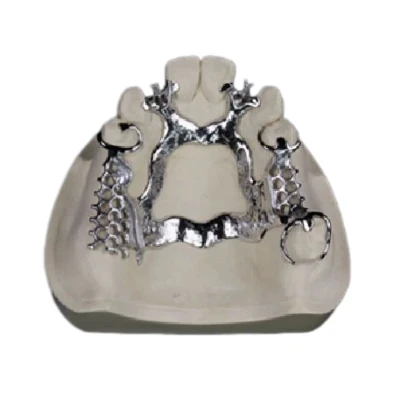
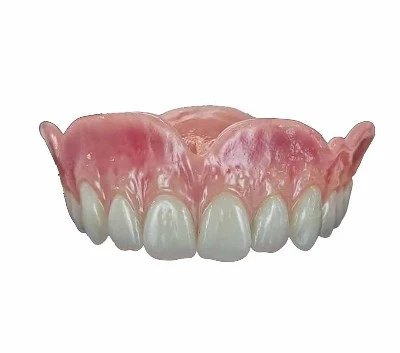
A digital dental laboratory can be more practical when case volume varies or when the practice routinely handles complex esthetic, implant, bridge, removable, or full-arch cases.
The practice keeps the clinical workflow digital while the laboratory provides the manufacturing capacity.
This shifts part of the restorative production burden away from fixed capital investment and toward a variable cost per case. The practice can avoid managing additional milling equipment, software, manufacturing staff, maintenance, and material inventory.
For many practices, that is the main financial value of dental lab outsourcing-not simply a lower unit price.
Hybrid Workflow
A hybrid model combines both approaches.
A practice might scan most restorative cases digitally, manufacture selected simple restorations chairside, and outsource complex cases to a specialized laboratory.
This gives the clinical team control where same-day production creates value while retaining access to experienced dental technicians and broader manufacturing capabilities when needed.
A dental practice can digitize its restorative workflow without becoming a dental laboratory.
The most profitable model is the one that matches production capability to actual case volume and clinical needs.
Build a More Profitable Restorative Workflow Step by Step
Improving dental practice profitability through digital dentistry does not require replacing every system at once. The more practical approach is to improve the parts of the restorative workflow that create the most repeated work.
Step 1: Improve Case Capture
Create a consistent intraoral scanning or impression protocol. Check margins, opposing dentition, bite records, and other required data before the patient leaves.
Step 2: Standardize Case Submission
Use consistent prescriptions, shade photographs, implant information, and special instructions. Make it easy for the laboratory to understand what is expected before production begins.
Step 3: Align the Workflow With the Laboratory
Agree on how files are submitted, how incomplete cases are handled, expected turnaround, design confirmation, technical communication, shipping, and remake management.
Step 4: Measure the Results
Track remakes, chairside adjustments, seating time, turnaround, and lab-related rescheduling. These metrics show whether the workflow is actually improving.
Step 5: Scale What Works
Decide which cases are economically sensible to keep in-house and which are better outsourced. As volume grows, evaluate whether the laboratory can maintain the same communication, turnaround, and quality consistency.
The goal is not to make every case move faster. It is to remove unnecessary work from every case.
Better lab and digital workflows improve profitability by lowering the total cost of completing restorations, protecting productive chair time, reducing remakes and adjustments, and making case delivery more predictable. Digital tools provide the infrastructure, but standardized communication and a reliable laboratory partner determine how much value the practice actually gains from them.
ADS Dental Laboratory Ltd supports overseas dentists and dental laboratories with digital case receiving, CAD/CAM design, milling, 3D printing, implant and full-arch restorations, removable prosthetics, structured case tracking, and quality-control workflows. Practices looking to streamline restorative production or evaluate a long-term dental lab outsourcing model can contact ADS to discuss their current workflow and case requirements.