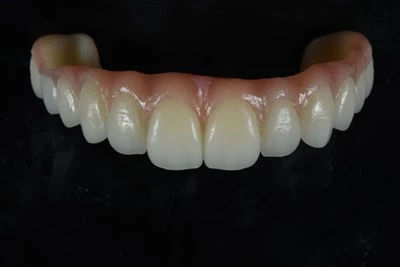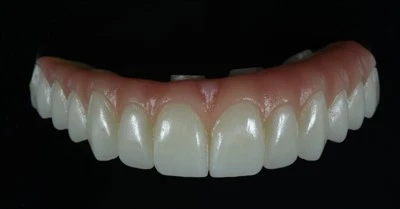
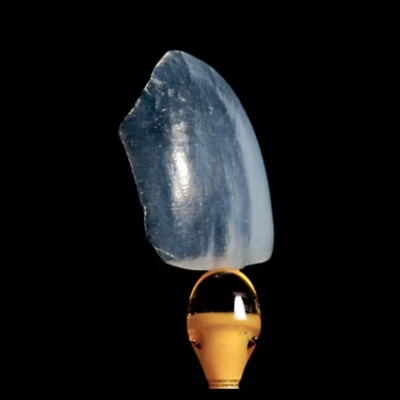
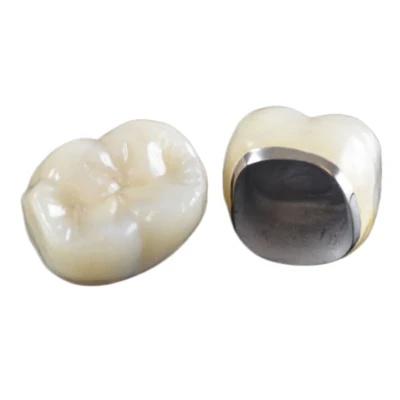
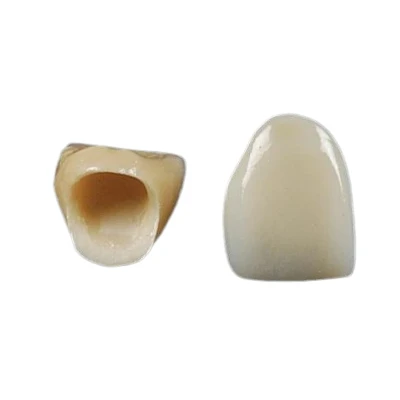
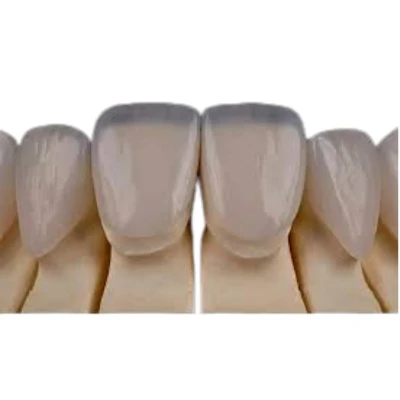
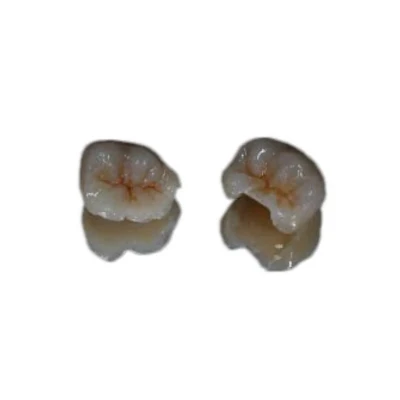

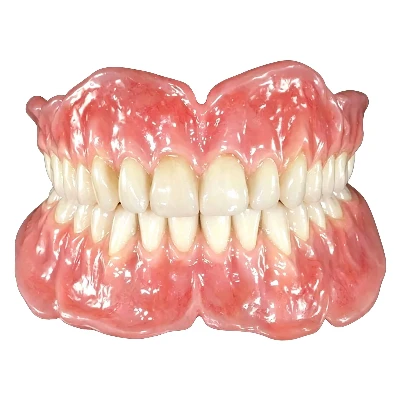

Choosing an OEM dental lab is not only about unit price.
A lab can quote low, show a clean sample, and still become a risky partner once real case volume begins. The real test is whether it can receive digital files correctly, design restorations consistently, control materials, document production, inspect quality at multiple stages, and communicate clearly when a case becomes complicated.
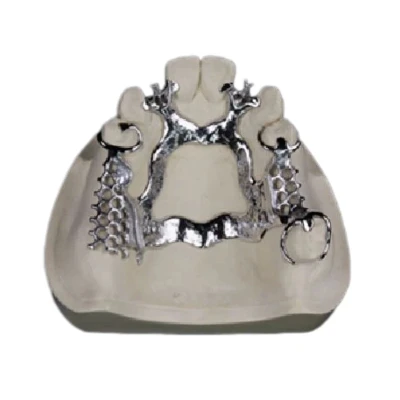
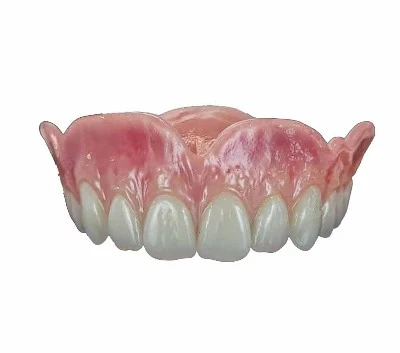
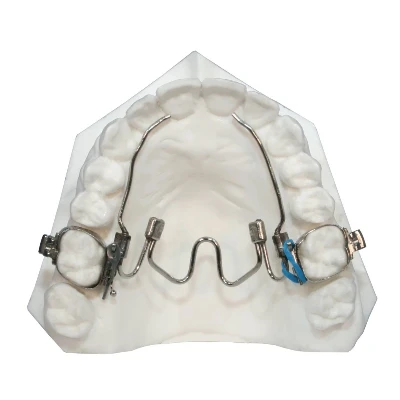
An OEM dental lab is a dental laboratory that manufactures restorations or dental products for another clinic, dental practice, or laboratory under that client's workflow, brand, prescription, or quality requirements. In practical B2B outsourcing, this may include zirconia crowns, bridges, veneers, implant restorations, custom abutments, removable appliances, digital design services, or full-arch cases.
To evaluate the engineering and technical capabilities of an OEM dental lab, you need to look beyond equipment lists and sales claims. You need to check whether the lab has a controlled system.
That system should include digital workflow, CAD/CAM integration, material documentation, traceability, SOPs, QMS, technician expertise, certification awareness, turnaround consistency, and overseas communication.

Why Engineering Capability Matters More Than Price Alone
Engineering capability matters because an OEM dental lab must deliver consistent restorations at scale, not just produce one acceptable sample at a low price.
A low price can reduce your purchasing cost on paper. But if the lab creates remakes, delays, adjustment problems, shade inconsistency, or unclear communication, the real cost moves back to your clinic or your client-facing dental lab.
A crown that needs 20 minutes of chairside adjustment is not cheap.
A bridge that comes back with tight contacts twice is not cheap.
An implant case delayed because the lab missed the scan body information is not cheap.
Price-focused evaluation usually asks, "How much per unit?"
Engineering-focused evaluation asks, "Can this lab repeat the same quality across hundreds or thousands of units?"
That is the better question.
|
Evaluation Area |
Price-Focused Lab |
Engineering-Focused Lab |
|
Quotation |
Competes mainly by lowering unit price |
Explains price based on material, workflow, complexity, and service level |
|
Sample quality |
Can produce a good sample for review |
Can repeat quality across routine and complex cases |
|
Digital workflow |
Accepts STL files but may lack intake checks |
Reviews file quality, margin clarity, bite, scan body data, and case instructions |
|
Material control |
Uses broad terms such as "zirconia" or "ceramic" |
Provides material brand, batch information, COA, or supplier records when needed |
|
Quality control |
Checks mainly before shipping |
Applies QC across design, production, finishing, and packing |
|
Remake handling |
Treats each remake as an isolated issue |
Tracks remake reasons and corrects recurring process problems |
|
Communication |
Replies quickly when selling |
Provides technical answers during real production |
The cheapest lab is often expensive after problems start. A reliable OEM dental lab should be measured by repeatability, not by its first quote.
Evaluate the Lab's Digital Workflow and CAD/CAM Integration
A digital dental workflow is the process of receiving digital case data, reviewing the files, designing restorations through CAD software, manufacturing them through CAM equipment such as milling machines or 3D printers, and inspecting the final result against technical requirements.
Many labs say they have CAD/CAM. That statement alone means very little.
A true CAD/CAM dental lab should be able to explain how digital files move through the lab, who checks them, what software is used, how design parameters are controlled, how manufacturing equipment is maintained, and how the final restoration is verified.
File Compatibility and Digital Case Intake
Start with file intake. If the lab cannot manage digital case submission properly, every later step becomes unstable.
A capable OEM dental lab should be able to receive and process common digital files such as STL. In some cases, PLY or OBJ files may also be relevant because they can carry additional color or texture data. For implant cases, scan body data and implant system information must be checked early.
The lab should not simply "open the file." It should review whether the case is usable.
Key intake checks include:
- Is the margin visible?
- Is the bite record complete?
- Is the preparation scanned clearly?
- Is the scan body correct?
- Is the implant system identified?
- Are shade photos or stump shade details provided when needed?
- Are doctor preferences recorded?
- Are remake or revision instructions clear?
A common failure in overseas dental outsourcing happens at this stage. The customer sends a case, the lab accepts it, production begins, and only later does someone realize the bite is unclear or the implant library does not match. That delay could have been prevented by a stronger digital intake process.
Good file handling is not administrative work. It is part of technical control.
CAD Design, Milling, and 3D Printing Capability
CAD design is the digital design of the restoration. CAM is the manufacturing side, often involving milling, 3D printing, sintering, and finishing.
A lab may use Exocad, 3Shape, or other dental CAD systems. The software brand matters less than how the lab controls design standards. Cement gap, contact strength, emergence profile, connector thickness, occlusal anatomy, and margin adaptation all affect clinical performance.
Different restorations require different design thinking.
|
Restoration Type |
Technical Focus |
Common Risk if Poorly Controlled |
|
Monolithic zirconia crown |
Margin fit, contact, occlusion, shade |
Heavy chairside adjustment, open margin, high bite |
|
Veneer |
Thin margin, translucency, shade, surface texture |
Poor esthetics, fracture risk, poor fit |
|
Bridge |
Connector design, path of insertion, occlusion |
Chipping, distortion, weak connector |
|
Implant crown |
Emergence profile, screw access, implant library |
Misfit, poor tissue contour, screw channel issue |
|
Full-arch case |
Passive fit, framework accuracy, occlusal scheme |
Major remake risk, patient discomfort |
|
Digital denture or printed appliance |
Print accuracy, resin handling, curing |
Distortion, poor fit, weak appliance |
The same applies to equipment. A 5-axis milling machine can support more complex geometries than a basic 4-axis setup, but equipment alone does not guarantee quality. Burs wear down. Furnaces drift. Printers require resin handling and curing control. Operators make decisions.
Ask the lab what work is done in-house and what work is outsourced. In-house milling or 3D printing can improve control over turnaround and remake handling, but only if the lab maintains the equipment properly.
A strong lab can explain the workflow step by step. A weak lab hides behind the phrase "advanced digital technology."
Implant System and Complex Case Compatibility
Implant restorations reveal whether a dental lab has real technical depth.
Implant cases require accurate scan body handling, correct implant libraries, proper emergence profile design, screw access management, passive fit, and component compatibility. A single-unit implant crown is already more demanding than a simple posterior crown. Multi-unit implant bridges and full-arch cases raise the technical requirements even higher.
Ask whether the lab has experience with:
- Custom abutments
- Screw-retained crowns
- Implant bridges
- Hybrid restorations
- Full-arch restorations
- Different implant systems
- Cases involving scan bodies and digital implant libraries
If your business includes implant work, do not judge the lab only by posterior crown samples. Ask for implant case examples and discuss how the lab handles unclear implant data.
A capable digital OEM dental lab should manage the full workflow from file intake and CAD design to manufacturing, inspection, and technical communication.
Check Materials, Documentation, and Traceability
Material control means the lab can identify what material was used, where it came from, which batch it belonged to, and whether it meets the intended clinical or market requirements.
This matters because "zirconia" is not one material. High-translucency zirconia, multilayer zirconia, high-strength zirconia, lithium disilicate, titanium components, PMMA, dental resin, and ceramic systems all behave differently. They have different strength values, firing requirements, shade behavior, and indications.
A serious OEM dental lab does not treat material choice as a vague back-office topic.
Material Certificates and COA
A COA, or Certificate of Analysis, is a document that provides material batch information, specifications, or test-related data from the material supplier or manufacturer. In dental manufacturing, COA and material certificates help verify that the material used in production matches the stated quality and indication.
You do not need to request every document for every routine case. But for long-term OEM cooperation, the lab should be able to provide documentation when requested.
Useful documents may include:
- Zirconia material information
- Ceramic material documentation
- Titanium documentation for implant-related components
- PMMA or resin information
- COA for selected materials
- Supplier information
- Batch or lot number examples
- Biocompatibility-related documentation when applicable
The required documents depend on the product type and market. A routine zirconia crown does not require the same compliance review as an implant component. Still, the lab should know what materials it uses and be able to explain them clearly.
If a lab cannot name its zirconia supplier or refuses to discuss material origin, treat that as a warning sign.
Batch Tracking and Material Traceability
Traceability means the ability to track a restoration back to its material batch, production date, processing route, QC result, and, when needed, remake or complaint record.
This becomes valuable when a problem is not isolated.
Imagine a dental lab receives several reports of shade mismatch from the same week. Without traceability, the lab can only guess. With traceability, it can check whether those cases used the same zirconia batch, the same furnace, the same staining process, or the same technician group.
A lab with good traceability should be able to track:
- Material batch or lot number
- Production date
- Work department
- Machine or furnace used
- QC result
- Shipping date
- Remake reason, if any
Traceability is not paperwork for its own sake. It helps solve real production problems.
Supplier and External Vendor Control
Some OEM dental labs outsource certain steps or source semi-finished components from external vendors. That is not automatically a problem. The problem is lack of control.
If a lab uses external suppliers for materials, components, printed models, metal frameworks, or implant-related parts, it should have a way to evaluate those suppliers. Supplier control may include approved vendor lists, incoming material checks, documentation review, or performance monitoring.
A restoration is only as reliable as the weakest controlled step.
Material quality should be verified through certificates, COA, supplier information, and traceability records instead of relying only on verbal claims.
Review Process Control, SOPs, and Manufacturing Standardization
Process control means the lab defines and manages the conditions under which restorations are produced. SOPs, or Standard Operating Procedures, are written or structured instructions that tell the team how each production step should be performed.
In a dental lab, engineering capability depends heavily on process control.
A skilled technician can rescue a difficult case. But OEM cooperation requires repeatability. You need a lab that can produce consistent work when different technicians, shifts, materials, and case volumes are involved.
SOPs for Each Production Stage
SOPs should cover the main production stages, not only final inspection.
For a fixed restoration workflow, that may include:
- Case intake
- File review
- CAD design
- Nesting
- Milling
- Sintering
- Staining
- Glazing
- Polishing
- Fit check
- Final inspection
- Packaging
For implant cases, SOPs should also cover scan body verification, implant library selection, abutment design, screw channel control, and component matching.
The buyer does not need to read every internal SOP. But the lab should be able to explain how it controls routine decisions. For example, how does it set cement space for zirconia crowns? How does it define contact tightness? How does it handle minimum connector thickness for bridges? How does it manage firing schedules for shade consistency?
When each technician uses a different personal method, quality becomes unpredictable.
Equipment Calibration and Maintenance
Dental lab equipment must be maintained and calibrated. Otherwise, quality slowly drifts.
A scanner that is not calibrated can create inaccurate data. A milling machine with worn burs can damage margins. A furnace with temperature variation can affect zirconia color and strength. A 3D printer with poor resin handling can create inaccurate models or appliances.
Ask how the lab manages:
- Scanner calibration
- Milling machine maintenance
- Bur replacement schedule
- Furnace calibration
- 3D printer maintenance
- Resin storage and curing
- Production environment control where relevant
A lab does not need to show you every maintenance record during the first conversation. But it should not be confused by the question.
If the lab cannot explain how it maintains its equipment, it may not understand why its results change.
Process Validation for Repeatable Results
Process validation means proving that a production process can repeatedly create the expected result under normal working conditions.
In a dental lab, this may involve checking whether a milling strategy produces stable margins, whether a sintering schedule produces predictable shade, or whether an implant workflow maintains fit across repeated cases.
Examples of process variables include:
|
Process Variable |
What It Affects |
|
Cement gap settings |
Crown fit and seating |
|
Milling bur condition |
Margin accuracy and surface quality |
|
Sintering curve |
Zirconia strength, translucency, and shade |
|
Staining and firing schedule |
Esthetic consistency |
|
Implant library accuracy |
Abutment and crown fit |
|
Polishing protocol |
Surface smoothness and antagonist wear |
|
Final QC criteria |
Defect detection before shipping |
The real engineering capability of an OEM dental lab is its ability to repeat the same quality standard across many cases through controlled SOPs, calibrated equipment, and validated processes.
Assess Quality Control and QMS Maturity
Quality control, or QC, refers to inspection steps used to confirm whether a restoration meets technical and clinical requirements. A Quality Management System, or QMS, is broader. It includes procedures, records, responsibilities, training, complaint handling, corrective actions, traceability, and continuous improvement.
A lab can have QC without a mature QMS. That usually means problems are caught late, handled case by case, and repeated too often.
A better OEM partner uses quality control as part of a system.
Multi-Step QC from Design to Final Inspection
Final inspection is necessary, but it is too late to be the only inspection.
A practical dental lab quality control checklist should cover several points:
- File and prescription review
- CAD design review
- Margin check
- Internal fit check
- Contact point check
- Occlusion check
- Shade inspection
- Surface finish inspection
- Implant interface or screw channel verification
- Final packaging check
Different product types require different QC focus.
|
Product Type |
QC Focus |
|
Zirconia crown |
Margin, fit, contact, occlusion, shade |
|
Veneer |
Thin margin, shade, translucency, surface texture |
|
Bridge |
Connector thickness, path of insertion, occlusal balance |
|
Implant crown |
Interface fit, emergence profile, screw access, contact |
|
Full-arch restoration |
Passive fit, framework accuracy, occlusal scheme |
|
Removable appliance |
Fit, retention, polishing, patient comfort |
If QC only happens before shipping, the lab is inspecting mistakes after value has already been added. Stronger labs prevent errors earlier.
QC should reduce remakes, not only detect finished defects.
Complaint Handling and Remake Analysis
Every dental lab has remakes. The difference is whether the lab learns from them.
A weak lab treats remakes as normal noise. A strong lab records them, categorizes them, and looks for root causes.
For example, repeated tight contacts may point to CAD parameter settings. Repeated shade complaints may point to material selection, photo communication, firing process, or technician interpretation. Repeated implant fit issues may point to scan body handling or library mismatch.
Ask the lab:
- Is there a remake log?
- Are complaint reasons categorized?
- Who reviews technical complaints?
- Is root-cause analysis performed?
- Are corrective actions recorded?
- Are recurring problems tracked by product type, client, material, or workflow?
A clear remake policy is also part of technical service. It should define how the lab handles remakes, what evidence is needed, and how both sides communicate when problems occur.
A lab that refuses to discuss remakes is usually not confident in its process.
Internal Audits and Continuous Improvement
Internal audits check whether the lab is following its own process. In a dental lab, audits may cover material storage, CAD design standards, machine maintenance, QC records, case packing, or shipping accuracy.
Continuous improvement means the lab reviews problems and updates its process.
This does not need to sound corporate. In practical terms, it means the lab notices that something keeps going wrong and fixes the source. It may adjust a design setting, retrain a department, change a material handling process, improve a prescription form, or revise QC criteria.
A strong QMS allows an OEM dental lab to identify errors, trace their causes, correct them, and prevent the same issues from recurring.

Verify Certifications and Regulatory Compliance Carefully
Certifications are useful, but they are often misunderstood.
A certificate does not automatically prove that a lab will produce good restorations. It proves that the company has been assessed against a specific standard within a defined scope. The scope matters.
Certification requirements vary by product category, target market, and business model. A lab producing routine custom restorations does not have the same requirements as a company producing implant components or regulated medical devices for a specific market.
Common Certifications and Compliance Documents to Review
Some documents and standards may be relevant when evaluating OEM dental lab certifications.
|
Document or Standard |
Typical Relevance |
What It Helps Show |
|
ISO 13485 |
Medical device quality management system |
Process control, risk management, documentation discipline |
|
FDA registration / 510(k) |
Certain products for the U.S. market |
Regulatory pathway or product status, depending on product category |
|
CE-related documentation |
Products supplied to European markets |
EU market compliance context |
|
ISO 10993 |
Biological evaluation of medical device materials |
Biocompatibility evidence for relevant materials |
|
COA and material certificates |
Common in material verification |
Material identity, batch information, supplier quality |
|
Batch or lot records |
Long-term OEM quality control |
Traceability and issue investigation |
Do not ask for every certificate as a checkbox exercise. Ask which documents apply to the product you plan to order.
For example, a zirconia crown, a custom abutment, a printed surgical guide, and an implant component may fall into different documentation expectations. A professional lab should understand these differences.
How to Cross-Check Certificates
Do not rely only on a PDF.
Certificates can be expired, outside the correct scope, issued to another entity, or unrelated to the actual product you are purchasing. When evaluating a dental lab, check the details.
Review:
- Company name
- Certificate number
- Expiration date
- Issuing body
- Registered address
- Product or process scope
- Whether the certificate applies to the relevant product category
Where public databases or certification bodies allow verification, cross-check the information. For FDA-related claims, confirm whether the product category and registration details match what the lab says. For ISO claims, check the certifying body and certificate validity.
A serious OEM dental lab should be comfortable providing clear certification details.
Certification Is Not a Substitute for Daily Quality Control
A certified lab can still make poor restorations if daily process control is weak.
Certification should be supported by real working records: material records, QC checks, production logs, calibration data, remake analysis, and training updates. Without those, the certificate becomes a marketing document rather than a quality signal.
Certifications are useful only when they are current, relevant, verifiable, and supported by daily quality records.
Evaluate Technician Expertise and Technical Support
Equipment improves production efficiency. Technicians make the case work.
A skilled dental technician understands what is not always obvious from a digital file: margin readability, preparation limitations, occlusal risk, esthetic compromise, implant emergence, shade interpretation, and when to stop production to ask a technical question.
For OEM dental lab outsourcing, the team behind the equipment matters.
Experience with Different Restoration Types
Do not assume that one good product category means the lab is strong in all categories.
A lab may be excellent at posterior monolithic zirconia crowns but weak in anterior esthetics. Another lab may handle veneers well but lack implant workflow experience. Full-arch work requires a different level of planning from single crowns.
Ask for experience in the specific products you need:
- Zirconia crowns
- Porcelain crowns
- Veneers
- Bridges
- Implant crowns
- Custom abutments
- Full-arch restorations
- Removable restorations
- Digital design services
If your normal work includes implant restorations, ask for implant examples. If your clients care about anterior esthetics, ask for shade-matched anterior cases. If your order volume is mostly posterior crowns, test consistency rather than only esthetic photos.
Evaluate the lab based on your real case mix, not its best marketing sample.
Training, Specialization, and Internal Knowledge Transfer
A scalable OEM dental lab usually has specialization. CAD designers, ceramic technicians, implant technicians, removable technicians, and QC staff may work in separate roles.
That structure helps reduce variation.
Training also matters because dental materials and digital systems change quickly. New zirconia systems, updated CAD software, new implant libraries, and different intraoral scan workflows all require ongoing learning.
Ask whether the lab has:
- Product-specific technician teams
- Internal training programs
- Senior technician review for complex cases
- Case review meetings
- Updates for new materials or software
- A process for recording client preferences
A lab that depends on one "master technician" may produce excellent work when that person handles the case. It may also become unstable when volume grows.
Technical Support for Overseas Clients
For overseas clients, technical support is not only customer service. It affects production accuracy.
A good technical support team should be able to discuss unclear margins, shade photos, implant libraries, bite issues, remake reasons, and doctor-specific preferences. Quick replies are helpful, but technical clarity matters more.
Ask:
- Can the lab communicate in clear English?
- Who handles technical questions?
- Can cases be reviewed before production?
- Can doctor preferences be stored?
- How are urgent cases escalated?
- How are remake discussions handled?
- Can the lab explain why a case needs more information?
Advanced equipment improves production efficiency, but experienced technicians and clear technical support determine how well an OEM dental lab handles complex clinical requirements.
Test Turnaround Time, Scalability, and Overseas Communication
Turnaround time should not be judged by one sample case.
A lab can rush a trial order to win business. The better test is whether it can maintain stable delivery when volume increases and case complexity varies.
For overseas dental outsourcing, turnaround time includes file review, technical clarification, production, QC, packing, international shipping, customs-related documentation when needed, and communication after delivery.
Turnaround Consistency by Product Type
Different products need different timelines. A simple monolithic zirconia crown should not be treated the same as a layered anterior crown, an implant bridge, or a full-arch restoration.
Ask for product-specific turnaround expectations.
|
Product Type |
What to Clarify |
|
Monolithic zirconia crown |
Standard production time, shade process, remake response |
|
Anterior layered crown |
Extra time for esthetic work and shade review |
|
Bridge |
Connector design, fit verification, distortion control |
|
Implant crown |
Implant system confirmation, component availability |
|
Full-arch case |
Design review, try-in workflow, passive fit control |
|
Removable appliance |
Model accuracy, finishing time, adjustment policy |
A lab that gives the same delivery promise for every product is either oversimplifying or overselling.
Reliable delivery requires classification.
Case Volume Capacity and Scalability
Scalability is the ability to handle increased case volume without losing quality, delaying communication, or raising remake rates.
Ask about daily or monthly capacity, but do not stop there. Production numbers mean little without QC capability.
Better questions include:
- What is your normal monthly output by product category?
- What happens when volume increases by 30%?
- How do you handle peak seasons?
- How many cases can your CAD team review per day?
- Does rush production bypass normal QC?
- How do you protect turnaround when complex cases increase?
A scalable lab does not simply add more cases to the same team. It manages capacity through workflow, staffing, equipment planning, and quality control.
Communication and Logistics for Overseas Outsourcing
A China dental lab working with overseas dentists or dental labs must manage time zones and shipping rhythm carefully.
Communication gaps create technical errors. For example, if the lab asks a margin question after the customer's working hours, production may lose one full day. If shipping updates are unclear, the clinic may not schedule patients properly. If remake instructions are vague, the same problem may repeat.
Check whether the lab provides:
- Clear case submission process
- English communication
- Defined response time
- Technical clarification before production
- Shipping updates
- Remake communication
- Case photos when needed
- Stable contact person or support team
For overseas dental outsourcing, turnaround time should include case review, production, QC, packaging, shipping, and communication-not only the number of days spent in manufacturing.

Conclusion
Evaluating the engineering and technical capabilities of an OEM dental lab means looking at the whole production system.
The right question is not "Does this lab have CAD/CAM?" or "Can this lab offer a lower price?" The better question is whether the lab can deliver consistent, traceable, clinically reliable restorations through a controlled workflow.
A strong OEM dental lab should show digital workflow capability, CAD/CAM integration, material documentation, traceability, SOPs, QMS, relevant certifications, trained technicians, stable turnaround, and clear overseas communication.
The best OEM dental lab is not simply the one with advanced machines. It is the one with a controlled workflow, trained technicians, documented quality systems, transparent communication, and consistent delivery performance.
ADS Dental Laboratory Ltd is a China-based digital dental laboratory focused on long-term OEM restoration outsourcing for overseas dentists and dental labs. If you are evaluating a new dental lab partner or planning a pilot order, contact our team to discuss your case types, materials, workflow requirements, turnaround expectations, and quality standards.

FAQ
What is the most important factor when evaluating an OEM dental lab?
The most important factor is whether the OEM dental lab can deliver consistent restorations repeatedly, not whether it can make one good sample.
Consistency depends on digital workflow, CAD/CAM standards, technician training, material control, SOPs, QC, QMS, and communication. A lab that relies only on individual technician skill may produce good work sometimes, but it may become unstable when case volume increases.
Is CAD/CAM equipment enough to prove technical capability?
No. CAD/CAM equipment is only the foundation of technical capability.
A true CAD/CAM dental lab must also control file intake, design parameters, milling or printing processes, equipment maintenance, material selection, inspection standards, and remake handling. Owning a scanner or milling machine does not prove that the lab can control fit, contact, occlusion, shade, and turnaround across repeated cases.
What documents should I request from an OEM dental lab?
You can request material certificates, COA records, supplier information, certification documents, batch or lot tracking examples, QC process descriptions, and equipment maintenance or calibration examples.
The exact documents depend on the product type and target market. For routine crowns and bridges, material and QC documentation may be enough. For implant-related products or regulated markets, additional compliance documents may be needed.
What certifications should an OEM dental lab have?
The right certifications depend on the restoration type, product category, and target market.