
Choosing an implant restoration lab is not the same as choosing a general crown and bridge lab.
Implant restorations leave less room for error. A crown on a natural tooth can often tolerate small clinical adjustments. An implant-supported restoration is different. The connection, screw channel, emergence profile, occlusion, component compatibility, and passive fit all affect the final result.
For dentists and dental laboratories outsourcing implant cases, the right lab should be judged by three areas: materials, workflow, and quality standards.
A reliable implant restoration lab should offer suitable materials such as zirconia, lithium disilicate, titanium, Ti-base components, and PMMA. It should also follow a controlled digital workflow, from scan file review and implant system identification to CAD/CAM production, finishing, final QC, and shipping. Most of all, it should show repeatable quality, not just one good sample case.
That is the difference between a supplier and a long-term outsourcing partner.

What Is an Implant Restoration Lab?
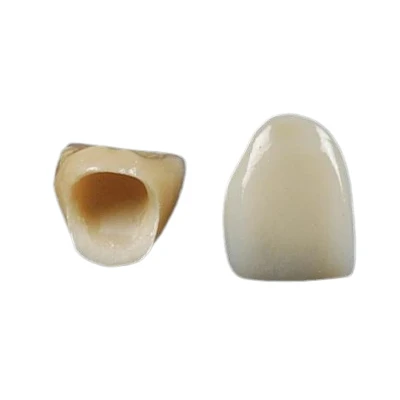
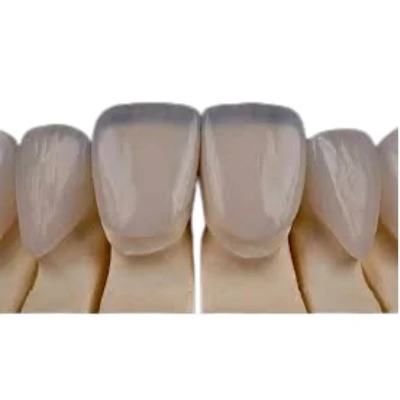
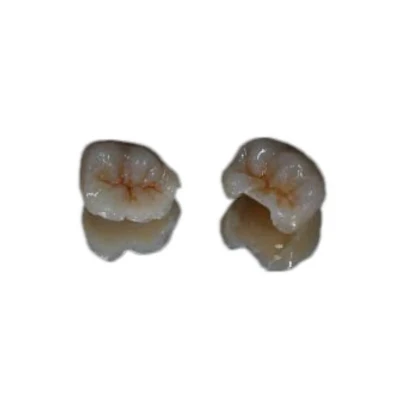
An implant restoration lab is a dental laboratory that designs and manufactures prosthetic restorations supported by dental implants. These restorations may include implant crowns, implant bridges, custom abutments, Ti-base crowns, implant-supported dentures, implant bars, and full-arch restorations.
The implant fixture acts as the artificial root. It is placed in the jawbone by the clinician.
The implant restoration is the visible and functional part. It replaces the missing tooth or teeth, restores chewing function, supports esthetics, and helps the patient speak and smile naturally.
This distinction matters. An implant restoration lab is not simply "making a crown." The lab must understand the entire restorative connection: implant platform, scan body, digital library, abutment design, Ti-base compatibility, screw access position, restorative space, soft tissue contour, and occlusion.
A general dental lab may be strong in conventional crowns and bridges. That does not automatically mean it can handle implant cases well.
How Implant Restoration Labs Differ from General Dental Labs
A conventional crown is supported by a prepared natural tooth. An implant restoration is supported by an implant system with mechanical components.
That changes the technical demands.
An implant dental lab needs to control:
- Implant interface accuracy
- Scan body and digital library matching
- Ti-base or abutment compatibility
- Screw access channel position
- Emergence profile
- Passive fit in bridge and full-arch cases
- Occlusal force distribution
- Cleanability around the restoration
For a single posterior implant crown, the difference may look small from the outside. But inside the workflow, the lab must match the correct implant platform, design the restoration around the screw channel, and avoid excessive occlusal load on the implant.
For a full-arch case, the gap becomes even wider. A misfit framework or inaccurate bite record can turn into remakes, extra chair time, delayed delivery, and an unhappy patient.
A reliable implant restoration lab combines prosthetic design knowledge, implant system compatibility, CAD/CAM accuracy, and strict quality control. Without all four, consistency is hard to maintain.
Common Types of Implant Restorations a Lab Should Support
A capable implant restoration lab should be able to support more than one type of case. Dentists and dental labs often send a mix of single crowns, custom abutments, bridges, temporary restorations, and full-arch cases. A lab that only handles simple single units may not be the right partner for a growing implant workflow.
The case type affects material choice, design method, production route, and QC focus.
Single Implant Crowns
A single implant crown is used when one missing tooth is restored with one implant and one crown. It can be screw-retained or cement-retained, depending on implant angulation, esthetic demands, restorative space, and doctor preference.
Common structures include:
- Zirconia crown bonded to Ti-base
- Custom titanium abutment with zirconia or lithium disilicate crown
- Custom zirconia abutment with ceramic crown in esthetic areas
For posterior cases, strength and occlusion control come first. For anterior cases, emergence profile, shade, translucency, and soft tissue support become more sensitive.
The lab's job is not only to make the crown fit. It must design a restoration that seats correctly, avoids excessive occlusal stress, and gives the dentist a predictable delivery appointment.
Custom Abutments
A custom abutment is a patient-specific implant component designed to support the final crown or bridge. It helps manage soft tissue shape, implant angulation, crown margin position, and esthetic outcome.
Custom abutments are often used when stock abutments do not provide the right path, height, margin level, or tissue support.
Titanium custom abutments are widely used because of their strength and stability. Zirconia abutments may be selected in anterior esthetic zones when soft tissue thickness and case conditions allow.
A well-designed custom abutment should do several things at once: support the crown, respect tissue contours, allow clean margins, reduce cement risk, and provide enough restorative space.
Bad abutment design creates problems before the crown is even made.
Implant Bridges
An implant bridge replaces multiple missing teeth using two or more implants as support. It may reduce the need for one implant per missing tooth, but it adds technical demands.
The lab must control the framework design, connector strength, path of insertion, and occlusion across multiple units. Passive fit becomes more sensitive because implants do not move like natural teeth.
For example, a three-unit posterior implant bridge supported by two implants may look routine. But if the framework is slightly distorted or contacts are too heavy on one side, the patient may return with screw loosening, food trapping, or discomfort.
Implant bridge cases should be handled by labs that understand both mechanical stability and hygiene access.
Implant-Supported Dentures and Hybrid Restorations
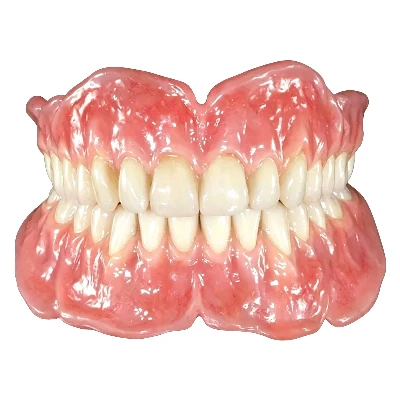
An implant-supported denture may be removable or fixed. It is commonly used for patients missing most or all teeth in one arch.
This category includes overdentures, bar-supported dentures, fixed hybrid restorations, and acrylic-based implant prosthetics. These cases often involve attachments, titanium bars, acrylic teeth, PMMA prototypes, or reinforced frameworks.
The lab must consider retention, cleansability, vertical dimension, phonetics, occlusion, and patient comfort.
A denture that looks good on the bench can still fail clinically if the bite is wrong or the intaglio surface is hard to clean.
Full-Arch Implant Restorations
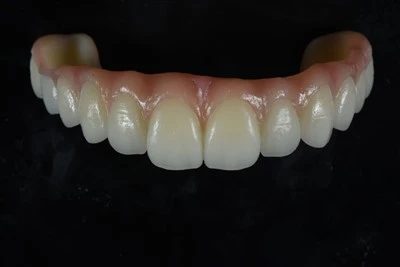
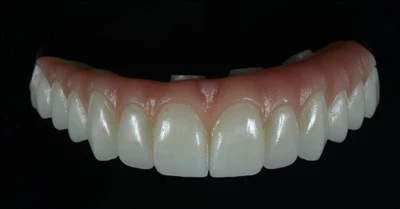
Full-arch implant restorations include All-on-4, All-on-6, full-arch zirconia bridges, titanium bar hybrids, and PMMA prototype restorations.
These are not simple "large bridges."
Full-arch cases require careful control of:
- Vertical dimension
- Bite records
- Midline and smile line
- Phonetics
- Framework fit
- Implant positions
- Esthetic setup
- Occlusal scheme
- Try-in or prototype approval
Many full-arch workflows use a PMMA try-in before the final zirconia or hybrid restoration. This lets the dentist and patient evaluate esthetics, bite, lip support, speech, and function before committing to the final prosthesis.
Skipping this step may save a few days. It can also create a costly remake.
Temporary Implant Restorations and PMMA Try-Ins
PMMA temporary restorations and try-ins are used to test function and esthetics before final production. They are common in full-arch cases, immediate temporaries, and complex anterior implant cases.
PMMA is not usually selected as the long-term final material for high-load implant cases. Its value is different. It gives the dentist a practical prototype that can be adjusted, tested, approved, and then copied into the final restoration.
|
Restoration Type |
Typical Use |
Key Lab Focus |
|
Single implant crown |
One missing tooth |
Fit, shade, occlusion |
|
Custom abutment |
Tissue and angulation management |
Emergence profile, margin design |
|
Implant bridge |
Multiple missing teeth |
Passive fit, connector strength |
|
Implant-supported denture |
Full or partial arch support |
Stability, bar or attachment design |
|
Full-arch restoration |
Complete arch replacement |
Framework fit, bite, try-in |
|
PMMA temporary restoration |
Provisional or prototype stage |
Function, esthetics, adjustability |
A capable implant restoration lab should support routine single units and more complex implant prosthetics. If your lab cannot handle bridge fit, custom abutment design, temporary prototypes, or full-arch communication, it may limit your clinical options.
Key Materials Used in Implant Restorations
Material selection directly affects strength, esthetics, biocompatibility, occlusal performance, and long-term comfort.
A good implant restoration lab should not only offer different materials. It should know when each material makes sense.
Material choice depends on several factors: anterior or posterior region, implant angulation, soft tissue thickness, restorative space, occlusal load, patient habits, esthetic expectations, and whether the restoration is temporary or final.
Zirconia for Implant Crowns, Bridges, and Full-Arch Restorations
Zirconia is one of the most widely used materials for implant crowns and bridges. It offers high strength, good esthetics, and reliable performance when designed and processed correctly.
Different zirconia types have different properties. High-strength 3Y zirconia is often used for posterior bridges and full-arch frameworks. More translucent multilayer zirconia may be selected for esthetic crowns where appearance matters more.
Typical dental zirconia materials may range from about 600 MPa to over 1,000 MPa in flexural strength, depending on the formulation and manufacturer. Higher translucency often comes with lower strength, so the lab should not choose material only by appearance.
Zirconia works well for:
- Posterior implant crowns
- Implant bridges
- Ti-base zirconia crowns
- Full-arch zirconia bridges
- Cases requiring strength and wear resistance
But zirconia is not automatic. Poor design, thin connector areas, wrong sintering parameters, or weak bonding to Ti-base can compromise the case.
A digital lab should control nesting, milling strategy, sintering cycle, staining, glazing, polishing, and final fit verification. The material is only as good as the workflow behind it.
Lithium Disilicate for Esthetic Implant Restorations
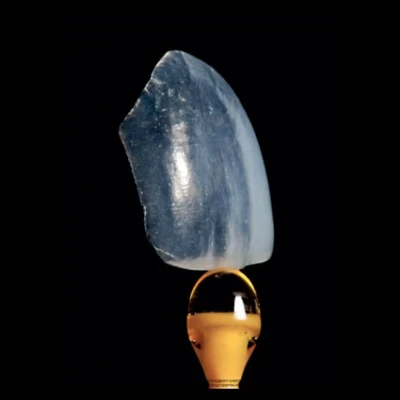
Lithium disilicate, often known by the market name E.max, is used when esthetics and translucency are high priorities. It is usually selected for single-unit restorations rather than long-span implant bridges.
Lithium disilicate often has flexural strength around 360–500 MPa, depending on material type and processing. It can deliver natural translucency and good shade blending, especially in anterior cases.
It may be suitable for:
- Anterior single implant crowns
- Esthetic cases with enough restorative space
- Custom abutment + crown workflows
- Low to moderate load conditions
It is not the first choice for every implant case. Heavy occlusion, limited thickness, bruxism, or posterior high-load cases may call for zirconia or another solution.
The lab should not simply follow a material request without checking the case conditions.
Titanium and Ti-Base Components
Titanium is widely used in implant restorations because of its strength, biocompatibility, and mechanical stability. It is common in custom abutments, implant bars, frameworks, and Ti-base restorations.
A Ti-base is a prefabricated titanium base bonded to a milled ceramic restoration, often zirconia. This is common in screw-retained implant crowns.
Ti-base workflows are popular because they combine digital ceramic production with a stable titanium implant interface. But compatibility is everything.
The lab must match:
- Implant brand
- Platform size
- Connection type
- Scan body
- CAD library
- Ti-base geometry
- Screw type
A mismatch between scan body, digital library, and Ti-base can produce a crown that looks correct in CAD but fails to seat clinically.
For implant work, component quality is not a minor detail. The interface is the foundation of the restoration.
PMMA for Temporaries, Prototypes, and Try-Ins
PMMA is used for temporary crowns, provisional restorations, prototypes, and full-arch try-ins. It is easy to mill, adjust, and evaluate clinically.
In full-arch workflows, a PMMA prototype can help confirm:
- Bite
- Esthetics
- Tooth position
- Midline
- Lip support
- Phonetics
- Patient approval
This stage can reduce final remake risk. It also gives the clinician a practical way to test the design before moving to zirconia, titanium, or hybrid final materials.
PMMA should not be treated as just a low-cost temporary. In complex cases, it is a diagnostic tool.
PFM and Other Material Options
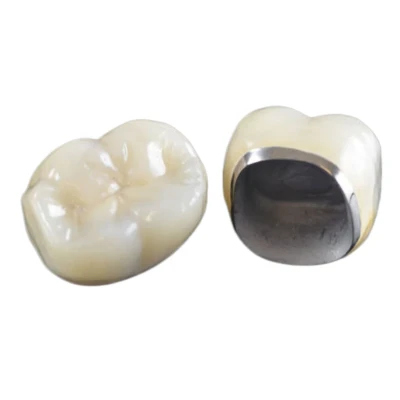
PFM, or porcelain-fused-to-metal, is still used in some implant crown and bridge cases. Many dentists are familiar with it, and it remains useful in certain markets or budget-sensitive cases.
PFM offers strength and clinical familiarity, but it may not provide the same esthetic depth as modern all-ceramic options. Chipping, metal show-through, or gingival discoloration can also be concerns, especially in visible areas.
Some niche materials, such as PEEK or reinforced polymers, may appear in selected implant prosthetic designs. They are not the main material choice for most implant restoration outsourcing cases unless the clinical plan specifically calls for them.
|
Material |
Common Use |
Main Advantages |
Key Considerations |
|
Zirconia |
Implant crowns, bridges, full-arch restorations |
Strong, esthetic, durable |
Requires accurate design, milling, and sintering |
|
Lithium disilicate |
Esthetic single implant crowns |
High translucency, natural appearance |
Not ideal for every high-load case |
|
Titanium |
Abutments, bars, frameworks |
Strong, biocompatible, stable |
Interface accuracy is key |
|
Ti-base |
Screw-retained zirconia crowns |
Supports retrievability and digital workflow |
Must match implant system and library |
|
PMMA |
Temporaries, prototypes, try-ins |
Fast, adjustable, useful for testing |
Not for long-term final restorations |
|
PFM |
Crowns and bridges |
Familiar, cost-effective |
Esthetics may be less ideal than all-ceramic options |
The best material for an implant restoration depends on the case. A lab that pushes one material for every situation is not giving real technical support.
Digital Workflow of a Modern Implant Restoration Lab
A modern implant restoration lab should be able to work with intraoral scans, model scans, or conventional impressions converted into digital files.
Digital workflow does not mean pressing a button and waiting for a perfect crown. It means every step is controlled, recorded, checked, and communicated.
A well-run digital implant workflow usually includes case review, scan verification, implant system identification, CAD design, CAM production, finishing, QC, packaging, and shipping.
Case Review and Digital File Receiving
Most digital implant cases begin with files and instructions from the dentist or sending lab.
A complete submission may include:
- STL or PLY files
- Upper and lower arch scans
- Bite scan or bite record
- Implant system and platform
- Scan body information
- Shade information
- Clinical photos
- Design preferences
- Special instructions
For overseas dental lab outsourcing, file quality is one of the first risk points. A distorted scan, missing bite, wrong scan body, or unclear implant platform can delay the case before production starts.
The lab should review the case before design. If something is missing, it should ask questions early.
Silent guessing is expensive.
Implant System Identification and Library Matching
This is one of the most common weak points in implant outsourcing.
The lab must identify the implant brand, platform, connection type, scan body, and CAD library. Then it must match that information with the correct Ti-base, custom abutment, or component system.
Common design platforms include exocad and 3Shape. Both can produce accurate implant designs, but only if the implant libraries and scan data match the real clinical components.
A mistake here can cause:
- Non-seating restorations
- Incorrect screw channel position
- Open contacts after seating
- Component mismatch
- Screw loosening
- Remake delays
For example, two scan bodies may look similar in a screenshot but belong to different platforms. A lab without strong implant library control may not catch the difference.
A good implant restoration dental lab checks before production, not after the crown fails to seat.
CAD Design and Case Communication
CAD design for implant restorations is not just tooth morphology. The designer must consider the mechanical and biological environment.
Key design areas include:
- Crown contour
- Emergence profile
- Contact points
- Occlusion
- Screw access channel
- Abutment height
- Gingival clearance
- Restorative space
- Hygiene access
- Doctor preference
For complex cases, design approval can reduce misunderstandings. This may be a screenshot, PDF preview, 3D viewer file, or internal case discussion before milling.
Designers should also flag risks. If restorative space is too limited for zirconia thickness, the lab should say so. If screw access exits through an incisal edge, the dentist should know before production.
That is technical support, not delay.
CAM Milling, 3D Printing, and Fabrication
After design approval, the case moves into production.
A digital implant lab may use:
- 5-axis milling machines for zirconia, PMMA, wax, or titanium
- Desktop or industrial scanners
- DLP or SLA 3D printers for models, surgical guides, or try-ins
- Sintering furnaces for zirconia
- Ceramic furnaces for staining, glazing, or crystallization
- Titanium milling systems for bars or abutments
- Bonding protocols for Ti-base restorations
The machines matter, but they do not replace judgment. A 5-axis mill can still produce a poor restoration if the design is weak, bur condition is poor, sintering shrinkage is not controlled, or the wrong material blank is selected.
Digital production needs trained technicians, equipment maintenance, and process control.
Finishing, Fit Verification, and Final QC
Finishing is where many implant restorations succeed or fail.
A zirconia implant crown may come out of the mill with the right shape, but the final case still needs sintering, staining, glazing or polishing, contact adjustment, fit verification, and screw channel inspection.
Before shipping, the lab should check:
- Implant interface fit
- Crown seating
- Proximal contacts
- Occlusion
- Screw access channel
- Shade and surface texture
- Emergence contour
- Polishing quality
- Case label and component match
- Packaging protection
For implant bridges and full-arch cases, fit verification may require printed models, analogs, verification jigs, or try-in stages depending on the workflow.
A lab that treats final QC as a quick visual inspection is not suitable for demanding implant cases.
Packaging, Shipping, and Ongoing Support
For overseas cases, production quality is only one part of delivery. Packaging and logistics also affect the final experience.
Implant restorations should be clearly labeled, protected from damage, and shipped with the correct screws, components, or case notes when required. Tracking information and communication should be reliable.
If an issue occurs, the lab should respond with a practical solution: review the file, check the design, inspect component compatibility, remake if needed, or advise the dentist on the likely cause.
A digital workflow is only useful when it reduces uncertainty. The best labs make the case easier to manage from upload to delivery.

Quality Standards to Look For in an Implant Restoration Lab
Quality in implant restorations has two layers.
The first is clinical quality: fit, passive seating, occlusion, contact, emergence profile, shade, and finishing.
The second is operational quality: documentation, material traceability, standard procedures, remake handling, communication, and production consistency.
Both matter. A beautiful crown with poor documentation is risky. A lab with certificates but inconsistent fit is not a good partner either.
Poor quality control can lead to misfit, chairside adjustment, delayed appointments, screw loosening, remakes, esthetic complaints, and loss of trust in the outsourcing relationship.
Implant Interface and Marginal Fit Accuracy
Implant interface accuracy refers to how precisely the restoration connects to the implant component, Ti-base, or abutment.
This is one of the most technical areas in implant restoration. The interface must be clean, accurate, and compatible. A small mismatch can affect seating and screw stability.
For custom abutment + crown cases, marginal fit also matters. The crown margin should seat cleanly on the abutment without open margins or excessive adjustment.
A good lab controls fit through:
- Correct implant library selection
- Verified component matching
- Accurate milling
- Clean bonding protocols
- Model or analog verification
- Final seating checks
Fit problems are expensive because they usually appear at delivery, when the patient is already in the chair.
Passive Fit for Bridges and Full-Arch Cases
Passive fit means the restoration seats on the implants without forcing the framework into place.
This is especially relevant for implant bridges and full-arch restorations. Natural teeth have periodontal ligaments and slight mobility. Implants do not. A framework that is under strain can transfer stress to screws, implants, and prosthetic components.
Signs of poor passive fit may include:
- Difficulty seating
- Screw tightening sequence problems
- Rocking framework
- Repeated screw loosening
- Patient discomfort
- Fracture risk over time
For full-arch cases, passive fit often requires extra verification steps. A PMMA try-in, printed model with analogs, verification jig, or test framework may prevent final failure.
The larger the case, the less acceptable guessing becomes.
Emergence Profile and Soft Tissue Support
Emergence profile describes how the restoration comes out of the gingival tissue. It affects esthetics, hygiene, food impaction, and tissue support.
In anterior implant cases, emergence profile can decide whether the crown looks natural or artificial. In posterior cases, it affects cleansability and patient comfort.
Over-contoured restorations may trap plaque and irritate tissue. Under-contoured designs may look flat or fail to support soft tissue. Margin position also affects cement control and hygiene access.
The lab should design the custom abutment and crown together, not as separate objects. This is especially true for esthetic implant crowns.
Occlusion and Contact Accuracy
Implant occlusion must be controlled carefully because implants do not absorb forces like natural teeth.
The lab should evaluate centric contacts, lateral movements, proximal contacts, and opposing dentition. Heavy bite, bruxism, cantilevers, and posterior full-arch cases need extra attention.
A common issue in implant crowns is excessive occlusal contact after seating. It may seem easy for the dentist to adjust, but repeated chairside grinding wastes time and may damage surface finishing.
Good lab occlusion is not about making the crown "light everywhere." It is about controlled contacts based on the case design and clinician preference.
Shade Matching and Esthetic Finishing
Esthetics include more than shade tabs.
A natural implant crown depends on contour, translucency, value, surface texture, staining, glazing, and gingival harmony. Zirconia and lithium disilicate behave differently, so the lab must select the right technique for the material.
For anterior cases, the dentist should send photos whenever possible. A basic shade like A2 is not enough for high-esthetic work. Photos of adjacent teeth, stump or abutment shade, smile line, and surface character help the lab produce a better result.
For posterior cases, esthetics still matter, but surface polishing and occlusal smoothness may matter more for long-term comfort and opposing dentition.
Material Documentation and Traceability
A reliable implant restoration lab should be able to explain what materials and components are used.
For routine restoration outsourcing, this may include material brand, zirconia type, Ti-base source, case records, design files, and internal QC notes. For certain regulated markets or component manufacturing, additional certificates or documentation may apply.
Useful documentation may include:
- Material information
- Case prescription
- Design record
- Batch or lot details where available
- QC checklist
- Final inspection notes
- Remake or issue history
- Relevant certificates where applicable
This does not mean every implant restoration lab must operate like an implant fixture manufacturer. A lab making crowns, bridges, and abutments is not the same as a company manufacturing implant bodies.
But transparency still matters.
If a lab cannot tell you what material was used or how a case was checked, long-term cooperation becomes harder to manage.
Certifications, QMS, and Documented Processes
Certifications can support trust, especially for labs manufacturing medical-device-related components or serving regulated markets. ISO 13485 may be relevant in some contexts. Material and biocompatibility documentation may also matter depending on the product and market.
But certificates alone do not guarantee good daily output.
A lab's quality management system should show up in ordinary work:
- Standard operating procedures
- Technician training
- Equipment maintenance
- Calibration routines
- Case review process
- Final QC steps
- Complaint handling
- Remake analysis
- Continuous process improvement
The strongest labs are not defined only by equipment or certificates. They are defined by repeatable work.
Communication, Remake Policy, and Long-Term Consistency
For overseas dentists and dental labs, communication is part of quality control.
A good outsourcing lab should ask clear questions before production, flag risk areas, confirm unclear instructions, and respond quickly when something goes wrong.
Look for:
- Clear case intake process
- Reasonable turnaround time
- English communication support
- Design confirmation for complex cases
- Clear remake policy
- Issue tracking
- Stable production capacity
- Repeatable quality across batches
One good trial case proves little. A reliable long-term implant restoration lab must deliver consistent results across many cases, different doctors, different implant systems, and changing monthly case volumes.
|
Quality Area |
What to Check |
Why It Matters |
|
Interface accuracy |
Component match, implant library, seating |
Prevents misfit and screw issues |
|
Passive fit |
Bridge and full-arch fit verification |
Reduces stress on implants and screws |
|
Emergence profile |
Tissue contour and cleanability |
Affects esthetics and hygiene |
|
Occlusion |
Contact control and bite scheme |
Reduces chairside adjustment |
|
Material documentation |
Material and component information |
Supports traceability |
|
QMS process |
SOPs, QC, complaint handling |
Supports repeatable quality |
|
Communication |
Case clarification and remake policy |
Reduces outsourcing risk |
When choosing an implant restoration lab, dentists should look beyond price and sample photos. The real test is whether the lab can control fit, materials, documentation, and communication case after case.
Screw-Retained vs. Cement-Retained Implant Restorations
One of the most common design decisions in implant prosthetics is whether to use a screw-retained or cement-retained restoration.
Both options have clinical use. The lab's role is to help evaluate the case conditions and produce the design correctly.
When Screw-Retained Restorations Are Preferred
A screw-retained implant restoration is attached directly to the implant or Ti-base with a screw. It can be retrieved by removing the screw access filling and loosening the screw.
Many dentists prefer screw-retained designs because they are easier to maintain and avoid cement residue.
Common advantages include:
- Easier retrievability
- No cement residue risk
- Easier repair or maintenance
- Common compatibility with Ti-base zirconia crowns
- Useful for posterior implant crowns and many bridge cases
The main limitation is screw access position. If the screw channel exits through a visible facial surface or incisal edge, esthetics may suffer. Angled screw channel systems can help in some cases, but they require the correct components and careful design.
When Cement-Retained Restorations May Be Used
A cement-retained implant restoration usually involves a custom or stock abutment with a crown cemented on top.
This option may be used when implant angulation makes the screw access channel unfavorable, or when anterior esthetics require avoiding a visible screw access opening.
Cement-retained designs can look clean and natural, but they bring one well-known risk: cement residue. Excess cement around implants can contribute to tissue inflammation and maintenance problems.
The lab should design margins carefully. Margins that are too deep make cement cleanup harder. Margins that are too visible may compromise esthetics.
This is where custom abutment design matters.
What the Lab Should Evaluate Before Design
A good implant restoration lab does not choose screw-retained or cement-retained designs mechanically. It evaluates the case.
Key factors include:
- Implant angulation
- Screw access channel position
- Esthetic zone
- Tissue height
- Restorative space
- Occlusal load
- Material choice
- Retrievability needs
- Doctor preference
- Component availability
|
Factor |
Screw-Retained |
Cement-Retained |
|
Retrievability |
Easier |
More difficult |
|
Cement residue risk |
None |
Possible |
|
Esthetics |
Depends on screw channel position |
Often favorable |
|
Maintenance |
Easier |
More complex |
|
Common structure |
Ti-base crown or direct screw-retained design |
Custom abutment + crown |
|
Lab design requirement |
High precision needed |
Abutment and crown fit both matter |
Screw-retained restorations are often preferred for retrievability and avoiding cement residue. Cement-retained restorations still have a place when esthetics, implant angulation, or restorative design makes them the better choice.
Why Overseas Dentists and Labs Work with China-Based Digital Implant Restoration Labs
Overseas dentists and dental laboratories often work with China-based dental labs for one practical reason: they need stable custom production at a competitive cost.
But price alone is not a good outsourcing strategy.
For implant restorations, a China implant restoration lab should be judged by digital workflow, technical communication, material options, turnaround stability, and QC consistency.
Competitive Cost with Custom Manufacturing Capability
China-based dental labs often offer competitive pricing because of production scale, technician teams, supply chain access, and established export workflows.
For overseas dentists and labs, this can make custom implant crowns, bridges, abutments, and full-arch restorations more cost-effective.
But low cost is not enough. Implant cases carry higher risk than simple crowns. A cheap remake is still a remake. A delayed full-arch case still damages the client relationship.
The better value is controlled cost with predictable quality.
Digital Workflow for Remote Case Collaboration
Digital dentistry makes cross-border implant restoration outsourcing more practical. A dentist or sending lab can submit STL or PLY files, implant system details, shade information, and photos without shipping physical impressions first.
A China-based digital dental laboratory should be able to support:
- Intraoral scan files
- Model scan files
- CAD/CAM design
- exocad or 3Shape workflows
- Implant library matching
- Digital design communication
- 3D printed models when needed
- International shipping
Remote work fails when communication is vague. It succeeds when the digital workflow is specific and repeatable.
Stable Production Capacity for Long-Term Outsourcing
Many overseas labs do not need help with one case. They need a production partner that can handle repeat orders.
That means stable technician teams, clear workflow, consistent materials, predictable turnaround, and quality control that does not depend on one individual.
For example, a dental lab sending 50 to 200 units per month needs the same shade interpretation, margin standard, occlusal adjustment level, and packaging discipline every week.
This is where production management matters as much as craftsmanship.
Communication, Transparency, and Issue Resolution
Cross-border outsourcing requires clear communication. The lab should be able to ask case questions, explain design concerns, and respond when a case needs adjustment.
Good communication includes:
- English case support
- Clear file requirements
- Early warning for incomplete information
- Design confirmation for complex cases
- Remake coordination
- Shipping updates
- Documentation when needed
Transparency builds trust over time. A lab that hides problems or guesses silently will eventually cost more than it saves.
ADS dental laboratory Ltd is a China-based digital dental laboratory serving overseas dentists and dental laboratories with custom implant restorations, crown and bridge work, digital workflow support, and long-term outsourcing cooperation.
A practical outsourcing partner should provide consistent quality, clear communication, competitive pricing, documented QC, and stable production capacity. That combination matters more than any single selling point.

Conclusion
An implant restoration lab should be evaluated by the same things that determine the success of the case: material choice, process control, fit accuracy, communication, and long-term consistency.
For materials, look for a lab that understands zirconia, lithium disilicate, titanium, Ti-base components, PMMA, and PFM in the right clinical context.
For process, look for a digital workflow that includes scan review, implant system identification, CAD/CAM design, controlled fabrication, finishing, final QC, and secure shipping.
For quality standards, look beyond the surface. Ask how the lab controls implant interface fit, passive fit, occlusion, emergence profile, shade matching, documentation, remake handling, and production consistency.
The right implant restoration lab reduces chairside adjustment, remake risk, and outsourcing uncertainty.
If you are looking for a long-term implant restoration lab for custom implant crowns, bridges, abutments, Ti-base restorations, or full-arch digital cases, ADS dental laboratory Ltd can support overseas dentists and dental laboratories with stable production, digital workflow communication, and custom case solutions. Contact us to discuss your case files or outsourcing needs.
FAQ
What does an implant restoration lab do?
An implant restoration lab designs and manufactures implant-supported prosthetics. These may include implant crowns, implant bridges, custom abutments, Ti-base restorations, implant bars, implant-supported dentures, and full-arch restorations. The lab works with the dentist or sending dental lab to produce restorations that fit the implant system, restore function, and meet esthetic requirements.
What is the difference between an implant and an implant restoration?
The implant is the artificial root placed in the jawbone. The implant restoration is the visible prosthetic part attached to the implant, such as a crown, bridge, or denture. The implant provides support. The restoration restores chewing function, tooth shape, esthetics, and patient comfort.
What materials are commonly used for implant restorations?
Common implant restoration materials include zirconia, lithium disilicate, titanium, Ti-base components, PMMA, and PFM. Zirconia is often used for strong crowns and bridges. Lithium disilicate is selected for some esthetic single crowns. Titanium is used for abutments, bars, and frameworks. PMMA is used for temporaries and try-ins. The best choice depends on load, esthetics, restorative space, implant position, and final purpose.
Is zirconia good for implant crowns?
Yes, zirconia is widely used for implant crowns because it offers strength, durability, and good esthetics. It is especially common for posterior crowns, bridges, and Ti-base restorations. The result depends on correct case selection, enough restorative thickness, accurate CAD design, proper milling, sintering, finishing, and fit verification.
What is the difference between screw-retained and cement-retained implant crowns?
A screw-retained implant crown is attached with a screw and can usually be retrieved more easily. It also avoids cement residue. A cement-retained implant crown is cemented onto an abutment and may be useful when screw access position is unfavorable or when esthetics require it. The choice depends on implant angulation, tissue height, esthetic zone, restorative space, and doctor preference.
What files should I send to an implant restoration lab?
For a digital implant case, dentists typically send STL or PLY scan files, upper and lower arch scans, bite records, implant system details, scan body information, shade information, clinical photos, and special instructions. For complex cases, additional photos, design preferences, temporary restoration information, or approved wax-up data can help reduce design errors.
What are the most important quality standards for implant restorations?
The most useful quality standards include implant interface accuracy, marginal fit, passive fit, occlusion, contact points, emergence profile, shade matching, material traceability, and final QC before shipping. For bridges and full-arch cases, passive fit and framework verification become especially important.