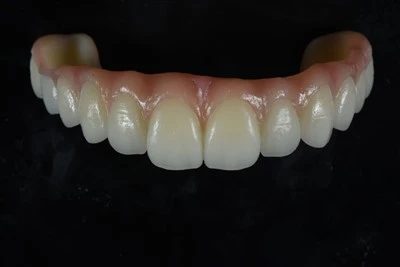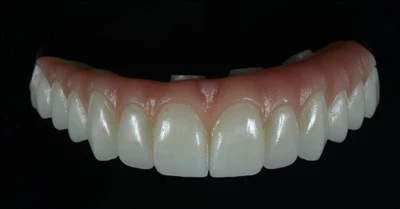
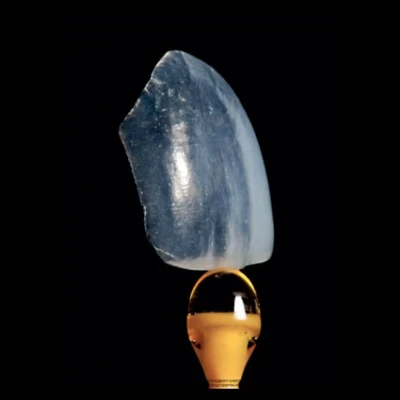
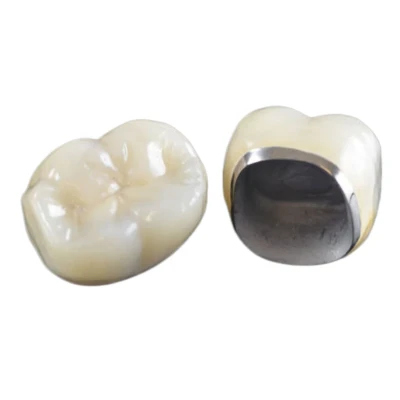
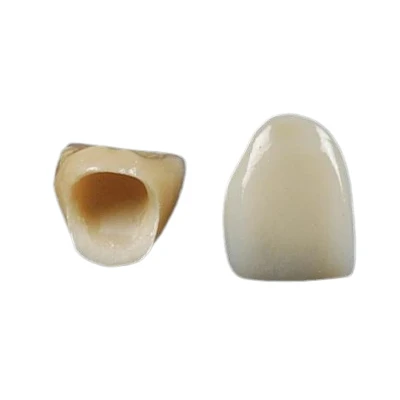
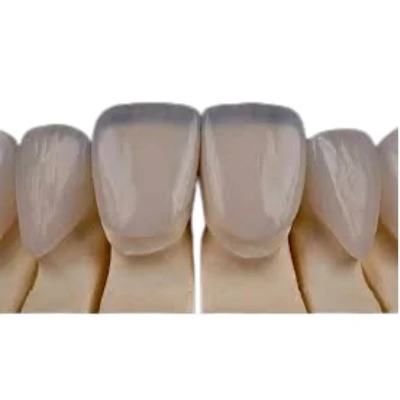
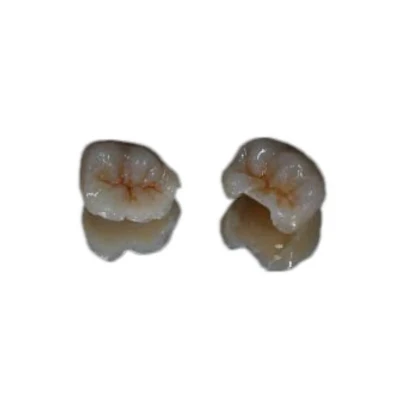


An inlay restores the internal part of a tooth without covering the cusps. An onlay covers one or more cusps when the tooth needs extra protection. An overlay covers most or all of the occlusal surface when broader protection or occlusal reconstruction is required.
That is the practical difference.
These three restorations sit between a direct filling and a full crown. They are indirect dental restorations, which means they are usually designed and fabricated outside the mouth by a dental laboratory, then bonded or cemented by the dentist.
For posterior teeth, the choice is rarely about the name alone. It is about coverage.
If the cusps are intact, an inlay may be enough.
If one or more cusps are weak, an onlay is usually the better choice.
If the occlusal table is worn down, multiple cusps are involved, or the tooth needs broader functional rebuilding, an overlay becomes more reasonable.
Inlays, onlays, and overlays form a spectrum of conservative indirect restorations. The more tooth structure is lost, the more coverage the restoration needs.
The main difference between an inlay, onlay, and overlay is the amount of tooth structure they cover: inlays stay within the cusps, onlays cover one or more cusps, and overlays provide broader occlusal coverage for more compromised teeth.

Quick Comparison Table: Inlay vs. Onlay vs. Overlay
The fastest way to understand these restorations is to compare them by coverage, cusp involvement, and clinical use.
|
Factor |
Inlay |
Onlay |
Overlay |
|
Basic definition |
Indirect restoration placed inside the tooth structure |
Indirect restoration covering one or more cusps |
Indirect restoration covering most or all of the occlusal surface |
|
Cusp coverage |
No cusp coverage |
Partial cusp coverage |
Broad cusp and occlusal coverage |
|
Typical indication |
Moderate internal defect with intact cusps |
One or more weakened or fractured cusps |
Extensive occlusal wear, multiple weak cusps, broader structural loss |
|
Common tooth area |
Posterior pits, fissures, proximal boxes |
Premolars and molars with larger MOD defects |
Molars or premolars with heavy occlusal involvement |
|
Preparation level |
Most conservative |
Moderate |
More extensive than inlay or onlay |
|
Main purpose |
Restore internal anatomy |
Protect cusps and reinforce the tooth |
Rebuild occlusal function and distribute load |
|
Common materials |
Lithium disilicate, ceramic, composite resin |
Lithium disilicate, zirconia, hybrid ceramic |
Zirconia, lithium disilicate, ceramic |
|
Limitation |
Not suitable when cusps are weak |
May not be enough for severe occlusal loss |
Requires more planning, space, and material control |
How They Compare with Fillings and Crowns
A direct filling is placed chairside, usually in one visit. It works well for smaller defects, but when a posterior tooth has a wide cavity, thin remaining walls, or heavy occlusal load, direct material alone may not provide enough long-term support.
A crown provides full coverage. It is useful when the tooth has major structural loss, but it also requires more tooth preparation.
Inlay, onlay, and overlay restorations fill the gap between these two options. They offer lab-made precision, stronger material choices, and better control of anatomy and contacts, while preserving more natural tooth structure than a crown in suitable cases.
For dental labs, this distinction matters because the restoration type affects margin design, CAD strategy, material thickness, and final fit.
Inlay, onlay, and overlay restorations sit between direct fillings and full crowns: they provide more strength and precision than fillings while preserving more natural tooth structure than crowns in properly selected cases.
What Is an Inlay Restoration?
An inlay restoration is an indirect restoration that fits within the prepared internal structure of a tooth. It restores pits, fissures, and proximal areas without covering the cusps.
In practical terms, an inlay is used when the damage is inside the tooth, but the surrounding cusps are still strong enough to function without additional protection.
This is usually the most conservative option among the three.
A common case is a posterior tooth with an old composite or amalgam restoration. After removal, the cavity may be too wide for a predictable direct filling, but the cusps remain intact. In this situation, a ceramic or lithium disilicate inlay can restore anatomy and contact while preserving the external tooth structure.
When Is an Inlay Usually Recommended?
An inlay is usually selected when:
- The defect is internal and does not involve the cusps
- The remaining enamel walls are stable
- The old filling needs replacement, but the tooth does not need cusp coverage
- The dentist wants a more precise option than direct composite
- The patient needs better wear resistance or marginal control than a chairside filling can provide
In a digital workflow, an inlay case may arrive at the lab as an intraoral scan with a clear margin line and antagonist scan. The CAD designer must pay close attention to internal fit, proximal contact, and occlusal anatomy. Because inlays have less external coverage than onlays or overlays, precision is not optional.
A small open margin or high occlusal contact can quickly become a chairside adjustment problem.
Limitations of Inlay Restorations
The biggest mistake with inlays is using them because they look conservative on paper.
Conservative does not always mean safer.
If the cusps are thin, undermined, cracked, or heavily loaded, an inlay may leave the tooth under-protected. This is especially relevant for large MOD cavities in molars. When both marginal ridges are gone and the remaining cusps are narrow, internal repair alone may not be enough.
For these cases, an onlay is often a more realistic option because it protects the weak cusps instead of simply filling the space between them.
An inlay is usually selected when the tooth defect is moderate, the cusps remain intact, and the goal is to preserve as much natural tooth structure as possible.
What Is an Onlay Restoration?
An onlay restoration is an indirect restoration that covers one or more cusps. It is used when the tooth needs more protection than an inlay can provide, but a full crown may not be necessary.
Onlays are often described as the middle option between an inlay and a crown. That description is useful, but it should not be misunderstood. An onlay is not a "small crown." Its purpose is selective coverage.
The key reason to choose an onlay is cusp protection.
A typical onlay case may involve a molar with a large MOD restoration, a fractured functional cusp, or a tooth weakened after removal of an old filling. The dentist wants to preserve sound axial walls, but the occlusal surface needs reinforcement. In this case, an onlay can cover the vulnerable cusp and distribute occlusal forces more effectively.
When Is an Onlay Usually Recommended?
An onlay is commonly used when:
- One or more cusps are weakened or fractured
- A large MOD defect reduces tooth stiffness
- A previous large filling has failed
- The tooth carries high posterior load
- The dentist wants to avoid unnecessary full crown preparation
- Partial occlusal reshaping is needed
For dental laboratories, onlay cases require clear communication about which cusps should be covered. A vague prescription such as "make onlay" is not enough. The lab needs to know whether the buccal cusp, lingual cusp, or both are included in the design.
The scan also needs enough reduction space. Many ceramic onlay designs require roughly 1.0–1.5 mm of occlusal clearance depending on the material, tooth position, and manufacturer protocol. If the clearance is not there, the lab has two bad choices: make the restoration too thin or create a high occlusion.
Neither is acceptable.
Inlay vs. Onlay: The Key Decision Point
The difference between an inlay and an onlay is not the material. Both can be made from lithium disilicate, zirconia, hybrid ceramic, or other CAD/CAM materials.
The real decision point is cusp involvement.
If the cusps are intact and well supported, an inlay may work. If one or more cusps are structurally compromised, the restoration should usually cover and protect them.
This is where onlays show their value. They allow the dentist to preserve healthy tooth structure while reinforcing the part of the tooth that actually needs protection.
The key reason to choose an onlay instead of an inlay is cusp protection. When one or more cusps are structurally compromised, an onlay can provide broader coverage while remaining more conservative than a full crown.
What Is an Overlay Restoration?
An overlay restoration is an indirect restoration that covers most or all of the occlusal surface and may involve multiple cusps. It is used when the tooth needs broader protection or occlusal reconstruction, but complete crown coverage is not always required.
An overlay should not be confused with a full crown. A crown usually covers the full coronal form, including axial walls. An overlay focuses mainly on the occlusal table and cusp coverage.
In real cases, overlays are often considered when the occlusal surface has lost its original anatomy. This may happen in patients with heavy wear, bruxism, erosion, large failed restorations, or multiple weakened cusps. The goal is not just to fill a defect. The goal is to rebuild function.
When Is an Overlay Usually Recommended?
An overlay may be appropriate when:
- Multiple cusps are weak or damaged
- The occlusal table is flattened by wear
- The tooth needs broader load distribution
- Occlusal height or anatomy needs reconstruction
- A full crown would remove more tooth structure than necessary
- The case is part of a larger posterior rehabilitation
For example, a lower first molar with three weakened cusps and heavy occlusal wear is not a good inlay case. It may not even be a simple onlay case. If the entire biting surface needs redesign, an overlay gives the technician and dentist more control over anatomy, contact, and force distribution.
Overlay cases demand more from the lab. The CAD design must respect occlusal curves, antagonist contacts, lateral movement, and minimum material thickness. For zirconia overlays, sintering shrinkage control and final occlusal adjustment are also part of the production risk. For lithium disilicate overlays, crystallization and bonding surface management need close attention.
Overlay vs. Onlay: What Is the Difference?
An onlay usually covers selected cusps. An overlay covers a broader occlusal area.
If the restoration mainly protects one or two cusps, it is usually an onlay. If it rebuilds most or all of the biting surface, it is usually an overlay.
The boundary is not always perfectly clean in daily clinical language. Some clinicians use the terms differently. From a lab perspective, the prescription should describe the intended coverage clearly instead of relying only on the restoration name.
A simple note such as "cover all cusps, maintain buccal wall" or "functional cusp coverage only" can prevent design misunderstandings.
Overlay vs. Crown: Are They the Same?
No. An overlay is not the same as a crown.
A crown generally provides full coronal and axial coverage. An overlay usually provides occlusal and cusp coverage while preserving more non-functional tooth surfaces when possible.
That difference matters. Overlay preparation can be more conservative than crown preparation, but it still requires enough space and a clean margin design. If the remaining tooth walls are too weak, the margins are subgingival, or retention and isolation are poor, a crown may still be the better option.
An overlay is generally chosen when most or all of the occlusal surface requires coverage, but complete crown preparation may not be necessary or desirable.

Material Options for Inlays, Onlays, and Overlays
Material choice should not start with the question, "Which material is strongest?"
That is too simple.
The better question is: Which material fits the design, load, thickness, esthetic requirement, and bonding condition of this case?
An inlay in a premolar with high esthetic demand is not the same as an overlay for a bruxing molar. A thin restoration with limited clearance is not the same as a well-reduced case with stable enamel margins. The material should match the clinical reality.
|
Material |
Common Use |
Strength Profile |
Esthetic Profile |
Lab Notes |
|
Lithium disilicate |
Inlays, onlays, selected overlays |
Good strength when bonded properly |
High esthetic value |
Needs correct thickness, crystallization, bonding protocol |
|
Zirconia |
Onlays and overlays in high-load zones |
High strength |
Varies by zirconia type; often less translucent than glass ceramic |
Requires accurate milling, sintering, finishing, and occlusal polishing |
|
Hybrid ceramic / CAD/CAM composite |
Selected inlays, some lower-load cases |
Moderate, case-dependent |
Good, but may change over time |
Easy to mill and adjust; indication must be selected carefully |
|
Metal alloy |
Selected posterior cases |
High durability |
Poor esthetics |
Less common in esthetic-driven markets but still clinically relevant in some regions |
Lithium Disilicate
Lithium disilicate, often known through materials such as e.max, is widely used for ceramic inlays, onlays, and selected overlays. It offers a strong balance between esthetics and function when the case is designed and bonded correctly.
It is especially useful when the dentist wants a natural enamel-like appearance. For premolars or visible posterior areas, this can be a strong advantage.
But lithium disilicate is not magic. It needs proper preparation, enough thickness, and good bonding conditions. If the occlusal clearance is too tight or the tooth cannot be isolated well, the risk increases.
For labs, the key points are margin accuracy, internal fit, crystallization control, and surface finishing. A lithium disilicate onlay that looks good but binds internally will create seating problems. A restoration with beautiful staining but poor contact is still a failed lab result.
Zirconia
Zirconia is commonly selected for posterior onlays and overlays where strength is the main concern. It is often used in high-load molars, patients with heavy occlusion, and cases where the restoration needs greater fracture resistance.
Zirconia works well when the design is right.
The problem starts when zirconia is chosen only because it is strong. High strength does not fix poor clearance, unclear margins, or bad occlusal design. A zirconia overlay still needs accurate milling, controlled sintering, proper polishing, and good contact adjustment.
Esthetics also need to be discussed. Modern multilayer zirconia can look much better than older opaque zirconia, but it does not behave exactly like lithium disilicate. For highly visible areas, material selection should be made carefully.
Hybrid Ceramic or CAD/CAM Composite
Hybrid ceramic and CAD/CAM composite materials can be useful in selected cases. They are easier to mill and adjust, and some clinicians like their shock-absorbing behavior.
They are not the default answer for every case.
For lower-load inlays or cases where repairability and fast production matter, these materials may be reasonable. For heavy occlusion, broad overlays, or long-term high-stress posterior cases, the dentist and lab should be more cautious.
The lab should not simply accept "composite onlay" without looking at the tooth position, occlusion, restoration thickness, and patient habits.
How to Match Material with Restoration Type
For inlays, the focus is often internal fit, esthetics, bonding, and conservative preparation.
For onlays, the material must support cusp protection. Strength, bonding, and thickness become more demanding.
For overlays, the material must handle broader occlusal load. The design needs enough thickness, stable contacts, and careful occlusal anatomy.
The best material for an inlay, onlay, or overlay depends on tooth position, occlusal load, esthetic demand, restoration thickness, bonding conditions, and the amount of remaining tooth structure.
Why Work with a Digital Dental Laboratory for Inlay, Onlay, and Overlay Cases?
Inlays, onlays, and overlays are not forgiving restorations.
A crown gives the technician more room to hide small design compromises. A thin onlay margin or poorly scanned inlay preparation does not. The fit, contact, occlusion, and material thickness all matter at the same time.
This is where a digital dental laboratory can add real value.
A good lab does not only manufacture what is written on the prescription. It checks whether the case data supports the requested restoration.
Digital Workflow from Scan File to Final Restoration
A typical digital workflow for inlay, onlay, and overlay restorations includes:
1.Receiving intraoral scan files, usually STL, PLY, or similar formats
2.Checking margin visibility and scan completeness
3.Reviewing occlusal clearance and antagonist data
4.Evaluating undercuts and preparation geometry
5.Designing the restoration in CAD software
6.Selecting material based on design and functional demand
7.Milling with a 4-axis or 5-axis milling unit, depending on case complexity
8.Sintering zirconia or crystallizing lithium disilicate when required
9.Staining, glazing, polishing, and adjusting contacts
10.Final inspection before packing and shipping
For a simple inlay, a 4-axis mill may be enough. For complex overlays with deeper anatomy and broader occlusal coverage, 5-axis milling can offer better access and detail reproduction.
The digital workflow also makes repeat cases easier. When a clinic or partner lab sends cases regularly, the lab can learn the dentist's contact preference, occlusal style, margin design habits, and material preferences. That consistency matters in long-term outsourcing.
What Dentists Should Send to the Lab
The quality of the final restoration depends heavily on the quality of the case submission.
For inlay, onlay, and overlay cases, dentists should send:
- Clear intraoral scan or model scan
- Visible margin line
- Bite record
- Antagonist scan
- Shade information
- Preparation photos when possible
- Material preference
- Notes on occlusion, bruxism, wear, or limited clearance
- Contact preference, especially for tight proximal areas
- Clear instruction on cusp coverage
The last point is often missed.
If the dentist wants only the functional cusp covered, say so. If all cusps should be covered, say so. If the buccal wall should be preserved, write it clearly.
Case clarity leads to predictable lab work.
How Lab Communication Affects the Final Restoration
Most remakes are not caused by one big mistake. They come from small missing details.
A margin that is hard to read.
A bite record that does not match the scan.
A shade photo taken under poor lighting.
A restoration requested in zirconia with too little clearance.
A prescription that says "onlay" but does not define cusp coverage.
These are practical problems, not academic ones.
For overseas cases, communication becomes even more important because chairside adjustment time is expensive. A dentist in Europe, North America, Australia, or the Middle East does not want to spend 20 minutes adjusting contacts on a restoration that should have been controlled at the lab stage.
A digital lab should check:
- Whether the margin is complete
- Whether occlusal clearance is enough for the selected material
- Whether proximal contact areas are readable
- Whether the antagonist scan is reliable
- Whether the requested restoration type matches the preparation
This is especially relevant for B2B dental lab outsourcing. Overseas dentists and partner laboratories need stable results, not just low-cost production.
How ADS Dental Laboratory Ltd Supports Overseas Dentists and Dental Labs
ADS dental laboratory Ltd is a digital dental laboratory in China focused on long-term custom restoration outsourcing for overseas dentists and dental laboratories.
For inlay, onlay, and overlay cases, ADS supports digital design, CAD/CAM production, material selection, quality control, and stable delivery for ongoing cooperation. Cases can be handled from digital files, allowing overseas partners to send scans and receive custom restorations without traditional model-based delays.
Our work is not limited to making a restoration fit the screen. The goal is to produce restorations that seat well, maintain proper contact, respect occlusion, and reduce unnecessary chairside adjustment.
For overseas dentists and dental laboratories, working with a reliable digital dental lab can improve production consistency, reduce chairside adjustment time, and support stable delivery of custom inlays, onlays, and overlays.

Conclusion
The choice between an inlay, onlay, and overlay should follow the tooth, not the label.
Choose an inlay when the defect is internal and the cusps remain strong. Choose an onlay when one or more cusps need protection. Choose an overlay when the tooth needs broad occlusal coverage, multiple cusp support, or functional rebuilding.
The real decision depends on defect size, cusp involvement, remaining tooth structure, occlusal load, esthetic expectation, material thickness, bonding condition, and lab communication.
Inlays are best for conservative internal restorations, onlays are ideal when cusp protection is needed, and overlays are suitable for broader occlusal reconstruction.
If you are an overseas dentist or dental laboratory looking for a long-term outsourcing partner for custom inlays, onlays, and overlays, ADS dental laboratory Ltd can support your cases through digital design, CAD/CAM production, material selection, and consistent quality control. Contact us to discuss your case workflow or send a sample case for evaluation.