
Dental labs are under pressure from both sides.
Doctors want faster turnaround, consistent fit, better aesthetics, and competitive pricing. At the same time, many labs are dealing with technician shortages, rising labor costs, expensive CAD/CAM equipment, and unstable case volume.
That is why more dental labs and dentists are looking at outsourcing dental CAD/CAM services to China.
This is not only a low-cost decision. A good China dental lab can act as a backend production partner, helping overseas dental businesses handle more digital cases, reduce production pressure, and keep their workflow stable without hiring more local technicians or buying more machines.
The smart choice is not "find the cheapest lab."
The smart choice is finding a reliable digital dental lab in China that understands CAD/CAM workflows, quality control, communication, remake handling, and long-term cooperation.

What Does Dental CAD/CAM Outsourcing to China Mean?
Dental CAD/CAM outsourcing to China means sending dental case data to a Chinese digital dental lab for CAD design, CAM production, or complete custom dental restoration manufacturing.
In practical terms, an overseas dental clinic or dental lab sends case information such as STL files, digital impressions, bite records, shade details, material choices, implant system information, and clinical photos. The Chinese dental lab then completes part or all of the workflow.
A typical digital outsourcing workflow looks like this:
|
Step |
What Happens |
|
Case submission |
Client sends STL files, prescription, shade, material, photos, and special instructions |
|
Case review |
Lab checks scan quality, margin clarity, bite, space, and missing information |
|
CAD design |
Designer creates the restoration design using CAD software |
|
Design communication |
Lab contacts client if margins, space, implant data, or instructions are unclear |
|
CAM production |
Case moves to milling, printing, sintering, staining, glazing, or polishing |
|
Final inspection |
Lab checks fit, contacts, occlusion, shade, surface, and prescription match |
|
Shipping and feedback |
Case is shipped; client feedback is recorded for future cases |
This workflow is why digital outsourcing is different from traditional overseas purchasing. The work depends on files, instructions, design preferences, production control, and feedback.
When the workflow is clear, distance becomes easier to manage.
CAD Design Outsourcing
Some overseas labs already have milling machines, 3D printers, ceramic departments, and local finishing teams. What they lack is CAD design capacity.
For these labs, dental CAD design outsourcing can be the most practical starting point. They can send crown, bridge, implant crown, model, or digital wax-up cases to a China-based design team, then produce the restorations locally.
This is especially useful when a lab has too many scans coming in but not enough experienced CAD designers to keep up.
Full Dental Restoration Outsourcing
Full outsourcing goes further. The Chinese dental lab handles design, production, finishing, quality inspection, and shipping.
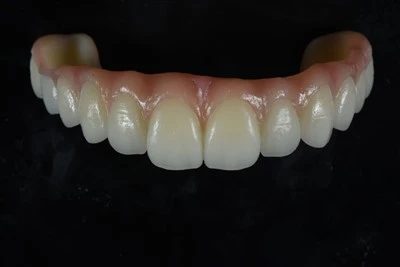
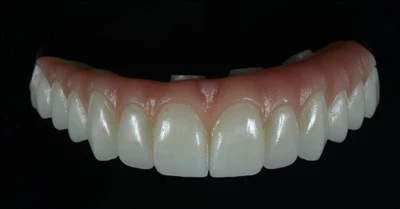
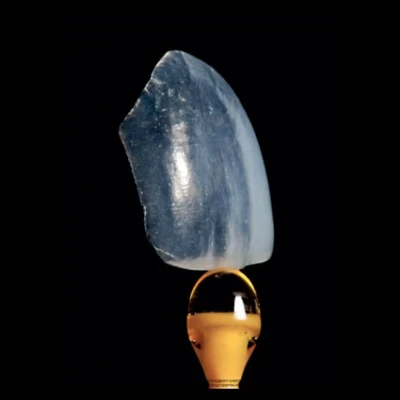
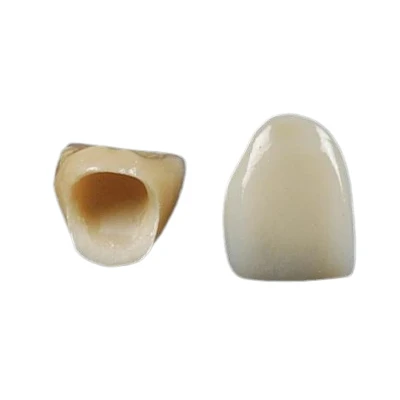
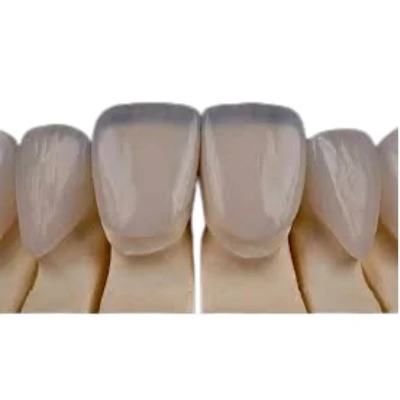
This model is common for zirconia crowns, bridges, implant restorations, custom abutments, screw-retained crowns, veneers, night guards, and other custom dental restorations.
It suits labs and clinics that want extra production capacity without expanding every department in-house.
What Information Should Be Sent with a Case?
The quality of an outsourced case starts before the lab opens the file.
For dental CAD/CAM outsourcing, the case should include:
- STL files or digital impression files
- Clear prescription
- Restoration type
- Material choice
- Shade information
- Bite record
- Margin instruction
- Implant system and scan body data
- Clinical photos when needed
- Special design preferences, such as contact strength or occlusion style
Incomplete information creates back-and-forth communication. Back-and-forth communication creates delay.
A complete case file is one of the simplest ways to improve outsourcing quality.
Why China Is a Strong Destination for Dental CAD/CAM Outsourcing
China has become a strong destination for dental CAD/CAM outsourcing because it combines manufacturing capacity, digital workflow experience, skilled technical teams, and competitive production costs.
That combination matters.
A single advantage is not enough. Low cost without quality control is risky. Advanced machines without experienced technicians do not guarantee a good crown. Fast production without clear communication leads to remakes.
China's advantage is the full production environment.
Mature Dental Manufacturing Supply Chain
Dental CAD/CAM work depends on more than one machine. A lab needs materials, scanners, design software, milling machines, sintering furnaces, 3D printers, staining systems, polishing tools, packaging, and shipping support.
China has a mature dental manufacturing supply chain. This allows many Chinese dental labs to source materials, maintain equipment, train technicians, and handle international orders with better cost control.
For overseas clients, this often means more flexible pricing and stronger production support than building every process locally.
Digital CAD/CAM Workflow Capability
A qualified digital dental lab in China should be comfortable with digital case submission and CAD/CAM production.
In daily work, this may include:
- Receiving STL files from intraoral scanners
- Working with 3Shape, Exocad, Medit Link, iTero, or open STL workflows
- Designing crowns, bridges, implant crowns, and digital wax-ups
- Milling zirconia, PMMA, wax, or other CAD/CAM materials
- Using 3D printing for models, surgical guides, or other digital workflows
- Managing case communication through email, portals, shared folders, or account teams
The point is not the brand name of one machine.
The point is whether the lab understands the full digital workflow from case receiving to final inspection.
Specialized Workflow Division
In a mature dental lab, one person does not handle everything from start to finish without checks.
A more stable workflow separates the work into stages:
|
Workflow Stage |
Main Control Point |
|
Case review |
File quality, margin, bite, space, prescription |
|
CAD design |
Anatomy, contact, occlusion, cement space, emergence profile |
|
CAM production |
Milling strategy, nesting, material handling |
|
Finishing |
Staining, glazing, polishing, surface texture |
|
Final inspection |
Fit, contacts, shade, occlusion, case requirements |
This division improves consistency. Technicians become better when they repeat and refine a specific part of the process.
For international clients, it also makes problems easier to trace. If a case fails, the lab can check whether the issue came from the scan, design, material, production, finishing, or communication.
Flexible Capacity for International Orders
Many overseas labs do not need more technicians every month.
They need more capacity during busy periods.
A Chinese outsourcing partner can help absorb case volume when a lab receives more scans than usual, loses a technician, handles holiday backlogs, or wants to accept more crown and bridge work without increasing fixed payroll.
This is one of the strongest reasons to outsource.
Outsourcing gives a lab adjustable capacity. Hiring gives a lab fixed cost.
Cost-Effective, Not Simply Cheap
China is often associated with lower production costs, but the best reason to outsource is not the lowest unit price.
The real cost of outsourcing includes:
- Unit price
- Shipping
- Customs or import handling
- Remake rate
- Communication time
- Delayed cases
- Chairside adjustment
- Client complaints
- Long-term workflow stability
A cheaper crown that needs to be remade is not cheap.
A cost-effective dental lab partner offers a reasonable price, stable quality, clear communication, and predictable handling of problems.
That is the difference between low price and real value.
Key Benefits of Outsourcing Dental CAD/CAM Services to China
The benefits of outsourcing dental CAD/CAM services to China are practical. They are not theoretical business-school points. They show up in daily lab operations.
A lab can accept more cases. A dentist can access more competitive restoration pricing. A small team can survive a busy season without burning out. A growing lab can delay major equipment investment until the case volume is stable enough to justify it.
Lower Operational Pressure
Running an in-house CAD/CAM department is expensive.
A lab may need:
- CAD designers
- Design software licenses
- Milling machines
- Sintering furnaces
- 3D printers
- Maintenance contracts
- Trained finishing technicians
- Quality control staff
The equipment is only part of the cost. The bigger cost is keeping skilled people busy, trained, and productive.
Outsourcing reduces pressure because the overseas client does not need to carry every fixed cost internally. This is especially useful for small and mid-sized dental labs that want to grow but are not ready to expand every department.
Flexible Capacity Without Hiring More Technicians
Hiring takes time. Training takes longer.
When a lab receives a sudden increase in zirconia crowns, implant crowns, or CAD design cases, it may not have enough people to process everything on time. Outsourcing helps fill that gap.
Instead of refusing cases or extending turnaround time, the lab can send selected cases to a China dental laboratory and keep local staff focused on urgent, complex, or high-touch work.
This does not replace the local lab. It supports it.
Access to Digital Workflow Expertise
Digital dentistry has changed the way cases move.
More doctors now send intraoral scans instead of physical impressions. More labs receive open STL files, scan body data, implant libraries, and digital bite records. This creates new pressure on labs that were built around traditional analog workflows.
A Chinese digital dental lab with strong CAD/CAM experience can help handle that pressure.
For example, a lab may outsource standard posterior zirconia crown designs while keeping complex anterior cases in-house. Or it may outsource implant crown design during peak periods while maintaining local finishing control.
The goal is not to outsource everything.
The goal is to place each case where it can be handled most efficiently.
Better Focus on Client Service and Local Delivery
Many overseas dental labs win business because of relationships with local dentists. They understand the doctor's habits, chairside expectations, patient base, and communication style.
Those strengths should not be sacrificed because the lab is overloaded with routine production.
By outsourcing selected CAD/CAM work, a lab can spend more time on:
- Doctor communication
- Shade discussion
- Treatment planning support
- Local pickup and delivery
- Final adjustment
- Urgent cases
- Customer retention
Production support from China gives the local lab more room to protect its client relationships.
More Stable Long-Term Production Support
One-off outsourcing often disappoints people.
Long-term outsourcing works better because both sides learn from each case. The lab records preferences. The client gives feedback. Design standards become clearer.
Over time, the outsourcing partner can learn details such as:
- Preferred contact tightness
- Occlusion style
- Anatomy shape
- Bridge connector preference
- Implant emergence profile
- Staining expectations
- Remake patterns
This is where stable cooperation becomes more valuable than a cheap first order.
What Dental CAD/CAM Services Can Be Outsourced to a Chinese Dental Lab?
Not every dental case should be outsourced. Some cases are better handled locally, especially urgent chairside cases, highly customized anterior esthetic cases, or cases that need direct doctor-technician collaboration.
But many CAD/CAM services are well suited for outsourcing.
CAD Design Services
CAD design is one of the easiest starting points for outsourcing.
Common design work includes:
- Single crown design
- Bridge design
- Implant crown design
- Screw-retained crown design
- Digital wax-up
- Model design
- Diagnostic design
This is useful for labs that already own milling or printing equipment but lack design capacity.
A lab can keep production local while outsourcing the design bottleneck.
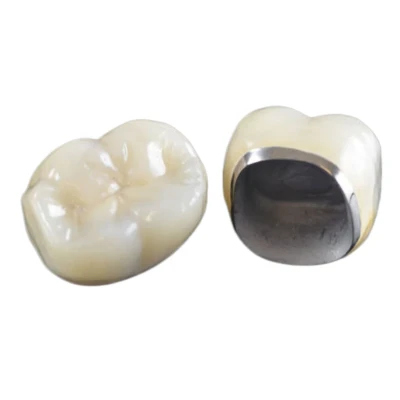
Zirconia Crowns and Bridges
Zirconia crowns and bridges are among the most common outsourced restorations.
They are suitable because the workflow is highly digital: scan, design, mill, sinter, stain, glaze, polish, inspect, ship.
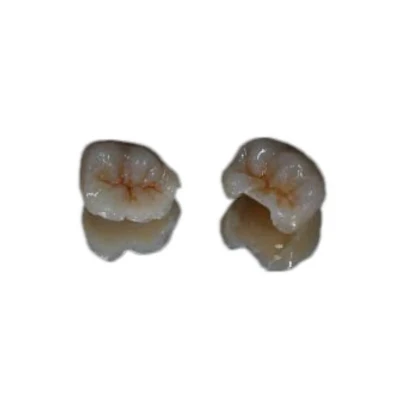
For posterior crowns, full-contour zirconia is often a practical choice. For anterior or higher-esthetic cases, material selection and staining requirements need more detailed communication.
The important point is consistency. A stable zirconia workflow depends on scan quality, margin design, occlusion, contact strength, sintering control, and final inspection.
Implant Restorations
Implant cases can also be outsourced, but they require more complete information.
For implant restorations, the lab may need:
- Implant system
- Platform size
- Scan body type
- Tissue height
- Screw channel preference
- Restoration type
- Emergence profile requirement
- Opposing arch
- Bite record
Implant crowns, custom abutments, screw-retained crowns, and implant bridges can be handled well by an experienced digital dental lab, but missing implant data can create serious problems.
Implant outsourcing should never rely on guesswork.
Veneers, Night Guards, and Other Custom Restorations
Some Chinese dental labs also support veneers, night guards, temporary restorations, diagnostic wax-ups, and other custom restorations.
These cases should be discussed based on the lab's actual product range. For esthetic cases, photos, shade maps, surface texture preferences, and doctor expectations matter more than they do for routine posterior crowns.
A reliable outsourcing partner should be clear about what it does well.
Material Options Based on Case Requirements
Material choice should follow the case, not the price list.
For example, a posterior molar crown, anterior veneer, implant-supported restoration, and long-span bridge do not carry the same mechanical and esthetic demands. The lab should be able to discuss material options based on strength, translucency, wear, shade, budget, and market expectations.
Good material discussion prevents many problems before production starts.

How Quality Control Works When Outsourcing Dental CAD/CAM Services
Quality control in dental CAD/CAM outsourcing is not one final check at the end.
It starts when the case is received.
If the scan is distorted, the bite is wrong, the margin is unclear, or the implant information is incomplete, even the best production team will struggle. Quality depends on the whole workflow.
Case Review Before CAD Design
The first quality checkpoint is case review.
A trained team should check:
- Scan quality
- Margin clarity
- Occlusal clearance
- Bite relationship
- Missing data
- Material suitability
- Implant system details
- Shade information
- Doctor instructions
If a scan shows insufficient clearance, the lab should not blindly design a thin crown and hope it works. If the implant scan body information is missing, the lab should ask before moving forward.
Good labs stop bad cases early.
Design Communication Before Production
Communication is part of quality control.
For example, if a posterior crown has tight occlusal space, the lab may need to ask whether to reduce anatomy, adjust material choice, or request clinical adjustment. If the margin is unclear, the lab may need a new scan or approval before proceeding.
This communication protects both sides.
It prevents the lab from producing a restoration that looks complete but fails clinically.
CAD Design Quality Checks
During CAD design, the main control points include:
|
Design Factor |
Why It Matters |
|
Margin design |
Affects fit and seating |
|
Cement space |
Affects seating and retention |
|
Proximal contacts |
Affects adjustment time |
|
Occlusion |
Affects chairside grinding and comfort |
|
Anatomy |
Affects function and aesthetics |
|
Connector thickness |
Affects bridge strength |
|
Emergence profile |
Especially important for implant restorations |
CAD software helps, but software does not replace judgment. A designer must understand how the restoration will be used in the mouth.
Material and Production Control
After design approval or internal design check, the case moves into production.
For zirconia restorations, production quality can be affected by milling strategy, bur condition, nesting, sintering temperature, staining technique, glazing, and polishing.
For printed models or guides, accuracy can depend on printer calibration, resin handling, curing process, and post-processing.
This is why a dental CAD/CAM outsourcing partner should have both equipment and production discipline.
Machines do not guarantee quality by themselves.
Final Inspection Before Shipping
Before shipping, the restoration should be checked against the prescription.
Final inspection may include:
- Fit on model or digital verification
- Contact check
- Occlusion check
- Shade and surface review
- Margin inspection
- Polishing quality
- Screw channel position for implant cases
- Packaging and labeling
This step should not be rushed. It is cheaper to catch a problem inside the lab than after the case reaches the doctor.
Feedback Loop and Remake Learning
No dental lab can avoid every remake.
The question is how the lab handles feedback.
A useful feedback loop records why a case needed adjustment or remake. Was the contact too tight? Was the shade too bright? Was the bite record inaccurate? Did the doctor prefer lighter occlusion? Was the implant data incomplete?
Long-term quality improves when this feedback becomes part of the client profile.
That is how outsourcing becomes more stable over time.
How to Reduce Risks When Working with an Overseas Dental Lab
Overseas dental lab outsourcing has real risks. Quality can vary between labs. Communication may be slower because of time zones. Shipping can affect turnaround. Remake policies may be unclear if they are not discussed early.
These risks can be managed.
Start with Trial Cases
Do not begin with your most difficult esthetic case.
Start with a few trial cases that represent your normal workflow: posterior crowns, simple bridges, CAD designs, or selected implant cases with complete information.
Use these cases to judge:
- Design understanding
- Fit
- Contact strength
- Occlusion
- Shade handling
- Communication speed
- Remake response
- Packaging and shipping reliability
Trial cases reveal more than a sales brochure.
Avoid Choosing Only the Cheapest Option
The lowest price often looks attractive until problems appear.
A very cheap case may cost more if it leads to remakes, extra chairside adjustment, doctor complaints, or lost clients. For dental outsourcing, stable mid-range pricing often makes more business sense than chasing the lowest quote.
Price matters.
But predictable quality matters more.
Use a Clear Case Submission Standard
A case submission standard reduces mistakes.
For each case, the client should provide a consistent set of information: files, prescription, material, shade, bite, implant details, photos, and special preferences.
If your lab has regular doctors with specific preferences, send those preferences in writing.
Do not assume the outsourcing partner knows what your local doctor likes.
Manage Time Zone and Communication Expectations
China may be 8 to 13 hours ahead of many overseas markets. A simple question can delay a case if it arrives after the relevant department has closed.
The best way to reduce this delay is to submit complete information at the beginning.
For urgent or complex cases, mark them clearly. Set a regular communication window. Use photos and screenshots when words are not enough.
Good outsourcing does not depend on constant messages. It depends on clear messages.
Confirm Shipping, Turnaround, and Remake Policy
Turnaround time depends on case type, design confirmation, production schedule, finishing requirements, and international shipping.
Discuss these points before increasing case volume:
- Standard production time
- Shipping method
- Tracking process
- Rush order handling
- Remake responsibility
- Remake documentation
- Payment terms
- Customs or import handling
A reliable lab should be willing to explain these terms clearly.
Unclear expectations create most outsourcing disputes.
How to Choose the Right Dental CAD/CAM Outsourcing Partner in China
Choosing the right partner matters more than choosing the right country.
China has excellent dental labs. It also has labs that may not fit your quality, communication, or market requirements. The selection process should be practical.
Digital Workflow Capability
Ask how the lab receives and manages digital cases.
Can it work with STL files? Does it understand intraoral scan cases? Can it handle Exocad or 3Shape workflows? Does it have a process for implant scan body information? Can it communicate design issues before production?
A lab that cannot manage digital files clearly is not the right partner for CAD/CAM outsourcing.
Relevant Restoration Experience
A lab may be good at simple crowns but weak in implant restorations. Another lab may be strong in CAD design but not ideal for high-esthetic anterior work.
Ask about the exact case types you plan to outsource:
- Zirconia crowns
- Bridges
- Implant crowns
- Custom abutments
- Screw-retained restorations
- Veneers
- Night guards
- CAD design only
Relevant experience is more useful than a long product list.
Material Transparency and Documentation
Ask what materials the lab uses and whether material documentation is available.
This does not mean every case needs the most expensive material. It means the lab should be able to explain material options and match them to the case.
For overseas markets, material traceability and documentation can matter for compliance, doctor confidence, and long-term business protection.
Technician and QC Team Stability
Quality problems often come from inconsistent teams.
If one team makes your cases one week and another team handles them the next week with different standards, contacts, anatomy, and shade may vary.
A good outsourcing partner should have stable production standards, trained technicians, and a defined QC process.
For larger cooperation, ask whether your cases can follow a consistent workflow or dedicated account process.
Responsive English Communication
Good quality and good communication are tied together.
The customer service or account team should understand dental terminology, case status, production questions, shipping details, and remake discussions. Perfect English is not the main issue. Clear dental communication is.
The best communication is specific: screenshots, case numbers, design notes, photos, and clear action points.
Realistic Turnaround and Shipping Support
Be careful with unrealistic promises.
Same-day production may be possible for some local workflows, but international outsourcing involves design review, production, finishing, inspection, packing, shipping, and customs handling.
A reliable partner gives realistic turnaround expectations and explains what can delay a case.
That is more valuable than a fast promise that cannot be kept.
Long-Term Partnership Mindset
The best dental CAD/CAM outsourcing partner is not just a supplier.
It is a production partner that learns your standards over time.
Look for a lab willing to record preferences, review feedback, adjust design standards, discuss remakes fairly, and support your business as volume grows.
For overseas dental labs, this is the real value of working with China.
ADS dental laboratory Ltd is a China-based digital dental laboratory focused on supporting overseas dentists and dental labs with long-term CAD/CAM outsourcing and custom dental restoration services. For clients looking for stable cooperation, digital workflow support, and scalable production capacity, ADS can serve as a reliable backend dental lab partner.

Conclusion
Outsourcing dental CAD/CAM services to China is a smart choice when it is handled as a long-term production strategy.
The value is not just lower cost. The value comes from digital workflow capability, experienced technicians, flexible production capacity, quality control, and clear communication. A good Chinese dental lab can help overseas dentists and dental labs reduce operational pressure while keeping case delivery stable.
The wrong partner creates remakes and frustration.
The right partner becomes part of your production system.
ADS dental laboratory Ltd provides long-term CAD/CAM outsourcing and custom dental restoration support for overseas dentists and dental laboratories. Contact us to discuss your case types, workflow, and cooperation needs.
FAQ
Why do dental labs outsource CAD/CAM services to China?
Dental labs outsource CAD/CAM services to China to reduce production pressure, control costs, access digital workflow support, and handle more cases without hiring more local technicians or investing immediately in more CAD/CAM equipment.
Is it reliable to outsource dental restorations to China?
Yes, it can be reliable when the selected China dental lab has strong digital workflow capability, clear communication, material transparency, quality control steps, and experience with international dental cases. Reliability depends on the partner, not only the location.
What files are needed for dental CAD/CAM outsourcing?
Common files and information include STL files, digital impressions, case prescription, material choice, shade, bite record, implant system, scan body information, clinical photos, and special design preferences.
How do I start working with a Chinese dental lab?
Start with a few trial cases. Send complete case information, review the design and final restoration quality, check communication speed, confirm shipping and remake terms, then increase case volume gradually if the workflow is stable.
Should I choose the cheapest dental lab in China?
Not always. The cheapest option may increase remake risk, communication problems, material concerns, or chairside adjustment time. A cost-effective dental lab should offer stable quality, clear communication, transparent pricing, and predictable workflow support.
How can dental labs reduce risks when outsourcing overseas?
Dental labs can reduce risks by starting with trial cases, using clear case submission standards, confirming turnaround and remake policies, managing time zone communication, and building a long-term feedback loop with the outsourcing partner.